

Learning to ride a bike is an exciting milestone for any child, but traditional bicycles with pedals can sometimes feel intimidating for a 3-year-old. This is where a balance bike can make a big difference. Designed without pedals, balance bikes allow young riders to concentrate on the two skills they need most at this stage: balancing and steering. Instead of worrying about pedaling, children can use their feet to move, stop, and stabilize themselves while gradually becoming more comfortable on two wheels.
Choosing the best balance bikes for 3-year-olds involves more than simply finding a bike with a fun color or attractive design. At this age, children are still developing coordination, confidence, and control, so factors such as bike weight, seat height, frame design, wheel size, tire type, and overall comfort can significantly affect their riding experience. A bike that is too heavy or too large may be difficult for a small child to control, while a properly sized balance bike can make learning feel much more natural and enjoyable.
The right balance bike can also help prepare a child for transitioning to a pedal bike later. As children practice pushing themselves forward, lifting their feet, steering, and maintaining their balance, they can gradually develop the coordination needed for independent riding. Just as importantly, successfully controlling a bike can give young riders a sense of independence and accomplishment.
In this guide, we’ve selected 7 Best Balance Bikes for 3-Year-Olds to help parents compare some of the top options available. We’ll look at important features, specifications, advantages, potential drawbacks, and the type of young rider each bike may suit best. Whether you’re looking for a lightweight beginner bike, a comfortable option for everyday outdoor rides, or a durable choice for an adventurous toddler, these picks can help you find a balance bike that makes those first riding experiences easier, more enjoyable, and confidence-building.
Quick comparison tale of 7 Best Balance Bikes for 3-Year-Olds – Top Picks for Learning Balance, Building Confidence & Easy Riding
| Rank | Product Name | Recommended Age | Wheel Size | Frame / Build | Weight | Key Feature | Best For |
|---|---|---|---|---|---|---|---|
| 1 | Strider 12 Sport Balance Bike | 18 months–5 years | 12 inches | Lightweight steel frame | Approx. 6.4 lb | Adjustable seat and handlebars | Overall best balance bike |
| 2 | woom GO 1 Balance Bike | 18 months–4 years | 12 inches | Lightweight aluminum frame | Approx. 5.1 lb | Ergonomic child-friendly design | Lightweight riding |
| 3 | Radio Flyer Glide & Go Balance Bike | 2–5 years | 12 inches | Steel frame | Approx. 6.3 lb | Air tires and adjustable seat | Outdoor adventures |
| 4 | Chillafish Charlie Balance Bike | 18 months–4 years | 10 inches | Lightweight frame | Approx. 5.5 lb | Adjustable saddle and handlebars | Smaller toddlers |
| 5 | Retrospec Cricket Balance Bike | 2–5 years | 12 inches | Steel frame | Approx. 7 lb | Adjustable seat and handlebars | Everyday riding |
| 6 | Bixe 12″ Balance Bike | 2–5 years | 12 inches | Lightweight metal frame | Approx. 4.5 lb | Adjustable seat and handlebars | Lightweight beginners |
| 7 | Yvolution Y Velo Junior Balance Bike | 18 months–4 years | 10 inches | Durable lightweight frame | Approx. 6 lb | Adjustable seat and footrest | Early balance training |
7 Best Balance Bikes for 3-Year-Olds – Top Picks for Learning Balance, Building Confidence & Easy Riding
1. Strider 12 Sport Balance Bike
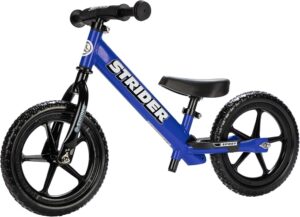
The Strider 12 Sport Balance Bike is designed to give young children a simple and confidence-building introduction to riding on two wheels. Instead of pedals and training wheels, the bike allows children to use their feet to push themselves forward while learning how to balance, steer, and control their speed. This approach can make the transition to independent cycling feel more natural because children can focus on balance before having to coordinate pedaling at the same time.
One of the biggest advantages of the Strider 12 Sport is its adjustability. With a seat height range of 11 to 17 inches (28–43 cm), it is designed to accommodate children with inseams from approximately 12 to 18 inches (31–46 cm). The adjustable seat and handlebars allow the bike to grow with the child, making it suitable for a broad age range from approximately 1 to 4 years old. This is particularly useful for parents who want a balance bike that can remain useful as their child grows rather than quickly becoming too small.
The bike also uses 12-inch foam rubber tires, eliminating the need for inflation and helping reduce maintenance. Because the tires cannot go flat, parents do not have to worry about punctures or carrying a pump when their child is riding outdoors. Combined with the bike’s lightweight steel frame, this makes the Strider 12 Sport relatively easy for a young rider to maneuver while also making it convenient for parents to carry when the ride is over.
Key Specifications
- Brand: Strider
- Bike Type: Balance bike
- Wheel Size: 12 inches
- Seat Height: 11–17 inches (28–43 cm)
- Recommended Inseam: 12–18 inches (31–46 cm)
- Recommended Age: Approximately 1–4 years
- Frame Material: Lightweight steel
- Bike Weight: 6.7 lbs. (3.0 kg)
- Tire Type: Foam rubber
- Tire Maintenance: No inflation required
- Maximum Rider Weight: 60 lbs. (27 kg)
- Assembly: Designed for easy assembly with tools included
- Adjustability: Adjustable seat and handlebars
Adjustable Design for Growing Children
A major selling point of the Strider 12 Sport is its ability to accommodate a growing child. The 11–17-inch seat-height range gives parents considerable flexibility when adjusting the bike to the rider’s size. Proper seat height is especially important on a balance bike because children need to be able to place their feet comfortably on the ground.
For a child who is just beginning to learn, having both feet within easy reach of the ground can provide greater confidence. The child can push off, glide for short distances, and place their feet down whenever they feel unstable. As their balance and riding ability improve, parents can gradually adjust the bike to suit their growing height.
The handlebars are also adjustable, helping maintain a comfortable riding position as the child grows. Rather than being limited to one fixed configuration, the bike can be adapted to different stages of the child’s development.
Lightweight 6.7-Pound Frame
At 6.7 pounds (3.0 kg), the Strider 12 Sport has a lightweight steel frame designed with young riders in mind. Weight matters considerably when choosing a first bike because a child needs to be able to control the bike rather than feeling as though the bike is controlling them.
A lighter balance bike can make it easier for a young rider to push, turn, stop, and recover from a loss of balance. It is also easier for parents to pick up and carry when a child becomes tired during an outdoor ride.
Despite its relatively low weight, the frame is made from steel, giving the bike a sturdy construction suitable for everyday childhood riding.
Never-Flat Foam Rubber Tires
The Strider 12 Sport comes with 12-inch foam rubber tires that do not require air. This is particularly convenient for parents because there is no need to regularly check tire pressure or deal with punctures and flats.
The tires are designed to provide steady riding across different types of terrain, allowing children to practice their balance and steering skills without the maintenance requirements associated with conventional pneumatic bicycle tires.
For families who frequently take their child’s balance bike to parks, sidewalks, playgrounds, or other outdoor areas, the maintenance-free design can be a significant convenience.
Designed to Build Balance and Confidence
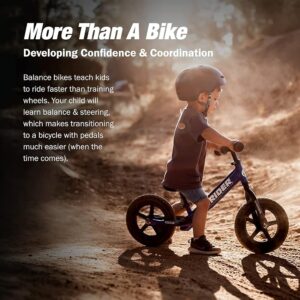
The biggest purpose of a balance bike is to allow children to learn the fundamentals of cycling without immediately having to deal with pedals. The Strider 12 Sport gives children the opportunity to practice balancing, steering, pushing, stopping, and gliding at their own pace.
A child can begin by walking the bike while sitting on the seat. Once they become more comfortable, they can push harder with their feet and gradually lift their feet from the ground for short periods. With continued practice, these short glides can become longer and more controlled.
This gradual learning process can help make riding less intimidating. Instead of expecting a young child to master multiple movements simultaneously, the balance-bike design lets them concentrate primarily on staying upright and controlling the bike.
Easy Assembly
The Strider 12 Sport is also designed with straightforward assembly in mind. The necessary tools are included, which means parents do not necessarily need to purchase additional equipment just to put the bike together.
This can be particularly helpful when the bike is being purchased as a birthday or holiday gift and needs to be assembled relatively quickly. Once assembled and properly adjusted, parents can set the seat and handlebars according to the child’s height before introducing them to the bike.
Pros
- Adjustable seat height from 11 to 17 inches
- Suitable for children approximately 1 to 4 years old
- Lightweight 6.7-pound steel frame
- 12-inch foam rubber tires never go flat
- No tire inflation or puncture maintenance required
- Adjustable seat and handlebars accommodate growing children
- Supports riders weighing up to 60 pounds
- Designed specifically for learning balance and steering
- Easy assembly with tools included
- Suitable for use across different outdoor terrains
Cons
- Children who are already comfortable with pedal bikes may quickly outgrow the need for a balance bike.
- Foam tires provide convenience and eliminate flats but have a different riding feel from traditional air-filled bicycle tires.
- The bike is primarily focused on balance training, so it does not provide the pedal-based riding experience of a conventional bicycle.
Who Is the Strider 12 Sport Best For?
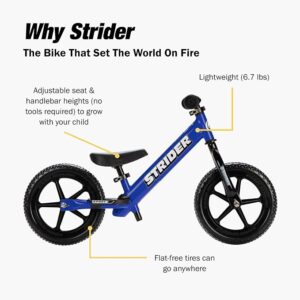
The Strider 12 Sport Balance Bike is particularly well suited to parents looking for a straightforward first bike for a young child who is still developing balance and coordination. Its adjustable dimensions make it useful for children at different stages of early riding, while the lightweight frame gives young riders a bike they can more easily maneuver themselves.
It is also a strong option for parents who prioritize low maintenance. The foam rubber tires eliminate the hassle of pumping tires or repairing punctures, while the included assembly tools make initial setup easier.
For a child who is nervous about learning to ride, the bike’s foot-powered design can also provide a gentler introduction to two-wheel riding. The child can start slowly, keep their feet on the ground, and gradually progress toward gliding as their confidence improves.
Also read: 6 Best Road Bikes For Long Distance Rides
2. woom GO 1 Balance Bike
The woom GO 1 Balance Bike is a lightweight, child-focused balance bike designed to introduce toddlers to the fundamentals of riding on two wheels. Rather than using pedals, the bike allows young riders to concentrate on balancing, steering, braking, and controlling their movement before progressing to a pedal bike. With its 12-inch wheels, lightweight aluminum frame, adjustable saddle, and ergonomically designed controls, the woom GO 1 is built around the needs of young children who are just beginning their cycling journey.
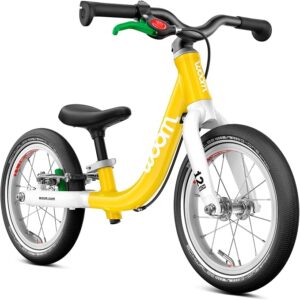
At just 6.4 pounds, the woom GO 1 is light enough for a young rider to maneuver without feeling overwhelmed by the weight of the bike. Its relatively lightweight construction is also convenient for parents who may need to carry it after a child becomes tired. The bike is intended for children approximately 18 months to 3.5 years old, with a recommended height range of 31 to 40 inches and inseam range of 10.0 to 14.4 inches.
What makes the woom GO 1 particularly interesting is that it goes beyond simply teaching balance. It incorporates a child-friendly rear hand brake and a steering limiter, giving children an opportunity to begin learning braking and controlled steering at an early age. These features can help make the transition from simply walking or gliding on a balance bike toward more confident two-wheel riding smoother.
Key Specifications
- Brand: woom
- Model: GO 1
- Bike Type: Balance bike
- Wheel Size: 12 inches
- Frame Material: Aluminum
- Color: Yellow
- Number of Speeds: 1
- Recommended Age: Approximately 18 months to 3.5 years
- Recommended Height: 31–40 inches
- Recommended Inseam: 10.0–14.4 inches
- Saddle Height: 10.4–14.4 inches
- Bike Weight: 6.4 lbs.
- Weight Limit: 110 lbs.
- Brake: Child-friendly rear hand brake
- Steering: Steering limiter
- Special Feature: Carry-on design
- Included Component: Balance bike
Superlight Design for Young Riders
One of the standout characteristics of the woom GO 1 is its 6.4-pound weight. For a toddler, the weight of a bike can have a noticeable effect on how easily they can control it. A lighter bike can make it easier to push, turn, stop, and recover when the rider loses balance.
The lightweight design can also make the learning process less physically demanding. Young riders can move the bike using their own feet rather than struggling to propel a heavy frame forward. For parents, the low weight is equally useful because carrying a child’s bike becomes much easier when the child decides they have had enough riding for the day.
The aluminum frame contributes to the bike’s lightweight construction while providing a sturdy foundation for everyday riding.
Designed Specifically for Toddlers
The woom GO 1 is intended for children approximately 18 months to 3.5 years old, making it particularly suitable for very young beginners. Instead of designing the bike as a scaled-down adult bicycle, woom focuses on dimensions and controls intended for smaller riders.
The recommended height range is 31 to 40 inches, while the ideal inseam range is approximately 10.0 to 14.4 inches. Parents should therefore consider the child’s actual height and inseam rather than relying solely on age when determining whether the bike is an appropriate fit.
The adjustable saddle, which ranges from 10.4 to 14.4 inches, allows parents to position the seat according to the child’s size and riding ability. Having the right saddle height is especially important for a balance bike because the rider needs to comfortably reach the ground with their feet.
Comfortable, Child-Friendly Riding Position
The woom GO 1 features an upright riding position intended to give young riders a clear view ahead while maintaining control. Its wide handlebars are designed to provide a comfortable grip for smaller hands and give the child greater leverage when steering.
This type of riding position can be particularly helpful during the early stages of learning. Instead of leaning aggressively forward, the child can maintain a more natural posture while using their feet to move and stabilize themselves.
As the rider becomes more confident, the upright position and wide handlebars can help them practice making controlled turns and navigating around obstacles.
Rear Hand Brake for Early Braking Skills
A particularly useful feature of the woom GO 1 is its child-friendly rear brake system. Balance bikes traditionally rely heavily on children using their feet to slow down and stop, but the GO 1 gives young riders an opportunity to start learning how to use a hand brake.
This can help introduce an important cycling skill before the child moves onto a pedal bike. The child can learn that squeezing the brake lever gradually slows the bike, giving them greater control over their speed.
Because the brake is designed specifically with young riders in mind, it is intended to be easier for small hands to operate than a conventional adult-oriented bicycle brake.
For parents planning to eventually transition their child to a pedal bike, learning basic hand braking earlier can be a useful part of the overall riding progression.
Steering Limiter for More Controlled Handling
Another notable feature is the steering limiter, which is designed to prevent excessive steering movement. For a beginner, turning the handlebars too sharply can cause the bike to become unstable.
The steering limiter helps reduce the likelihood of dramatic oversteering by limiting how far the handlebars can turn. This can give young riders a more predictable steering response while they are developing their balance and coordination.
Rather than expecting a toddler to immediately understand how much steering is appropriate, the feature provides an additional layer of control as they become accustomed to riding on two wheels.
Adjustable Saddle for a Better Fit
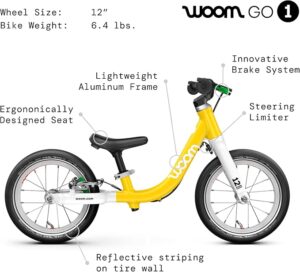
The woom GO 1 has an adjustable saddle ranging from 10.4 to 14.4 inches, allowing parents to adjust the bike as their child grows.
A proper saddle position is important for a balance bike. If the seat is too high, the child may struggle to put their feet firmly on the ground. If it is too low, the riding position may become unnecessarily cramped.
The adjustable design allows parents to find a comfortable starting position and make adjustments as the child becomes taller. Combined with the recommended 10.0–14.4-inch inseam range, this makes correct sizing easier to manage.
Helping Children Learn Balance, Steering and Braking
The primary purpose of the woom GO 1 is to introduce children to the basic skills required for independent cycling.
A young rider can begin by walking the bike while seated, gradually progressing to pushing themselves forward and lifting their feet for short glides. As their confidence increases, they can practice longer glides while learning to steer around objects and control their speed.
The addition of the rear hand brake means children can also begin learning how to stop using a bicycle’s braking system rather than relying exclusively on their feet.
This combination of balance, steering, and braking practice gives the woom GO 1 a broader learning focus than a balance bike that only concentrates on gliding.
Easy to Carry
The woom GO 1 is designed to be easy for both children and parents to handle. At 6.4 pounds, it is relatively light to carry when a toddler gets tired or decides they no longer want to ride.
This is especially useful for families who take the bike to parks, playgrounds, neighborhood paths, or other outdoor spaces. Parents can carry the bike without dealing with the bulk associated with heavier children’s bicycles.
Pros
- Lightweight 6.4-pound design
- Aluminum frame helps keep overall weight low
- Designed specifically for young riders
- Suitable for approximately 18 months to 3.5 years
- 12-inch wheels provide a suitable platform for early riding
- Adjustable saddle from 10.4 to 14.4 inches
- Child-friendly rear hand brake teaches early braking skills
- Steering limiter helps prevent excessive steering
- Wide handlebars provide a comfortable grip
- Upright riding position promotes control
- High stated weight limit of 110 pounds
- Easy for parents to carry
Cons
- The recommended age range means some children may outgrow the bike relatively quickly.
- Its toddler-focused sizing makes proper measurement of the child’s height and inseam particularly important.
Who Is the woom GO 1 Best For?
The woom GO 1 Balance Bike is best suited to toddlers who are beginning to explore two-wheeled riding and need a lightweight, easy-to-control bike. It is especially appealing to parents who want their child to learn more than basic balancing.
The addition of the rear hand brake gives young riders an opportunity to practice stopping independently, while the steering limiter helps provide a more controlled steering experience. Together, these features make the bike suitable for parents who want to introduce several fundamental cycling skills before their child moves on to a pedal bike.
It is also a strong choice for families who value portability. At just 6.4 pounds, the bike should be manageable for a toddler to handle and relatively easy for an adult to carry.
3. Radio Flyer Glide & Go Balance Bike
The Radio Flyer Glide & Go Balance Bike is a straightforward, beginner-friendly option designed to help toddlers learn the fundamentals of riding without the added complexity of pedals. Instead of focusing on pedaling from the beginning, children can concentrate on walking, gliding, balancing, steering, and developing coordination as they become more comfortable on two wheels.
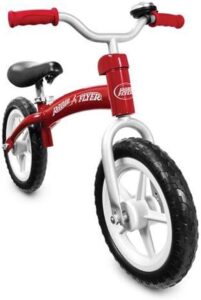
With its classic design, lightweight frame, adjustable seat, and playful ringing bell, the Glide & Go is built around making those first riding experiences enjoyable. It is recommended for children approximately 2.5 to 5 years old, giving it a useful age range for toddlers who are ready to begin developing their balance and riding confidence.
One of its biggest advantages is the tool-free adjustable seat. Parents can adjust the seat as their child grows without needing additional tools, helping maintain a more comfortable riding position over time. The bike also has a sturdy yet lightweight frame, making it easier for a young rider to maneuver while remaining practical for parents to handle.
Key Specifications
- Brand: Radio Flyer
- Model: Glide & Go Balance Bike
- Bike Type: Balance bike
- Color: Red
- Style: Discontinued – Classic
- Recommended Age: 2.5–5 years
- Maximum Rider Weight: 50 lbs.
- Assembled Dimensions: 34.3 × 16 × 20 inches
- Seat: Tool-free adjustable
- Frame: Lightweight and durable
- Pedals: None
- Special Feature: Ringing bell
Great Beginner Bike for Learning Balance
The main purpose of the Glide & Go is to provide children with an uncomplicated way to learn how to ride. Because there are no pedals, a child can concentrate on keeping the bike upright and controlling their movement without having to coordinate pedaling at the same time.
A young rider can begin by simply sitting on the bike and walking it forward with their feet. As their confidence improves, they can start gliding for short distances, gradually lifting their feet from the ground. Eventually, they can work toward longer glides while practicing steering and controlling their direction.
This gradual approach can help develop the coordination needed for future bicycle riding. Rather than expecting a child to master every cycling skill immediately, the Glide & Go allows them to progress through the basics at their own pace.
Adjustable Seat That Grows With Your Child
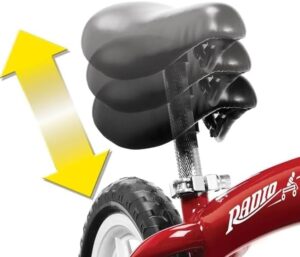
The Glide & Go features a tool-free adjustable seat, which is one of its most practical features for growing toddlers.
The bike is designed for children approximately 2.5 to 5 years old, so having an adjustable seat allows parents to modify the riding position as their child gets taller. Because no tools are required, making adjustments should be relatively straightforward.
A properly positioned seat is particularly important on a balance bike because children need to be able to place their feet comfortably on the ground. This allows them to push themselves forward and quickly regain stability whenever they feel uncertain.
The ability to adjust the seat also means parents can avoid being locked into a single riding position throughout the bike’s usable age range.
Lightweight Yet Durable Frame
The Glide & Go features a lightweight and durable frame designed to balance maneuverability with durability.
For young children, a lighter bike can be easier to push and control. A child who is still developing coordination may have difficulty managing a bicycle that feels too heavy, particularly when turning or recovering from a wobble.
At the same time, the frame is designed to withstand the normal use associated with children’s outdoor play. This combination makes the Glide & Go suitable for everyday practice sessions as children become more confident.
The lightweight design is also helpful for parents who need to pick up and carry the bike after a child becomes tired.
Fun Ringing Bell
The Glide & Go also includes a ringing bell, adding a playful element to the riding experience.
While the bell isn’t essential to learning balance, it can make riding more engaging for young children. It gives them something fun to interact with while also introducing them to a feature commonly found on bicycles.
For toddlers, making the learning experience enjoyable can encourage them to spend more time practicing. The bell therefore adds a small but appealing element to the overall beginner-bike experience.
Suitable for Ages 2.5 to 5 Years
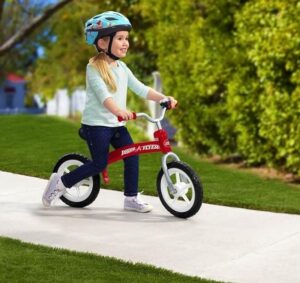
The recommended age range of 2.5 to 5 years makes the Glide & Go particularly suitable for toddlers who are ready to move beyond simply walking and running and start experimenting with two-wheel balance.
However, age should not be the only consideration when deciding whether the bike is appropriate. Children develop at different rates, so parents should also consider the child’s height, ability to comfortably reach the ground, and overall confidence on a balance bike.
The adjustable seat provides some flexibility, allowing the bike to accommodate a growing rider during its recommended age range.
Compact Dimensions
When assembled, the Glide & Go measures approximately 34.3 inches long, 16 inches wide, and 20 inches high.
Its relatively compact dimensions are appropriate for a young child’s bike and make it practical for use around the neighborhood, playground, driveway, or other suitable riding areas.
The compact design also makes the bike easier to store when it is not being used.
50-Pound Maximum Weight Capacity
The Glide & Go has a maximum weight capacity of 50 pounds. This provides sufficient capacity for the children within its intended age range while giving parents a clear specification to consider when deciding whether the bike is appropriate for their child.
Parents should always ensure that the rider falls within the manufacturer’s recommended specifications and that the child can comfortably control the bike before allowing them to ride independently.
Classic Design for Simple Riding
The Glide & Go uses a relatively straightforward approach to balance-bike design. It does not overwhelm young riders with complicated controls or unnecessary features. Instead, the focus remains on helping children learn the fundamental movements involved in riding.
The red classic styling also gives the bike a traditional children’s-bicycle appearance, while the bell adds a playful touch.
For parents who prefer a simple first bike rather than a highly specialized balance bike, this straightforward approach can be appealing.
Pros
- Pedal-free design helps children focus on balance
- Encourages walking, gliding, and coordination
- Tool-free adjustable seat grows with the child
- Designed for children approximately 2.5–5 years old
- Lightweight frame is easier for young riders to handle
- Durable construction is suitable for everyday use
- Includes a fun ringing bell
- Maximum weight capacity of 50 pounds
- Compact assembled dimensions
- Simple design suitable for beginners
Cons
- The 50-pound weight limit is lower than some competing balance bikes.
- Children outside the recommended 2.5–5-year age range may find the bike less suitable.
Who Is the Radio Flyer Glide & Go Best For?
The Radio Flyer Glide & Go Balance Bike is best suited to toddlers who are beginning their transition into two-wheel riding and need a simple way to practice balance and coordination.
It is particularly appealing for parents who want a bike that is easy to adjust and straightforward to use. The tool-free seat adjustment makes it convenient to modify the bike as the child grows, while the lightweight frame makes it easier for a young rider to maneuver.
The Glide & Go can also be a fun choice for children who respond well to playful features. The included ringing bell gives the bike an entertaining element that can make practice sessions feel more like play than formal learning.
4. Chillafish Charlie Balance Bike
The Chillafish Charlie Balance Bike is a lightweight, compact balance bike designed specifically for young children who are beginning to explore riding on two wheels. With its 10-inch wheels, lightweight metal frame, adjustable seat, and adjustable handlebars, Charlie provides a simple platform for children to practice balance, steering, coordination, and confidence before moving on to a pedal bike.
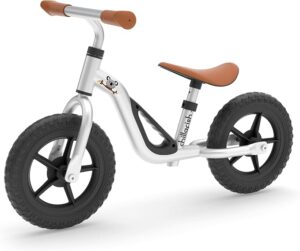
One of the bike’s biggest advantages is its exceptionally light 5.5-pound weight. A lightweight balance bike can be much easier for a toddler to push, steer, and control, particularly when they are still developing their gross motor skills. The integrated carry handle also makes it convenient for parents to pick up and carry the bike when a young rider becomes tired.
The Chillafish Charlie is designed to grow with young riders. Its adjustable seat can be positioned from 11 to 14.5 inches, while the handlebars adjust from 18.7 to 19.8 inches. The bike is intended for children approximately 18 to 48 months old, making it a particularly interesting option for younger toddlers who may find larger 12-inch balance bikes difficult to manage.
Key Specifications
- Brand: Chillafish
- Model: Charlie
- Bike Type: Balance bike
- Size: 10-inch
- Wheel Size: 10 inches
- Frame Material: Alloy steel
- Color: Silver
- Suspension: Rigid
- Recommended Age: Approximately 18–48 months
- Seat Height: 11–14.5 inches
- Handlebar Height: 18.7–19.8 inches
- Bike Weight: 5.5 lbs.
- Tire Type: EVA
- Tires: No-flat
- Special Features: Adjustable seat, adjustable handlebars, lightweight design, integrated carry handle
- Included Components: Balance bike, instruction manual, assembly tools, warranty sheet
Lightweight 5.5-Pound Construction
The most noticeable feature of the Chillafish Charlie is its 5.5-pound weight. For a young toddler, keeping the bike lightweight can make a significant difference in how easily they can control it.
A child learning to balance needs to be able to move the bike naturally beneath them. If the bike is too heavy, turning, pushing, stopping, and recovering from a wobble can become more difficult. Charlie’s lightweight construction helps reduce that burden, allowing young riders to focus more on learning the fundamentals of riding.
The lightweight design is equally useful for parents. When a toddler decides they have had enough riding, the integrated carry handle makes it easier to pick up the bike and take it home or move it to another location.
Compact 10-Inch Wheels for Young Riders
Unlike many balance bikes that use 12-inch wheels, the Chillafish Charlie uses 10-inch wheels. This compact sizing makes the bike particularly suitable for younger or smaller children who may not yet be comfortable on a larger balance bike.
For toddlers beginning their riding journey, having a bike that matches their physical size can make the learning process less intimidating. The smaller wheel size contributes to the bike’s compact proportions and makes it easier for young riders to handle.
Parents should still check their child’s measurements rather than relying solely on age, especially because children’s heights and inseams can vary considerably.
Adjustable Seat for a Growing Child
The Charlie features an adjustable seat with a height range of 11 to 14.5 inches. This gives parents the flexibility to adjust the bike as their child grows.
Having an appropriately positioned seat is particularly important on a balance bike. Young riders need to be able to comfortably reach the ground with their feet so they can push themselves forward, slow down, and regain balance whenever necessary.
The adjustable saddle allows parents to start with a comfortable position and gradually raise it as the child becomes taller. This can help extend the useful life of the bike instead of requiring a completely different bike as the child grows.
Adjustable Handlebars
The handlebars can also be adjusted from approximately 18.7 to 19.8 inches. This allows parents to create a more appropriate riding position for children at different stages of development.
Adjustable handlebars can help maintain comfortable control as the child’s height changes. They also allow parents to find a position where the child can comfortably reach and grip the handlebars while maintaining a natural posture.
Combined with the adjustable seat, the handlebar adjustment gives the Charlie a degree of flexibility that is useful for a growing toddler.
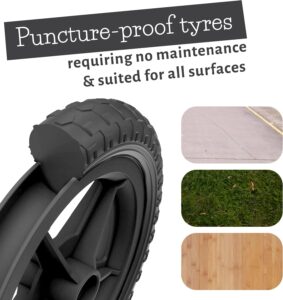
No-Flat EVA Tires
The Chillafish Charlie uses 10-inch EVA tires designed to be maintenance-free and resistant to flats.
For parents, this eliminates some of the routine maintenance associated with air-filled bicycle tires. There is no need to regularly inflate the tires or worry about a puncture leaving the child without a ride.
The no-flat design is particularly convenient for families who frequently take the balance bike to parks, playgrounds, sidewalks, or other suitable outdoor riding areas.
It also means that a toddler can be ready to ride without parents having to check tire pressure before every outing.
Integrated Carry Handle
Another practical feature is the integrated carry handle. Because young children can become tired quickly, parents may frequently find themselves carrying both the child and the bike.
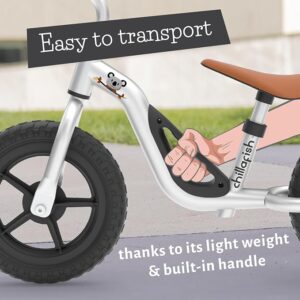
The built-in handle makes picking up and transporting Charlie easier. Combined with the bike’s 5.5-pound weight, it makes the model particularly convenient for families who travel with the bike or take it on outdoor adventures.
The handle also gives parents a convenient place to hold the bike when moving it around the house or storing it.
Designed to Build Gross Motor Skills
The Charlie is more than simply a way for children to get around. Its balance-bike design gives young riders an opportunity to develop important gross motor skills, coordination, balance, and steering control.
Children can initially walk the bike while seated, using their feet to move slowly. As they become more confident, they can begin gliding and briefly lifting their feet from the ground.
Over time, these activities can help children become more comfortable controlling their body position while moving on two wheels. This can provide a useful foundation for eventually learning to ride a pedal bike.
Suitable for Young Toddlers
The Charlie is designed for children approximately 18 to 48 months old, making it one of the more toddler-focused options on this list.
Its smaller 10-inch wheels and lightweight frame can be particularly appealing to younger riders who may not yet be ready for a larger balance bike. However, parents should still ensure that the child can comfortably reach the ground and control the bike before riding.
The combination of smaller dimensions, adjustable components, and low weight makes Charlie a strong option for introducing very young children to balance-bike riding.
Pros
- Extremely lightweight at just 5.5 pounds
- Compact 10-inch wheel design
- Suitable for young toddlers
- Adjustable seat from 11 to 14.5 inches
- Adjustable handlebars from 18.7 to 19.8 inches
- Integrated carry handle makes transportation easier
- Maintenance-free EVA tires never go flat
- Helps develop balance and gross motor skills
- Lightweight alloy-steel frame
- Includes assembly tools and instruction manual
- Designed to grow with the child
Cons
- The 10-inch wheels may be outgrown sooner than larger 12-inch balance bikes.
- The smaller frame may not be suitable for taller or older children within the broader 3-year-old age group.
Who Is the Chillafish Charlie Best For?
The Chillafish Charlie Balance Bike is best suited to younger and smaller toddlers who are beginning to learn balance and coordination. Its 10-inch wheels, 5.5-pound weight, and adjustable components make it particularly approachable for children who may find larger balance bikes difficult to maneuver.
It is also a great option for parents who prioritize portability. The combination of the lightweight frame and integrated carry handle means the bike is easy to take along on family outings, even when the child isn’t riding the entire time.
Parents looking for a simple, lightweight, no-flat balance bike for early riding practice may find Charlie particularly appealing.
Also read: 6 Best Road Bikes For Long Distance Rides
5. EGINNER Baby Balance Bike
The EGINNER Baby Balance Bike takes a slightly different approach from traditional two-wheel balance bikes by focusing specifically on very young toddlers who are just beginning to develop their balance and coordination. Designed for children approximately 12 to 24 months old, this first bike is intended to introduce young riders to the basic movements involved in cycling through walking, scooting, steering, and riding.
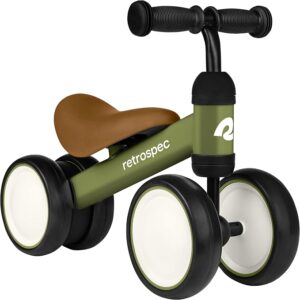
For a child who is only beginning to walk confidently, a conventional two-wheel balance bike may feel challenging. The EGINNER addresses this stage with a four-wheel design, giving toddlers a broader and more stable base while they learn how to move and control the bike. The feet-to-floor design allows children to remain close to the ground and use their feet to propel themselves forward.
The bike also focuses heavily on comfort and ease of use. It features a soft handlebar, cushioned seat, non-slip wheels, and a built-in steering limit, giving young riders a controlled environment in which to practice. With the bike arriving 95% assembled, parents can also get it ready for use with relatively little setup.
Key Specifications
- Brand: EGINNER
- Bike Type: Baby balance bike / ride-on toy
- Recommended Age: 12–24 months
- Recommended Inseam: 9–13 inches
- Maximum Rider Weight: 44 lbs. (20 kg)
- Wheel Configuration: Four wheels
- Riding Style: Feet-to-floor
- Tire Design: Quiet, non-slip wheels
- Seat: Cushioned
- Handlebars: Soft
- Steering: Built-in steering limit
- Assembly: Approximately 95% assembled
- Use: Indoor and outdoor play
- Portability: Lightweight design
Designed for Toddlers Ages 12–24 Months
The EGINNER Baby Balance Bike is aimed at a younger age group than many conventional balance bikes. It is designed for children approximately 12 to 24 months old, making it suitable as an early introduction to riding.
At this stage, many toddlers are still developing basic coordination and balance. The goal isn’t necessarily to have a child immediately glide around like an older balance-bike rider. Instead, the bike provides a way for toddlers to become familiar with sitting on a ride-on toy, moving themselves forward, steering, and controlling their direction.
This makes the EGINNER particularly interesting as a first birthday gift or first riding toy for a child who is beginning to walk and explore their surroundings.
Four-Wheel Design for Added Stability
One of the biggest differences between this model and conventional two-wheel balance bikes is its four-wheel configuration.
Instead of requiring a toddler to immediately balance on two wheels, the four-wheel design provides additional stability. Children can sit on the bike and use their feet to walk or scoot themselves forward while the wheels help keep the bike upright.
This can make the initial learning process less intimidating for very young riders. A child can concentrate on understanding how movement and steering work before progressing toward the more demanding balance skills required by a two-wheel bike.
The design is therefore particularly appropriate for toddlers who are at the beginning of their riding journey rather than children who are already proficient on a conventional balance bike.
Feet-to-Floor Design
The feet-to-floor configuration allows children to keep their feet close to the ground while riding. This gives toddlers an immediate way to propel themselves forward and regain control whenever they need to stop.
For a beginner, this can provide a greater sense of security. Instead of relying entirely on the bike to support them, children can use their own feet to determine how quickly they move.
As their coordination improves, they can gradually become more comfortable with steering and controlling their movement.
Quiet, Non-Slip Wheels
The EGINNER features quiet, non-slip wheels designed for use both indoors and outdoors.
For indoor play, quieter wheels can be particularly useful because they reduce some of the noise associated with children’s ride-on toys moving across floors. The non-scratch design is also intended to help protect indoor flooring during normal use.
For outdoor play, the non-slip surface provides grip while the child moves across suitable surfaces. This gives parents greater flexibility when deciding where their toddler can practice riding.
The ability to use the bike both indoors and outdoors also means children can continue practicing even when outdoor conditions aren’t ideal.
Soft Handlebars and Cushioned Seat
Comfort is particularly important for toddlers because an uncomfortable riding position can quickly turn a fun activity into a frustrating one.
The EGINNER addresses this with soft handlebars designed to provide a comfortable grip for small hands. The bike also includes a cushioned seat, giving the child a softer place to sit while riding.
These details may seem simple, but they can make a difference when a young child spends extended periods practicing movement and steering.
Built-In Steering Limit
The bike also incorporates a built-in steering limit to help keep the handlebars from turning excessively.
Young children are still developing their understanding of steering, and making an overly sharp turn can cause them to lose control of a ride-on toy. A steering limit provides a more controlled range of movement, allowing the child to practice directing the bike without having completely unrestricted steering.
This feature works alongside the four-wheel design to create a more stable learning environment for very young riders.
Suitable for Indoor and Outdoor Play
Another advantage of the EGINNER Baby Balance Bike is its versatility. The quiet, non-scratch wheels are designed for indoor use, while the non-slip design also supports riding outdoors.
This gives parents multiple opportunities to let their child practice. A toddler can ride around an appropriate indoor space at home or take the bike outside for supervised play in a suitable area.
Having both options can be particularly useful for young children because short, frequent practice sessions can help them gradually become more comfortable with riding.
Quick Assembly
The EGINNER arrives 95% assembled, reducing the amount of work required before a toddler can start using it.
For parents purchasing a first birthday gift or trying to introduce a young child to riding quickly, this can be a useful convenience. Rather than spending a long time putting together a complicated children’s bicycle, only limited setup is required.
The lightweight construction also makes the bike easy to move between rooms or take along on family outings.
Designed for a Toddler’s Size
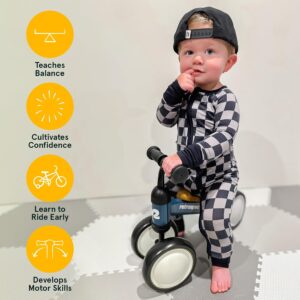
The bike is recommended for toddlers with an inseam between 9 and 13 inches and supports riders weighing up to 44 pounds (20 kg).
These measurements are useful for determining whether the bike is an appropriate fit. Since toddlers can vary significantly in size even when they are the same age, parents should consider the child’s actual measurements and physical ability rather than relying exclusively on the stated age range.
The feet-to-floor design is particularly useful because the child should be able to comfortably reach the ground while sitting on the bike.
Lightweight and Portable
The EGINNER is designed to be easy for parents to carry to places such as parks, playdates, or grandparents’ homes.
Portability can be particularly valuable with toddler products because children may want to ride for a while and then suddenly decide they would rather walk or be carried. A lightweight ride-on bike is much easier for an adult to transport when the child is no longer using it.
This makes the EGINNER a practical choice for families who want a riding toy that can easily travel with them.
Helps Build Early Riding Confidence
At this age, the purpose of a first riding toy is not simply transportation. It can also give children an opportunity to develop confidence in controlling a moving object.
The EGINNER allows toddlers to practice:
- Balance and body control
- Steering
- Coordination
- Forward movement
- Stopping through foot contact
- Spatial awareness
- Basic riding confidence
As children become more comfortable with these movements, they may be better prepared to progress toward a traditional two-wheel balance bike and eventually a pedal bicycle.
Pros
- Designed specifically for young toddlers aged 12–24 months
- Four-wheel design provides additional stability
- Feet-to-floor configuration allows easy scooting and stopping
- Helps develop early balance and coordination
- Quiet, non-scratch wheels suitable for indoor floors
- Non-slip wheels provide grip outdoors
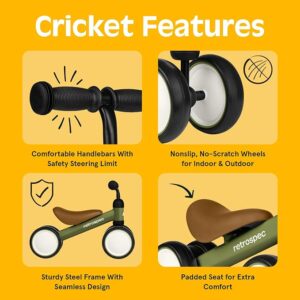
- Soft handlebars provide a comfortable grip
- Cushioned seat improves riding comfort
- Built-in steering limit helps provide controlled handling
- Arrives approximately 95% assembled
- Supports up to 44 pounds (20 kg)
- Suitable for children with a 9–13-inch inseam
- Lightweight and easy for parents to carry
- Suitable for indoor and outdoor play
Cons
- The four-wheel design focuses more on early stability than the two-wheel balancing skills required for a traditional balance bike.
- Its 12–24-month age range means older 3-year-olds may outgrow it quickly.
Who Is the EGINNER Baby Balance Bike Best For?
The EGINNER Baby Balance Bike is best suited to very young toddlers who are just beginning to walk and explore riding toys. Its four-wheel construction and feet-to-floor design make it considerably more approachable for a child who isn’t ready to balance independently on two wheels.
It is particularly useful for parents looking for a first birthday gift that encourages active play while introducing basic concepts such as steering, coordination, and controlled movement.
Families who want something that can be used both inside and outside may also appreciate the quiet, non-scratch wheels and portable design.
6. Bixe 12-Inch Balance Bike
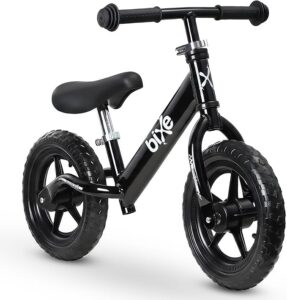
The Bixe 12-Inch Balance Bike is a lightweight, straightforward option designed to help children learn the fundamentals of cycling before introducing pedals. By removing the pedals from the equation, the bike allows young riders to focus on two of the most important skills involved in cycling: balance and steering. Once children become comfortable controlling their body and the bike, transitioning to a pedal bike can feel more natural.
Designed for children approximately 3 to 5 years old, the Bixe balance bike is particularly well suited to young riders who are ready to move beyond basic ride-on toys and begin developing more independent cycling skills. Its 12-inch wheels and aluminum frame provide a relatively lightweight platform, while the bike weighs just 4 pounds (1.8 kg).
Another advantage is the bike’s simple setup. It arrives partially assembled, with the wheels already securely attached. Parents primarily need to position the seat and handlebars and secure them using the included wrench. This makes it a convenient option for families who want to get their child’s first balance bike ready without a lengthy assembly process.
Key Specifications
- Brand: Bixe
- Bike Type: Balance bike
- Color: Black
- Wheel Size: 12 inches
- Frame Material: Aluminum
- Frame Weight: Approximately 4 lbs. (1.8 kg)
- Recommended Age: Approximately 3–5 years
- Suspension: Rigid
- Brake Style: Coaster
- Included Components: Seat and training wheels
- Size: 12 inches
- Theme: Kids
- Assembly: Partially assembled
- Included Tool: Wrench
Designed to Teach Balance Before Pedaling
The Bixe takes the fundamental approach of a balance bike: learn to balance and steer first, then progress toward pedaling.
Because there are no pedals requiring constant coordination, children can concentrate on keeping the bike upright and controlling its direction. They can begin by walking the bike with their feet, then gradually move toward scooting and gliding.
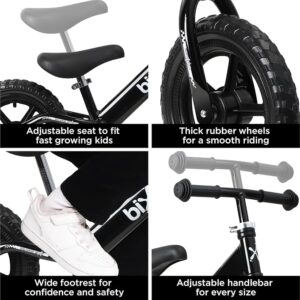
As the child’s confidence develops, they can practice lifting their feet from the ground for increasingly longer periods. This gives them an opportunity to understand how balance works naturally rather than relying on training wheels to keep the bike upright.
For children who are approaching their first pedal bike, this can provide a useful foundation for developing independent riding skills.
Suitable for Children Ages 3 to 5
The Bixe balance bike is designed for children approximately 3 to 5 years old, making it particularly relevant to the target age of this article.
At this stage, many children are physically ready to begin practicing two-wheel balance and steering. However, children develop at different rates, so parents should still consider their child’s size, confidence, and ability to reach the ground comfortably.
The 12-inch wheel size provides a larger platform than toddler-focused 10-inch balance bikes, making it more appropriate for many preschool-age riders.
Extremely Lightweight 4-Pound Design
One of the strongest features of this Bixe model is its remarkably low weight. At approximately 4 pounds (1.8 kg), it is considerably lighter than many children’s bikes.
This can make a noticeable difference for a young rider. A lightweight bicycle is easier to push, turn, lift, and control, particularly when the child is still learning how to coordinate their movements.
If the bike begins to tip, the child may also have an easier time correcting the movement because they are not attempting to control a heavy frame.
The low weight is equally convenient for parents. Carrying a 4-pound bike to and from the park is considerably easier than transporting a heavier children’s bicycle.
Aluminum Frame
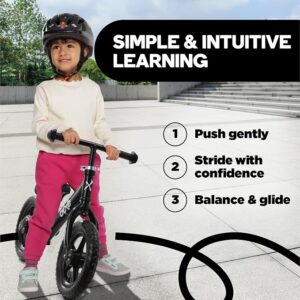
The Bixe uses an aluminum frame, helping achieve its low overall weight while providing a durable structure for young riders.
Aluminum is particularly useful in children’s bikes where keeping weight down is important. A lighter frame means more of the child’s effort can go toward riding rather than simply moving the bike.
According to the supplied product information, the balance bike has also been tested for durability, with clamps designed to be tamper-resistant and washers fitted to both wheels.
These construction details are intended to provide additional security during normal use.
12-Inch Wheels
The bike features 12-inch wheels, making it a good middle ground between very small toddler balance bikes and larger children’s bicycles.
The wheel size is appropriate for the product’s intended 3–5-year-old age range, although the correct fit ultimately depends on the individual child’s height and inseam.
For a child who has outgrown a 10-inch toddler bike but isn’t quite ready for a larger pedal bicycle, a 12-inch balance bike can provide a useful intermediate step.
Simple Assembly
The Bixe arrives partially assembled, which can save parents time during setup.
The wheels are already securely attached, while the remaining setup involves positioning the seat and handlebars and securing them with the included wrench.
This straightforward assembly process can be particularly convenient when the bike is purchased as a birthday gift or when parents want to get their child riding without spending a long time assembling the product.
Focus on Balance and Steering
The Bixe is designed to remove some of the complexity associated with learning to ride a conventional bicycle.
Without pedals being the primary focus, children can spend their early practice sessions learning:
- How to maintain balance
- How to steer
- How to control their speed
- How to stop safely
- How to coordinate their movements
- How to glide independently
These skills can eventually make the transition to a pedal bike less intimidating.
The goal is not simply to teach children how to move forward, but to help them understand how their movements affect the bike.
Lightweight Design for Independent Handling
The bike’s 4-pound weight also supports independent handling. Young children can more easily move the bike themselves rather than relying on an adult whenever they need to reposition it.
This can be useful when practicing in a driveway, yard, playground, or other suitable riding area. The child can walk the bike, turn it around, and reposition it as they develop greater confidence.
The lightweight construction can also make the experience feel less physically demanding during longer practice sessions.
Durable Construction for Everyday Use
Although the bike is lightweight, the supplied specifications emphasize durability. Each clamp is designed to be tamper-proof, while both wheels feature washers.
These construction details are intended to provide a secure and durable riding platform for children who are learning and may occasionally wobble or tip the bike.
For parents, this combination of low weight and durability is useful because a child’s first bike can experience plenty of everyday handling beyond simply riding.
Pros
- Designed for children approximately 3–5 years old
- 12-inch wheels are suitable for preschool-age riders
- Extremely lightweight at just 4 pounds (1.8 kg)
- Aluminum frame keeps overall weight low
- Helps children develop balance and steering before pedaling
- Durable construction designed for regular use
- Tamper-proof clamps provide added security
- Wheels include washers
- Arrives partially assembled
- Wheels are already securely attached
- Included wrench simplifies final assembly
- Easy for parents to carry
- Available in a simple black finish
Cons
- The product information lists training wheels among the included components, which may make the configuration less straightforward than a traditional pedal-free balance bike.
- Its 3–5-year target range means children may eventually need a larger bicycle as they grow.
Who Is the Bixe 12-Inch Balance Bike Best For?
The Bixe 12-Inch Balance Bike is best suited to children around 3 to 5 years old who are beginning to learn independent cycling skills. Its larger 12-inch wheels and lightweight aluminum frame make it particularly appropriate for preschool-age riders who may already be too big for smaller toddler balance bikes.
It is also a good option for parents who prioritize low weight and easy setup. At only 4 pounds, the bike is exceptionally easy for both children and adults to handle.
Parents looking for a simple introduction to balance and steering before moving their child onto a pedal bike may find the Bixe especially appealing.
7. Yvolution Y Velo Senior Balance Bike
The Yvolution Y Velo Senior Balance Bike is designed for children who are ready to take their balance and coordination skills to the next level. Rather than introducing pedals and training wheels immediately, the Y Velo Senior allows children to concentrate on the fundamental skills needed for cycling, including balance, steering, coordination, and motor control.
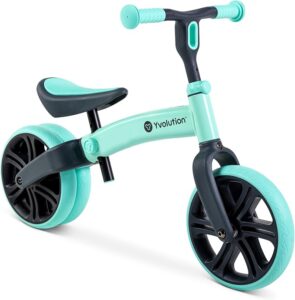
Designed for children approximately 3 to 6 years old, this balance bike is built to grow alongside the child. Its adjustable seat and handlebar heights allow parents to modify the riding position as their child grows, with a seat height ranging from 13.3 to 18 inches. The bike can accommodate riders weighing up to 55 pounds, giving it a useful lifespan across several early riding stages.
The Y Velo Senior also takes a confidence-first approach to learning. Its larger wheels, increased ground clearance, and puncture-proof rubber tires are intended to make riding easier on different surfaces, including areas with some unevenness. Combined with its lightweight aluminum construction and vibrant pink and green color options, it offers a balance bike that is designed to be both practical and appealing to young riders.
Key Specifications
- Brand: Yvolution
- Model: Y Velo Senior
- Bike Type: Balance bike
- Recommended Age: Approximately 3–6 years
- Color Options: Pink and green
- Frame Material: Aluminum
- Suspension: Rigid
- Seat Height: 13.3–18 inches
- Maximum Rider Weight: 55 lbs
- Wheel Design: Larger wheels with higher ground clearance
- Tires: Rubber, puncture-proof
- Brake Style: Coaster
- Special Feature: Training wheel listed in product specifications
- Included Components: Training wheel listed
- Size: One size
- Adjustability: Adjustable seat and handlebars
Designed to Build Balance, Coordination and Confidence
The Y Velo Senior is built around the idea that children can learn cycling skills naturally by first mastering balance.
Instead of requiring a child to coordinate pedals, balance, and steering simultaneously, the balance-bike design allows them to focus on controlling the bike and keeping themselves upright. As their confidence grows, they can gradually begin gliding for longer distances.
This approach can help children develop several important riding skills, including:
- Balance
- Coordination
- Steering
- Motor skills
- Strength
- Confidence
- Body control
For a 3-year-old who is just beginning to explore independent cycling, this can make the learning process feel less overwhelming.
Designed to Grow With Children
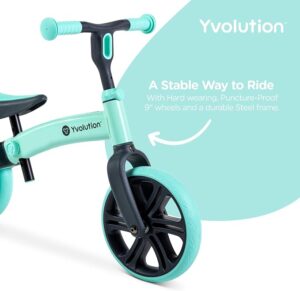
One of the standout features of the Y Velo Senior is its adjustable design.
Both the seat and handlebars can be adjusted, allowing parents to change the riding position as their child grows. The seat can be positioned between 13.3 and 18 inches, providing a relatively broad adjustment range for a balance bike.
This is particularly useful for a product designed for children from approximately 3 to 6 years old. Instead of buying a smaller bike that a child quickly outgrows, parents can adjust the fit over time.
The bike supports riders weighing up to 55 pounds, giving it additional room for growing children.
A Balance Bike Without Traditional Training Wheels
The product information emphasizes a major advantage of balance-bike riding: children can prepare for a pedal bicycle without depending on traditional training wheels.
Training wheels can keep a bicycle upright, but they don’t require children to actively develop the same balancing skills needed when riding on two wheels. A balance bike takes a different approach by allowing the child to learn how to maintain their own balance.
The Y Velo Senior therefore acts as a bridge between early riding and eventually moving onto a conventional pedal bike.
As children become comfortable lifting their feet and gliding, they can begin to understand how their body position affects the bike. This can make the eventual transition to a pedal bicycle feel much more familiar.
Larger Wheels for Easier Riding
The Y Velo Senior uses larger wheels and increased ground clearance, which are designed to make riding easier and more stable across different surfaces.
The additional ground clearance can be particularly useful when children ride outdoors, where the surface may not always be perfectly smooth.
Rather than being restricted to completely flat indoor flooring, the bike is designed with outdoor play in mind. The larger wheels can help the bike move over minor changes in the riding surface while maintaining a comfortable riding position.
Puncture-Proof Rubber Tires
Another useful feature is the inclusion of rubber puncture-proof wheels.
For parents, puncture-resistant tires can reduce one of the common maintenance concerns associated with children’s bicycles. There is less need to worry about a child being unable to continue riding because of an ordinary tire puncture.
The tires are also designed to support the bike’s outdoor-oriented construction, making the Y Velo Senior suitable for supervised riding in appropriate outdoor areas.
Built for Uneven Surfaces
Children don’t always choose perfectly smooth surfaces when they are learning to ride. Driveways, playgrounds, sidewalks, and outdoor paths can contain small bumps or changes in terrain.
The Y Velo Senior’s larger wheels and higher ground clearance are intended to make these conditions easier to navigate.
This doesn’t mean the bike should be used on dangerous or excessively rough terrain, but the design gives young riders greater flexibility for ordinary outdoor play.
For a child learning balance, having a bike that can handle normal changes in the riding surface can help keep practice sessions enjoyable.
Aluminum Frame
The Y Velo Senior features an aluminum frame, providing a lightweight structural foundation for the bike.
For young children, weight can have a significant effect on how easy a bicycle feels to control. A bike that is too heavy can make steering, turning, stopping, and recovering from a wobble more difficult.
The aluminum construction contributes to a design intended for young riders while still supporting the bike’s durability requirements.
Adjustable Seat and Handlebar Height
The ability to adjust both the seat and handlebars gives parents greater control over the child’s riding position.
A properly positioned seat can allow the child to place their feet comfortably on the ground while learning. As the child grows and develops greater confidence, the seat can be raised.
The 13.3–18-inch seat-height range is particularly useful because it provides several adjustment points throughout the bike’s intended age range.
This adjustability also makes it easier to find a riding position that feels comfortable rather than forcing every child into the same fixed configuration.
Vibrant Pink and Green Colors
The refreshed Y Velo Senior is available in pink and green, giving children colorful options that can make the bike feel more personal.
While appearance doesn’t determine how well a balance bike teaches riding skills, having a design a child likes can make them more excited about using the bike.
For parents purchasing a first balance bike as a birthday or special gift, the vibrant color choices add another appealing element.
Built for Confidence and Motor Development
Learning to ride isn’t just about transportation. For young children, cycling can also provide an opportunity to develop physical coordination and confidence.
The Y Velo Senior encourages children to control the bike themselves. They need to understand how leaning, steering, and foot placement affect movement.
As they become more comfortable, they can gradually increase their speed and gliding distance. Each successful ride can reinforce their confidence and encourage them to continue practicing.
This makes the bike useful not only as a cycling-learning tool but also as an activity that encourages active outdoor play.
Pros
- Suitable for children approximately 3–6 years old
- Supports riders up to 55 lbs
- Adjustable seat and handlebars
- Seat height adjusts from 13.3–18 inches
- Aluminum frame
- Larger wheels designed for easier riding
- Higher ground clearance for outdoor surfaces
- Puncture-proof rubber tires
- Helps develop balance and coordination
- Encourages motor-skill development
- Helps build riding confidence
- Designed to reduce reliance on traditional training wheels
- Available in vibrant pink and green
- Designed to grow with the child
- Suitable for outdoor play
Cons
- The bike has a rigid suspension, so it does not provide suspension-based shock absorption.
- The one-size design may not provide the same fit flexibility as balance bikes available in multiple frame sizes.
Who Is the Yvolution Y Velo Senior Best For?
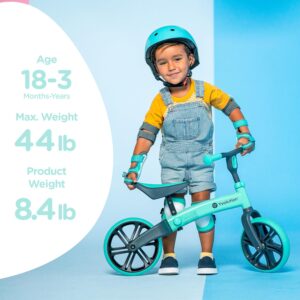
The Yvolution Y Velo Senior Balance Bike is best for children around 3 to 6 years old who are ready to develop stronger balance, coordination, and steering skills before transitioning to a pedal bike.
It is particularly appealing for parents who want a balance bike that can remain useful as their child grows. The adjustable 13.3–18-inch seat height, adjustable handlebars, and 55-pound weight capacity give the bike room to accommodate a growing rider.
It is also a strong option for families who expect their child to ride outdoors. The larger wheels, increased ground clearance, and puncture-proof rubber tires make it better suited to everyday outdoor riding than a balance bike designed exclusively for smooth indoor surfaces.
Also read: 6 Best Road Bikes For Long Distance Rides