There is something wonderfully different about seeing a bird through a good pair of binoculars. A distant eagle suddenly reveals the detail in its feathers, a colorful sunbird becomes much easier to identify, and a tiny bird hidden among branches can turn into the highlight of an entire morning outdoors. Whether you are exploring a forest trail, watching birds from your backyard, visiting a national park, or simply enjoying nature from a quiet viewpoint, the right binoculars can make the experience feel much more immersive.
Finding the Best Binoculars for Bird Watching, however, is not simply about choosing the pair with the highest magnification. Bird watching often involves tracking fast-moving subjects, identifying subtle colors and markings, and observing birds in changing lighting conditions. A binocular that provides a bright, sharp image while remaining comfortable to hold can make a much bigger difference than specifications alone might suggest. Factors such as objective lens size, field of view, close-focus distance, optical clarity, weight, waterproofing, and overall build quality can all influence how enjoyable your birding experience will be.
For beginners, choosing between different binocular sizes and magnification levels can also be confusing. Compact binoculars may be lightweight and convenient for travel, while larger models can provide brighter images and better performance in lower light. Some birders may prioritize portability because they spend hours hiking, while others may prefer a more substantial pair designed for detailed observation from a stationary position.
In this guide, we have brought together 7 of the best binoculars for bird watching, focusing on options suitable for different types of birders and outdoor activities. These picks are designed to help you compare important features such as magnification, objective lens diameter, optical performance, durability, portability, and ease of use. Whether you are a beginner discovering birding for the first time or an experienced wildlife enthusiast looking to upgrade your equipment, this list will help you find a pair that brings the fascinating world of birds closer to you.
From a tiny bird perched on a distant branch to a magnificent bird of prey gliding across the sky, the right binoculars can transform a quick glimpse into a memorable observation. Let’s explore the top options and find the Best Binoculars for Bird Watching for your next adventure.
7 Best Binoculars for Bird Watching – Top Picks for Birding, Wildlife & Nature Observation
1. Nikon Monarch M5 8×42 Binoculars
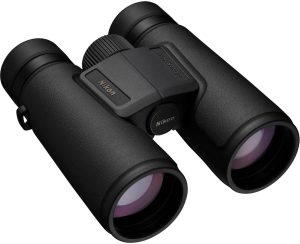
The Nikon Monarch M5 8×42 Binoculars are designed for bird watchers, wildlife enthusiasts, and outdoor explorers who want clear, detailed views without sacrificing comfort or portability. Featuring 8x magnification and 42 mm objective lenses, these binoculars offer a practical balance between image detail, brightness, and ease of use. Whether you are observing colorful birds perched among tree branches, following a flock across an open field, or exploring a forest trail, the Monarch M5 is built to help bring distant subjects into clearer view.
One of the standout features of the Nikon Monarch M5 is its Extra-low Dispersion (ED) glass, which helps minimize chromatic aberration, a common optical issue that can produce unwanted color fringes around objects. By reducing these distortions, the binoculars are designed to deliver sharper images with more natural-looking colors. This is particularly useful for bird watching, where subtle differences in feather patterns, markings, and coloration can help distinguish between similar species.
The binoculars also feature dielectric high-reflective multilayer prism coatings that enhance light transmission, helping produce bright, natural-looking images in a variety of outdoor conditions. This can be beneficial when watching birds beneath forest canopies, exploring shaded habitats, or observing wildlife during the softer light of early morning and late afternoon. Their broad field of view also makes it easier to locate birds and follow their movements without constantly readjusting the binoculars.
Beyond their optical performance, the Nikon Monarch M5 8×42 is designed for dependable outdoor use. Its waterproof, fogproof, nitrogen-purged construction helps protect the internal optics from moisture and fogging, while the rubber-armored exterior provides a secure grip and additional resistance to everyday knocks. Adjustable turn-and-slide eyecups also accommodate different viewing preferences, including those of eyeglass wearers.
Overall, the Nikon Monarch M5 8×42 Binoculars stand out as a versatile option for birders who want reliable optical clarity, comfortable handling, and a durable design for regular outdoor observation.
Key Specifications
-
-
-
-
-
Objective Lens Diameter: 42 mm
-
Optical Glass: Extra-low Dispersion (ED) glass
-
Prism Coatings: Dielectric high-reflective multilayer coatings
-
Field of View: Wide field of view designed for tracking birds and wildlife
-
Close-Focus Distance: Approximately 8.2 feet
-
-
Fogproof Construction: Yes, nitrogen-purged housing
-
Housing Protection: O-ring seals and rubber-armored exterior
-
Eyecups: Adjustable turn-and-slide design
-
Primary Uses: Bird watching, wildlife observation, travel, nature walks, and outdoor exploration
Note: Exact weight, dimensions, eye relief, and field-of-view measurements may vary by specification source or listing. Check the specific Amazon product page before publishing those figures.
Key Features
Extra-low Dispersion (ED) Glass for Clearer Images
One of the most important features of the Nikon Monarch M5 is its use of Extra-low Dispersion glass. In binocular optics, chromatic aberration can cause colored fringes to appear around high-contrast objects, especially when viewing dark birds against a bright sky. These color distortions can affect the perceived sharpness of fine details.
The ED glass in the Monarch M5 is designed to minimize this problem, helping produce high-resolution images with more accurate color reproduction. For bird watchers, this can make it easier to appreciate intricate feather patterns, distinguish markings, and observe the natural colors of birds in their surroundings.
Whether you are watching a brilliantly colored bird in a garden or examining a distant raptor in flight, the ED optical system is an important part of the binoculars’ appeal.
8x Magnification for Comfortable Bird Watching
The Monarch M5 provides 8x magnification, meaning distant subjects appear approximately eight times closer than they would to the unaided eye under comparable viewing conditions.
This magnification level is particularly practical for bird watching because it offers a useful amount of detail without making the image excessively difficult to keep steady. Higher magnification can make distant birds appear larger, but it can also amplify hand movements and make moving subjects harder to track.
With 8x magnification, users can scan trees, follow birds moving between branches, and observe wildlife across open spaces with a comfortable balance of reach and stability. It is a versatile configuration for beginners and experienced birders alike.
42 mm Objective Lenses for Bright, Detailed Viewing
The binoculars feature 42 mm objective lenses, which gather light before it reaches the viewer’s eyes. This lens size is popular among bird watchers because it balances light-gathering capability with manageable overall size.
The larger objective lenses can help maintain a bright image when observing birds in shaded woodland, beneath thick foliage, or during early-morning outings. Combined with the binoculars’ optical coatings, they are designed to provide clear, natural-looking views across a range of outdoor lighting conditions.
Although objective lens size alone does not determine image brightness, the 42 mm configuration makes the Monarch M5 a practical choice for people who want binoculars suitable for both daylight birding and less brightly lit environments.
Dielectric Prism Coatings for Improved Light Transmission
Nikon incorporates dielectric high-reflective multilayer coatings on the prisms to improve light reflection and transmission through the optical system. These coatings are intended to help preserve brightness and support accurate color reproduction.
This feature is useful when observing birds against complex backgrounds, such as green foliage, dark tree trunks, or shadowed branches. A bright, well-defined image can make it easier to distinguish the subject from its surroundings.
For nature enthusiasts who regularly move between open landscapes and shaded habitats, these coatings contribute to the binoculars’ all-around viewing capability.
Wide Field of View for Tracking Moving Birds
Bird watching often requires more than simply magnifying a stationary subject. Birds can take flight unexpectedly, dart between branches, or move rapidly across the sky. A wider field of view helps users locate these subjects and keep them within the viewing area.
The Nikon Monarch M5 8×42 is designed with a broad field of view that supports comfortable scanning and tracking. This can be especially valuable when observing flocks, following birds in flight, or searching for small species hidden among vegetation.
The 8x magnification also complements this purpose by making it easier to maintain a broad view of the surroundings while still seeing useful details.
Close-Focus Capability for Nearby Wildlife
The Monarch M5 can focus on subjects as close as approximately 8.2 feet, allowing users to observe nearby birds and other small wildlife in greater detail.
This is useful for garden birding, woodland walks, and nature observation, where a bird may land on a branch just a few feet away. Rather than being limited to distant subjects, users can also examine nearby details such as feather textures, eye markings, and beak shapes.
The close-focus capability adds versatility for people who enjoy observing butterflies, insects, and other small natural subjects alongside birds.
Smooth Central Focusing for Quick Adjustments
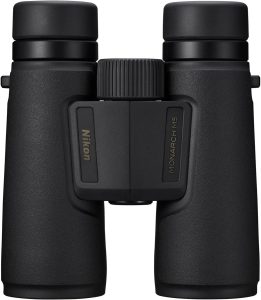
The large central focus knob allows users to adjust sharpness without needing to make complicated changes to the binoculars. This is particularly important in bird watching because viewing opportunities can be brief.
For instance, if a bird moves from a nearby branch to a more distant tree, the central focus mechanism allows the viewer to make a quick adjustment. Its smooth operation is intended to support precise focusing while reducing the effort involved in switching between subjects at different distances.
This straightforward design makes the binoculars approachable for beginners while remaining convenient for experienced birders who need to respond quickly to changing scenes.
Waterproof and Fogproof Construction
Outdoor conditions can change unexpectedly, especially during long bird-watching trips. Morning dew, light rain, humidity, and changes in temperature can all affect equipment.
The Monarch M5 features a waterproof, fogproof housing with nitrogen purging and O-ring seals. These construction details help prevent moisture from entering the optical system and reduce internal fogging caused by temperature changes.
This protection makes the binoculars suitable for a variety of outdoor environments, from damp woodland trails to nature reserves and open countryside. However, users should still follow Nikon’s care instructions and avoid assuming that waterproof construction makes the binoculars suitable for every water-related activity.
Rubber-Armored Body for Grip and Durability
The binoculars feature a rubber-armored exterior designed to improve handling and help protect the body from everyday knocks. This is useful when walking over uneven ground, moving through woodland, or carrying the binoculars during extended outdoor excursions.
The textured exterior also helps provide a secure grip, which can be particularly reassuring when handling the binoculars with damp hands. Although the protective body helps with durability, careful storage and handling remain important for maintaining optical performance over time.
Adjustable Eyecups for Viewing Comfort
The turn-and-slide eyecups allow users to adjust the distance between their eyes and the binoculars’ eyepieces. This helps accommodate different facial features and viewing preferences.
For people who wear glasses, adjustable eyecups can make it easier to find a comfortable viewing position while maintaining access to the visible image. This is especially valuable during extended bird-watching sessions, when an uncomfortable viewing position can become tiring.
The ability to adjust the eyecups also makes the binoculars more adaptable for different users who may share the same pair.
Technology & Special Features
The Nikon Monarch M5 8×42 combines optical engineering with practical features intended to support reliable outdoor viewing. Its ED glass, dielectric prism coatings, and 8×42 configuration work together to provide detailed images, natural-looking colors, and useful performance across different bird-watching environments.
The ED glass helps control chromatic aberration, while the prism coatings support light transmission through the optical system. The 42 mm objective lenses provide useful light-gathering capability, and the 8x magnification makes the binoculars manageable for handheld use. Together, these characteristics create a versatile optical setup for observing birds at varying distances.
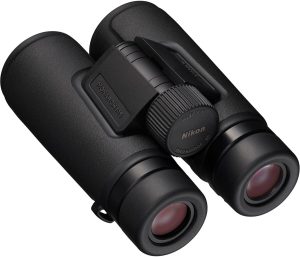
The physical construction is equally important. Nitrogen purging and O-ring seals help protect against moisture and internal fogging, while the rubber-armored body supports grip and everyday durability. The adjustable eyecups and smooth central focusing mechanism further improve ease of use.
Rather than concentrating on one specialized function, the Monarch M5 combines several useful characteristics into a general-purpose bird-watching binocular. This makes it appealing to users who want a dependable option for regular nature observation without needing separate binoculars for every outdoor activity.
Best Uses
The Nikon Monarch M5 8×42 Binoculars are particularly suited to:
-
Bird watching: The 8x magnification and wide field of view help users locate birds, follow their movements, and observe their markings.
-
Forest and woodland observation: The 42 mm objective lenses and coated optics support bright, detailed viewing in shaded habitats.
-
Bird identification: ED glass helps reduce color fringing, which can improve the clarity of feather details and distinguishing features.
-
Backyard birding: The close-focus capability is useful for observing birds at feeders, on nearby branches, and around gardens.
-
Wildlife observation: The versatile magnification and optical design make the binoculars suitable for observing animals beyond bird species.
-
Nature walks and hiking: The rubber-armored body and practical 8×42 configuration make them a useful companion for outdoor exploration.
-
Changing weather conditions: Waterproof and fogproof construction helps protect the binoculars during damp or humid outings.
-
Users who wear glasses: Adjustable turn-and-slide eyecups help accommodate different viewing positions, including those of eyeglass wearers.
Pros & Cons
Pros
-
ED glass helps reduce chromatic aberration and color fringing.
-
8x magnification offers a practical balance between detail and handheld stability.
-
42 mm objective lenses provide useful light-gathering capability.
-
Dielectric prism coatings support light transmission and natural-looking colors.
-
Wide field of view helps with locating and tracking moving birds.
-
Close-focus distance of approximately 8.2 feet supports nearby nature observation.
-
Smooth central focus knob makes sharpness adjustments convenient.
-
Waterproof and fogproof construction supports outdoor use.
-
Rubber-armored exterior improves grip and helps protect against everyday knocks.
-
Adjustable eyecups accommodate different viewing preferences.
Cons
-
8x magnification may not provide as much reach as 10x binoculars when observing very distant birds across open landscapes.
-
The 42 mm objective lenses may be less convenient for ultralight travel than smaller compact binoculars, particularly during long hikes.
Why We Selected It
The Nikon Monarch M5 8×42 Binoculars earn their place in this guide because they combine several qualities that matter most to bird watchers: clear optics, natural-looking colors, comfortable magnification, useful close-focus capability, and dependable outdoor construction.
Their ED glass is particularly appealing to birders who want to examine subtle markings and feather details, while the 8×42 configuration offers a practical balance for scanning wide areas and tracking birds by hand. Features such as the broad field of view, smooth central focus knob, and adjustable eyecups further support comfortable observation during extended outings.
Durability is another reason to consider this model. The waterproof and fogproof housing, nitrogen purging, O-ring seals, and rubber-armored exterior are designed to help the binoculars withstand the demands of regular outdoor use. These qualities make them suitable for everything from casual backyard birding to visits to forests, wetlands, and wildlife reserves.
For our 7 Best Binoculars for Bird Watching – Top Picks for Birding, Wildlife & Nature Observation guide, the Nikon Monarch M5 8×42 represents a strong all-around option for readers who value optical clarity, ease of use, and versatility. It is particularly worth considering for birders who want one dependable pair for observing nearby birds, tracking movement across open spaces, and enjoying the finer details of the natural world.
Also read: 8 Best Binoculars For Wildlife Viewing
2. Vortex Diamondback HD 8×42 Binoculars
The Vortex Diamondback HD 8×42 Binoculars are designed for bird watchers, wildlife enthusiasts, and outdoor adventurers who want dependable optical performance in a rugged, comfortable-to-use package. Featuring 8x magnification and 42 mm objective lenses, these binoculars offer a useful balance between image detail, light-gathering capability, and handheld stability. Whether you are scanning treetops for small birds, watching waterbirds along a lake, or following wildlife across an open landscape, the Diamondback HD is built to help you observe distant subjects with greater clarity.
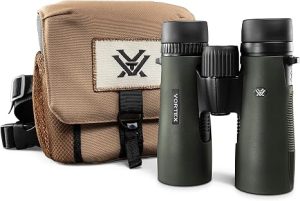
One of the model’s key strengths is its high-definition optical system. Vortex uses selected glass elements designed to improve resolution, reduce chromatic aberration, and preserve natural color reproduction. These characteristics are particularly valuable in bird watching, where subtle differences in feather patterns, body markings, and coloration can help distinguish one species from another. Combined with fully multi-coated lenses and dielectric prism coatings, the binoculars are designed to deliver bright, sharp, and color-accurate images across a range of outdoor conditions.
The Diamondback HD also emphasizes practical usability. Its adjustable twist-up eyecups accommodate viewing with or without eyeglasses, while the central focus wheel allows both barrels to be focused together. A separate diopter adjustment on the right eyepiece helps compensate for differences between the user’s eyes, making it easier to achieve a clear image. These adjustments are particularly useful when switching between birds at different distances or sharing the binoculars with another person.
Durability is another important part of the design. The rubber-armored exterior provides a secure, nonslip grip, while argon purging and O-ring seals help protect the internal optics against moisture and fogging. The exterior lenses also feature an Armortek protective coating designed to resist scratches, oil, and dirt. Additionally, the binoculars are tripod-adaptable and include a GlassPak harness, giving users more flexibility when carrying or supporting them during longer outdoor excursions.
Overall, the Vortex Diamondback HD 8×42 Binoculars are a compelling option for birders who want a versatile combination of optical clarity, comfortable handling, weather-resistant construction, and practical accessories. They are especially worth considering for users who spend considerable time outdoors and want binoculars that can support regular bird watching without being overly specialized.
Key Specifications
-
-
-
-
-
Objective Lens Diameter: 42 mm
-
Optical Design: High-definition optical system with selected glass elements
-
Lens Coatings: Fully multi-coated lenses
-
Prism Coating: Dielectric coating
-
Exterior Lens Protection: Armortek protective coating
-
Focusing System: Central focus wheel
-
Diopter Adjustment: Located on the right eyepiece
-
Eyecups: Adjustable twist-up and twist-down design
-
Waterproofing: Water-resistant construction using O-ring seals
-
Fogproof Performance: Argon-purged optical system
-
Exterior Protection: Rubber-armored body
-
Mounting Compatibility: Tripod-adaptable
-
Included Accessory: GlassPak harness
-
Warranty: Vortex VIP Warranty, subject to its terms and exclusions
-
Primary Uses: Bird watching, wildlife observation, nature walks, hiking, and general outdoor viewing
Key Features
High-Definition Optics for Clear Bird Identification
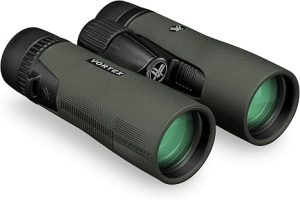
A major attraction of the Vortex Diamondback HD is its high-definition optical system, which uses selected glass elements to improve image resolution, reduce chromatic aberration, and support accurate color reproduction.
Chromatic aberration can appear as unwanted colored fringes around objects, particularly when a dark bird is viewed against a bright sky or when sunlight creates strong contrast between a subject and its surroundings. By helping control this effect, the Diamondback HD’s optical design aims to produce cleaner-looking images with well-defined details.
For bird watchers, this can make observations more rewarding. Fine feather patterns, distinctive markings around the eyes, and variations in a bird’s plumage may be easier to examine when the optics preserve sharpness and color fidelity. This feature is useful for beginners learning to identify common species as well as experienced birders observing more subtle differences between similar birds.
8x Magnification for Stable, Comfortable Viewing
The Diamondback HD provides 8x magnification, making distant subjects appear approximately eight times closer than they would to the unaided eye under comparable viewing conditions.
This magnification level is particularly suitable for general bird watching because it provides useful detail while remaining relatively easy to hold steady. Birds rarely stay in one place for long, so the ability to locate and follow them without excessive image movement is important.
With 8x magnification, users can scan tree branches, follow birds flying between habitats, and observe wildlife across fields without narrowing their view as much as higher-magnification binoculars typically do. It is a practical configuration for both beginners and experienced nature enthusiasts.
42 mm Objective Lenses for Versatile Outdoor Viewing
The binoculars feature 42 mm objective lenses, which gather incoming light and direct it through the optical system. This lens size is popular among bird watchers because it provides useful light-gathering capability without requiring the bulk of many larger binoculars.
The 42 mm configuration can be helpful when observing birds in wooded areas, under tree canopies, or during the softer lighting of early morning and late afternoon. Combined with the Diamondback HD’s optical coatings, it is designed to support bright and detailed views in a variety of everyday birding environments.
Actual brightness also depends on factors such as optical transmission, pupil size, weather, and available light, but the 8×42 format provides a versatile starting point for general-purpose outdoor observation.
Fully Multi-Coated Lenses for Improved Light Transmission
Vortex applies fully multi-coated treatments to the Diamondback HD’s lenses, including anti-reflective coatings on all air-to-glass surfaces. These coatings are designed to reduce unwanted reflections and help more light pass through the optical system.
This matters because light can be lost whenever it encounters a glass surface. Reducing those reflections helps preserve image brightness and contrast, contributing to a clearer view of the subject.
For bird watching, the benefit is especially relevant when viewing birds against busy backgrounds. Better contrast and color fidelity can help the subject stand out from foliage, branches, and shadows, making observations more comfortable.
Dielectric Prism Coating for Bright, Natural Colors
The Diamondback HD also uses dielectric prism coatings designed to improve reflectivity and preserve light transmission through the binoculars.
These coatings complement the fully multi-coated lenses by supporting the overall optical performance of the system. The intended result is a bright, clear image with accurate colors and useful detail.
For anyone who enjoys observing colorful birds, this can help make the viewing experience more satisfying. Natural color reproduction is also valuable for identification because plumage color and markings can be important clues when distinguishing species.
Armortek Exterior Lens Coating
Outdoor equipment is regularly exposed to dust, fingerprints, oils, and the occasional accidental contact with rough surfaces. The Diamondback HD addresses some of these everyday challenges with an Armortek coating on its exterior lenses.
This protective coating is designed to help guard the outer lens surfaces against scratches, oil, and dirt. It can make routine care more convenient and help protect the binoculars during frequent outdoor use.
Although the coating provides additional protection, it does not make the lenses immune to damage. Using appropriate lens-cleaning materials and storing the binoculars securely remain important for preserving optical quality.
Adjustable Eyecups for Eyeglass Wearers
The binoculars feature twist-up and twist-down eyecups that let users adjust their viewing position according to their needs.
People who wear glasses often need to position their eyes differently from those who view without glasses. Adjustable eyecups help accommodate these differences, making it easier to find a comfortable position and see the intended field of view.
This feature is particularly useful during extended bird-watching sessions, when comfortable viewing can make a noticeable difference. It also allows users who do not wear glasses to adjust the eyecups for a viewing position that feels natural.
Central Focus Wheel for Quick Adjustments
The central focus wheel adjusts the focus of both binocular barrels simultaneously. This allows users to sharpen the image as they switch between nearby and distant subjects.
In bird watching, a quick focus adjustment can be particularly valuable when a bird suddenly moves to another branch or appears at a different distance. Rather than adjusting each barrel independently, the user can turn the central wheel to bring the subject into focus.
The straightforward arrangement is convenient for beginners and experienced birders alike, helping them concentrate on observing the subject instead of struggling with complicated controls.
Right-Eyepiece Diopter Adjustment
In addition to the central focus wheel, the Diamondback HD includes a diopter adjustment on the right eyepiece. This allows users to compensate for differences in vision between their left and right eyes.
Once the diopter has been set to suit the user’s vision, routine focusing can generally be handled with the central wheel. This is particularly useful for people whose eyes do not have exactly the same focusing requirements.
The adjustment can help establish a more comfortable viewing experience, especially during repeated or extended use.
Argon-Purged, Waterproof and Fogproof Construction
Bird watchers cannot always choose ideal weather. Morning outings may begin in damp conditions, and moving between environments with different temperatures can cause condensation to form on optical surfaces.
The Diamondback HD uses argon purging and O-ring seals to help provide waterproof and fogproof performance. The seals help prevent water from entering the optical housing, while the internal gas purging helps reduce internal fogging.
These construction features make the binoculars suitable for regular outdoor observation in a variety of environments, including humid forests and nature reserves. They provide added peace of mind when the weather changes, although users should still follow the manufacturer’s care and maintenance instructions.
Rubber Armor for Grip and Impact Protection
The rubber-armored exterior is designed to provide a secure, nonslip grip while offering additional protection against everyday knocks and impacts.
This is helpful when moving along hiking trails, handling binoculars with damp hands, or observing birds while standing on uneven ground. A secure grip can also make it easier to keep the binoculars positioned comfortably during handheld viewing.
The rugged construction supports regular outdoor use, though it should not be interpreted as protection against every possible drop or impact.
Tripod Compatibility and Included GlassPak Harness
Another practical advantage is the binoculars’ tripod adaptability. While the 8x magnification is generally manageable by hand, mounting the binoculars on a compatible tripod or car window mount can help reduce movement during prolonged observation.
This may be especially useful when watching birds from a fixed viewpoint, examining distant wildlife, or sharing observations with other people. A stable platform can make it easier to concentrate on fine details without constantly correcting hand movements.
The included GlassPak harness is also useful for outdoor enthusiasts who carry their binoculars for extended periods. Having a dedicated carrying system can make the binoculars easier to keep accessible during walks and excursions.
Vortex VIP Warranty
Vortex backs the Diamondback HD with its VIP Warranty, described in the supplied product information as an unlimited, unconditional, lifetime, transferable promise to repair or replace the product if it becomes damaged or defective.
The stated exclusions include loss, theft, deliberate damage, and cosmetic damage that does not affect performance. Buyers should review the current warranty terms and any applicable regional conditions before relying on coverage.
For people investing in binoculars for regular bird watching, warranty support can provide additional reassurance about long-term ownership.
Technology & Special Features
The Vortex Diamondback HD combines optical coatings, ergonomic adjustments, and protective construction to support a dependable outdoor viewing experience.
Its high-definition optical system is designed to improve resolution, control chromatic aberration, and preserve natural colors. Fully multi-coated lenses and dielectric prism coatings work together to support light transmission and image clarity, while the Armortek exterior coating adds protection to the exposed lens surfaces.
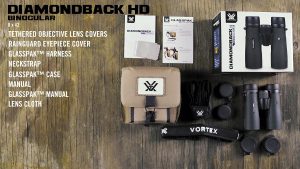
The focusing system is equally practical. A central focus wheel adjusts both barrels simultaneously, while the right-eyepiece diopter accommodates differences between the user’s eyes. Adjustable eyecups further help tailor the viewing position to individual needs, including those of eyeglass wearers.
For outdoor durability, the argon-purged, O-ring-sealed housing helps protect against water and internal fogging. The rubber armor improves grip and provides additional protection, while tripod compatibility offers another way to achieve a stable view. The included GlassPak harness also makes carrying the binoculars more convenient.
Rather than relying on a single standout feature, the Diamondback HD brings together several practical improvements that support everyday bird watching. Its optical design serves the need for clear images, while its construction and accessories address the demands of spending extended periods outdoors.
Best Uses
The Vortex Diamondback HD 8×42 Binoculars are particularly suited to:
-
Bird watching for beginners: The 8x magnification offers a practical balance of detail and handheld stability, making it easier to learn how to locate and follow birds.
-
Wildlife observation: High-definition optics and natural color reproduction support detailed viewing of animals in their natural environments.
-
Forest and woodland birding: The 42 mm objective lenses and coated optical system are designed to provide useful brightness in shaded habitats.
-
Bird identification: Reduced chromatic aberration and good color fidelity can help users examine feather patterns and distinguishing markings.
-
Hiking and nature walks: Rubber armor and the included GlassPak harness support carrying and handling the binoculars outdoors.
-
Extended observation sessions: Tripod adaptability offers a more stable viewing option when observing birds from a fixed position.
-
Changing weather conditions: Waterproof and fogproof construction helps protect the optics during damp or humid outings.
-
Users who wear glasses: Adjustable eyecups help accommodate different viewing positions.
-
Regular outdoor use: The rugged exterior and protective lens coating are designed to handle the ordinary challenges of outdoor observation.
Pros & Cons
Pros
-
8x magnification offers a useful balance between detail and handheld stability.
-
42 mm objective lenses provide versatile light-gathering capability.
-
High-definition optics are designed to improve resolution and color fidelity.
-
Fully multi-coated lenses help improve light transmission.
-
Dielectric prism coatings support bright, color-accurate images.
-
Armortek coating helps protect exterior lenses against scratches, oil, and dirt.
-
Adjustable eyecups accommodate viewing with or without eyeglasses.
-
Central focus wheel makes focusing straightforward.
-
Right-eyepiece diopter adjustment accommodates differences between the eyes.
-
Argon purging and O-ring seals provide waterproof and fogproof protection.
-
Rubber-armored body provides a secure grip and additional external protection.
-
Tripod adaptability supports more stable observation.
-
Includes a GlassPak harness for carrying convenience.
-
Backed by the Vortex VIP Warranty, subject to its terms and exclusions.
Cons
-
8x magnification may be less suitable for very distant birds than 10x binoculars, particularly in open habitats where the subject is far away.
-
The 42 mm objective lenses are larger than those on compact binoculars, which may be a consideration for users prioritizing minimal weight and packed size.
Why We Selected It
The Vortex Diamondback HD 8×42 Binoculars earn their place in this guide because they combine useful optical performance with rugged construction and thoughtful features for everyday bird watching.
Their high-definition optical system, fully multi-coated lenses, and dielectric prism coatings are designed to provide clear images with natural colors. The 8×42 configuration makes them versatile for locating birds, following movement, and observing wildlife across a variety of habitats. Meanwhile, the central focus wheel, adjustable eyecups, and right-eyepiece diopter give users the adjustments needed for comfortable, personalized viewing.
Their durability and practical accessories strengthen their appeal. Argon purging and O-ring seals help protect against water and fogging, rubber armor supports grip and impact protection, and the Armortek coating helps protect exposed lens surfaces. The included GlassPak harness and tripod adaptability also make the binoculars useful for birders who spend long periods outdoors.
For our 7 Best Binoculars for Bird Watching – Top Picks for Birding, Wildlife & Nature Observation guide, the Vortex Diamondback HD 8×42 is a strong all-around contender, particularly for readers who want a combination of image clarity, comfortable handling, weather-resistant construction, and useful carrying options. It is a practical choice for people looking to enjoy everything from casual backyard birding to longer wildlife-observation trips.
3. Celestron Nature DX 8×42 Binoculars
The Celestron Nature DX 8×42 Binoculars are designed for bird watchers, nature lovers, hikers, and outdoor enthusiasts who want dependable optical performance without investing in an overly complicated pair of binoculars. Featuring 8x magnification and 42 mm objective lenses, these binoculars provide a practical combination of image detail, brightness, and handheld stability. Whether you are observing birds in your garden, exploring a woodland trail, or scanning an open landscape for distant wildlife, the Nature DX offers a versatile viewing experience for everyday outdoor adventures.
One of the most appealing aspects of the Nature DX is its emphasis on clear, natural-looking images. Its fully multi-coated lenses are designed to maximize light transmission, while phase-coated BaK-4 prisms help improve contrast and resolution. Together, these optical features support sharp images with accurate colors, making it easier to appreciate the details that make bird watching so rewarding. From examining feather patterns to identifying distinctive markings on a bird’s head or wings, the optical system is designed to help bring the natural world into clearer view.
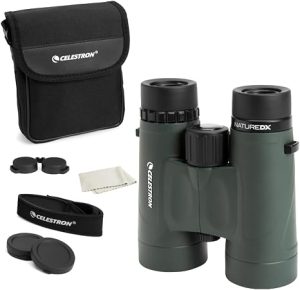
The 8x magnification is another important advantage. Although higher magnification can make distant subjects appear larger, it can also make binoculars harder to hold steady and more challenging to use when tracking birds in motion. The Nature DX’s 8x configuration offers a useful middle ground, allowing users to observe distant subjects while maintaining a relatively broad field of view. Its stated 7.4-degree angular field of view is particularly helpful when scanning trees, following birds in flight, or searching for wildlife across open spaces.
Durability is also central to the design. The binoculars feature a rubber-armored polycarbonate housing that helps protect against everyday bumps and accidental knocks. Their waterproof construction and nitrogen purging are intended to protect the internal optics from moisture and fogging, making them suitable for outdoor use in conditions that may include rain, humidity, or changing temperatures. For birders who enjoy extended observation sessions, the built-in tripod adapter socket also allows the binoculars to be mounted on a compatible tripod, although the adapter is not included.
Overall, the Celestron Nature DX 8×42 Binoculars are an appealing choice for birders who want a straightforward, weather-ready pair with useful optical features and a portable design. They offer a combination of brightness, stability, durability, and viewing comfort that makes them worth considering for both beginners and experienced nature enthusiasts.
Key Specifications
-
-
-
-
-
Objective Lens Diameter: 42 mm
-
Optical Design: Fully multi-coated lenses
-
-
Prism Coating: Phase-coated
-
Angular Field of View: 7.4°
-
Housing Material: Polycarbonate with rubber armor
-
-
Fogproof Construction: Nitrogen-purged
-
Tripod Compatibility: Yes, built-in tripod adapter socket
-
Tripod Adapter: Not included
-
Primary Uses: Bird watching, hiking, wildlife observation, nature walks, and general outdoor viewing
-
Warranty: Celestron Limited Lifetime US Warranty, according to the supplied product information
-
Customer Support: US-based technical support, according to the supplied product information
Note: The stated warranty and support arrangements may be subject to regional restrictions. Confirm the applicable terms for your location before purchasing.
Key Features
8x Magnification for Stable and Detailed Viewing
The Celestron Nature DX provides 8x magnification, allowing distant birds and wildlife to appear approximately eight times closer than they would to the unaided eye under comparable viewing conditions.
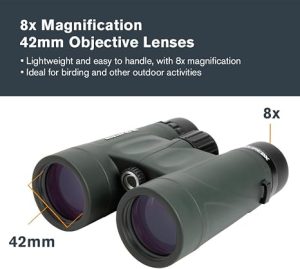
This level of magnification is especially useful for bird watching because it provides a reasonable amount of detail without making the image excessively sensitive to hand movements. Birds can be unpredictable, moving between branches or taking flight without warning, so a manageable magnification level can make them easier to locate and follow.
For beginners, 8x magnification also offers a relatively comfortable way to learn how to scan a habitat and keep moving subjects within the field of view. Experienced birders may appreciate the same balance when observing birds in forests, gardens, wetlands, and other environments where quick tracking is important.
42 mm Objective Lenses for Bright Outdoor Views
The binoculars feature 42 mm objective lenses, which gather light and direct it through the optical system. This lens size is popular for general-purpose bird watching because it balances useful light-gathering capability with a size that remains practical for carrying outdoors.
The 42 mm lenses can be helpful when observing birds in shaded woodland, beneath tree canopies, or during early-morning and late-afternoon outings. In combination with the fully multi-coated optics, they are designed to support bright, detailed views across a variety of outdoor conditions.
Although brightness depends on more than objective lens diameter alone, the 8×42 configuration makes the Nature DX a versatile option for birders who want binoculars suitable for everyday observation.
Fully Multi-Coated Lenses for Improved Light Transmission
The Nature DX features fully multi-coated lenses designed to maximize light transmission through the optical system. Anti-reflective coatings help reduce unwanted reflections at glass surfaces, allowing more of the available light to contribute to the final image.
This is important because birds are not always easy to distinguish from their surroundings. A bird perched among dark branches or green foliage may be difficult to examine if the image lacks contrast or brightness.
By supporting light transmission, the coatings help the binoculars deliver clearer-looking images with useful detail. This can make it easier to observe feather textures, body markings, and variations in plumage color during outdoor excursions.
Phase-Coated BaK-4 Prisms for Contrast and Resolution
Another important feature is the use of phase-coated BaK-4 prisms. BaK-4 glass is commonly used in binocular optical systems, while phase coatings are designed to improve image contrast and resolution in roof-prism designs.
These features work together with the coated lenses to support sharp, well-defined views. For bird watchers, improved contrast can help separate a bird from a complex background, while better resolution can help preserve the fine details that make individual species recognizable.
This combination is useful for observing birds at different distances, particularly when identifying subtle markings or examining a subject against a busy natural environment.
Wide 7.4-Degree Angular Field of View
The Celestron Nature DX offers a stated 7.4-degree angular field of view, giving users a broad viewing area for locating and following subjects.
A wide field of view is especially helpful in bird watching because it allows users to see more of the surrounding environment without constantly repositioning the binoculars. When searching for a bird hidden among branches, a wider view can make it easier to scan the area and locate the subject.
It is also useful when watching birds in flight. Rather than concentrating on a very narrow portion of the sky, users can follow movement across a broader area, making the viewing experience more comfortable.
For birders who regularly explore open fields, lakesides, forests, and nature reserves, this wide field of view is one of the Nature DX’s most useful practical features.
Compact, Lightweight Design for Outdoor Adventures
Celestron describes the Nature DX 8×42 as offering sharp, detailed views in a compact, lightweight frame. This makes it suitable for users who want binoculars they can carry during hiking, bird watching, and general outdoor exploration.
Portability matters because bird watching often involves walking considerable distances, standing for long periods, and moving between observation points. Bulky equipment can become tiring to carry, particularly during longer trips.
The Nature DX is intended to provide a practical balance between the benefits of 42 mm objective lenses and the convenience of an outdoor-friendly design. It can therefore suit birders who want a general-purpose pair rather than equipment intended exclusively for stationary observation.
Rubber-Armored Polycarbonate Housing
The binoculars use a polycarbonate housing covered with rubber armor. This exterior construction is designed to help protect the binoculars against everyday bumps and accidental knocks while providing a more secure grip.
The rubberized exterior can be particularly helpful when walking along uneven trails or handling the binoculars in damp conditions. A secure grip also makes it easier to hold the binoculars comfortably while scanning the surroundings.
Although the protective housing improves durability, it should not be treated as indestructible. Using a suitable carrying case and avoiding unnecessary impacts will help preserve the binoculars over time.
Waterproof and Nitrogen-Purged Construction
Outdoor conditions can change quickly, especially during early-morning birding trips or visits to humid natural habitats. Rain, moisture, and temperature changes can all present challenges for optical equipment.
The Nature DX is designed with waterproof construction and nitrogen purging to help protect the internal optics from water intrusion and fogging. These features make the binoculars suitable for a range of outdoor environments, including damp woodland trails and nature reserves where humidity may be high.
This weather-ready construction offers added convenience for people who do not want a little rain or changing conditions to immediately interrupt their observations. However, users should follow Celestron’s care instructions and avoid assuming that waterproof binoculars are intended for unrestricted underwater use.
Tripod-Adaptable Design for Steadier Viewing
The Celestron Nature DX includes a built-in tripod adapter socket, allowing the binoculars to be mounted on a compatible tripod for more stable observation. The required adapter is not included, so buyers may need to purchase one separately.
Although 8x magnification is generally manageable when holding binoculars by hand, even small movements can become distracting during extended observation sessions. Mounting the binoculars on a tripod can reduce those movements and make it easier to study a bird for longer periods.
This feature is especially useful when observing wildlife from a fixed position, scanning a distant landscape, or sharing a view with another person. It gives the Nature DX added flexibility beyond casual handheld bird watching.
Celestron Warranty and Technical Support
According to the supplied product information, the Nature DX includes a Celestron Limited Lifetime US Warranty and access to US-based expert technical support.
Warranty coverage can be an important consideration when purchasing optical equipment intended for frequent outdoor use. Having access to technical support may also help users obtain guidance about handling, maintenance, and product-related questions.
However, buyers outside the United States should verify whether the same warranty terms apply in their region and whether support or warranty claims must be handled through an authorized local distributor.
Technology & Special Features
The Celestron Nature DX 8×42 combines a practical optical system with a durable housing and features intended to improve usability in outdoor environments.
Its fully multi-coated lenses and phase-coated BaK-4 prisms form the foundation of its viewing performance. The coatings are designed to improve light transmission, contrast, and resolution, helping users observe birds with useful clarity and natural-looking colors. The 8×42 configuration complements these optics by providing a balance between magnification, light gathering, and handheld stability.
The binoculars’ stated 7.4-degree angular field of view also supports their bird-watching purpose. It provides a broad viewing area for scanning habitats, finding birds among vegetation, and following subjects moving across the sky.
The physical construction is equally practical. A rubber-armored polycarbonate body helps protect against everyday impacts, while waterproofing and nitrogen purging are designed to resist moisture and internal fogging. These features make the binoculars suitable for regular outdoor use in changing weather conditions.
Finally, the built-in tripod adapter socket expands their versatility. Users can enjoy handheld viewing during walks or mount the binoculars on a compatible tripod when they want a steadier image for prolonged observation.
Rather than emphasizing complicated technology, the Nature DX focuses on the optical fundamentals and practical protections that many bird watchers need most.
Best Uses
The Celestron Nature DX 8×42 Binoculars are particularly suited to:
-
Bird watching for beginners: The 8x magnification provides a useful balance of detail and stability, helping new birders locate and follow subjects.
-
Backyard birding: The 42 mm objective lenses and coated optics support detailed observation of birds visiting gardens and feeders.
-
Woodland and forest exploration: The optical coatings and light-gathering capability are useful when observing birds beneath tree canopies.
-
Birds in flight: The wide 7.4-degree angular field of view helps users follow movement across a broader area.
-
Hiking and nature walks: The compact, lightweight design makes the binoculars practical for carrying on outdoor adventures.
-
Wildlife observation: The 8x magnification and detailed optical system are useful for observing animals and distant landscapes.
-
Outdoor use in changing weather: Waterproof and nitrogen-purged construction helps protect the optics against moisture and fogging.
-
Extended observation sessions: Tripod adaptability allows users to obtain a steadier view when observing wildlife from a fixed position.
-
Budget-conscious outdoor enthusiasts: The model offers useful optical and durability features without requiring buyers to start with a highly specialized binocular system.
Pros & Cons
Pros
-
8x magnification offers a practical balance of image detail and handheld stability.
-
42 mm objective lenses provide useful light-gathering capability.
-
Fully multi-coated lenses are designed to maximize light transmission.
-
Phase-coated BaK-4 prisms support contrast and resolution.
-
7.4-degree angular field of view helps with scanning habitats and tracking moving birds.
-
Compact, lightweight design is suitable for hiking and outdoor exploration.
-
Rubber-armored polycarbonate housing helps protect against bumps and drops.
-
Waterproof construction supports use in damp outdoor environments.
-
Nitrogen purging helps resist internal fogging.
-
Built-in tripod adapter socket supports more stable observation.
-
Includes a stated limited lifetime US warranty and US-based technical support.
Cons
-
The tripod adapter is not included, so users who want tripod-mounted viewing may need to purchase an additional accessory.
-
8x magnification may not be ideal for every long-distance situation, particularly when observing very distant birds across open terrain.
Why We Selected It
The Celestron Nature DX 8×42 Binoculars earn their place in this guide because they offer a practical combination of optical clarity, comfortable magnification, weather protection, and portability.
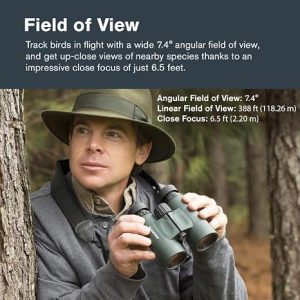
Their fully multi-coated lenses and phase-coated BaK-4 prisms are designed to produce bright, sharp images with good contrast and natural-looking colors. The 8x magnification and 42 mm objective lenses provide a versatile setup for observing birds in gardens, forests, wetlands, and open landscapes. Meanwhile, the wide 7.4-degree angular field of view makes it easier to scan the surroundings and follow birds as they move.
The rugged construction adds to their appeal. Waterproofing, nitrogen purging, and rubber armor help protect the binoculars during regular outdoor use, while the tripod adapter socket offers a useful option for prolonged observation. Their compact, lightweight design also makes them a practical companion for hiking and nature walks.
For our 7 Best Binoculars for Bird Watching – Top Picks for Birding, Wildlife & Nature Observation guide, the Celestron Nature DX 8×42 is a worthwhile choice for readers seeking a versatile pair that focuses on the essentials: clear views, comfortable handling, and dependable outdoor construction. It is particularly suitable for beginners and recreational birders who want to explore the natural world with binoculars that can accompany them on everyday adventures.
4. Celestron Nature DX ED 8×42 Binoculars
When birdwatching takes you into forests, open fields, wetlands, or mountain trails, optical clarity can make all the difference. The Celestron Nature DX ED 8×42 Binoculars are designed for outdoor enthusiasts who want sharp, detailed, and natural-looking views of birds and wildlife without carrying bulky equipment. Combining 8x magnification with 42mm objective lenses, these binoculars offer a practical balance between image detail, light-gathering ability, and portability.
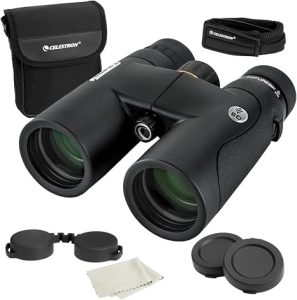
One of the biggest advantages of this model is its Extra-Low Dispersion (ED) glass. Color fringing can sometimes appear around objects with strong contrast, such as a dark bird perched against a bright sky. ED glass helps minimize this optical distortion, allowing you to see more accurate colors and sharper outlines. This can be especially useful when observing subtle plumage patterns, distinguishing similar bird species, or appreciating the natural colors of wildlife.
The Celestron Nature DX ED also incorporates phase-coated BaK-4 prisms with dielectric coatings to improve light transmission and image quality. Its waterproof, nitrogen-purged construction makes it suitable for changing outdoor conditions, while the rubber-armored polycarbonate housing provides additional protection against everyday bumps and accidental knocks.
For birdwatchers who spend long periods observing birds, the built-in tripod adapter threads offer another useful advantage. Mounting the binoculars on a compatible tripod can help minimize hand movement during extended viewing sessions. Overall, this model is a compelling option for anyone searching for the Best Binoculars for Bird Watching with an emphasis on optical clarity, realistic color reproduction, and weather-ready durability.
Key Specifications
-
-
-
-
Maximum Magnification: 8x
-
Objective Lens Diameter: 42mm
-
Special Feature: Waterproof construction
-
Optical Glass: Extra-Low Dispersion (ED) objective lenses
-
-
Prism Coatings: Phase coatings and dielectric coatings
-
Housing: Rubber-armored polycarbonate
-
Weather Protection: Waterproof and nitrogen-purged to help prevent internal fogging
-
Tripod Compatibility: Built-in tripod adapter threads; adapter not included
-
Warranty: Celestron Limited Lifetime US Warranty, with US-based technical support, according to the supplied product information
Key Features
1. Extra-Low Dispersion Glass for Sharper Bird Details
The standout feature of the Celestron Nature DX ED 8×42 is its Extra-Low Dispersion glass. ED glass is designed to reduce chromatic aberration, an optical issue that can produce colored fringes around high-contrast subjects.
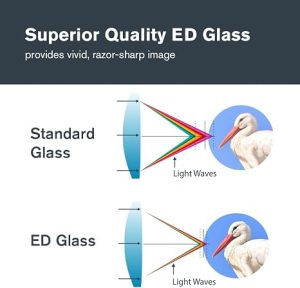
For birdwatchers, this improvement can be particularly valuable. When a bird sits against a bright sky or moves through a patch of sunlight, reduced color fringing can help preserve clearer outlines and more natural-looking details. This makes it easier to appreciate the differences in feather coloration, markings, and other identifying features.
Although lighting conditions and viewing distance still affect image quality, ED glass gives these binoculars a useful advantage for nature observation.
2. 8x Magnification for Comfortable Wildlife Tracking
With 8x magnification, subjects appear eight times closer than they would to the unaided eye under the same viewing conditions. This level of magnification is well suited to many common birdwatching situations, from watching birds at backyard feeders to observing wildlife across a field.
Another advantage is that 8x binoculars are generally easier to hold steady than models with higher magnification. That matters when following birds that move quickly between branches or fly across your field of view.
For beginners and experienced birders alike, this combination of useful magnification and manageable image movement makes the Nature DX ED a practical companion for everyday birdwatching.
3. 42mm Objective Lenses for Better Light Gathering
The 42mm objective lenses are designed to collect light and help produce bright, detailed images. This is particularly helpful when birdwatching early in the morning or later in the evening, when many species are active but available light is limited.
Larger objective lenses can support brighter viewing, although the final image also depends on optical coatings, viewing conditions, and other design factors. The 42mm configuration also offers a useful balance between light-gathering ability and portability.
Whether you’re scanning tree branches, observing birds near a lake, or looking for wildlife along a shaded trail, these objective lenses help make the binoculars versatile for a range of outdoor settings.
4. Phase-Coated BaK-4 Prisms for Improved Image Quality
The Celestron Nature DX ED uses BaK-4 glass prisms with phase and dielectric coatings. These components help improve the way light passes through the binoculars, supporting better brightness, contrast, and detail.
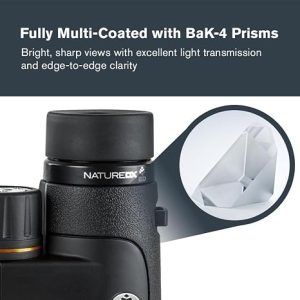
Phase coatings help reduce certain optical losses associated with prism systems, while dielectric coatings are designed to improve light reflectivity. Together, these technologies help the binoculars deliver a clearer, more useful image.
For birdwatchers, improved image quality can make it easier to distinguish a bird’s markings, examine its overall appearance, and observe wildlife against complex backgrounds such as leaves, reeds, and branches.
5. Waterproof and Nitrogen-Purged Construction
Outdoor observation does not always happen in perfect weather. Unexpected rain, morning dew, humid conditions, and cold temperatures can all complicate a birdwatching trip.
These binoculars feature a waterproof design and nitrogen-purged construction. Waterproofing helps protect the internal optics from water entering the housing, while nitrogen purging helps prevent internal fogging caused by moisture inside the binoculars.
This weather-ready construction makes the Nature DX ED suitable for a variety of outdoor adventures. However, waterproofing should not be interpreted as permission to submerge the binoculars unless the manufacturer explicitly confirms that level of protection.
6. Rubber-Armored Polycarbonate Housing
The binoculars feature a polycarbonate body covered with rubber armor. This construction helps protect against everyday bumps and provides a more secure grip when your hands are damp or you’re moving along a trail.
The protective exterior is especially useful for birdwatchers who frequently pack and unpack their equipment, travel between observation points, or carry their binoculars during hikes.
The housing also contributes to the binoculars’ outdoor-ready design without requiring the user to handle the optics with excessive caution during normal use.
7. Tripod-Adaptable Design for Extended Viewing
Holding binoculars steadily for a few minutes is usually manageable, but extended observation can lead to hand fatigue and image movement. The Nature DX ED includes built-in tripod adapter threads, allowing you to mount the binoculars on a compatible tripod with the appropriate adapter.
This can be particularly useful when watching birds at a nest from a suitable distance, monitoring wildlife across a wetland, or observing a stationary subject for an extended period.
Keep in mind that the tripod adapter is not included, so you may need to purchase a compatible accessory separately.
Technology & Special Features
The Celestron Nature DX ED 8×42 combines several optical and construction technologies that work together to improve the birdwatching experience.
-
Extra-Low Dispersion (ED) glass: Reduces chromatic aberration and color fringing, supporting sharper images and more faithful color reproduction.
-
BaK-4 prisms: Provide the optical foundation for transmitting light through the binoculars while maintaining useful image quality.
-
Phase-coated prisms: Help improve contrast and resolution by reducing phase-related losses within the prism system.
-
Dielectric prism coatings: Enhance reflectivity to support efficient light transmission and bright-looking views.
-
42mm objective lenses: Gather light to help reveal details in a range of outdoor lighting conditions.
-
Nitrogen purging: Helps prevent internal fogging when temperatures and humidity change.
-
Waterproof housing: Helps protect the internal optics when outdoor conditions become wet.
-
Rubber-armored polycarbonate body: Adds a protective outer layer and improves grip during outdoor use.
-
Tripod adapter threads: Allow the binoculars to be mounted on a compatible tripod for more stable, prolonged observation.
The combination of ED glass and coated BaK-4 prisms is particularly noteworthy. While magnification determines how much closer a subject appears, optical quality influences how clearly you can see it. These features make the Nature DX ED a strong candidate for birdwatchers who value image clarity and color accuracy alongside practical outdoor durability.
Best Uses
1. Birdwatching and Bird Identification
These binoculars are well suited to observing birds in gardens, forests, wetlands, grasslands, and other natural habitats. Their ED objective lenses help reduce color fringing, which can be useful when examining plumage patterns and other distinguishing characteristics.
2. Wildlife Observation
Beyond birds, the Nature DX ED can be used to observe squirrels, deer, and other wildlife from a respectful distance. The 8x magnification provides a practical balance between bringing subjects closer and keeping them easy to follow.
3. Early-Morning and Late-Afternoon Viewing
The 42mm objective lenses support light gathering, while the coated optical system helps transmit light efficiently. This makes the binoculars worth considering for dawn and dusk observation, although performance will still depend on the amount of available light.
4. Hiking and Nature Exploration
The compact, lightweight design described in the product listing makes these binoculars suitable for carrying on nature walks and hiking trips. Their rubber-armored body also offers practical protection during regular outdoor use.
5. Wet and Humid Environments
Waterproofing and nitrogen purging make the binoculars a useful option for birdwatching in damp habitats and changeable weather. As with any optical equipment, wiping the exterior dry after exposure to moisture and following the manufacturer’s care instructions will help maintain their condition.
6. Stationary and Extended Wildlife Observation
The tripod-adaptable design is useful when you want to observe a particular area for an extended period. A compatible tripod can reduce hand fatigue and help maintain a steadier image while you study a bird’s behavior.
Pros & Cons
Pros
-
ED objective lenses help reduce chromatic aberration and distracting color fringing.
-
8x magnification provides a practical balance between detail and ease of tracking moving birds.
-
42mm objective lenses support light gathering for outdoor observation.
-
Phase-coated BaK-4 prisms and dielectric coatings help improve image quality and light transmission.
-
Waterproof and nitrogen-purged construction helps protect against wet weather and internal fogging.
-
Rubber-armored polycarbonate housing provides a secure grip and protection against everyday bumps.
-
Tripod adapter threads support stable viewing during extended observation sessions.
-
Suitable for birdwatching, hiking, and general wildlife observation.
Cons
-
The 42mm objective lenses may make the binoculars less compact than smaller travel-oriented models.
-
The 8x magnification may not bring very distant birds as close as a higher-magnification model.
Why We Selected It
We selected the Celestron Nature DX ED 8×42 Binoculars as our pick for optical clarity because their Extra-Low Dispersion objective lenses address one of the most noticeable optical distractions in binocular viewing: color fringing around high-contrast subjects.
For birdwatchers, that benefit can make observations more satisfying when studying feather patterns, identifying subtle color differences, or viewing a bird against a bright background. The ED glass is complemented by BaK-4 prisms with phase and dielectric coatings, which are designed to support clear, contrast-rich images.
The model also offers a practical combination of 8x magnification and 42mm objective lenses, making it suitable for following active birds while gathering useful amounts of light. Its waterproof, nitrogen-purged construction and rubber-armored body add the durability needed for regular outdoor adventures.
The main trade-offs are that the tripod adapter must be purchased separately and the US warranty may not provide the same coverage to international buyers. Nevertheless, for anyone who places a high priority on image clarity, natural-looking colors, and dependable outdoor construction, the Nature DX ED deserves serious consideration.
Our verdict: The Celestron Nature DX ED 8×42 is an appealing choice for birdwatchers who want to see wildlife in greater detail without moving to a more powerful, potentially harder-to-steady magnification. Its ED glass and coated prism system make it a particularly attractive option for nature lovers who value sharpness and color accuracy.
5. Celestron TrailSeeker ED 8×42 Binoculars
For birdwatchers who love exploring wide-open landscapes, woodland trails, wetlands, and nature reserves, the Celestron TrailSeeker ED 8×42 Binoculars offer a combination of optical clarity, rugged construction, and practical comfort. Designed for avid birders, hunters, and outdoor enthusiasts, these binoculars are built to help you observe wildlife in detail while remaining prepared for changing weather and demanding outdoor adventures.
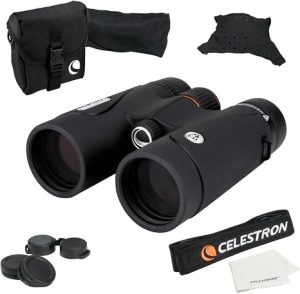
One of the model’s standout features is its Extra-Low Dispersion (ED) objective lenses, which help minimize chromatic aberration, commonly seen as unwanted color fringing around objects with strong contrast. This technology supports sharper-looking images and more natural color reproduction, making it easier to appreciate the fine details of bird plumage, distinguish markings, and observe wildlife against bright skies or leafy backgrounds.
The TrailSeeker ED also features BaK-4 prisms with phase coatings, designed to improve light transmission and image quality. These optical components work together to produce bright, detailed views, which can be especially valuable when birdwatching beneath tree cover or observing wildlife during less-than-ideal lighting conditions.
Beyond its optical performance, the TrailSeeker ED is designed with outdoor practicality in mind. Its rubber-armored polycarbonate housing provides protection against everyday bumps, while waterproofing and nitrogen purging help protect the internal optics in wet or humid conditions. Twist-up eyecups allow users to adjust their viewing position, and the large focus knobs make it easier to bring distant subjects into focus.
Another advantage is its collection of included accessories. A carry harness, padded neck strap, protective case, eyepiece cover, and tetherable objective covers help make the binoculars more convenient to carry, protect, and use during outdoor excursions.
For anyone searching for the Best Binoculars for Bird Watching, the Celestron TrailSeeker ED 8×42 is a compelling option for combining high-quality optics, comfortable handling, and a well-equipped outdoor package.
Key Specifications
-
-
-
-
Objective Lens Diameter: 42mm
-
Optical Glass: Extra-Low Dispersion (ED) objective lenses
-
-
Prism Coatings: Phase coatings
-
Housing Material: Polycarbonate with rubber armor
-
Weather Protection: Waterproof and nitrogen-purged construction
-
Eyecup Design: Twist-up eyecups for adjustable eye relief
-
Focusing System: Large focus knobs for convenient, precise adjustment
-
Intended Uses: Birdwatching, hiking, outdoor exploration, hunting, and wildlife observation
-
Included Accessories: Carry harness, deluxe padded neck strap, eyepiece cover, tetherable objective covers, padded carrying case, and other supplied accessories
-
Warranty: Celestron Limited Lifetime US Warranty, with US-based technical support, according to the supplied product information
Note: The product details provided specify the 42mm objective lens diameter but do not explicitly state the magnification. Confirm the exact magnification on the product listing before purchasing or comparing it with other models.
Key Features
1. Extra-Low Dispersion Objective Lenses for Natural Colors
One of the most important features of the Celestron TrailSeeker ED is its ED glass. In binoculars, chromatic aberration can cause colored outlines around objects, particularly where dark subjects contrast with bright backgrounds. This effect can interfere with the clarity of fine details.
ED objective lenses are designed to reduce this problem, helping produce sharper images with more faithful color reproduction. For birdwatchers, this can be useful when examining distinctive feather patterns, identifying color variations, or observing birds perched against bright skies.
This feature is particularly valuable for nature enthusiasts who want to appreciate wildlife details rather than simply see a magnified image of a distant subject.
2. Phase-Coated BaK-4 Prisms for Bright, Detailed Viewing
The TrailSeeker ED incorporates BaK-4 glass prisms with phase coatings. The prisms help direct light through the binoculars, while the coatings are designed to improve image quality by reducing certain optical losses.
The result is a system intended to provide bright, detailed views with useful contrast. These characteristics can help when scanning branches for small birds, observing wildlife in wooded areas, or looking for movement across open landscapes.
Although actual brightness depends on lighting, the observer’s eyes, and other optical characteristics, the coated prism system is an important part of the binoculars’ overall optical design.
3. Rugged, Waterproof Construction
Outdoor equipment needs to handle more than perfect weather. Rain showers, humidity, accidental bumps, and frequent packing and unpacking can all affect equipment over time.
The TrailSeeker ED features a polycarbonate housing covered with protective rubber armor. This construction helps protect the binoculars against everyday impacts and provides a more secure grip during outdoor activities.
The binoculars are also waterproof and nitrogen-purged. Waterproofing helps keep water from entering the internal optical system, while nitrogen purging helps prevent internal fogging when environmental conditions change.
These features make the model a practical option for birdwatchers who visit nature reserves, hike through forests, or spend extended periods outdoors. Nevertheless, waterproof construction should not be treated as permission to submerge the binoculars unless the manufacturer explicitly confirms that use is supported.
4. Twist-Up Eyecups for Flexible Viewing Comfort
Comfort can have a significant effect on how enjoyable a long birdwatching session becomes. The TrailSeeker ED uses twist-up eyecups that allow users to adjust the distance between their eyes and the binoculars’ eyepieces.
This adjustment is useful for people who wear glasses because it can help them obtain a fuller field of view without needing to press their glasses against the eyecups. Users who do not wear glasses can also adjust the eyecups to suit their preferred viewing position.
The ability to customize eye relief makes the binoculars more adaptable to different users and viewing preferences. For anyone who spends hours observing birds, a comfortable viewing position can help reduce unnecessary strain.
5. Large Focus Knobs for Convenient Adjustments
Birds rarely stay still for long. A bird may move from one branch to another, turn its head, or disappear behind foliage within seconds. Easy focusing is therefore an important feature for birdwatching binoculars.
The TrailSeeker ED features large focus knobs designed to make focusing convenient and precise. Their size can make them easier to locate and adjust while you’re holding the binoculars, helping you bring a subject into clearer view without excessive fumbling.
This is useful when switching between subjects at different distances or quickly refocusing as wildlife moves through its surroundings.
6. Useful Accessories for Outdoor Adventures
Unlike binoculars that leave buyers to purchase several carrying and protective accessories separately, the TrailSeeker ED comes with a collection of items intended to improve convenience.
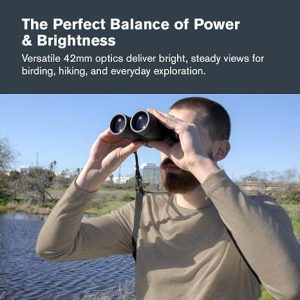
The supplied accessories include a comfortable carry harness, a deluxe padded neck strap, a single-piece eyepiece cover, tetherable objective covers, and a durable padded carrying case.
These additions have practical benefits. The harness and neck strap help with carrying the binoculars, the covers protect the optical surfaces when the equipment is not in use, and the padded case provides an extra layer of protection during storage and transport.
For birdwatchers who frequently travel to different observation locations, having these accessories included can make preparing for a trip easier.
Technology & Special Features
The Celestron TrailSeeker ED combines several optical technologies and outdoor-oriented design features to support reliable viewing in different environments.
-
Extra-Low Dispersion (ED) glass: Helps minimize chromatic aberration and color fringing, supporting clearer outlines and more natural-looking colors.
-
BaK-4 glass prisms: Direct light through the optical system to produce a usable, magnified image.
-
Phase-coated prisms: Help improve image contrast and detail by reducing phase-related optical losses.
-
Waterproof construction: Helps prevent water from entering the binoculars’ internal components during wet-weather use.
-
Nitrogen purging: Helps prevent internal fogging caused by moisture within the optical housing.
-
Rubber-armored polycarbonate body: Offers protection against everyday bumps while improving grip.
-
Twist-up eyecups: Allow users to adjust eye relief to accommodate different viewing preferences, including those of many eyeglass wearers.
-
Large focus knobs: Make focusing adjustments easier and more convenient during active wildlife observation.
-
Protective carrying accessories: The included harness, padded neck strap, carrying case, and lens covers support comfortable transport and equipment protection.
The combination of ED glass and phase-coated BaK-4 prisms is especially noteworthy. ED glass helps reduce color fringing, while the prism system supports image quality and light transmission. Together, these technologies make the TrailSeeker ED an attractive choice for birdwatchers who value clarity and detail.
Its ergonomic features and included accessories further distinguish it as an outdoor-oriented package rather than simply a pair of binoculars designed for occasional use.
Best Uses
1. Birdwatching and Bird Identification
The ED objective lenses make the TrailSeeker ED particularly appealing for birdwatchers who want clear views of feather patterns, color differences, and other identifying features. It can be useful in gardens, forests, wetlands, and open countryside.
2. Hiking and Nature Exploration
The rugged housing, waterproof design, and included carrying accessories make these binoculars suitable for outdoor excursions. Whether you’re following a forest trail or exploring a nature reserve, the protective construction helps accommodate regular outdoor use.
3. Wildlife Observation
The combination of ED glass and coated prisms supports detailed observation of wildlife in natural surroundings. You can use binoculars of this type to observe animals from a respectful distance without disturbing their behavior.
4. Viewing in Changeable Weather
Waterproofing and nitrogen purging are useful for outdoor enthusiasts who encounter rain, humidity, or changing temperatures. These features help protect the internal optics and reduce the risk of internal fogging.
5. Extended Observation Sessions
The adjustable eyecups help users establish a comfortable viewing position, while the large focus knobs simplify adjustments. These features can be useful when spending longer periods observing birds at feeding sites or monitoring wildlife across an open area.
6. Outdoor Photography and Wildlife Trips
Although binoculars are not a replacement for a camera lens, they can be useful companions for photographers and nature enthusiasts who want to scout locations, identify wildlife, or observe subjects before taking photographs. The included case and carrying accessories also help when transporting the equipment between locations.
Pros & Cons
Pros
-
ED objective lenses help reduce color fringing and support more natural color reproduction.
-
Phase-coated BaK-4 prisms are designed to improve image quality and light transmission.
-
Waterproof and nitrogen-purged construction helps protect the internal optics in challenging weather.
-
Rubber-armored polycarbonate housing provides protection against everyday bumps and a secure grip.
-
Twist-up eyecups allow users to adjust eye relief for comfortable viewing.
-
Large focus knobs make focusing convenient during active wildlife observation.
-
Includes a carry harness, padded neck strap, protective case, eyepiece cover, and tetherable objective covers.
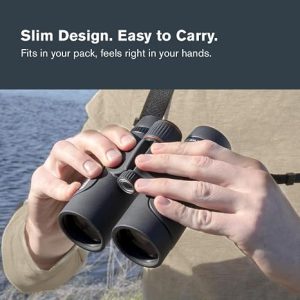
-
Suitable for bird watching, hiking, hunting, and general nature observation.
Cons
-
The 42mm objective lenses may be bulkier than smaller binoculars designed primarily for lightweight travel.
-
ED glass and coated prisms do not eliminate every optical limitation, particularly in very poor lighting.
Why We Selected It
We selected the Celestron TrailSeeker ED Binoculars as our wide-ranging outdoor option because they combine optical features designed for detailed viewing with practical features that make a difference on birdwatching trips.
Their Extra-Low Dispersion objective lenses help minimize distracting color fringing, while the phase-coated BaK-4 prisms are designed to support bright, detailed images. These features can be especially useful when identifying birds, studying their plumage, and observing wildlife in varied natural surroundings.
The TrailSeeker ED also stands out for its outdoor-ready construction. Waterproofing, nitrogen purging, and rubber armor help protect the equipment during regular outdoor use. Meanwhile, twist-up eyecups and large focus knobs make the binoculars easier to adjust, and the included carry harness, padded strap, carrying case, and lens covers add everyday convenience.
The main consideration is to verify the exact magnification on the product listing, since it was not included in the specifications supplied for this review. Buyers outside the United States should also check the applicable warranty terms.
Our verdict: The Celestron TrailSeeker ED is a strong candidate for birders and outdoor enthusiasts who want quality optical features, comfortable handling, weather protection, and useful accessories in one package. If your birdwatching trips often involve hiking and exploring different habitats, its combination of clarity, durability, and carrying convenience makes it worth considering among the Best Binoculars for Bird Watching.
6. Nikon MONARCH M5 10×42 Binoculars
For birdwatchers who want to observe distant birds with greater detail, the Nikon MONARCH M5 10×42 Binoculars offer a compelling combination of powerful magnification, high-quality optics, and rugged outdoor construction. Designed for adults who enjoy birdwatching, wildlife observation, travel, and nature exploration, these binoculars bring distant subjects closer while helping preserve the fine details that make wildlife viewing rewarding.
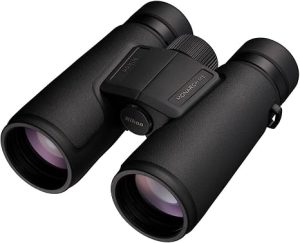
The standout advantage of this model is its 10x magnification paired with Extra-Low Dispersion (ED) glass. The higher magnification is useful when observing birds perched across a lake, resting high in a tree, or moving through open countryside. Meanwhile, ED glass helps minimize chromatic aberration, a visual defect that can create distracting color fringes around objects. This supports sharper-looking images and more natural color reproduction when examining plumage and identifying distinctive markings.
The MONARCH M5 also incorporates dielectric high-reflective multilayer prism coatings, designed to enhance light transmission and help deliver bright, natural-looking images. This is particularly helpful when observing birds in shaded woodland or during early-morning and late-afternoon outings, when lighting conditions may be less favorable.
Beyond its optical system, Nikon has designed these binoculars for practical outdoor use. The waterproof and fogproof, nitrogen-purged housing with O-ring seals helps protect the internal optics from moisture. A lightweight rubber-armored body improves grip and provides additional protection against everyday impacts, while adjustable turn-and-slide eyecups accommodate different viewing preferences, including those of many eyeglass wearers.
The model also offers a close-focus capability of approximately 8.2 feet, allowing users to observe nearby subjects in greater detail. Combined with a smooth central focus knob, this makes the binoculars versatile enough for both distant wildlife and closer nature observation.
For anyone comparing the Best Binoculars for Bird Watching, the Nikon MONARCH M5 10×42 is particularly worth considering if seeing distant subjects in greater detail is a higher priority than having the steadiest possible handheld image.
Key Specifications
-
-
-
-
Maximum Magnification: 10x
-
Objective Lens Diameter: 42mm
-
Optical Glass: Extra-Low Dispersion (ED) glass
-
Prism Coatings: Dielectric high-reflective multilayer coatings
-
Field of View: Described by the manufacturer as broad; exact measurement not supplied in the provided details
-
Close-Focus Distance: Approximately 8.2 feet
-
Focusing System: Large central focus knob
-
Housing: Lightweight rubber-armored body
-
Weather Protection: Waterproof and fogproof, nitrogen-purged construction with O-ring seals
-
Eyecups: Adjustable turn-and-slide design
-
Intended Uses: Birdwatching, wildlife observation, travel, scenic viewing, and outdoor exploration
Key Features
1. 10x Magnification for Observing Distant Birds
The Nikon MONARCH M5 10×42 offers 10x magnification, making distant subjects appear ten times closer than they would to the unaided eye under the same viewing conditions.
This is especially useful when watching birds across open fields, along shorelines, or high in tree canopies. It can help you examine plumage patterns, observe behavior, and distinguish visible features that may be difficult to appreciate with lower-magnification binoculars.
The increased magnification does come with a trade-off: small hand movements become more noticeable, and tracking fast-moving birds may require a little more practice than with 8x binoculars. However, for birdwatchers who frequently observe wildlife at longer distances, the added reach can be worthwhile.
2. ED Glass for Sharp, Natural-Looking Images
The MONARCH M5 uses Extra-Low Dispersion glass to minimize chromatic aberration, commonly seen as colored fringes around high-contrast subjects.
For birdwatching, this feature can be particularly valuable when observing a dark bird against a bright sky or trying to distinguish subtle colors within its feathers. By reducing unwanted color fringing, ED glass helps maintain cleaner outlines and more accurate-looking colors.
This can improve the overall viewing experience when identifying birds with similar appearances or appreciating the finer details of wildlife.
Although ED glass cannot eliminate every optical imperfection, it is a valuable feature for anyone who prioritizes image clarity.
3. Dielectric High-Reflective Multilayer Prism Coatings
The binoculars feature dielectric high-reflective multilayer prism coatings designed to improve light transmission and produce bright, natural-looking colors.
These coatings are particularly useful because the image you see through binoculars depends not only on magnification and lens size but also on how efficiently light passes through the optical system.
For birdwatchers, good light transmission helps reveal details in shaded environments and supports enjoyable viewing across a range of outdoor conditions. Whether you’re observing birds beneath leafy branches or scanning a sunlit landscape, the coated prism system contributes to the binoculars’ overall optical performance.
4. 42mm Objective Lenses for Versatile Outdoor Viewing
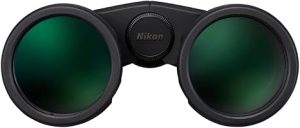
The 42mm objective lenses provide a useful balance between light-gathering ability and portability. They help collect light before it passes through the optical system, supporting detailed views in many common birdwatching situations.
This configuration is practical for birdwatchers who want binoculars suitable for different habitats without moving to a substantially larger objective lens size.
The 42mm lenses can be especially helpful during shaded woodland walks or early-morning observations. However, no binocular can fully compensate for very poor lighting, and perceived brightness also depends on magnification, optical coatings, and the viewer’s eyes.
5. Broad Field of View and Smooth Focusing
When birdwatching, locating a subject is often just as important as seeing it clearly. A bird may move between branches or disappear into foliage before you can focus on it.
Nikon describes the MONARCH M5 as offering a broad field of view, which can help users locate and follow wildlife. The large central focus knob also makes it easier to adjust focus smoothly as viewing distances change.
These features work together to make the binoculars useful for scanning natural habitats, following wildlife movements, and switching between subjects at different distances.
Because 10x magnification tends to make tracking more demanding than 8x magnification, using a deliberate scanning technique and keeping the binoculars steady can help you get the most out of this model.
6. Close Focus for Nearby Nature Observation
Although the MONARCH M5 10×42 is well suited to distant wildlife, its close-focus capability of approximately 8.2 feet adds another dimension to its versatility.
This allows you to examine nearby subjects such as butterflies, insects, and other small natural features, provided they are within the binoculars’ focusing range.
For birdwatchers, close focus can also be useful when observing nearby birds without disturbing them. It means you can use the binoculars for more than distant viewing, making them a helpful companion for general nature exploration.
7. Waterproof, Fogproof, and Rugged Construction
Outdoor observation frequently involves unpredictable conditions. Rain, humidity, changing temperatures, and accidental bumps can all affect equipment.
The MONARCH M5 features a waterproof and fogproof housing that is nitrogen-purged and sealed with O-rings. These design elements help protect the internal optics against moisture and reduce the risk of internal fogging.
Its lightweight rubber-armored body adds protection against everyday impacts and provides a secure grip. This is helpful when carrying the binoculars on hiking trails, handling them with damp hands, or moving between observation points.
The result is a design intended to withstand regular outdoor use while maintaining the performance expected from a dedicated pair of birdwatching binoculars.
8. Adjustable Turn-and-Slide Eyecups for Viewing Comfort
Comfort matters when you’re observing birds for extended periods. The MONARCH M5 uses adjustable turn-and-slide eyecups that allow users to customize the position of the eyepieces relative to their eyes.
This is especially helpful for many eyeglass wearers, who may need to adjust eye relief to see the full field of view without pressing their glasses against the binoculars.
Users who do not wear glasses can also adjust the eyecups to find a comfortable viewing position.
Combined with the central focus knob and relatively lightweight body, this design supports a more comfortable experience during outdoor excursions.
Technology & Special Features
The Nikon MONARCH M5 10×42 combines several optical technologies with a practical, weather-ready design.
-
Extra-Low Dispersion (ED) glass: Helps reduce chromatic aberration and color fringing, supporting sharper details and more accurate-looking colors.
-
Dielectric high-reflective multilayer prism coatings: Improve light reflectivity and transmission to help produce bright, natural-looking images.
-
10x magnification: Brings distant birds and wildlife closer, making it useful for observing subjects across open spaces.
-
42mm objective lenses: Gather light to support detailed viewing in a variety of outdoor conditions.
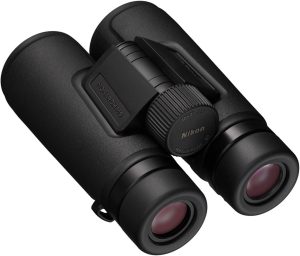
-
Broad field of view: Helps users locate and track wildlife, although the exact field-of-view measurement was not provided.
-
Smooth central focus knob: Allows convenient adjustments when changing between subjects at different distances.
-
Close-focus capability: Focuses on subjects as near as approximately 8.2 feet, according to the supplied product information.
-
Nitrogen-purged, O-ring-sealed housing: Helps protect against moisture and internal fogging.
-
Rubber-armored body: Provides a secure grip and added protection against everyday impacts.
-
Turn-and-slide eyecups: Allow users to adjust the viewing position for comfort, including when wearing glasses.
The combination of ED glass and dielectric-coated prisms is particularly important for users who value optical quality. ED glass helps minimize color fringing, while the prism coatings support efficient light transmission. Together, these features complement the 10x magnification to make distant wildlife observation more rewarding.
Best Uses
1. Long-Distance Birdwatching
The 10x magnification makes the MONARCH M5 particularly suitable for watching birds across lakes, open fields, wetlands, and wide landscapes. It brings distant subjects closer, helping users inspect visible details without needing to approach wildlife.
2. Bird Identification and Plumage Observation
ED glass helps reduce distracting color fringing, supporting clearer outlines and more natural-looking colors. This is useful when examining distinctive markings, comparing similar species, or observing feather details.
3. Wildlife Observation
These binoculars can be used to observe animals in nature reserves, forests, and open countryside. Their magnification is particularly helpful when maintaining a respectful distance from wildlife.
4. Dawn and Dusk Viewing
The 42mm objective lenses and dielectric high-reflective multilayer prism coatings are designed to support light transmission. This makes the binoculars worth considering for early-morning and late-afternoon birdwatching, although performance will depend on the actual lighting conditions.
5. Hiking and Outdoor Exploration
The waterproof and fogproof construction, rubber armor, and lightweight design make the binoculars suitable for hiking, camping, and general outdoor exploration.
6. Nearby Nature Observation
With a close-focus distance of approximately 8.2 feet, the binoculars can also be useful for observing nearby natural subjects. This adds versatility for nature enthusiasts who enjoy examining insects, butterflies, and other small features along their trails.
Pros & Cons
Pros
-
10x magnification provides extra reach for observing distant birds and wildlife.
-
ED glass helps minimize chromatic aberration and distracting color fringing.
-
Dielectric high-reflective multilayer prism coatings support bright, natural-looking colors.
-
42mm objective lenses provide a practical balance between light gathering and portability.
-
Broad field of view, as described in the product listing, supports wildlife tracking.
-
Smooth central focus knob makes focusing adjustments convenient.
-
Close-focus capability of approximately 8.2 feet adds versatility for nearby subjects.
-
Waterproof and fogproof construction helps protect the internal optics in changing weather.
-
Nitrogen purging and O-ring seals help prevent internal fogging and moisture entry.
-
Rubber-armored body provides a secure grip and added protection against everyday impacts.
-
Adjustable turn-and-slide eyecups accommodate different viewing preferences, including those of many eyeglass wearers.
Cons
-
10x magnification makes hand movement more noticeable than with comparable 8x binoculars.
-
Tracking fast-moving birds may require more practice, especially for beginners.
Why We Selected It
We selected the Nikon MONARCH M5 10×42 Binoculars as our choice for long-distance viewing because they combine 10x magnification with optical technologies designed to maintain image clarity and natural-looking colors.
The higher magnification is particularly useful for birdwatchers who frequently observe wildlife across open spaces or need to examine subjects that cannot be approached closely. ED glass helps minimize color fringing, while dielectric high-reflective multilayer prism coatings are designed to support bright, detailed views.
The MONARCH M5 also offers practical features that make it suitable for regular outdoor use, including waterproof and fogproof construction, a rubber-armored body, adjustable eyecups, and a smooth central focus knob. Its close-focus capability adds further flexibility for nearby nature observation.
The principal trade-off is the higher magnification, which can make the image more sensitive to hand movement and make tracking fast-moving birds slightly more challenging than with 8x binoculars. Birdwatchers who value a steadier handheld view may prefer an 8x model, while those who prioritize additional reach may appreciate this 10x option.
Our verdict: The Nikon MONARCH M5 10×42 is a strong choice for birdwatchers who want to bring distant wildlife closer without sacrificing the benefits of ED glass and quality prism coatings. If your outings often involve open landscapes, distant perches, or wildlife that must be observed from afar, it deserves a place among the Best Binoculars for Bird Watching.
7. Vortex Diamondback HD 10×42 Binoculars
For birdwatchers who want to observe distant wildlife with greater detail, the Vortex Diamondback HD 10×42 Binoculars offer a practical combination of 10x magnification, high-definition optical performance, and rugged outdoor construction. Designed for adults who enjoy birdwatching, hiking, wildlife observation, and other outdoor activities, these binoculars are built to bring faraway subjects closer while delivering clear, detailed images.
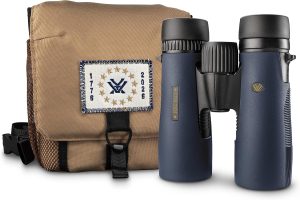
One of the model’s most appealing features is its optical system, which uses selected glass elements to improve resolution, reduce chromatic aberration, and support accurate color reproduction. This can be especially useful when observing birds at a distance, examining feather patterns, or distinguishing visible markings against complex backgrounds. The 10x magnification brings subjects closer, while the 42mm objective lenses provide light-gathering capability suited to a variety of outdoor viewing conditions.
The Diamondback HD also incorporates fully multi-coated lenses, dielectric prism coatings, and an Armortek exterior lens coating. These features serve different purposes: the optical coatings help improve light transmission and image quality, while Armortek helps protect the external lenses from scratches, oil, and dirt.
Beyond image quality, Vortex has equipped these binoculars for demanding outdoor use. Argon purging and O-ring seals provide water- and fogproof performance, while the rubber-armored body offers a secure grip and protection against impacts. Adjustable eyecups, a central focus wheel, and a right-eyepiece diopter allow users to tailor the viewing experience to their needs.
Another advantage is the tripod-adaptable design, which allows the binoculars to be mounted on a compatible tripod or car window mount for more stable observation. They are also backed by Vortex’s VIP Warranty, subject to its stated exclusions and applicable terms.
For anyone comparing the Best Binoculars for Bird Watching, the Vortex Diamondback HD 10×42 is a strong option for those who prioritize additional magnification, durable construction, and practical features for regular outdoor use.
Key Specifications
-
-
Model: Diamondback HD 10×42
-
-
Maximum Magnification: 10x
-
Objective Lens Diameter: 42mm
-
Optical System: High-definition optical system with selected glass elements
-
Lens Coatings: Fully multi-coated lenses with anti-reflective coatings on all air-to-glass surfaces
-
Prism Coating: Dielectric coating
-
Exterior Lens Protection: Armortek coating
-
Eyecups: Adjustable twist-up/twist-down design
-
Focusing System: Central focus wheel
-
Diopter Adjustment: Right eyepiece
-
Housing: Rubber-armored construction
-
Weather Protection: Argon-purged and O-ring-sealed for water- and fogproof performance
-
Mounting Compatibility: Tripod adaptable; compatible with a suitable car window mount
-
Special Features: Focus knob, fogproof construction, shock resistance, and tripod adaptability
-
Warranty: Vortex VIP Warranty, described in the supplied information as an unlimited, unconditional, lifetime, transferable repair-or-replacement promise, with exclusions for loss, theft, deliberate damage, and cosmetic damage that does not affect performance
Key Features
1. 10x Magnification for Detailed Long-Distance Viewing
The Vortex Diamondback HD 10×42 provides 10x magnification, making distant subjects appear ten times closer than they would to the unaided eye under the same viewing conditions.
For birdwatchers, this added reach can be valuable when observing birds perched high in trees, resting across a lake, or moving through open fields. It can help you examine visible plumage patterns and identifying features without having to approach the bird and risk disturbing it.
The higher magnification is particularly useful in open habitats where birds may remain far away. However, it also makes hand movement more noticeable than with lower-magnification binoculars. Holding the binoculars steadily, using a comfortable stance, or mounting them on a compatible support can help improve the viewing experience.
2. High-Definition Optics for Clarity and Color Fidelity
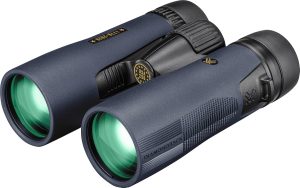
The Diamondback HD uses selected glass elements in an optical system designed to deliver high resolution, reduce chromatic aberration, and improve color fidelity.
Chromatic aberration can appear as colored fringes around high-contrast objects, such as a dark bird against a bright sky. Reducing this effect helps preserve cleaner outlines and makes the image more comfortable to study.
For birdwatchers, this is useful when comparing similar species, examining feather details, or observing subtle differences in coloration. The optical system is designed to balance sharpness, color accuracy, and light transmission, making it suitable for both everyday birdwatching and more focused wildlife observation.
3. Fully Multi-Coated Lenses for Improved Light Transmission
All air-to-glass surfaces in the Diamondback HD’s optical system feature anti-reflective coatings. These fully multi-coated lenses are designed to reduce unwanted reflections and improve the amount of light transmitted through the binoculars.
Better light transmission can support a clearer, brighter-looking image, especially when observing birds in shaded woodland or under changing daylight conditions.
For nature enthusiasts, this matters because bird identification often depends on seeing small details rather than simply locating a subject. The optical coatings complement the selected glass elements to help deliver a more detailed viewing experience.
4. Dielectric Prism Coating for Bright, Color-Accurate Images
The binoculars feature dielectric-coated prisms designed to improve light reflectivity and support bright, clear, color-accurate images.
The prism system is an important part of binocular performance because it directs light through the optical path to produce the final image. High-quality coatings help reduce light losses and contribute to overall viewing quality.
When scanning trees, wetlands, or open countryside, this technology helps support useful image brightness and contrast. Combined with the high-definition optical system and fully multi-coated lenses, it makes the Diamondback HD a compelling choice for birdwatchers who value optical performance.
5. Armortek Coating to Protect Exterior Lenses
Outdoor binoculars can encounter dust, fingerprints, oils, and other contaminants during regular use. The Diamondback HD addresses this with an Armortek coating on the exterior lenses.
This protective coating helps shield the outer lens surfaces from scratches, oil, and dirt. It is a useful feature for birdwatchers who frequently carry their equipment through wooded trails, grasslands, and other outdoor environments.
Although the coating provides an additional layer of protection, careful handling and appropriate lens-cleaning materials are still important for maintaining optical performance over time.
6. Adjustable Eyecups for Personalized Viewing Comfort
The Diamondback HD features eyecups that twist up and down, allowing users to adjust their viewing position according to their preferences.
This flexibility is particularly helpful for eyeglass wearers, who may need to lower the eyecups to obtain a suitable field of view. Users who do not wear glasses can raise the eyecups to establish a comfortable distance between their eyes and the eyepieces.
The adjustable design makes the binoculars more accommodating for different users and can improve comfort during extended birdwatching sessions.
7. Central Focus Wheel and Right-Eyepiece Diopter
The central focus wheel allows users to adjust both binocular barrels simultaneously, making it convenient to bring subjects into focus as viewing distances change.
The right-eyepiece diopter serves a different purpose: it helps compensate for differences between the user’s eyes. Once adjusted appropriately, it can help the binoculars deliver a more balanced image for the individual user.
These controls are useful when switching between nearby and distant birds or trying to focus quickly as wildlife moves through its environment. Learning to set the diopter correctly before heading outdoors can make the binoculars easier to use.
8. Rubber Armor for Grip and Impact Protection
The Diamondback HD features rubber armor that provides a secure, nonslip grip and added protection for the external body.
This is especially useful when carrying binoculars along hiking trails or handling them in damp conditions. The protective exterior also helps reduce concerns about everyday bumps during normal outdoor activities.
The product information describes the binoculars as having rugged construction designed to withstand recoil and impact. As with any optical instrument, however, they should still be handled carefully and protected from severe impacts.
9. Argon Purging and O-Ring Seals for Weather Resistance
Outdoor conditions can change quickly, particularly during long birdwatching trips. Rain, humidity, and temperature changes can create challenges for optical equipment.
The Diamondback HD uses argon purging and O-ring seals to provide water- and fogproof performance. The seals help prevent moisture from entering the internal housing, while the purged construction helps reduce the risk of internal fogging.
This makes the binoculars suitable for birdwatching and wildlife observation in a range of outdoor environments. Waterproof and fogproof construction does not mean that the binoculars should be submerged or exposed to conditions beyond the manufacturer’s stated limits.
10. Tripod Adaptability for More Stable Viewing
Higher magnification can make even small hand movements more visible. To address this, the Diamondback HD is tripod adaptable and can also be used with a compatible car window mount.
A suitable mount can help reduce image movement and hand fatigue during extended observation sessions. This can be useful when watching birds across a wetland, observing wildlife from a stationary location, or studying a distant subject for several minutes.
A compatible mounting accessory may be required separately, so buyers should confirm which accessories are included with their particular package.
11. Vortex VIP Warranty
The supplied product information describes the Vortex VIP Warranty as an unlimited, unconditional, lifetime, transferable repair-or-replacement promise for items that become damaged or defective.
The listed exclusions include loss, theft, deliberate damage, and cosmetic damage that does not hinder performance. This warranty can provide additional peace of mind for people who use their binoculars regularly.
Buyers should review the current warranty terms and confirm whether the same coverage applies in their country, particularly when purchasing from outside the United States or through an international retailer.
Technology & Special Features
The Vortex Diamondback HD 10×42 combines optical enhancements with mechanical and protective features designed for outdoor performance.
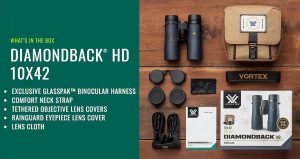
-
High-definition optical system: Selected glass elements help improve resolution, reduce chromatic aberration, and support color fidelity.
-
10x magnification: Brings distant birds and wildlife closer for more detailed observation.
-
42mm objective lenses: Gather light to support viewing in a variety of outdoor conditions.
-
Fully multi-coated lenses: Anti-reflective coatings on all air-to-glass surfaces help increase light transmission.
-
Dielectric prism coating: Supports bright, clear images with accurate-looking colors.
-
Armortek exterior lens coating: Helps protect outer lens surfaces against scratches, oil, and dirt.
-
Adjustable twist-up eyecups: Allow users to customize their viewing position, including when wearing glasses.
-
Central focus wheel: Adjusts the focus of both binocular barrels at the same time.
-
Right-eyepiece diopter: Compensates for differences between the user’s eyes.
-
Argon purging and O-ring seals: Provide water- and fogproof performance.
-
Rubber armor: Improves grip and offers additional protection against everyday impacts.
-
Tripod adaptability: Allows use with a compatible tripod or car window mount.
-
VIP Warranty: Provides repair-or-replacement coverage under the manufacturer’s applicable terms and exclusions.
These features work together to make the Diamondback HD suitable for birdwatchers who want higher magnification without giving up practical handling and protection. The optical coatings support image quality, while the focus controls and mounting compatibility provide additional flexibility in the field.
Best Uses
1. Long-Distance Birdwatching
The 10x magnification is particularly useful for observing birds across open fields, lakes, wetlands, and other habitats where approaching the subject is difficult. It can help reveal visible details that are harder to appreciate at a distance with the unaided eye.
2. Bird Identification and Plumage Observation
The high-definition optical system is designed to reduce chromatic aberration and improve color fidelity. This can be helpful when examining feather patterns, markings, and visible differences between similar-looking birds.
3. Wildlife Observation
These binoculars can be used to observe wildlife in nature reserves, forests, and open landscapes. Their magnification makes them suitable for viewing subjects from a respectful distance.
4. Hiking and Outdoor Adventures
The rubber-armored body, protective exterior lens coating, and weather-resistant construction make the Diamondback HD a practical option for outdoor enthusiasts who carry binoculars on trails and nature excursions.
5. Observation in Damp or Fog-Prone Conditions
Argon purging and O-ring seals help protect the internal optics against water and fogging. This can be particularly useful when birdwatching in humid habitats or during changeable weather.
6. Extended Observation from a Fixed Position
The tripod-adaptable design is useful for prolonged viewing sessions. Mounting the binoculars on a compatible tripod or car window mount can help stabilize the image and reduce fatigue when observing distant subjects.
7. General Outdoor and Scenic Viewing
Beyond birdwatching, the Diamondback HD can be used for viewing landscapes, wildlife movements, and other distant outdoor subjects. Its optical features and rugged construction make it versatile for a range of outdoor activities.
Pros & Cons
Pros
-
10x magnification provides useful reach for observing distant birds and wildlife.
-
42mm objective lenses offer a balance between light gathering and manageable size.
-
Selected glass elements support resolution, color fidelity, and reduced chromatic aberration.
-
Fully multi-coated lenses improve light transmission by reducing unwanted reflections.
-
Dielectric prism coatings support bright, clear, color-accurate images.
-
Armortek coating helps protect exterior lenses from scratches, oil, and dirt.
-
Adjustable eyecups accommodate different viewing preferences, including those of many eyeglass wearers.
-
Central focus wheel makes it convenient to focus both barrels together.
-
Right-eyepiece diopter allows adjustment for differences between the user’s eyes.
-
Argon purging and O-ring seals provide water- and fogproof performance.
-
Rubber armor offers a nonslip grip and added external protection.
-
Tripod adaptable for more stable viewing during extended observation sessions.
-
Backed by the Vortex VIP Warranty, subject to applicable terms and exclusions.
Cons
-
10x magnification makes hand movement more noticeable than with comparable 8x binoculars.
-
Following small, fast-moving birds may require more practice at higher magnification.
Why We Selected It
We selected the Vortex Diamondback HD 10×42 Binoculars as our top 10x option because they combine useful long-distance magnification with a comprehensive set of optical, ergonomic, and protective features.
Their selected glass elements are designed to deliver high resolution, reduce chromatic aberration, and improve color fidelity. Fully multi-coated lenses and dielectric prism coatings further support light transmission and image quality, while the Armortek coating helps protect the exterior lenses during regular outdoor use.
The model is also designed for practical field use. Adjustable eyecups, a central focus wheel, and a right-eyepiece diopter help users customize their viewing experience. Argon purging, O-ring seals, and rubber armor add protection, while tripod adaptability provides a way to improve stability when observing distant birds for extended periods.
The principal trade-off is that 10x magnification makes the image more sensitive to hand movement than an 8x model. However, for birdwatchers who frequently observe distant subjects, this extra reach can be worthwhile. The stated VIP Warranty is another appealing benefit, provided buyers confirm the terms that apply to their purchase.
Our verdict: The Vortex Diamondback HD 10×42 is a well-rounded option for birdwatchers who want greater magnification, detailed optics, and rugged construction. If your birdwatching adventures frequently take you across open landscapes or involve observing distant wildlife, these binoculars are a worthy contender among the Best Binoculars for Bird Watching.
Also read: 8 Best Binoculars For Wildlife Viewing
Frequently Asked Questions About the Best Binoculars for Bird Watching
1. What are the best binoculars for bird watching?
The best binoculars for bird watching depend on your budget, viewing environment, and preferred level of magnification. Models such as the Nikon MONARCH M5 8×42, Vortex Diamondback HD 8×42, and Celestron Nature DX 8×42 offer practical options for general birdwatching. If you prioritize optical clarity, the Celestron Nature DX ED 8×42 is worth considering, while the Nikon MONARCH M5 10×42 and Vortex Diamondback HD 10×42 are useful options for observing distant birds.
When choosing a pair, consider image clarity, brightness, field of view, comfort, weather resistance, and how easily you can follow moving birds.
2. Are 8x or 10x binoculars better for bird watching?
Both magnifications have advantages, and the right choice depends on how you plan to use your binoculars.
-
8x binoculars: Generally easier to hold steady, provide a wider field of view in many models, and make it easier to locate and track fast-moving birds. They are excellent for woodland birding and general nature observation.
-
10x binoculars: Bring distant subjects closer and can be particularly useful in open fields, wetlands, and other expansive habitats. However, they also make hand movements more noticeable.
For beginners and everyday birdwatching, 8x binoculars are often a comfortable starting point. If you frequently observe birds at greater distances, 10x binoculars may be the better fit.
3. Why are 42mm objective lenses popular for bird watching?
The objective lenses are the larger lenses at the front of the binoculars. Their diameter affects how much light can enter the optical system.
Binoculars with 42mm objective lenses offer a useful balance between light-gathering ability, image detail, and portability. They can be suitable for birdwatching in forests, gardens, wetlands, and open landscapes, including many early-morning and late-afternoon outings.
However, objective lens diameter alone does not determine image brightness. Optical coatings, magnification, overall optical quality, and lighting conditions also matter.
4. What is ED glass, and why is it important in birdwatching binoculars?
ED stands for Extra-Low Dispersion. It refers to optical glass designed to reduce chromatic aberration, a visual defect that can produce colored fringes around objects with strong contrast.
For birdwatchers, ED glass can help produce sharper-looking outlines and more natural color reproduction. This is useful when studying feather patterns, identifying markings, and observing birds against bright skies or other contrasting backgrounds.
The Celestron Nature DX ED 8×42 and Celestron TrailSeeker ED are examples from this review that feature ED objective lenses.
5. Are waterproof binoculars necessary for bird watching?
Waterproof binoculars are highly beneficial if you regularly observe birds outdoors. Birdwatching can involve unexpected rain, damp vegetation, humid environments, and changing temperatures.
Waterproof construction helps prevent water from entering the binoculars, while nitrogen or argon purging helps reduce internal fogging. These features can protect the internal optics and make the equipment more dependable in changing weather.
Even with waterproof binoculars, it is wise to dry the exterior after exposure to moisture and follow the manufacturer’s cleaning and storage instructions.
6. Can I use birdwatching binoculars if I wear glasses?
Yes. Many binoculars are designed to accommodate eyeglass wearers through adjustable eyecups and suitable eye relief.
Models such as the Nikon MONARCH M5 and Vortex Diamondback HD feature adjustable eyecups that can be positioned to help users obtain a comfortable view. If you wear glasses, check the manufacturer’s eye-relief specifications before buying, because the amount of adjustment and comfort can differ between models.
If possible, test the binoculars with your glasses on to make sure you can see the full field of view comfortably.
7. Which binoculars are best for bird watching in low light?
For early-morning and late-afternoon birdwatching, look for binoculars with good light transmission, quality optical coatings, and objective lenses suited to your needs.
The 42mm models featured in this review are worth considering because they balance light gathering and portability. The Nikon MONARCH M5 binoculars use dielectric high-reflective multilayer prism coatings, while the Celestron Nature DX models feature coated prisms designed to support light transmission and image quality.
Remember that no binocular can create light that is not available. As darkness increases, even high-quality binoculars will eventually struggle to reveal fine details.
8. Are 10x binoculars too powerful for beginners?
Not necessarily. Beginners can use 10x binoculars successfully, particularly when observing distant birds in open habitats. However, higher magnification makes small hand movements more noticeable and can make it harder to locate birds quickly.
If you are new to birdwatching and expect to observe birds in gardens, forests, and areas with dense vegetation, an 8x model may be easier to learn with. If your main interest is distant wildlife, a 10x model could suit you better.
Your preferred viewing environment is often more important than your experience level alone.
9. What is the difference between the Nikon MONARCH M5 and Vortex Diamondback HD binoculars?
Both product families offer 8×42 and 10×42 options in the models discussed in this review, but their features and accessories vary by version.
The Nikon MONARCH M5 models highlighted here feature ED glass, dielectric high-reflective multilayer prism coatings, a smooth central focus knob, and waterproof, fogproof construction. The Vortex Diamondback HD models feature selected glass elements, fully multi-coated lenses, dielectric prism coatings, Armortek exterior lens protection, and argon-purged, O-ring-sealed construction.
The Vortex models also offer tripod adaptability, and the supplied product information describes the Vortex VIP Warranty. When comparing the two brands, consider the specific model, handling comfort, optical performance, included accessories, price, and warranty coverage available in your country.
10. Do I need a tripod for birdwatching binoculars?
No. Most birdwatchers use binoculars handheld, particularly when walking through forests or following birds in motion.
However, a tripod can be helpful when using 10x binoculars for extended viewing sessions. It reduces image movement and hand fatigue, making it easier to observe distant or stationary birds for longer periods.
Some of the models discussed, including the Celestron Nature DX, Celestron TrailSeeker ED, and Vortex Diamondback HD, offer tripod-adaptable designs. Check whether a compatible adapter is included before purchasing.
11. What should I consider before buying birdwatching binoculars?
Before choosing a pair, consider the following factors:
-
Magnification: Choose 8x for comfortable general viewing or consider 10x for greater reach.
-
Objective lens diameter: A 42mm configuration offers a useful balance of light gathering and portability.
-
Optical quality: ED glass and quality lens and prism coatings can improve clarity, color reproduction, and light transmission.
-
Field of view: A wider field of view can make it easier to locate and track moving birds.
-
Comfort: Check the weight, grip, focusing controls, and eyecup adjustments.
-
Weather resistance: Waterproof and fogproof construction is valuable for regular outdoor use.
-
Durability: Protective rubber armor can help guard against everyday bumps.
-
Warranty and accessories: Review the included case, straps, mounting accessories, and the warranty coverage available where you live.
The best choice is one that fits your birdwatching habits, feels comfortable in your hands, and delivers the optical performance you need.
12. Are expensive binoculars always better for bird watching?
Not always. Higher-priced binoculars may offer better optical glass, improved coatings, more refined construction, or additional features, but the most expensive model is not automatically the best choice for every birdwatcher.
A well-made 8×42 pair can be more useful to someone who watches birds in dense woodland than a higher-magnification model designed for distant observation. Similarly, ED glass can be worthwhile if color fringing and fine detail are important to you, but beginners may find that a more affordable pair meets their needs.
Focus on the features that matter most for your environment and budget rather than paying for specifications you may rarely use.
Conclusion: Choosing the Best Binoculars for Bird Watching
Finding the Best Binoculars for Bird Watching can transform an ordinary walk outdoors into an opportunity to discover details that might otherwise go unnoticed. From the delicate markings on a small songbird to the movements of waterbirds across a distant lake, the right binoculars help bring the natural world closer while allowing you to observe wildlife without disturbing it.
In this review, we explored seven binocular options from Nikon, Vortex, and Celestron, each offering a different combination of optical performance, magnification, durability, and outdoor practicality.
The Nikon MONARCH M5 8×42 is an excellent option to consider for general birdwatching, while the Vortex Diamondback HD 8×42 offers a strong combination of useful optical features and rugged construction. For shoppers seeking a more budget-conscious choice, the Celestron Nature DX 8×42 is worth considering. Those who place greater emphasis on optical clarity may prefer the Celestron Nature DX ED 8×42, while the Celestron TrailSeeker ED appeals to outdoor enthusiasts who value ED optics, comfortable handling, and included carrying accessories.
For birdwatchers who frequently observe distant subjects, the Nikon MONARCH M5 10×42 and Vortex Diamondback HD 10×42 offer greater magnification. Keep in mind that 10x binoculars are more sensitive to hand movement, so an 8x model may be more comfortable for tracking fast-moving birds or scanning woodland habitats.
Ultimately, your ideal pair depends on where you watch birds, how far away your subjects tend to be, your budget, and the features you value most. Consider optical clarity, field of view, light transmission, eye comfort, weather protection, and warranty coverage before making your final decision.
Our final recommendation: If you want a versatile starting point for everyday birdwatching, begin by comparing quality 8×42 binoculars. If distant wildlife observation is your priority, explore the 10×42 alternatives. And if sharp detail and natural-looking colors matter most to you, pay particular attention to models equipped with ED glass.
Whichever pair you choose, the right binoculars can make every birdwatching trip more rewarding, helping you notice more, identify species with greater confidence, and enjoy a deeper connection with wildlife and nature.
Also Read: 8 Best Compact Binoculars – Top Picks for Travel, Bird Watching, Hiking & Outdoor Adventures
8 Best Compact Binoculars – Top Picks for Travel, Bird Watching, Hiking & Outdoor Adventures