
There is something almost magical about looking up at the night sky and realizing that what appears to be a handful of tiny points of light is actually an enormous universe filled with stars, planets, star clusters, and distant celestial objects. While a telescope may seem like the obvious choice for astronomy, a good pair of binoculars can make stargazing surprisingly exciting, accessible, and easy to enjoy. You can simply step outside, point them toward the sky, and begin exploring without dealing with complicated equipment or lengthy setup.
The Best Binoculars for Stargazing can reveal far more than the naked eye. The Moon becomes a fascinating landscape of craters and shadows, bright stars appear sharper and more numerous, and areas of the Milky Way can take on an entirely different appearance. Depending on their magnification, objective lens size, optical quality, and light-gathering ability, binoculars can also help you explore star clusters and other interesting objects that may be difficult to see clearly without optical assistance.
However, choosing binoculars specifically for astronomy is not always as simple as picking the pair with the highest magnification. A larger objective lens can collect more light, while excessive magnification can make the image harder to hold steady. Weight, field of view, optical clarity, eye relief, focusing system, and overall comfort can all influence your experience during a long night of sky watching. The ideal pair should provide a good balance between brightness, detail, stability, and ease of use.
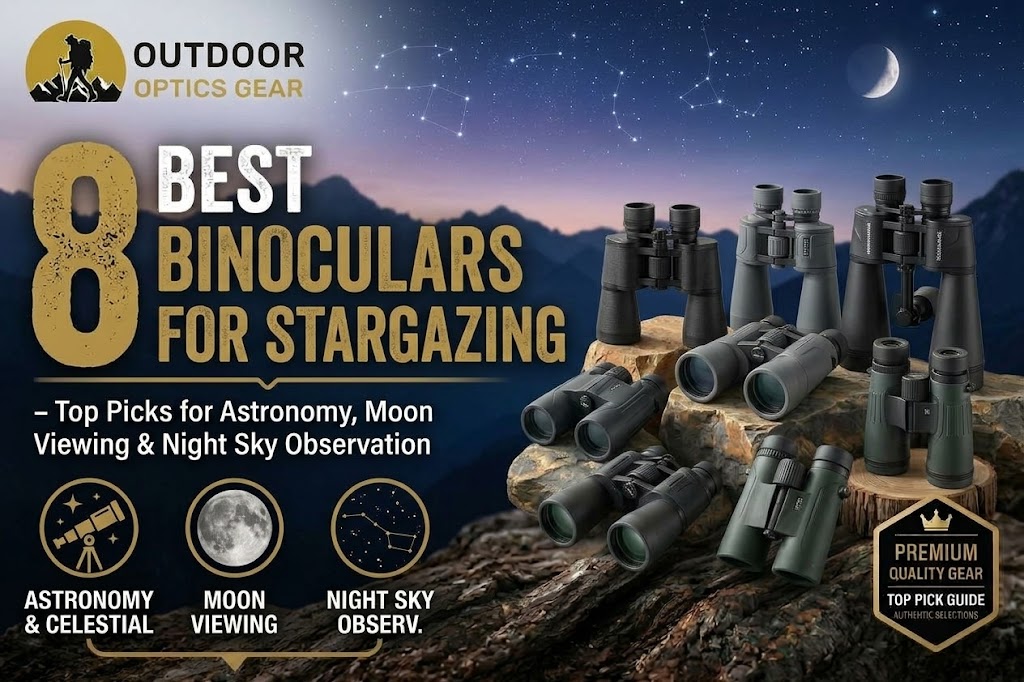
In this guide, we have selected 8 Best Binoculars for Stargazing that can make nighttime observation more enjoyable, whether you’re interested in casually exploring the Moon, scanning the stars from your backyard, learning more about astronomy, or simply looking for a portable alternative to a traditional telescope. Let’s take a closer look at these binoculars and discover which ones could be the perfect companion for your next adventure beneath the stars.
Quick Comparison Table of 8 Best Binoculars for Stargazing – Top Picks for Astronomy, Moon Viewing & Night Sky Observation
| # | Product | Magnification | Objective Lens | Prism / Optics | Tripod Recommended | Best For |
|---|---|---|---|---|---|---|
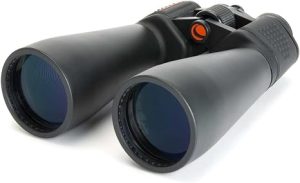
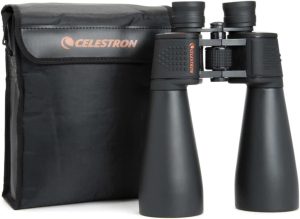
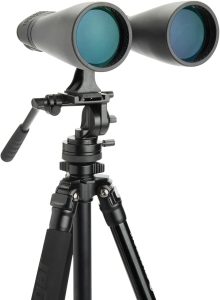
| 1 | Celestron SkyMaster 15×70 Astronomy Binoculars | 15x | 70 mm | BaK-4 prisms, multi-coated optics | Yes | Deep-sky viewing & serious stargazing |
| 2 | Nikon Aculon A211 10×50 Binoculars | 10x | 50 mm | Porro prism, multi-coated optics | Optional | All-around astronomy & Moon viewing |
| 3 | Celestron Cometron 7×50 Astronomy Binoculars | 7x | 50 mm | Porro prism | No | Beginners & wide-field star viewing |
| 4 | Celestron SkyMaster 20×80 Binoculars | 20x | 80 mm | BaK-4 prisms | Yes | Deep-sky objects & brighter celestial targets |
| 5 | Celestron SkyMaster 25×70 Binoculars | 25x | 70 mm | BaK-4 prisms | Yes | High-magnification astronomy |
| 6 | Vortex Diamondback HD 10×50 Binoculars | 10x | 50 mm | HD optical system | Optional | Low-light viewing & versatility |
| 7 | Pentax Jupiter 10×50 Binoculars | 10x | 50 mm | Multi-coated optics | Optional | General stargazing & star-field scanning |
| 8 | Nikon Action 10×50 EX Extreme Binoculars | 10x | 50 mm | Multi-coated optics | Optional | Astronomy & outdoor use |
2. Nikon Aculon A211 10×50 Binoculars
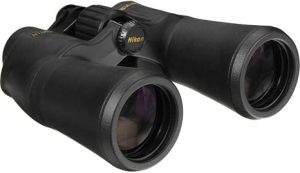
When choosing the Best Binoculars for Stargazing, you don’t necessarily need the largest or most powerful pair available. Sometimes, the better choice is a model that strikes a comfortable balance between magnification, light-gathering ability, handling, and ease of use. The Nikon Aculon A211 10×50 Binoculars are a good example of this approach, offering a practical combination of 10x magnification and 50mm objective lenses in a design intended to remain comfortable and relatively easy to handle.
Nikon designed the Aculon A211 with ergonomics in mind, making it suitable for people who may spend extended periods looking through their binoculars. For stargazing, this matters because astronomy sessions can quickly turn into long periods of scanning the Moon, stars, and night sky. Features such as the turn-and-slide rubber eyecups, smooth central focus knob, and rubber-armored exterior are intended to make the binoculars comfortable and straightforward to operate.
The 50mm objective lenses also make the Aculon A211 an interesting option for nighttime observation. Combined with Nikon’s multicoated Eco-Glass lenses, the binoculars are designed to produce bright and clear images in a variety of lighting conditions. While their 10x magnification is more moderate than the 15x or 20x models typically used for more specialized astronomical observation, that can actually make them easier to use for someone who wants a versatile pair for both stargazing and general outdoor viewing.
Key Specifications
- Brand: Nikon
- Model: Aculon A211
- Age Range: Adult
- Magnification: 10x
- Objective Lens Diameter: 50mm
- Special Feature: Waterproof
- Lens Type: Aspherical Multicoated Eco-Glass
- Eyecups: Turn-and-slide rubber eyecups
- Focus System: Smooth central focus knob
- Exterior: Durable rubber-armored coating
- Grip: Non-slip grip, including in wet conditions
- Primary Uses: Stargazing, astronomy, outdoor observation, travel, and general viewing
10x Magnification for a Balanced Stargazing Experience
The Aculon A211 offers 10x magnification, which provides a useful middle ground between lower-powered binoculars and much more powerful astronomy models.
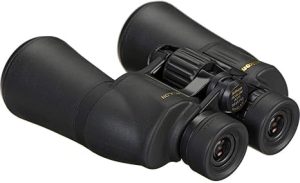
For stargazing, 10x magnification can make the Moon considerably more interesting compared with viewing it with the naked eye. You can explore its brighter surface features and observe details that aren’t readily apparent without optical assistance. The magnification can also make individual stars and sections of the night sky appear more prominent.
Another advantage of 10x magnification is that it doesn’t push the binoculars into the extremely high-magnification category. Very powerful binoculars can be difficult to hold steady because even small movements of your hands become amplified. With the Aculon A211, the 10x configuration offers a more manageable viewing experience while still providing a meaningful increase in detail.
This makes the binoculars particularly appealing to beginners or users who want one pair that can handle both astronomy and terrestrial viewing.
50mm Objective Lenses for Nighttime Viewing
The 50mm objective lenses are another important feature for anyone considering the Aculon A211 for astronomy.
Objective lenses determine how much light the binoculars can collect, and larger lenses can be particularly useful when you’re observing in darker conditions. A 50mm objective is considerably larger than the lenses found on many compact everyday binoculars, making this configuration well suited to nighttime observation.
For stargazing, the combination of 10x magnification and 50mm objective lenses provides a useful balance. You get enough magnification to explore the night sky while retaining a relatively practical form factor.
This is one reason the 10×50 configuration is so popular among people interested in astronomy. It doesn’t require the same level of setup associated with very large astronomy binoculars, yet it can still provide a much more engaging view of the sky than ordinary low-powered binoculars.
Aspherical Multicoated Eco-Glass Lenses
Nikon equips the Aculon A211 with aspherical multicoated Eco-Glass lenses, designed to produce bright and clear images in most lighting conditions.
For astronomy, optical quality is especially important because you’re often viewing objects against a dark background. A good optical system can help make the available light more useful, allowing you to see your targets more clearly.
The multicoated lens design is therefore a valuable feature for nighttime observation. Rather than simply relying on magnification, these binoculars combine their 10x power with an optical system designed to provide a clear viewing experience.
The aspherical design is another noteworthy detail because it contributes to the binoculars’ optical performance, helping make them useful beyond casual daytime observation.
Comfortable Turn-and-Slide Rubber Eyecups
Stargazing can involve extended viewing sessions, so comfort shouldn’t be overlooked.
The turn-and-slide rubber eyecups allow the user to adjust the eyecup position to create a more comfortable viewing experience. This can be especially useful when you’re spending considerable time scanning the sky rather than taking only quick looks.
Comfort becomes even more important when you’re observing the Moon or searching for particular stars because you may keep your eyes against the binoculars for several minutes at a time.
For users who wear glasses, adjustable eyecups can also be helpful in achieving a more suitable viewing position, although individual comfort and eye relief requirements can vary.
Smooth Central Focus Knob
Another advantage of the Aculon A211 is its straightforward focusing system.
The smooth central focus knob is designed to make focusing simple and intuitive. Instead of dealing with a complicated adjustment system, users can make quick focus changes using the centrally positioned control.
This is particularly useful for beginners who may be purchasing their first serious pair of binoculars. When you’re learning to navigate the night sky, the last thing you want is a complicated focusing system distracting you from what you’re trying to observe.
The simple focus mechanism also makes the binoculars practical for terrestrial use, where you may frequently move between subjects at different distances.
Durable Rubber-Armored Construction
Nikon gives the Aculon A211 a durable rubber-armored coating, which serves both practical and ergonomic purposes.
The exterior helps protect the binoculars from everyday bumps and provides a more secure surface for your hands. This becomes particularly useful outdoors, where moisture can make smooth surfaces difficult to grip.
The rubber armor also contributes to the overall handling experience. When you’re standing outside at night holding binoculars for an extended period, having a secure grip can make the experience more comfortable.
According to the provided specifications, the binoculars are designed to withstand wet conditions, making them suitable for outdoor observation where changing weather may be a concern.
Designed for Extended Viewing
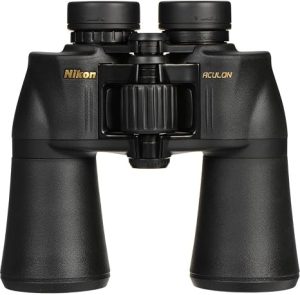
One of the strongest aspects of the Aculon A211 is its emphasis on ergonomics.
Nikon designed these binoculars to be as light as possible while maintaining a comfortable design. This is particularly valuable for stargazing because astronomy sessions can last much longer than initially expected.
You might start by looking at the Moon for a few minutes and end up spending an hour exploring different areas of the sky. A binocular that is uncomfortable to hold can quickly become frustrating during these longer sessions.
The Aculon A211’s ergonomic design, adjustable eyecups, rubberized exterior, and manageable 10x magnification all contribute to making it a practical option for extended use.
Pros and Cons
Pros
- 10x magnification provides a good balance between detail and manageability
- Large 50mm objective lenses are useful for nighttime observation
- Aspherical multicoated Eco-Glass lenses are designed to provide bright, clear images
- Comfortable turn-and-slide rubber eyecups
- Smooth central focus knob is easy to operate
- Rubber-armored exterior provides a secure, non-slip grip
- Designed with ergonomics and extended viewing comfort in mind
- Versatile enough for astronomy and general outdoor observation
- Suitable for adults looking for an easy-to-use binocular system
Cons
- 10x magnification provides less reach than larger astronomy binoculars such as 15x or 20x models
- 50mm objectives gather less light than larger 70mm or 80mm astronomy binoculars
Who Are the Nikon Aculon A211 10×50 Binoculars Best For?
The Nikon Aculon A211 10×50 is particularly well suited to someone who wants binoculars that can perform well for stargazing while remaining versatile enough for everyday outdoor observation.
They’re a strong choice for beginners who don’t want to jump immediately into very large astronomy binoculars. The 10x magnification is relatively approachable, while the 50mm objective lenses provide a useful amount of light-gathering capability for nighttime viewing.
They’re also a good option for someone who values comfort. The adjustable rubber eyecups, ergonomic construction, smooth focusing system, and rubber-armored grip make these binoculars suitable for longer observation sessions.
If your primary objective is extremely high magnification for deep-sky observation, however, a 15×70 or larger astronomy binocular may be more appropriate. But if you’re looking for a balanced, versatile, and user-friendly pair, the Aculon A211 is much easier to recommend.
3. Celestron Cometron 7×50 Astronomy Binoculars
For someone just beginning to explore astronomy, choosing the right binoculars can be more important than simply choosing the most powerful model available. Extremely high magnification may sound impressive, but beginners can sometimes have a better experience with binoculars that offer a wide field of view, straightforward controls, good light-gathering ability, and comfortable handling. The Celestron Cometron 7×50 Astronomy Binoculars are designed around exactly that philosophy.
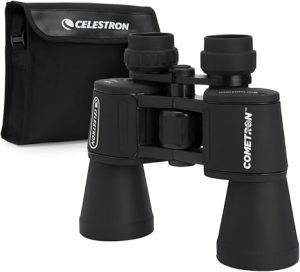
With 7x magnification and 50mm objective lenses, the Cometron provides a broad view of the night sky while still gathering a useful amount of light. This makes it particularly interesting for scanning large areas of the sky rather than concentrating exclusively on one small celestial object. You can pan across the Milky Way, move between constellations, search for star clusters, and explore large objects such as comets without constantly having to reposition the binoculars.
Another major advantage is accessibility. Celestron describes the Cometron as an affordable and easy-to-use way for beginners to learn the night sky. That makes it a particularly attractive choice for someone who is interested in the Best Binoculars for Stargazing but isn’t ready to invest in more specialized or powerful astronomy equipment.
Beyond astronomy, the Cometron can also be used during the daytime for activities such as birdwatching, hiking, and scenic viewing. Its tripod adaptability further adds versatility, allowing users to mount the binoculars on a standard tripod for longer, steadier viewing sessions.
Key Specifications
- Brand: Celestron
- Model: Cometron 7×50
- Age Range: Adult
- Magnification: 7x
- Objective Lens Diameter: 50mm
- Special Feature: Water resistant
- Angular Field of View: 6.6°
- Close Focus: 26.2 feet
- Optics: Multi-coated optics
- Tripod Compatibility: Yes
- Tripod Adapter: Built-in tripod adapter socket; adapter not included
- Primary Uses: Stargazing, astronomy, birdwatching, hiking, scenic viewing
- Warranty: Celestron Limited Lifetime US Warranty
- Customer Support: US-based expert technical support
7x Magnification for Wide-Sky Observation
The Cometron’s 7x magnification is one of its defining characteristics.
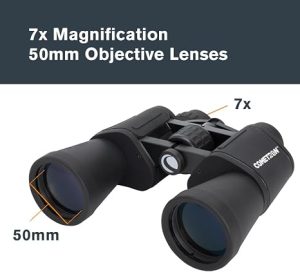
Instead of dramatically magnifying a small portion of the sky, these binoculars provide a wider perspective that makes it easier to explore large sections of the night sky. This can be particularly useful when you’re learning constellations or trying to locate objects whose exact position you don’t know.
The lower magnification also makes the binoculars easier to hold steadily than many high-powered astronomy binoculars. With less magnification, small hand movements are less noticeable, which can make handheld viewing more comfortable.
For beginners, this is a significant advantage. You can simply step outside, point the binoculars toward the sky, and begin exploring without necessarily needing to set up a tripod first.
The 7x configuration is especially useful for panning across the Milky Way, exploring constellations, and looking for large celestial objects. Rather than focusing exclusively on maximum detail, the Cometron emphasizes the experience of exploring the sky as a whole.
50mm Objective Lenses for Better Light Gathering
The binoculars feature 50mm objective lenses, which are an important part of their astronomy-focused design.
When you’re observing the night sky, light gathering becomes particularly important because many celestial objects are relatively faint. Larger objective lenses can collect more available light than the small lenses commonly found on compact binoculars.
The Cometron combines these 50mm lenses with its 7x magnification, producing a configuration that is well suited to wide-field nighttime observation.
This means the binoculars can help reveal more stars than you might see with the naked eye under suitable viewing conditions. They can also make large star fields and other expansive areas of the sky more interesting to explore.
For a beginner, this can be more rewarding than immediately jumping into a very high-powered binocular that has a much narrower field of view.
Multi-Coated Optics for Brighter, More Detailed Views
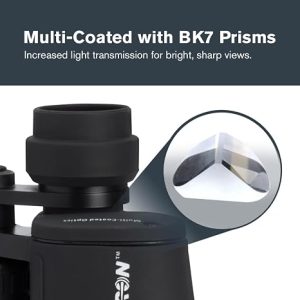
Celestron uses multi-coated optics on the Cometron to improve light transmission.
Multiple layers of anti-reflective coatings are designed to allow more available light to pass through the optical system. This is especially relevant for astronomy because you’re working with relatively low levels of available light.
According to the provided specifications, this optical design helps produce bright and detailed views with increased contrast and resolution.
When scanning the night sky, improved contrast can make it easier to distinguish stars and celestial objects against the surrounding darkness. The result is a more engaging viewing experience, particularly when you’re exploring areas such as the Milky Way.
Wide 6.6° Angular Field of View
One of the biggest reasons to consider the Cometron for stargazing is its 6.6° angular field of view.
A wide field of view means you can see a larger portion of the sky through the binoculars at once. This is extremely useful when you’re scanning rather than targeting a single small object.
Imagine slowly moving your binoculars across a dark sky. Instead of seeing only a small section at a time, the Cometron lets you cover a broader area, making it easier to search for interesting objects.
This wide perspective can be particularly useful for:
- Exploring the Milky Way
- Locating constellations
- Searching for comets
- Viewing large star clusters
- Spotting satellites
- Scanning large areas of the night sky
For beginners, the wide field can also make learning the positions of celestial objects more intuitive.
Excellent for Exploring the Milky Way
The Milky Way is one of the most rewarding things to explore with wide-field binoculars.
Under sufficiently dark skies, the Cometron’s combination of 7x magnification, 50mm objectives, and a 6.6° field of view makes it suitable for scanning across large sections of the Milky Way.
Rather than attempting to isolate one tiny celestial object, you can slowly sweep across the sky and discover different concentrations of stars and other features.
This is one area where the Cometron’s relatively modest 7x magnification can actually be an advantage. A higher-powered pair may provide more magnification but show a smaller section of the sky at once.
Useful for Comets, Star Clusters and Satellites
Celestron specifically highlights the Cometron’s suitability for viewing comets and large celestial objects.
Its wide field of view makes it easier to search across the sky, while the 50mm objectives provide useful light-gathering capability.
The binoculars can also be used to look for star clusters and satellites. If you enjoy simply exploring the sky and seeing what you can discover, this makes the Cometron an enjoyable tool rather than an instrument limited to one particular type of astronomical observation.
Of course, what you’ll be able to see depends heavily on factors such as light pollution, weather conditions, atmospheric clarity, and the brightness of the object you’re observing.
Suitable for Day and Night Use
One of the advantages of the Cometron is that it doesn’t have to remain in your astronomy equipment collection once the Sun comes up.
Celestron designed these binoculars for both daytime and nighttime use.
During the day, they can be used for:
- Birdwatching
- Hiking
- Scenic viewing
- Outdoor exploration
- General long-distance observation
The binoculars have a close focus of 26.2 feet, giving them some flexibility for terrestrial viewing.
This dual-purpose design can make the Cometron particularly appealing to someone who wants one pair of binoculars for multiple activities rather than purchasing dedicated equipment for astronomy alone.
Tripod-Adaptable for Extended Viewing
Although the Cometron’s 7x magnification makes handheld viewing relatively manageable, there are situations where mounting binoculars to a tripod can make a noticeable difference.
The Cometron features a built-in tripod adapter socket, allowing it to be mounted on a compatible standard tripod.
A tripod can be especially useful if you’re spending a long time studying the sky. Instead of continuously supporting the binoculars with your hands, you can mount them and enjoy a more stable image.
The tripod adapter is not included, so you’ll need compatible mounting equipment separately.
This is a useful feature for someone who starts with handheld stargazing and later decides to spend longer periods observing the night sky.
Water-Resistant Construction
Outdoor astronomy means dealing with the environment, and conditions can change quickly during nighttime observation.
The Cometron features a water-resistant design, giving it additional protection when you’re using it outdoors in conditions where unexpected moisture or light rain may occur.
The water-resistant construction can also be useful during daytime activities such as hiking and birdwatching.
As with any water-resistant optical equipment, however, water resistance should not be interpreted as permission to submerge the binoculars or deliberately expose them to heavy water.
Easy to Use for Beginners
Perhaps the biggest selling point of the Cometron is its simplicity.
You don’t necessarily need extensive astronomy knowledge to start using it. Its 7x magnification provides a broad view, its 50mm objectives provide useful light gathering, and its controls are designed to be straightforward.
For someone learning the constellations, this can be particularly valuable. You can start with familiar objects such as the Moon and then gradually move toward star clusters, the Milky Way, and other nighttime targets.
This makes the Cometron a particularly good option for someone who wants to learn astronomy through practical observation rather than purchasing complicated equipment at the beginning.
Pros and Cons
Pros
- Beginner-friendly astronomy binoculars
- 7x magnification provides a broad, easy-to-manage view
- Large 50mm objective lenses provide useful light-gathering capability
- Wide 6.6° field of view is excellent for scanning the night sky
- Multi-coated optics are designed for brighter, clearer views
- Well suited to exploring the Milky Way and constellations
- Useful for viewing large celestial objects, star clusters, comets, and satellites
- Can also be used for birdwatching, hiking, and scenic viewing
- Built-in tripod adapter socket
- Water-resistant construction
- 26.2-foot close focus for terrestrial viewing
- Backed by Celestron’s limited lifetime US warranty
Cons
- 7x magnification provides less detail on distant objects than higher-powered binoculars
- Tripod adapter is not included
Who Are the Celestron Cometron 7×50 Binoculars Best For?
The Celestron Cometron 7×50 is particularly well suited to beginners who are getting started with astronomy and want an easy way to explore the night sky.
It’s also a strong option for someone who values a wide field of view over extreme magnification. If your idea of stargazing involves slowly scanning the Milky Way, exploring constellations, searching for comets, and discovering star clusters, the Cometron’s design makes a lot of sense.
It’s also more versatile than a dedicated astronomy instrument because you can take it hiking, use it for birdwatching, or bring it along for scenic viewing during the day.
For someone buying their first astronomy binoculars, this versatility can be particularly valuable because the binoculars aren’t restricted to nighttime use.
4. Celestron SkyMaster 20×80 Astronomy Binoculars
When you’re ready to move beyond standard binoculars and want significantly more magnification and light-gathering capability for exploring the night sky, the Celestron SkyMaster 20×80 Astronomy Binoculars are built for exactly that kind of viewing. With an impressive 20x magnification and massive 80mm objective lenses, this model is designed to bring distant subjects closer while collecting substantial amounts of available light.
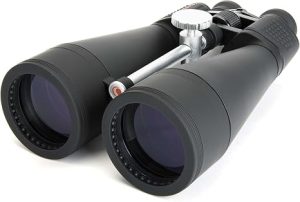
The SkyMaster 20×80 is particularly interesting for astronomy because its large objective lenses are designed to perform well in dim conditions. Whether you’re observing the Moon, scanning star fields, or exploring the sky after sunset, the 80mm objectives give this model considerably more light-gathering capability than smaller binoculars.
However, the impressive specifications also come with an important consideration: these are large binoculars. Their size, weight, and 20x magnification make tripod mounting highly advisable. Fortunately, Celestron has incorporated a built-in 1/4″-20 tripod adapter, allowing the binoculars to be attached to a compatible traditional photo tripod.
For serious nighttime observers who don’t mind using a tripod, this combination of high magnification, large objectives, and BaK-4 prisms makes the SkyMaster 20×80 one of the more powerful options in this list of the Best Binoculars for Stargazing.
Key Specifications
- Brand: Celestron
- Model: SkyMaster 20×80
- Age Range: Adult
- Magnification: 20x
- Objective Lens Diameter: 80mm / 8cm
- Special Feature: Water resistant
- Prism Type: BaK-4
- Tripod Compatibility: Yes
- Tripod Adapter: Built-in 1/4″-20 adapter
- Housing: Rubber armored
- Primary Uses: Astronomy, stargazing, long-distance terrestrial viewing
- Warranty: Celestron Limited Lifetime US Warranty
- Customer Support: US-based expert technical support
Powerful 20x Magnification
The most obvious feature of the SkyMaster 20×80 is its 20x magnification.
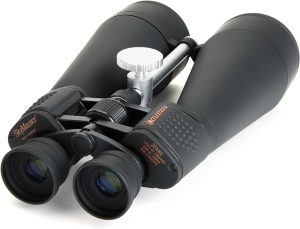
At 20x, objects appear substantially closer than they would through the naked eye. This can be especially useful for astronomy enthusiasts who want to examine the Moon and explore distant areas of the night sky with considerably more magnification than conventional binoculars provide.
The high magnification can also be useful for long-distance terrestrial viewing. Celestron specifically describes these binoculars as suitable for long-distance land-based observation as well as astronomy.
However, high magnification has a trade-off: hand movements become much more noticeable. Even small movements can cause the image to shake, which is why tripod mounting is strongly recommended.
For someone who intends to spend extended periods observing the night sky, using a tripod can transform the experience from difficult and shaky to much more stable and enjoyable.
Massive 80mm Objective Lenses
The 80mm objective lenses are another defining feature of this model.
Large objective lenses are valuable for astronomy because they can collect more available light. When observing at night, this additional light-gathering capability can help make celestial objects appear brighter and more visible.
Compared with smaller 42mm or 50mm binoculars, an 80mm objective provides a substantially larger aperture. This makes the SkyMaster 20×80 particularly suited to users who want to prioritize nighttime observation.
The combination of 20x magnification and 80mm objectives gives this model a distinctly astronomy-oriented character. It’s not designed primarily as a compact travel binocular; instead, it’s aimed at people who are willing to handle a larger instrument in exchange for increased optical capability.
BaK-4 Prisms for Bright, Detailed Images
Celestron equips the SkyMaster with BaK-4 prisms, which are designed to maximize light throughput to the observer’s eyes.
This is particularly important for astronomy because you’re often observing in conditions where available light is limited. The optical system is designed to produce brighter and more detailed images, helping you make better use of the light gathered by those large 80mm objective lenses.
The combination of large objectives and BaK-4 prisms makes the binoculars especially suited to dim conditions around dawn, dusk, and nighttime.
For astronomy enthusiasts, this is an important distinction. High magnification alone doesn’t necessarily make binoculars better for stargazing. The ability to gather and effectively transmit available light is equally important.
Excellent for Moon Viewing
The Moon is one of the easiest celestial objects to observe with binoculars, and the SkyMaster 20×80 provides substantial magnification for lunar observation.
At 20x, the Moon can appear dramatically different compared with viewing it with the naked eye. Its prominent surface features become much easier to explore, allowing you to spend time examining different regions of the lunar surface.
The large 80mm objectives also contribute to the model’s ability to collect light, while the BaK-4 prisms are designed to help deliver bright, detailed images.
For someone whose primary interest is Moon viewing, this model provides considerably more magnification than beginner-oriented 7×50 binoculars.
Designed for Astronomical Observation
The SkyMaster 20×80 is specifically designed with astronomy in mind.
Its combination of:
- 20x magnification
- 80mm objective lenses
- BaK-4 prisms
- Tripod compatibility
- Water-resistant construction
makes it particularly appropriate for users who plan to establish a more dedicated stargazing setup.
Rather than simply grabbing the binoculars for a few minutes of casual viewing, you can mount them on a tripod, position yourself comfortably, and spend an extended period exploring the sky.
This makes the SkyMaster especially attractive to astronomy enthusiasts who want something more substantial than ordinary general-purpose binoculars without necessarily moving immediately to a telescope.
Tripod Mounting Is Highly Recommended
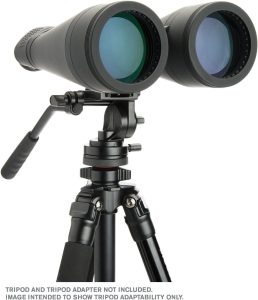
The biggest consideration when buying the SkyMaster 20×80 is its physical size and weight.
Celestron notes that because of their size and weight, most users mount these binoculars on a traditional photo tripod.
The built-in 1/4″-20 adapter makes this relatively straightforward. The binoculars can be attached to most compatible tripods without requiring a complicated mounting system.
A tripod is particularly valuable because of the 20x magnification. Holding the binoculars by hand for a short observation may be possible, but maintaining a stable image during an extended session is much more difficult.
With a tripod, you can keep the binoculars pointed at the area you’re interested in without continuously fighting hand movement.
The tripod is not included, so it needs to be purchased separately.
Durable Rubber-Armored Housing
Astronomy often involves taking equipment outdoors at night, and Celestron has equipped the SkyMaster with a rubber-armored housing.
The rubber exterior provides a more secure gripping surface while also helping protect the binoculars from everyday knocks and bumps.
This is particularly useful given the size of the instrument. A secure grip can make handling the binoculars easier when you’re carrying them between locations or positioning them on a tripod.
The rubber armor also gives the binoculars a more rugged feel, making them suitable for users who intend to take them outdoors regularly.
Water-Resistant Exterior
The SkyMaster 20×80 also features a water-resistant exterior.
Outdoor observation can expose equipment to unexpected weather, moisture, or light rain, so having some degree of water resistance provides additional peace of mind.
This feature can be particularly useful if you’re setting up an observation session outdoors and conditions begin to change.
However, water resistant does not mean the binoculars are intended for submersion. They should still be treated as precision optical equipment and protected from excessive water exposure.
Useful Beyond Astronomy
Although the SkyMaster 20×80 is strongly oriented toward astronomy, its capabilities aren’t restricted to the night sky.
The combination of 20x magnification and large objective lenses also makes it suitable for long-distance land-based viewing.
This could be useful for observing distant landscapes or other subjects where substantial magnification is beneficial.
However, because of its large size and tripod-oriented design, it isn’t the kind of binocular you’d typically choose if your main priority were lightweight hiking or compact travel.
It’s better suited to situations where you can establish a stable viewing position and take advantage of its powerful optical configuration.
Pros and Cons
Pros
- Extremely powerful 20x magnification
- Large 80mm objective lenses provide strong light-gathering capability
- BaK-4 prisms are designed for bright, detailed views
- Excellent choice for dedicated astronomy and stargazing
- Particularly useful for Moon viewing and long-distance observation
- Built-in 1/4″-20 tripod adapter
- Rubber-armored housing provides a secure grip
- Water-resistant exterior
- Suitable for long-distance terrestrial viewing as well as astronomy
- Backed by Celestron’s limited lifetime US warranty
- US-based expert technical support
Cons
- Very large compared with conventional binoculars
- Heavy enough that tripod mounting is strongly recommended
Who Are the Celestron SkyMaster 20×80 Binoculars Best For?
The Celestron SkyMaster 20×80 is best suited to adults who are serious about astronomy, stargazing, Moon viewing, and long-distance observation.
It’s an especially good fit for someone who doesn’t mind setting up a tripod and wants significantly more magnification and light-gathering capability than standard 7×50 or 10×50 binoculars can provide.
If your goal is to spend evenings exploring the Moon and night sky from a fixed location, these binoculars can be an exciting choice.
They’re less appropriate for someone who prioritizes portability. If you want something you can throw into a backpack and carry around all day, the 80mm objectives and high magnification may feel cumbersome.
5. Celestron SkyMaster 25×70 Astronomy Binoculars
If your idea of stargazing involves getting as much magnification as possible from a pair of binoculars, the Celestron SkyMaster 25×70 Astronomy Binoculars immediately stand out. With an impressive 25x magnification and 70mm objective lenses, this model is designed for observers who want a substantially closer look at distant subjects without moving straight to a traditional telescope.
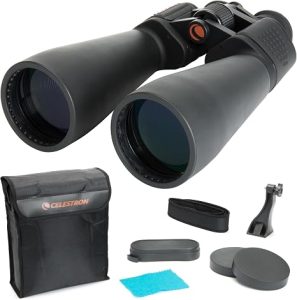
The SkyMaster 25×70 takes the powerful astronomy-binocular approach found throughout Celestron’s SkyMaster range and pushes the magnification even further. Its 70mm objective lenses provide substantial light-gathering capability, while the BaK-4 prisms are designed to maximize light transmission and produce brighter, more detailed views in dim conditions. This combination makes the binoculars particularly interesting for nighttime astronomy and long-distance terrestrial observation.
However, 25x magnification is not something to take lightly. At this level, even very small hand movements can cause noticeable image shake. The binoculars are therefore best used with a tripod, and Celestron has made this easier by incorporating a built-in 1/4″-20 tripod adapter. For an observer who has a stable viewing location and doesn’t mind carrying larger equipment, this can turn the SkyMaster 25×70 into a powerful astronomy setup.
If your priority is maximum magnification rather than portability, the Celestron SkyMaster 25×70 is one of the more specialized choices among our Best Binoculars for Stargazing.
Key Specifications
- Brand: Celestron
- Model: SkyMaster 25×70
- Age Range: Adult
- Magnification: 25x
- Objective Lens Diameter: 70mm / 7cm
- Special Feature: Ultra-sharp focus across the field of view
- Prism Type: BaK-4
- Tripod Compatibility: Yes
- Tripod Adapter: Built-in 1/4″-20 adapter
- Housing: Rubber armored
- Weather Protection: Water resistant
- Primary Uses: Astronomy, stargazing, Moon viewing, long-distance terrestrial observation
- Warranty: Celestron Limited Lifetime US Warranty
- Customer Support: US-based expert technical support
Powerful 25x Magnification
The defining feature of the SkyMaster 25×70 is its 25x magnification.
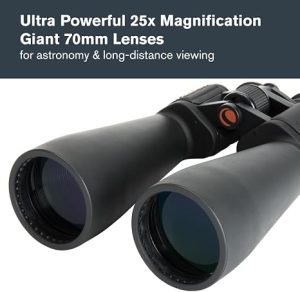
This puts it firmly in the high-powered astronomy-binocular category. Compared with 7x or 10x binoculars, 25x magnification can provide a much closer view of distant subjects.
For astronomy, this can be particularly useful when observing the Moon and examining portions of the night sky where additional magnification is beneficial. Instead of simply scanning a huge area of sky, you can concentrate on particular celestial targets and study them at a higher level of magnification.
The same power also makes the binoculars useful for long-distance terrestrial viewing.
There is, however, an important trade-off. As magnification increases, the effects of hand movement become increasingly obvious. At 25x, holding the binoculars steady for prolonged observation is difficult without support.
That is why this model is better thought of as a tripod-oriented astronomy binocular rather than an ordinary handheld pair.
70mm Objective Lenses for Nighttime Observation
The SkyMaster 25×70 uses 70mm objective lenses, giving it substantial light-gathering capability.
Large objective lenses are particularly valuable when you’re observing under low-light conditions. Astronomy takes place in precisely those conditions, so the size of the objective lenses is an important part of the binoculars’ design.
The 70mm objectives collect more available light than smaller binoculars, helping the optical system produce brighter views of nighttime subjects.
This complements the 25x magnification. The binoculars aren’t simply magnifying an image; they’re also designed to collect a significant amount of light for nighttime viewing.
For astronomy enthusiasts, that combination makes the 25×70 configuration particularly attractive.
BaK-4 Prisms for Bright and Detailed Images
Celestron uses BaK-4 prisms in the SkyMaster 25×70 to maximize light throughput to the observer’s eyes.
This is especially important for astronomy because many of the objects you’re attempting to observe are relatively faint. Good light transmission can help you make better use of the available light collected by the 70mm objectives.
Celestron positions the SkyMaster series as suitable for viewing in dim conditions around dawn and dusk as well as during nighttime astronomy.
The combination of the large objectives and BaK-4 prisms is therefore one of the most important aspects of this model for anyone purchasing it specifically for stargazing.
Ultra-Sharp Focus Across the Field of View
One of the standout features listed for this model is its ultra-sharp focus across the field of view.
For astronomy, this is particularly useful because you may be scanning across broad areas of sky rather than looking at a single object directly in the center of the image.
A sharp view across more of the visible field can make the overall experience more satisfying when you’re exploring stars and celestial targets.
It can also be beneficial for long-distance terrestrial observation, where maintaining clarity across the viewing area can make it easier to observe distant subjects.
For someone investing in a high-powered binocular, optical sharpness is particularly important because high magnification can make imperfections and image movement much more noticeable.
Built for Tripod Use
The SkyMaster 25×70 is a binocular where tripod mounting should be considered part of the overall setup.
Celestron notes that the binoculars’ size, weight, and high magnification mean that most users mount them on a traditional photo tripod.
The built-in 1/4″-20 tripod adapter makes this relatively straightforward. Compatible tripods can be attached quickly, allowing the binoculars to remain fixed and stable during observation.
This is particularly useful for astronomy because you may want to spend several minutes examining the same region of the sky.
Instead of continuously supporting the binoculars with your hands, the tripod takes over the job of maintaining stability.
The tripod itself is not included, so you’ll need to purchase one separately.
Excellent for Dedicated Astronomy Sessions
The SkyMaster 25×70 isn’t necessarily designed for casual, spontaneous stargazing. Its size and magnification make it better suited to someone who enjoys setting up a dedicated viewing session.
You could establish the binoculars on a tripod, position yourself comfortably, and spend an extended period observing the Moon or scanning particular areas of the night sky.
This setup can be particularly appealing to astronomy enthusiasts who want something more portable and straightforward than a telescope while still wanting substantial magnification.
The binocular format also provides the advantage of using both eyes, which many people find more comfortable for extended viewing than using a single-eye optical instrument.
Useful for Long-Distance Land Viewing
Although the SkyMaster 25×70 is strongly associated with astronomy, its capabilities extend beyond the night sky.
Celestron describes the binoculars as suitable for long-distance land-based viewing as well.
The 25x magnification can be valuable when observing distant terrestrial subjects from a stationary position. This could make the binoculars useful for activities where you need substantial optical reach.
However, their size and tripod-oriented design mean that they aren’t particularly suited to fast-moving activities such as lightweight hiking.
They’re better for situations where you can establish yourself in one place and observe from there.
Durable Rubber-Armored Housing
The binoculars feature a rubber-armored housing, which provides protection while also creating a secure gripping surface.
This is useful for a large pair of binoculars because the rubberized exterior makes the equipment easier to hold and handle.
It can also provide additional protection against minor bumps and knocks that may occur when transporting the binoculars between your storage area and observation location.
The rubber armor gives the SkyMaster 25×70 a rugged outdoor feel, which is appropriate given that astronomy often takes place outside.
Water-Resistant Exterior
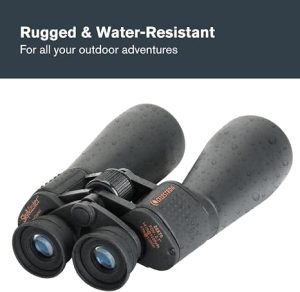
Celestron also gives the SkyMaster 25×70 a water-resistant exterior.
This provides some additional protection when you’re using the binoculars outdoors and encounter unexpected moisture or light rain.
It’s a useful feature for anyone who plans to take the binoculars outside regularly, particularly because nighttime observing can expose equipment to changing environmental conditions.
As always, water resistance should not be interpreted as waterproofing for immersion. The binoculars should still be protected from heavy or prolonged water exposure.
Pros and Cons
Pros
- Extremely powerful 25x magnification
- Large 70mm objective lenses provide strong light-gathering capability
- BaK-4 prisms are designed for bright and detailed views
- Ultra-sharp focus across the field of view
- Well suited to astronomy and nighttime observation
- Useful for Moon viewing and long-distance terrestrial observation
- Built-in 1/4″-20 tripod adapter
- Rubber-armored housing provides a secure grip
- Water-resistant exterior
- Suitable for dedicated, extended viewing sessions
- Backed by Celestron’s limited lifetime US warranty
- US-based expert technical support
Cons
- 25x magnification makes handheld viewing difficult
- Large and relatively heavy compared with standard binoculars
Who Are the Celestron SkyMaster 25×70 Binoculars Best For?
The Celestron SkyMaster 25×70 is best suited to adults who want very high magnification for astronomy, Moon viewing, and long-distance observation.
It makes the most sense for someone who already knows that they want powerful binoculars and is comfortable using a tripod. The combination of 25x magnification and 70mm objective lenses is geared toward users who prioritize optical reach and nighttime performance over portability.
It’s also worth considering if you’re interested in having a binocular system that can serve both astronomical and terrestrial purposes.
For beginners, however, this model may be more equipment than they actually need. Someone who simply wants to learn constellations and casually explore the Milky Way may find a 7×50 or 10×50 model easier to use.
Also read : 8 Best Compact Binoculars – Top Picks for Travel, Bird Watching, Hiking & Outdoor Adventures
6. Vortex Diamondback HD 10×50 Binoculars
When you are looking for the Best Binoculars for Stargazing, the Vortex Diamondback HD 10×50 stands out as a versatile option that combines strong light-gathering capability with optical features designed to produce clear, detailed images. With 10x magnification and 50mm objective lenses, these binoculars offer a useful balance between magnification and brightness, making them suitable for observing the Moon, brighter stars, constellations, and other nighttime subjects.
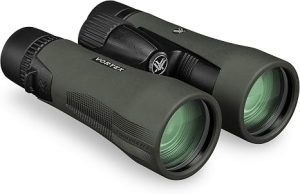
The Diamondback HD is particularly interesting for observers who want more than basic astronomy binoculars. Its select glass elements are designed to improve resolution, reduce chromatic aberration, and provide better color fidelity, sharpness, and light transmission. Combined with fully multi-coated lenses and dielectric coating, the optical system is designed to maximize the amount of usable light reaching your eyes—an important consideration when viewing the night sky.
Another advantage is its rugged, weather-resistant construction. Argon purging and O-ring seals provide water- and fogproof performance, while the rubber armor adds protection and grip. The binoculars can also be mounted to a tripod or car window mount, which can be particularly useful because 10x magnification can become difficult to hold perfectly steady during extended astronomical observations.
Key Specifications
- Brand: Vortex
- Model: Diamondback HD 10×50
- Age Range: Adult
- Magnification: 10x
- Objective Lens Diameter: 50mm
- Special Feature: Fog Proof
- Optical System: HD optical design with select glass elements
- Lens Coating: Fully multi-coated
- Dielectric Coating: Yes
- Exterior Lens Protection: Armortek coating
- Eyecups: Adjustable twist-up/twist-down
- Focus System: Center focus wheel
- Diopter: Right eyepiece adjustment
- Construction: Rubber armored
- Weather Protection: Water- and fogproof
- Tripod Compatible: Yes
- Mounting Options: Tripod or car window mount
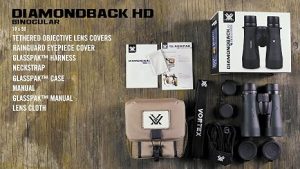
- Included Accessory: GlassPak harness
- Warranty: Unlimited, unconditional, lifetime VIP Warranty
10x Magnification and 50mm Objective Lenses
The 10×50 configuration is one of the reasons the Vortex Diamondback HD is well suited to a variety of nighttime observations. The 10x magnification provides more detail than lower-powered binoculars while remaining relatively practical for handheld viewing.
The 50mm objective lenses also provide a substantial opening for gathering light. This is particularly useful when observing in low-light conditions, where having adequate light transmission can make celestial objects easier to see.
For stargazing, this combination can be useful for scanning the sky, following brighter stars, observing constellations, and getting a closer look at the Moon. It also makes the binoculars versatile enough for daytime activities when you are not using them for astronomy.
HD Optical Design for Clearer Night-Sky Views
One of the main attractions of the Diamondback HD is its optical design. According to the supplied specifications, the binoculars use select glass elements intended to provide exceptional resolution, reduced chromatic aberration, improved color fidelity, sharpness, and light transmission.
This matters when viewing bright objects against a dark background. Better optical control can help produce a cleaner-looking image and reduce distracting color effects around high-contrast subjects.
For someone using binoculars for both astronomy and general outdoor viewing, this optical performance can make the Diamondback HD more versatile than a basic pair designed primarily for casual observation.
Fully Multi-Coated Lenses and Dielectric Coating
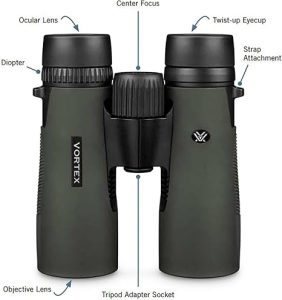
The lenses are fully multi-coated, meaning anti-reflective coatings are applied across all air-to-glass surfaces. These coatings are intended to improve light transmission through the optical system.
The Diamondback HD also uses a dielectric coating, which is designed to contribute to bright, clear and color-accurate images. For stargazing, efficient light transmission is particularly valuable because astronomical observation takes place under much darker conditions than normal daytime viewing.
The result is an optical setup designed to make better use of available light while maintaining image clarity and color accuracy.
Armortek Lens Protection
The exterior lenses feature an Armortek coating designed to protect them against scratches, oil and dirt.
This can be especially useful for binoculars that are regularly taken outdoors. Stargazing often involves carrying equipment between locations, setting it down, handling it in the dark and exposing it to different environmental conditions.
Having additional protection on the exterior lenses can therefore make the binoculars easier to maintain over time.
Adjustable Eyecups for Comfortable Viewing
The Vortex Diamondback HD features adjustable eyecups that twist up and down, allowing users to position the eyecups according to their preferred viewing setup.
This is particularly useful for people who wear glasses. The ability to adjust the eyecups allows the user to find a more comfortable viewing position rather than being restricted to a fixed configuration.
For longer stargazing sessions, comfort becomes increasingly important. Even excellent optics can be frustrating to use if the viewing position is uncomfortable.
Center Focus and Diopter Adjustment
The center focus wheel adjusts the focus of both binocular barrels simultaneously, making general focusing straightforward.
The diopter adjustment on the right eyepiece provides another important customization option. It allows users to compensate for differences between their eyes.
This can help create a more personalized viewing experience and is particularly useful when multiple people are using the binoculars and need to adjust the optics to suit their own vision.
Rubber Armor for Grip and Protection
The binoculars feature a rubber-armored exterior that serves two purposes: improving grip and adding protection.
The non-slip surface can make the binoculars easier to hold securely, especially during outdoor use. The rubber armor also provides additional protection against the bumps and impacts that can happen when carrying equipment outdoors.
The supplied specifications further state that the rugged construction is designed to withstand recoil and impact, making these binoculars suitable for users who want a durable optical instrument that can handle demanding environments.
Water- and Fogproof Construction
One of the standout features of the Diamondback HD is its environmental protection.
Argon purging and O-ring seals provide water- and fogproof performance, helping the binoculars remain usable in changing outdoor conditions. This can be especially useful during nighttime observations when temperature changes can create challenging conditions for optical equipment.
For someone who enjoys taking their binoculars outside for extended periods, this additional environmental protection provides peace of mind.
Tripod Adaptable for More Stable Stargazing
Although 10x magnification is manageable for many users, holding binoculars completely steady for extended astronomical observation can still be challenging.
The Vortex Diamondback HD is tripod adaptable, allowing it to be mounted on a tripod or car window mount. This gives users the option of switching from handheld observation to a more stable setup.
A tripod can be especially helpful when examining the Moon or spending a long time scanning a particular area of the sky. Instead of constantly supporting the binoculars with your arms, the mount can provide a steadier viewing platform.
GlassPak Harness Included
Another useful addition is the included GlassPak harness. This gives users a convenient way to carry the binoculars while keeping them readily accessible.
For outdoor enthusiasts who move between different observation locations, a harness can make carrying binoculars more practical than simply placing them in a bag and repeatedly taking them out.
Lifetime VIP Warranty
The Vortex Diamondback HD is backed by an unlimited, unconditional, lifetime VIP Warranty. The supplied warranty information states that Vortex promises to repair or replace the binoculars if they become damaged or defective.
The warranty is also fully transferable. However, it does not cover loss, theft, deliberate damage or cosmetic damage that does not affect performance.
For an investment in optical equipment, this type of long-term warranty can be an important consideration, particularly for users who plan to keep their binoculars for many years.
Pros and Cons
Pros
- 10x magnification provides a useful level of detail for Moon and night-sky observation.
- 50mm objective lenses provide good light-gathering capability.
- HD optical design is intended to improve resolution and sharpness.
- Select glass elements help reduce chromatic aberration.
- Fully multi-coated lenses improve light transmission.
- Dielectric coating supports bright, clear and color-accurate images.
- Armortek coating protects exterior lenses from scratches, oil and dirt.
- Adjustable eyecups are suitable for users with or without eyeglasses.
- Diopter adjustment allows users to compensate for differences between their eyes.
- Rubber armor provides grip and external protection.
- Water- and fogproof construction makes it suitable for outdoor use.
- Tripod and car-window mounting options provide greater stability.
- Includes a GlassPak harness.
- Backed by an unlimited, unconditional, lifetime VIP Warranty.
Cons
- 10x magnification can still become tiring to hold steadily during long astronomy sessions.
- A tripod or other mount may be preferable for extended stargazing.
Who Are the Vortex Diamondback HD 10×50 Binoculars Best For?
The Vortex Diamondback HD 10×50 Binoculars are best suited for adults who want binoculars that can serve multiple purposes rather than being limited to occasional stargazing.
They are particularly appealing to astronomy beginners and intermediate observers who want to explore the Moon, stars and constellations while also having an optical instrument suitable for outdoor activities.
They are also a strong option for people who prioritize optical clarity, weather protection and durability. The fully multi-coated lenses, dielectric coating, Armortek protection, rubber armor and fogproof construction make them well suited to users who regularly take their binoculars outdoors.
For extended astronomy sessions, users who already own—or are willing to use—a tripod can get even more value from the 10x magnification because mounting the binoculars can provide a more stable viewing experience.
7. Pentax Jupiter 10×50 Binoculars
When choosing the Best Binoculars for Stargazing, the Pentax Jupiter 10×50 Binoculars offer a straightforward combination of magnification, light-gathering capability, and comfortable viewing. With 10x magnification and 50mm objective lenses, this configuration is well suited to people who want to explore the Moon, stars, constellations, and other bright celestial objects without moving to an extremely high-powered astronomy binocular.
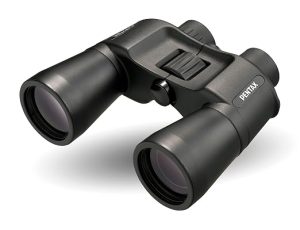
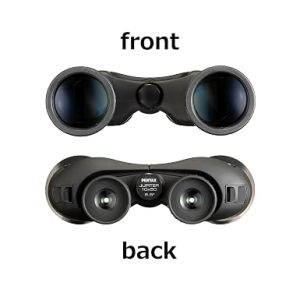
One of the most notable features of this model is its long eye relief. This can make a meaningful difference during extended observation sessions, particularly for people who wear eyeglasses. Rather than having to position your eyes extremely close to the eyepieces, long eye relief is designed to provide a more comfortable viewing position while still allowing you to see the image properly.
The 10×50 format also gives these binoculars versatility beyond astronomy. They can be used for outdoor observation, scenic viewing, wildlife observation, and other situations where a combination of magnification and a reasonably large objective lens is useful. For someone looking for one pair of binoculars that can be used both during the day and under the night sky, the Pentax Jupiter 10×50 is worth considering.
Key Specifications
- Brand: Pentax
- Model: Jupiter 10×50
- Age Range: Adult
- Magnification: 10x
- Objective Lens Diameter: 50mm
- Special Feature: Long Eye Relief
- Intended Use: Stargazing and general outdoor observation
- Optical Configuration: 10×50
- Viewing Comfort: Long eye relief
10x Magnification for Detailed Stargazing
The 10x magnification gives the Pentax Jupiter a useful advantage over lower-powered binoculars when you want to examine celestial objects in greater detail.
For stargazing, 10x magnification can help bring the Moon closer and make individual stars, star clusters, and recognizable patterns in the night sky easier to examine. It can also make the binoculars useful for scanning different areas of the sky rather than restricting you to one fixed target.
At the same time, 10x is still a relatively practical magnification for general handheld observation. Users who want more magnification than a typical 7x binocular provides may find this configuration a good middle ground.
50mm Objective Lenses for Nighttime Viewing
The Pentax Jupiter uses 50mm objective lenses, which provide a substantial lens diameter for gathering available light.
This is particularly relevant to astronomy because stargazing takes place under low-light conditions. A larger objective lens can help collect more light than smaller lenses, making the 50mm format a popular choice for binoculars intended for nighttime observation.
The 50mm objectives also complement the 10x magnification. Together, the 10×50 configuration provides a practical setup for exploring the night sky while remaining useful for daytime observation.
Long Eye Relief for Comfortable Viewing
The standout feature of this Pentax model is its long eye relief.
Eye relief refers to the distance between the eyepiece and the position where your eye can see the full image. Longer eye relief can be especially beneficial for people who wear glasses because it provides additional space between the eyepiece and the user’s eye.
For astronomy, this can make extended viewing sessions more comfortable. Instead of constantly adjusting your face against the eyepieces, you can position the binoculars more naturally while maintaining a useful field of view.
This makes the Pentax Jupiter particularly appealing to users who expect to spend significant amounts of time observing the Moon and stars.
A Practical Choice for Moon Viewing
The Moon is one of the easiest and most rewarding celestial objects to observe through binoculars, and the Pentax Jupiter’s 10x magnification can provide a noticeably closer view than viewing it with the naked eye.
The combination of 10x magnification and 50mm objectives gives users a useful setup for examining the Moon while still retaining the convenience of binocular viewing.
For someone beginning to explore astronomy, this can be an appealing alternative to immediately purchasing a telescope. Binoculars are generally straightforward to aim and can also be used for many other forms of observation.
Useful for Constellations and Star Observation
The Pentax Jupiter 10×50 is not only about viewing the Moon. Its configuration also makes it useful for exploring the wider night sky.
The 10x magnification can help reveal stars that may be difficult to distinguish with the naked eye, while the 50mm objective lenses are suited to collecting available light during nighttime observation.
This makes the binoculars useful for slowly scanning the sky, locating familiar constellations, and discovering groups of stars that may not be obvious when viewed without optical assistance.
For beginners, binocular astronomy can also be an enjoyable way to learn the night sky because you can move naturally from one section of the sky to another.
10×50 Configuration for Day and Night Use
Another advantage of the Pentax Jupiter is that it does not have to remain in your astronomy equipment bag during the daytime.
The 10×50 configuration can also be useful for general outdoor observation. Whether you are viewing distant scenery, observing wildlife, or simply exploring an outdoor environment, 10x magnification provides useful reach while the 50mm objectives provide a substantial optical opening.
This versatility makes the model appealing to users who do not want to purchase separate binoculars for astronomy and daytime activities.
Comfort During Longer Observation Sessions
Stargazing can involve spending considerable time looking through binoculars. You might begin by observing the Moon and then move on to constellations, star clusters, or other areas of the sky.
Because the Pentax Jupiter features long eye relief, it is designed with viewing comfort in mind. This can be particularly valuable during longer sessions when poorly suited eyepieces can cause discomfort.
For eyeglass wearers, this feature can be one of the biggest reasons to consider this model over binoculars with shorter eye relief.
Pros and Cons
Pros
- 10x magnification provides useful detail for Moon and star observation.
- 50mm objective lenses are well suited to low-light viewing.
- Long eye relief improves viewing comfort.
- Particularly useful for people who wear eyeglasses.
- 10×50 configuration provides a balance between magnification and light-gathering capability.
- Suitable for both nighttime astronomy and daytime outdoor observation.
- Useful for viewing the Moon, stars and constellations.
- Straightforward option for people beginning to explore binocular astronomy.
Cons
- 10x magnification can be difficult to keep completely steady during prolonged handheld observation.
- A stable support may be helpful for extended stargazing sessions.
Who Are the Pentax Jupiter 10×50 Binoculars Best For?
The Pentax Jupiter 10×50 Binoculars are best for adults who want a versatile pair of binoculars for stargazing, Moon viewing, constellation observation, and general outdoor use.
They are especially worth considering for eyeglass wearers because of their long eye relief. If viewing comfort is a major consideration, this feature can make a noticeable difference during longer observation sessions.
They can also be a good choice for beginner and intermediate astronomy enthusiasts who want a 10×50 setup without moving to extremely high magnification. The combination gives users enough magnification to explore the night sky while retaining the flexibility to use the binoculars during the day.
Final Verdict
The Pentax Jupiter 10×50 Binoculars are a practical seventh choice among the Best Binoculars for Stargazing, particularly for users who place a high value on viewing comfort.
Their 10x magnification and 50mm objective lenses provide a useful combination for observing the Moon, stars, and constellations, while the standout long eye relief makes them especially appealing to eyeglass wearers and anyone planning longer viewing sessions.
If you want binoculars that can introduce you to binocular astronomy without being limited exclusively to nighttime use, the Pentax Jupiter 10×50 is a versatile option. Its 10×50 configuration gives you a good starting point for exploring the night sky while still leaving plenty of room for daytime outdoor observation.
8. Nikon Action 10×50 EX Extreme Binoculars
When putting together a list of the Best Binoculars for Stargazing, the Nikon Action 10×50 EX Extreme Binoculars make a strong final pick for users who want a combination of useful magnification, a large objective lens, and durable construction. With 10x magnification and 50mm objective lenses, these binoculars provide a practical configuration for exploring the Moon, stars, constellations, and other nighttime subjects.
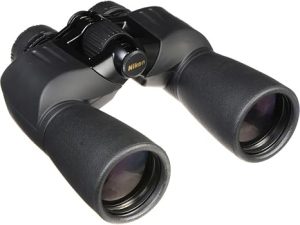
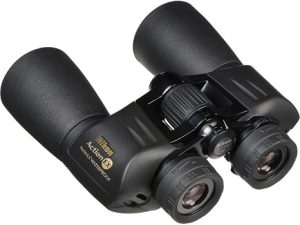
What makes this Nikon model particularly appealing is its emphasis on durability without making the binoculars unnecessarily cumbersome. The design combines an all-metal chassis with a lightweight polycarbonate shell, while the rubber-coated body provides a secure, non-slip grip. This makes the binoculars suitable for users who expect to take them outdoors rather than keeping them exclusively for occasional backyard stargazing.
The Nikon Action 10×50 EX Extreme also provides waterproof, fogproof, and shockproof performance. These features can be especially valuable for outdoor astronomy, where binoculars may be exposed to changing temperatures, moisture, accidental bumps, or challenging weather conditions. For someone who wants a sturdy and relatively lightweight pair of binoculars for both astronomy and general outdoor observation, this model is a compelling option.
Key Specifications
- Brand: Nikon
- Model: Action 10×50 EX Extreme
- Age Range: Adult
- Magnification: 10x
- Objective Lens Diameter: 50mm
- Special Features: Lightweight, waterproof
- Weather Protection: Waterproof and fogproof
- Impact Protection: Shockproof performance
- Chassis: All-metal chassis
- Outer Shell: Lightweight polycarbonate
- Body: Rubber-coated
- Grip: Firm, non-slip grip
- Primary Configuration: 10×50
10x Magnification for Night-Sky Observation
The Nikon Action 10×50 EX Extreme uses 10x magnification, giving users a closer view of distant objects than lower-powered binoculars.
For stargazing, this level of magnification can be useful for examining the Moon and exploring different sections of the night sky. It can also help bring individual stars, star groupings, and constellations into a more detailed view than you would get with the naked eye.
The 10x configuration also keeps the binoculars versatile. Rather than being designed exclusively for astronomical observation, they can be used for a range of daytime outdoor activities as well.
50mm Objective Lenses for Low-Light Viewing
The binoculars feature 50mm objective lenses, giving them a substantial optical opening for collecting available light.
This is particularly relevant for astronomy because stargazing takes place under low-light conditions. A 50mm objective lens can be advantageous when compared with smaller objective lenses, making the 10×50 configuration a popular choice among people looking for binoculars for nighttime observation.
Combined with the 10x magnification, the 50mm objectives give the Nikon Action a useful balance between magnification and light-gathering capability.
Lightweight Construction
Despite using an all-metal chassis, the binoculars are housed in a lightweight polycarbonate shell.
This combination is useful for users who want the structural benefits of a metal chassis without carrying an unnecessarily heavy optical instrument.
Weight matters when stargazing because binoculars are often held for several minutes at a time while scanning the sky. A lighter design can make carrying the binoculars between observation locations more convenient and may also reduce fatigue during outdoor use.
Waterproof and Fogproof Performance
One of the most useful characteristics of the Nikon Action 10×50 EX Extreme is its waterproof and fogproof performance.
Weather can change quickly during outdoor observation, and temperature differences can also create fogging problems with optical equipment. Fogproof construction can help the binoculars remain usable when environmental conditions change.
Waterproof performance adds another layer of protection when the binoculars are used outdoors. For stargazers who observe from locations where moisture or unexpected weather is a concern, this can be a significant advantage.
Shockproof Performance for Outdoor Use
The binoculars are also designed to provide shockproof performance.
This is particularly useful for users who take their binoculars on hikes, camping trips, outdoor excursions, or other activities where accidental knocks and impacts can happen.
Rather than being an optical instrument that needs to be handled extremely delicately, the Action 10×50 EX Extreme is designed with outdoor durability in mind.
This can give users greater confidence when transporting the binoculars between different stargazing locations.
All-Metal Chassis and Polycarbonate Shell
The construction combines an all-metal chassis with a lightweight polycarbonate shell.
The metal chassis contributes to the structural design of the binoculars, while the polycarbonate exterior helps keep the overall construction lightweight.
This combination is particularly appealing to outdoor observers who want durability without choosing an unnecessarily bulky pair of binoculars.
For astronomy enthusiasts who regularly travel to darker locations away from city lights, having binoculars that are relatively easy to carry can be a meaningful advantage.
Rubber-Coated Body for a Secure Grip
The Nikon Action 10×50 EX Extreme features a rubber-coated body designed to provide a firm, non-slip grip.
This is useful when using binoculars outdoors, particularly if your hands are cold, damp, or otherwise not providing an ideal grip.
The rubber coating also adds another layer of protection around the body. Combined with the shockproof design, it helps make the binoculars better suited to outdoor environments where accidental bumps and handling are inevitable.
Useful for Moon Viewing
The Nikon Action 10×50 EX Extreme can be a practical choice for Moon viewing.
The 10x magnification allows the Moon to appear substantially closer than it does to the naked eye, while the 50mm objective lenses provide a large optical opening for nighttime observation.
For someone getting started with binocular astronomy, the Moon is an excellent first target because it is bright and easy to locate. From there, users can begin exploring other parts of the night sky.
Suitable for Exploring Stars and Constellations
Beyond the Moon, the 10×50 configuration can be used to explore stars and constellations.
Binoculars offer a wider and more natural way to scan the sky than many high-magnification optical instruments. You can move from one section of the sky to another and gradually become familiar with different celestial patterns.
The Nikon Action’s 10x magnification gives you additional reach while the 50mm objective lenses are designed for low-light viewing.
For beginners, this can make binocular astronomy an enjoyable way to learn the night sky before investing in more specialized astronomical equipment.
Pros and Cons
Pros
- 10x magnification provides useful detail for Moon and star observation.
- 50mm objective lenses are well suited to nighttime viewing.
- Waterproof construction provides protection against moisture.
- Fogproof performance helps prevent internal fogging in changing conditions.
- Shockproof performance adds durability for outdoor use.
- All-metal chassis provides a sturdy structural foundation.
- Lightweight polycarbonate shell helps keep the binoculars easier to carry.
- Rubber-coated body provides a firm, non-slip grip.
- Suitable for astronomy as well as general outdoor observation.
- Practical option for users who regularly take binoculars into outdoor environments.
Cons
- 10x magnification can be challenging to hold completely steady during extended stargazing sessions.
- A tripod or other stable support may be useful for prolonged observation.
Who Are the Nikon Action 10×50 EX Extreme Binoculars Best For?
The Nikon Action 10×50 EX Extreme Binoculars are best for adults who want a durable and versatile pair of binoculars that can be used for stargazing, Moon viewing, outdoor observation, and general exploration.
They are particularly suitable for people who frequently use their binoculars outdoors and want protection against environmental conditions. The waterproof, fogproof, and shockproof characteristics make them an attractive option for camping, hiking, travel, and outdoor astronomy.
They are also a good fit for users who want a 10×50 configuration but prefer a relatively lightweight design. The combination of the metal chassis and polycarbonate shell provides durability while helping keep the overall construction manageable.
Also read : 8 Best Compact Binoculars – Top Picks for Travel, Bird Watching, Hiking & Outdoor Adventures