
Imagine this: the sun is slowly sinking behind a distant mountain range, painting the sky in beautiful shades of orange, pink, and gold. A gentle breeze rustles through the trees as the smell of freshly prepared dinner drifts through your campsite. Nearby, the children are laughing as they chase each other across the grass, while the adults settle into their camping chairs, enjoying the peaceful surroundings. As darkness falls and the first stars begin to appear, everyone gathers around the campfire to share stories, roast marshmallows, and create memories that will be cherished for years to come. At the heart of this wonderful outdoor experience is one essential piece of equipment that makes it all possible: a reliable family camping tent.
Family camping offers a refreshing opportunity to step away from busy schedules, digital distractions, and the demands of everyday life. Whether you are planning a weekend getaway at a nearby campground, a weeklong adventure in the mountains, a lakeside retreat, or an exciting road trip with the entire family, having the right tent can make a remarkable difference in your experience. It provides a comfortable place to sleep, a sheltered space to relax, and a dependable home base where everyone can recharge after a day filled with hiking, fishing, exploring nature, and other outdoor activities.
However, choosing the ideal family camping tent involves more than simply finding one large enough to accommodate everyone. The best tent should offer a thoughtful balance of spaciousness, comfort, durability, weather resistance, ventilation, and ease of setup. After all, nobody wants to spend the first hour of a camping trip struggling with complicated poles and confusing instructions while daylight fades and excited children wait impatiently to settle in. A well-designed tent can transform that potentially stressful task into a straightforward process, allowing you to spend more time enjoying the adventure and less time wrestling with equipment.
Space is particularly important when camping with family. A tent that feels adequate in a product photograph may become surprisingly cramped once sleeping bags, air mattresses, pillows, backpacks, and other essentials are inside. For this reason, it is worth considering not only the advertised sleeping capacity but also the tent’s actual floor dimensions, interior height, room layout, and available storage space. Some family tents feature multiple rooms that provide extra privacy for parents and children, while others offer generous living areas where everyone can sit comfortably during rainy afternoons. Models with large doors, vestibules, and convenient storage pockets can also make organizing camping gear considerably easier.
Weather protection is another essential consideration. Even a beautifully planned camping trip can become challenging when unexpected rain, strong winds, or chilly nighttime temperatures arrive. A dependable family tent should provide suitable rain protection, sturdy construction, secure anchoring points, and adequate ventilation to help manage condensation. Features such as a well-designed rainfly, sealed seams, durable flooring, and mesh windows can contribute to a more comfortable shelter, although performance will vary depending on the tent’s construction and the conditions in which it is used. Choosing a tent suited to your destination and expected weather conditions is therefore just as important as choosing one with enough sleeping space.
Convenience matters, too. Modern family camping tents come in a variety of designs, including traditional dome tents, spacious cabin-style models, tunnel tents, and instant tents with preattached or quick-deploying frames. Each style offers different advantages in terms of interior space, standing height, portability, setup time, and stability. While a large cabin tent may provide room to move around comfortably, a lighter and more compact model might be better suited to families who frequently change campsites or have limited vehicle storage. The best choice ultimately depends on your family’s size, camping habits, budget, and preferred outdoor destinations.
That is where this guide comes in. In 10 Best Family Camping Tents – Top Picks for Spacious Comfort, Easy Setup & Outdoor Adventures, we explore ten family camping tent options worth considering for your next outdoor escape. We will look at the features that matter most, including sleeping capacity, interior space, setup convenience, weather protection, ventilation, construction quality, and overall practicality. We will also consider the strengths and potential limitations of different designs to help you understand which type of tent may suit your family’s needs.
Whether you are a first-time camper searching for a straightforward, beginner-friendly shelter or an experienced outdoor enthusiast looking to upgrade to a more spacious family setup, this roundup is designed to help you make a more informed decision. You will discover options for families who prioritize generous living space, campers who value quick assembly, and outdoor adventurers who need a dependable shelter for a variety of camping conditions.
Ultimately, the right family camping tent is more than just a place to sleep. It is the cozy retreat where children whisper stories before bedtime, the sheltered gathering place where everyone escapes an afternoon shower, and the comfortable home base that makes exploring the outdoors together feel effortless. With the right choice, even a simple weekend beneath the stars can become an adventure your family talks about long after the camping gear has been packed away.
So, before you load the car, pack the sleeping bags, and set off in search of your next outdoor adventure, let’s explore the 10 best family camping tents that can help make your next getaway more comfortable, convenient, and memorable.
10 Best Family Camping Tents – Top Picks for Spacious Comfort, Easy Setup & Outdoor Adventures
| No. | Product name | Capacity | Best for | Key features to compare | Amazon link |
|---|---|---|---|---|---|
| 1 | Coleman Skydome 6-Person Camping Tent | 6 people | Best overall for small families | Quick setup, roomy interior, WeatherTec features | View on Amazon |
| 2 | CORE 9-Person Instant Cabin Tent | 9 people | Families prioritizing space and convenience | Pre-attached poles, cabin-style design, room divider on applicable models | View on Amazon |
| 3 | UNP 6-Person Camping Tent | 6 people | Families wanting a spacious shelter | Tall interior on applicable models, multiple windows, ventilation | View on Amazon |
| 4 | CAMPROS CP 8-Person Camping Tent | 8 people | Larger families and group camping | Room divider, mesh windows, cabin-style layout | View on Amazon |
| 5 | Coleman Instant Camping Tent | Varies by model | Campers who want fast setup | Pre-attached poles, convenient pitching, family-sized options | View on Amazon |
| 6 | Coleman Sundome Camping Tent | 4–6 people, depending on model | Budget-conscious families | Dome design, rainfly, straightforward assembly | View on Amazon |
| 7 | CORE 10-Person Straight Wall Cabin Tent | 10 people | Families needing extra living space | Tall walls, large floor area, room divider on applicable models | View on Amazon |
| 8 | Coleman Montana Camping Tent | Varies by model | Family base camps and longer weekends | Extended floor plan, hinged door on applicable models, rain protection | View on Amazon |
| 9 | UNP 10-Person Family Camping Tent | 10 people | Large families and group outings | Large interior, multiple doors or rooms on applicable models | View on Amazon |
| 10 | PORTAL 8-Person Family Camping Tent with Screen Room | 8 people | Families wanting a sheltered gathering area | Screen room on applicable models, ventilation, separate living space | View on Amazon |
1. Coleman Skydome 6-Person Camping Tent – Best Family Camping Tent for Spacious Comfort, Easy Setup & Outdoor Adventures
Planning a family camping trip is an exciting opportunity to step away from everyday routines and enjoy the beauty of the outdoors together. Whether you are heading to a scenic campground, exploring a forest, spending a weekend beside a lake, or organizing a memorable road trip, having a dependable tent can make the entire experience more comfortable. The Coleman Skydome 6-Person Camping Tent is an option worth considering for families looking for a practical shelter that combines sleeping capacity, portability, and convenience.
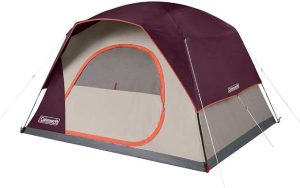
Manufactured by Coleman, a well-known outdoor equipment brand, the Skydome tent is designed for camping and hiking adventures. Its six-person occupancy rating makes it suitable for families and small groups who need a shared shelter for overnight stays in the outdoors. However, the amount of usable space will depend on the sleeping arrangements, air mattresses, sleeping bags, and personal belongings you bring along.
One of the most appealing aspects of the Skydome range is its emphasis on convenient camping. Coleman Skydome models are known for features such as a dome-style structure, a relatively straightforward setup process, and weather-protection elements designed to help campers stay comfortable in changing outdoor conditions. Exact specifications can vary by model, so it is important to confirm which features are included with the particular Skydome Tent 6P Blackberry C002 version before purchasing.
The supplied product details list an item weight of 12 pounds, a floor width of 10 feet, and water-resistance technology described as 3000. These specifications suggest a tent intended to balance family-sized accommodation with manageable transport. However, the provided dimensions of 1 inch long by 1 inch wide by 1 inch high appear to be placeholder or incomplete measurements rather than realistic tent dimensions.
In this review, we will examine the Coleman Skydome 6-Person Camping Tent’s specifications, sleeping capacity, floor space, portability, weather protection, seasonal suitability, and practical advantages to help you decide whether it is a suitable choice for your next family outdoor adventure.
Key Specifications of the Coleman Skydome 6-Person Camping Tent
| Feature | Details |
|---|---|
| Brand | Coleman |
| Product Name | Skydome Tent 6P Blackberry C002 |
| Manufacturer | Coleman |
| Recommended Uses | Camping and hiking |
| Occupancy | 6 people |
| Item Weight | 12 pounds |
| Listed Floor Width | 10 feet |
| Product Dimensions | Listed as 1″L × 1″W × 1″H; requires verification |
| Shape | Square, according to the supplied listing |
| Season Rating | 3-season |
| Water Resistance Technology | Listed as 3000; exact rating basis requires verification |
| Included Components | Listed as “Great Product”; actual accessories require verification |
| Color/Configuration | Blackberry C002 |
| Tent Style | Skydome family camping tent |
| Intended Use | Family camping, recreational outdoor trips, and hiking-related camping |
1. Six-Person Capacity for Family Camping
One of the main attractions of the Coleman Skydome 6-Person Camping Tent is its advertised capacity for six people. For families planning weekend trips or occasional outdoor holidays, this capacity offers the possibility of accommodating several campers under one roof.
A shared tent can make family camping more convenient by keeping everyone together in a single shelter. Parents can organize the sleeping arrangements, keep essential belongings nearby, and establish a central place where children can rest after a busy day of exploring the outdoors.
The six-person rating is particularly useful when planning trips with two adults and several children. It may also accommodate smaller families who prefer to have additional room for sleeping bags and camping accessories.
However, advertised tent capacity generally reflects how many people can fit into the available sleeping area rather than how comfortably everyone can move around. Six adults sleeping shoulder to shoulder will have a different experience from a family with young children who can share smaller sleeping spaces.
For this reason, families who prioritize comfort should consider the number and size of their sleeping pads, the space needed for personal belongings, and whether they intend to keep luggage inside the tent.
If your family regularly travels with bulky air mattresses or prefers more personal space, a larger tent may be worth considering. Nevertheless, the six-person configuration makes the Coleman Skydome a useful starting point for families seeking a shared outdoor shelter.
2. Dome-Style Design for Practical Outdoor Use
The Coleman Skydome belongs to a tent range associated with a dome-style structure. This type of design is popular among recreational campers because it offers a practical balance between interior space, portability, and relatively straightforward assembly.
A dome tent typically uses flexible poles that cross or connect to form a curved roof. This structure helps support the tent fabric and creates a sheltered interior without requiring the large footprint or tall, rigid frame associated with some cabin-style tents.
For family camping, this design can be advantageous when setting up at established campgrounds, wooded sites, or outdoor recreation areas where a straightforward tent configuration is desirable.
The curved profile can also provide a useful balance between height and stability, although actual performance in wind depends on pole construction, tent geometry, anchoring, and the weather conditions encountered.
Unlike some tall cabin tents, a dome-style model may offer less standing room around the edges. Families should therefore check the manufacturer’s actual peak height and interior dimensions before deciding whether the tent provides enough room for changing clothes or moving around comfortably.
The supplied listing describes the tent’s shape as square, but the exact floor geometry should be verified against the manufacturer’s specifications for the C002 version.
Overall, the Skydome design is worth considering for families who prefer a practical camping shelter rather than a large, room-divided cabin tent.
3. Ten-Foot Floor Width for Sleeping Arrangements
The supplied product details list a floor width of 10 feet, which could provide a useful amount of lateral space for arranging family sleeping equipment if this measurement is accurate for the specific model.
Floor dimensions are among the most important specifications to examine when choosing a family tent. They determine whether sleeping bags, sleeping pads, or air mattresses can fit comfortably without leaving the interior excessively crowded.
A wider sleeping area can also make it easier to arrange children’s sleeping spaces beside those of their parents. Depending on the tent’s full dimensions, families may be able to position their gear along the sides while preserving a central area for movement.
However, floor width alone does not reveal the tent’s complete usable area. The floor length, wall shape, height, and placement of doors all affect how efficiently the interior can be arranged.
The provided product dimensions of 1 inch by 1 inch by 1 inch are not realistic for a six-person camping tent, so they should not be used to evaluate the product. Before publishing or purchasing, confirm the actual floor length and width from the manufacturer’s documentation or the exact Amazon listing.
It is also worth remembering that a six-person tent may not provide sufficient storage space for six campers’ luggage and equipment if everyone sleeps inside.
For families who intend to keep backpacks, shoes, and other belongings inside the tent, checking the full floor plan is essential.
4. Twelve-Pound Weight for Transport and Portability
According to the supplied specifications, the Coleman Skydome 6-Person Camping Tent weighs 12 pounds. If this figure refers to the tent’s complete packed weight, it could be a useful consideration for families who need to transport their camping equipment between home, vehicle, and campsite.
Weight matters because camping often involves carrying several items at once, including sleeping bags, clothing, food, water, cooking equipment, and lighting. A tent that is reasonably manageable to transport can help make the packing process less demanding.
For families traveling by car, a 12-pound tent would generally be manageable to load alongside other camping essentials. It may also be practical for campground trips where the parking area is relatively close to the campsite.
However, families planning to hike significant distances to reach remote campsites should consider more than the tent’s weight alone. A six-person tent may occupy substantial space in a backpack, and its packed dimensions, pole arrangement, and overall bulk can influence how easy it is to carry.
The supplied information does not clarify whether the listed 12 pounds represents the minimum trail weight, the complete packed weight, or another measurement. Confirming this distinction will help you make a more accurate comparison with competing family tents.
For conventional car camping and short walks to established campsites, the listed weight is a useful starting point when evaluating portability.
5. Three-Season Suitability for Spring, Summer, and Fall
The Coleman Skydome 6-Person Camping Tent is listed as a three-season tent. This category generally refers to shelters intended for camping during spring, summer, and fall, subject to the model’s specific weather limitations.
For many families, three-season suitability covers a wide range of recreational activities. These may include summer holidays at established campgrounds, springtime nature trips, autumn weekends in the countryside, and overnight stays during mild weather.
A three-season tent typically prioritizes a combination of ventilation, rain protection, and manageable weight rather than the specialized construction required for severe winter conditions.
For example, mesh panels can help improve airflow during warmer nights, while a compatible rainfly and properly constructed seams can help protect the interior from precipitation. The exact features available depend on the specific tent model.
Families should remember that a three-season rating does not guarantee comfort in every weather condition. Cold temperatures, strong winds, heavy rainfall, and sudden changes in weather can still create challenging camping conditions.
Before heading out, check the forecast, select a suitable campsite, secure the tent properly, and follow the manufacturer’s guidance concerning wind and weather limitations.
The three-season designation makes the Skydome a potential option for ordinary family camping trips, particularly when the destination and expected conditions are appropriate for a recreational tent.
6. Water-Resistance Technology for Protection Against Rain
Weather protection is an essential consideration when choosing a tent for family adventures. Unexpected rain can turn a pleasant afternoon into a difficult experience if water begins entering the sleeping area or soaking essential equipment.
The supplied product details list water-resistance technology as “3000.” This may refer to a waterproof rating, such as a 3,000 mm hydrostatic head, but the information provided does not explicitly identify the measurement or confirm that interpretation.
If the figure represents a 3,000 mm hydrostatic-head rating, it would describe the pressure of a column of water that the fabric can withstand under a standardized test. It would not, by itself, guarantee that the entire tent remains dry in every situation.
The performance of a tent in rain also depends on the rainfly design, seam construction, floor material, zippers, ventilation openings, ground conditions, and how well the tent is pitched.
For family campers, it is important to check whether the specific Skydome model includes a full or partial rainfly and whether the seams and floor have appropriate water-resistant construction.
Proper campsite selection also matters. Avoid pitching in depressions where rainwater may collect, and choose ground that drains effectively. A suitable footprint, when recommended by the manufacturer and correctly sized, may help protect the tent floor from abrasion and ground moisture.
Because the supplied listing does not clarify the exact meaning of “3000,” confirm the rating before presenting it as a verified waterproof specification.
7. Setup Convenience for Less Stressful Camping Trips
Setting up camp is often one of the first challenges families encounter after arriving at their destination. Children may be eager to explore, daylight may be fading, and everyone may be ready to relax after the journey.
Coleman Skydome tents are associated with a design intended to make setup relatively straightforward compared with some more complicated tent configurations. The specific setup time and assembly details, however, depend on the model.
For families new to camping, a conventional dome-style tent can be a practical choice because its structure is generally easier to understand than that of a large multiroom shelter with numerous poles and extensions.
Learning the setup process at home before departure can make the experience considerably smoother. It gives you an opportunity to identify the tent’s components, understand how the poles connect, and check that all essential parts are present.
It is also worth practicing how to attach the rainfly and secure the tent with stakes and guylines. Correct pitching is important for stability and weather protection, particularly if conditions change during the night.
The supplied product details do not explicitly confirm a particular setup-time claim or instant-assembly mechanism for the C002 model. Buyers should therefore verify the exact setup features rather than assume that every Skydome version uses the same system.
Overall, the tent’s practical dome-style configuration may appeal to families who want a shelter that is reasonably straightforward to assemble and take down.
8. Camping and Hiking Versatility
The product listing identifies camping and hiking as the recommended uses for the Coleman Skydome 6-Person Camping Tent. This suggests that it is intended for recreational outdoor activities where a portable shelter is needed for overnight stays.
For family camping, the tent could serve as a central sleeping area during weekends at established campgrounds, nature trips, and outdoor holidays.
It may also be useful for families who enjoy day hikes followed by overnight stays at suitable campsites. However, its six-person capacity means that its size and packed bulk should be considered carefully if you need to carry it for long distances.
For vehicle-based adventures, transport is usually less demanding because the tent can travel in the car along with other equipment. This gives families more flexibility to choose a larger shelter without having to carry every component on their backs.
Before using the tent in a particular location, check whether the campsite permits overnight camping and whether the model is appropriate for the local terrain and expected weather.
For backpacking trips, compare the packed dimensions and weight against the available carrying capacity of your equipment. A tent suitable for car camping is not necessarily the best choice for a family undertaking a long-distance hike.
Its listed camping and hiking applications make the Skydome a potential option for families who enjoy a mixture of outdoor recreation and overnight adventures.
9. Blackberry Color and Practical Tent Visibility
The supplied listing identifies the configuration as “SKYDOME TENT 6P BLACKBERRY C002.” The Blackberry designation appears to refer to the tent’s color or color configuration.
Color may seem like a minor consideration compared with capacity and weather protection, but it can influence the tent’s appearance and how easily it stands out among other shelters at a busy campground.
A distinctive color can help family members identify their campsite when several tents are pitched close together. This may be especially convenient at organized campgrounds, festivals, or popular outdoor destinations.
The actual shade and pattern should be confirmed from the product images and the exact listing, as colors may appear different under varying lighting conditions and on different displays.
Color alone does not determine a tent’s durability, waterproof performance, or ability to withstand wind. Those characteristics depend on the materials and structural design.
For families who care about the appearance of their camping equipment, the Blackberry configuration may be an appealing detail, provided it matches the version they intend to purchase.
10. Included Components and What to Verify Before Buying
The supplied specification table lists the included components as “Great Product.” This wording does not identify the actual accessories included with the tent, so it is important not to assume that every item needed for camping comes in the package.
Depending on the exact product version, a camping tent package may include the tent body, poles, rainfly, stakes, guylines, and a storage bag. However, these items should be verified against the listing for the specific Coleman Skydome C002 model.
Other accessories, such as a footprint, sleeping pads, air mattresses, lanterns, and additional weather-protection equipment, may need to be purchased separately.
Checking the package contents before buying can help avoid inconvenience at the campsite. Discovering that an essential pole, rainfly, or other required component is missing can disrupt a trip, especially when you arrive late or camp far from nearby shops.
It is also sensible to check the seller, product variant, return policy, and current customer feedback. These details can help you determine whether the product listing accurately reflects the tent you expect to receive.
For an article comparing family camping tents, accurate component information is particularly important because accessories can affect both value for money and overall convenience.
Pros and Cons of the Coleman Skydome 6-Person Camping Tent
Pros
-
Six-person occupancy rating: Offers a shared shelter option for families and small groups.
-
Recognizable outdoor brand: Manufactured by Coleman, a well-established camping equipment brand.
-
Manageable listed weight: The supplied 12-pound figure may be convenient for vehicle-based camping if it represents the complete packed weight.
-
Useful floor-width specification: The listed 10-foot width provides a starting point for evaluating sleeping arrangements, subject to verification.
-
Three-season classification: Intended for recreational camping during suitable spring, summer, and fall conditions.
-
Practical dome-style design: Offers a conventional shelter configuration suited to many established campsites.
-
Camping and hiking applications: Designed for outdoor recreation and overnight shelter.
-
Distinctive Blackberry configuration: May appeal to buyers who prefer this color option.
Cons
-
Incomplete product dimensions: The supplied 1-inch measurements are not realistic for a six-person tent and require verification.
-
Unclear water-resistance rating: The listed “3000” figure needs confirmation before it can be interpreted as a specific waterproof rating.
Who Should Buy the Coleman Skydome 6-Person Camping Tent?
The Coleman Skydome 6-Person Camping Tent may be worth considering for several types of outdoor enthusiasts.
Families with children may appreciate the opportunity to share a single shelter during weekend camping trips and outdoor holidays. The six-person capacity provides a starting point for planning sleeping arrangements, although families should check the actual interior dimensions.
Beginner campers may find a conventional dome-style tent appealing because it offers a relatively familiar shelter design. Practicing the assembly process before departure can make the first camping experience less stressful.
Car campers may find the tent more practical for established campgrounds where equipment can be transported by vehicle rather than carried over long distances.
Outdoor recreation enthusiasts who enjoy a combination of camping, nature exploration, and suitable hiking-related overnight stays may also wish to consider it.
However, families who need separate sleeping rooms, generous standing height, or a large indoor living area may prefer a bigger cabin-style tent. Likewise, backpackers planning long hikes should verify the complete packed weight and dimensions before choosing a six-person shelter.
The best fit depends on how many people will sleep inside, how much equipment you carry, and the conditions in which you plan to camp.
Final Verdict: Is the Coleman Skydome 6-Person Camping Tent Worth Considering?
The Coleman Skydome 6-Person Camping Tent is a potential choice for families looking for a practical shelter for recreational camping and outdoor adventures. Its six-person occupancy rating, listed 12-pound weight, and conventional dome-style design make it worth comparing with other family camping tents.
Its strongest appeal is the combination of family-oriented capacity and a design intended for general camping use. For families who primarily visit established campgrounds or travel by car, it may offer a convenient starting point when planning their outdoor accommodation.
The three-season classification also makes it a candidate for camping during suitable spring, summer, and fall conditions. Nevertheless, weather performance depends on the exact construction, rainfly coverage, floor materials, pitching method, and conditions encountered.
Several supplied specifications need confirmation before a final buying recommendation can be made. In particular, the listed product dimensions of 1 inch by 1 inch by 1 inch are clearly unsuitable for evaluating a family tent, the meaning of the “3000” water-resistance figure is not specified, and the included components are not properly identified.
It is also important to remember that a six-person capacity does not necessarily mean six people will have generous sleeping or storage space. Families who prioritize comfort should check the complete floor dimensions, interior height, and sleeping layout before purchasing.
Overall, the Coleman Skydome 6-Person Camping Tent is worth investigating as a family camping option, provided the exact model specifications and included accessories are verified. For your final product roundup, confirm the details against the manufacturer’s information and the corresponding Amazon listing so readers can make an informed comparison with the other nine tents.
Also read : 9 Best Tents for Camping – Top Picks for Comfort, Weather Protection & Outdoor Adventures
2. CORE 9-Person Instant Cabin Tent – Best Instant Family Camping Tent for Quick Setup, Spacious Comfort & Weather Protection
A successful family camping trip begins with a shelter that offers enough room for everyone to relax, sleep comfortably, and keep essential belongings organized. However, assembling a large tent can sometimes become one of the most frustrating parts of an outdoor adventure, particularly when you arrive at your campsite late in the day or have excited children waiting to explore. The CORE 9-Person Instant Cabin Tent is designed to make this process easier by combining a spacious cabin-style interior with pre-attached poles that lock into place for a remarkably quick setup.
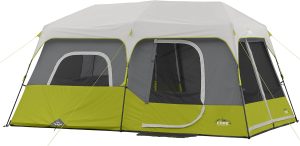
Manufactured by CORE, this tent is intended for families and groups who want a generous camping shelter without spending too much time assembling complicated pole systems. According to the supplied product details, it measures 14 feet by 9 feet, features a 78-inch center height, and can accommodate up to nine people without additional gear. Its interior is also designed to fit two queen-size air beds, offering flexibility for families who prefer elevated sleeping arrangements instead of traditional sleeping bags.
Another notable feature is its instant pop-up-style setup system. The pre-attached poles are designed to lock into position, with the manufacturer advertising a setup time of two minutes or less under suitable conditions. This can be especially appealing to families who want to spend more time enjoying the outdoors and less time preparing their campsite.
Weather protection is also an important part of the design. The tent features CORE’s H2O Block Technology, a stated 1,200 mm fabric rating, a fully taped rainfly, and sealed seams. Fully zipped windows, adjustable ground-level vents, and a mesh ceiling help balance protection against the elements with airflow. Interior storage pockets provide additional convenience by keeping smaller camping essentials off the floor.
Weighing 27.6 pounds, the CORE 9-Person Instant Cabin Tent is designed with spacious recreational camping in mind rather than ultralight backpacking. Its combination of quick assembly, generous interior height, and practical organization features makes it worth considering for families who primarily travel to established campsites by car.
In this review, we will examine the CORE 9-Person Instant Cabin Tent’s specifications, sleeping capacity, instant setup system, interior layout, weather protection, ventilation, storage options, portability, and potential drawbacks to help you determine whether it is the right choice for your next family camping adventure.
Key Specifications of the CORE 9-Person Instant Cabin Tent
| Feature | Details |
|---|---|
| Brand | CORE |
| Product Name | CORE 9-Person Instant Cabin Tent |
| Material | Polyester |
| Product Dimensions | 168″L × 108″W × 78″H |
| Floor Dimensions | 14 feet × 9 feet |
| Item Weight | 27.6 pounds |
| Recommended Uses | Camping and hiking |
| Occupancy | Up to 9 people |
| Season Rating | 3-season |
| Shape | Rectangular |
| Center Height | 78 inches |
| Setup System | Instant setup with pre-attached poles |
| Advertised Setup Time | 2 minutes or less under suitable conditions |
| Sleeping Capacity | Up to 9 people without gear; approximately 4 people with gear |
| Air Mattress Compatibility | Fits two queen-size air beds |
| Water Resistance Technology | CORE H2O Block Technology |
| Listed Fabric Water Resistance | 1,200 mm |
| Rainfly | Included, fully taped |
| Seam Construction | Sealed seams |
| Window Design | Fully zipped windows |
| Ventilation | Lower ground vents and mesh ceiling |
| Interior Organization | Storage pockets |
| Stability Accessories | Guylines and steel stakes |
| Country of Origin | Imported |
1. Spacious Nine-Person Capacity for Family Camping
One of the most appealing features of the CORE 9-Person Instant Cabin Tent is its advertised capacity for up to nine people. This makes it a potential option for larger families, groups of friends, and campers who want a shared shelter for weekend getaways or extended stays at established campgrounds.
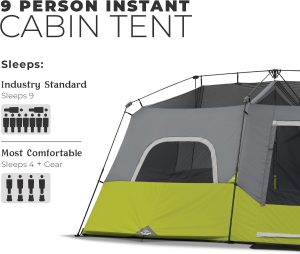
According to the supplied product information, the tent measures 14 feet long by 9 feet wide, providing approximately 126 square feet of floor space. This rectangular layout can help families organize sleeping arrangements and camping equipment within a single shelter.
However, the manufacturer’s capacity description makes an important distinction: the tent can accommodate up to nine people without gear, but it is more comfortably suited to approximately four people when camping equipment is included.
That distinction matters because sleeping capacity is not the same as comfortable living capacity. Nine people sleeping closely together may leave little room for backpacks, clothing, shoes, and other personal belongings.
For a family of four, the extra floor space can provide more flexibility for arranging air beds, sleeping bags, and essential equipment. Larger families may also be able to use the available space effectively, provided they plan their sleeping arrangements carefully.
The rectangular floor plan can make it easier to position sleeping equipment in organized rows, while the cabin-style structure provides a practical layout for recreational camping.
For families who prioritize interior space and want to avoid the cramped feeling associated with smaller tents, the CORE 9-Person Instant Cabin Tent offers a useful capacity advantage.
2. Instant Setup Technology for Faster Campsite Preparation
One of the biggest selling points of the CORE 9-Person Instant Cabin Tent is its pre-attached pole system. Instead of requiring campers to assemble numerous separate poles and thread them through fabric sleeves, the tent’s poles are already connected to the structure and designed to lock into position.
CORE advertises a setup time of two minutes or less. Although the actual time will depend on the user’s experience, campsite conditions, and the process of securing the tent, the instant design can significantly simplify initial assembly.
For families arriving at a campsite after a long drive, this convenience can make a noticeable difference. Rather than spending an extended period assembling the shelter, campers can focus on arranging sleeping equipment, preparing meals, or enjoying their surroundings.
The design may also appeal to beginners who have limited experience pitching large tents. A simpler assembly process can reduce the confusion associated with identifying separate poles and working out how they connect.
Nevertheless, quick setup does not eliminate the need to secure the tent properly. Campers should still follow the manufacturer’s instructions for anchoring the structure, attaching the rainfly where applicable, and using the supplied guylines and stakes.
It is also sensible to practice setting up and packing away the tent before leaving home. This helps familiarize you with the locking mechanisms and folding sequence, reducing the likelihood of difficulties when packing up at the end of a trip.
For families who value convenience, the instant pole system is one of the strongest reasons to consider this tent.
3. Generous 78-Inch Center Height for Improved Interior Comfort
Interior height can significantly influence how comfortable a family tent feels, particularly when campers need to change clothes, organize their belongings, or move around during rainy weather.
The CORE 9-Person Instant Cabin Tent has a listed center height of 78 inches, equivalent to 6 feet 6 inches. This provides substantial headroom for many adults and may allow taller users to stand upright near the center of the tent.
Compared with lower-profile dome tents, the cabin-style structure is designed to offer a more upright interior. This can make everyday activities such as getting dressed, arranging sleeping bags, and helping children prepare for bed more convenient.
The extra height can also help the interior feel less confined, especially when several people are sharing the shelter.
However, the 78-inch measurement refers to the center height rather than the height available throughout the entire tent. The walls and roof slope can reduce headroom closer to the edges.
Families should also remember that standing room does not automatically translate into a larger floor area. The tent’s 14-by-9-foot footprint still determines how much space is available for sleeping equipment and luggage.
Overall, the generous center height is a valuable feature for families who prefer a shelter that feels more like a small indoor room than a low sleeping enclosure.
4. Rectangular Floor Plan and Queen-Size Air Mattress Compatibility
The CORE 9-Person Instant Cabin Tent features a rectangular floor measuring 14 feet by 9 feet. This layout offers approximately 126 square feet of floor space, giving families several possibilities for arranging their sleeping equipment.
According to the manufacturer, the tent can accommodate two queen-size air beds. This can be particularly useful for families who prefer elevated sleeping surfaces rather than sleeping directly on the ground.
Two queen-size air beds can provide a more familiar sleeping arrangement for adults, while children may use sleeping bags or smaller sleeping pads, depending on the space remaining.
For a family of four, this configuration could provide a comfortable sleeping arrangement, although the amount of remaining room will depend on the actual dimensions of the air beds and the placement of other equipment.
Campers should be aware that two queen-size mattresses occupy a considerable portion of the floor. Additional space may still be needed for clothing, backpacks, shoes, and other essentials.
If you intend to use large air mattresses, it is worth measuring them before your trip and comparing their dimensions with the tent’s interior floor plan.
The rectangular layout can also simplify the organization of sleeping areas, helping families separate sleeping equipment from smaller belongings.
For campers who value flexible sleeping arrangements, the CORE tent’s floor dimensions and stated air mattress compatibility are useful advantages.
5. H2O Block Technology and 1,200 mm Water Resistance
Weather protection is essential when camping with family, especially when rain arrives unexpectedly or conditions change during the night.
The CORE 9-Person Instant Cabin Tent features H2O Block Technology and a listed fabric water-resistance rating of 1,200 mm. This rating generally refers to the hydrostatic head measurement, which indicates the amount of water pressure a fabric can withstand under standardized testing.
The rating provides a useful specification for comparing tent materials, but it should not be interpreted as a guarantee that the entire tent will remain dry in every weather condition.
The supplied product information also identifies a fully taped rainfly and sealed seams. These features are intended to help reduce water entry through vulnerable areas where fabric panels join or where rainwater might otherwise penetrate.
Fully zipped windows can provide another layer of protection when the weather turns wet, provided they are properly closed and the tent is pitched according to the manufacturer’s instructions.
For family camping, these features can be helpful during ordinary recreational trips in suitable conditions. However, actual performance also depends on rain intensity, wind direction, campsite drainage, fabric condition, and correct assembly.
A 1,200 mm fabric rating should not be treated as evidence that the tent is suitable for prolonged severe storms. Families expecting heavy rainfall should review the manufacturer’s detailed weather guidance and consider whether a shelter with a higher verified waterproof rating would better suit their needs.
Choosing a campsite on well-drained ground and avoiding low-lying areas where water can accumulate will also help improve comfort during wet weather.
6. Fully Taped Rainfly and Sealed Seams for Added Weather Protection
The CORE 9-Person Instant Cabin Tent includes a rainfly designed to provide additional protection against precipitation. Its fully taped construction and sealed seams are intended to help prevent water from entering through areas that may be more vulnerable than the main fabric panels.
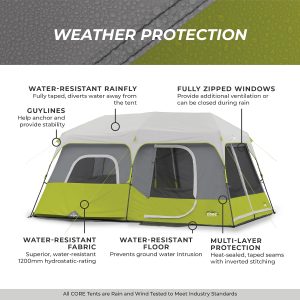
A rainfly is an important component of many camping tents because it helps shield the tent body from direct rainfall. Depending on its coverage and design, it can also protect parts of the roof and windows from moisture.
Sealed seams address another potential entry point for water. When tent panels are stitched together, small openings may remain around the needle holes. Proper seam sealing helps reduce the likelihood of water passing through these areas.
For families, these construction features can make a difference when spending the night in damp conditions or encountering occasional showers during a camping trip.
The supplied listing also states that the tent includes guylines and steel stakes to improve stability. These components help secure the shelter to the ground and support its structure when used correctly.
However, no rainfly or seam construction can compensate for poor campsite selection or inadequate anchoring. Campers should pitch the tent on suitable ground, secure all required attachment points, and follow the manufacturer’s instructions for expected weather conditions.
Overall, the included rainfly and sealed seams provide useful design features for recreational family camping, although their effectiveness depends on the complete tent construction and the conditions encountered.
7. Adjustable Ventilation for a More Comfortable Interior
Ventilation is especially important when several people sleep inside a tent. Body heat and moisture from breathing can accumulate overnight, sometimes leading to condensation on interior surfaces.
The CORE 9-Person Instant Cabin Tent addresses this concern through a combination of lower ground-level vents and a mesh ceiling.
The lower vents are designed to draw cooler air into the tent, while the mesh ceiling allows warmer air to rise and escape when conditions and the tent’s rainfly configuration permit.
This arrangement supports airflow through the shelter and can help reduce the buildup of warm, humid air.
For families camping during warmer months, ventilation can make the interior feel more comfortable, particularly when several people share the same sleeping area.
Air circulation is also important when the tent is occupied overnight, as moisture from breathing and damp clothing can contribute to condensation.
However, ventilation performance depends on outdoor temperature, humidity, wind, and whether the vents are obstructed. Even a well-ventilated tent may experience condensation in cold or humid conditions.
Campers should keep ventilation openings clear whenever conditions allow and avoid bringing wet equipment into the sleeping area unnecessarily.
The mesh ceiling can also provide an open view of the sky when the tent is configured appropriately and the rainfly is not covering that area. This can add to the enjoyment of camping on clear nights.
For families who prioritize airflow and comfort, the tent’s ventilation design is a useful feature.
8. Interior Storage Pockets for Better Organization
A spacious tent can quickly become cluttered when everyone brings personal belongings, electronic accessories, flashlights, toiletries, and other camping essentials.
The CORE 9-Person Instant Cabin Tent includes interior storage pockets designed to keep small items organized and off the floor.
These pockets can provide convenient places for items such as phones, headlamps, glasses, maps, and other lightweight accessories that campers may want to reach during the night.
Keeping small belongings off the ground can help reduce clutter around sleeping bags and air mattresses. It can also make it easier to locate frequently used items without searching through luggage.
For families with children, simple storage solutions can make a shared tent easier to manage. Each person may be able to keep selected belongings in a consistent place, helping reduce the chance of items becoming mixed together.
However, storage pockets are generally intended for small, lightweight objects rather than heavy equipment. The supplied information does not specify the pockets’ dimensions or weight limits, so users should avoid overloading them.
Larger items such as backpacks, coolers, and bulky clothing may require separate storage arrangements.
Although interior pockets are a relatively small feature, they contribute to a more organized camping environment and can make day-to-day life inside the tent more convenient.
9. Steel Stakes and Guylines for Improved Stability
A family camping tent needs to remain securely positioned throughout the night, especially when wind or changing weather conditions are expected.
The CORE 9-Person Instant Cabin Tent includes steel stakes and guylines intended to help stabilize the structure.
Stakes secure the tent to suitable ground, while guylines provide additional support by helping manage tension across the tent’s structure. When correctly positioned, these components can reduce unwanted movement and help maintain the intended shape of the shelter.
For families camping at established campgrounds, proper anchoring is an important part of preparing the tent for overnight use.
The quality of the ground matters, too. Stakes may behave differently in loose sand, soft soil, rocky terrain, or hard-packed ground. Campers should use suitable anchoring methods for the campsite and follow the manufacturer’s instructions.
It is important not to assume that steel stakes and guylines make a tent suitable for extreme winds. The instant cabin design has a relatively tall profile, and wind resistance depends on the overall structure, anchoring, and weather conditions.
If strong winds are forecast, consider choosing a more sheltered location or postponing the trip if conditions exceed the manufacturer’s recommendations.
For ordinary camping conditions, the inclusion of stakes and guylines is a practical advantage because these components help campers secure the tent without necessarily needing to purchase them separately.
10. Portability and Practicality for Car Camping
The CORE 9-Person Instant Cabin Tent weighs 27.6 pounds, making it substantially heavier than many smaller recreational tents.
This weight is understandable for a shelter designed to accommodate a large group and incorporate a pre-attached pole structure. However, it is an important consideration when deciding how and where to use the tent.
For car camping, portability is generally less challenging because the tent can be transported in a vehicle alongside sleeping bags, cooking equipment, clothing, and other supplies.
Families can then carry the tent a relatively short distance from the parking area to the campsite.
The tent may be less convenient for long-distance backpacking, where every pound and the packed dimensions of equipment can affect comfort. A large instant cabin tent is typically more appropriate for vehicle-based camping than for trips requiring campers to carry all their equipment over substantial distances.
The setup system may also add convenience at the campsite, potentially making the tent’s weight a worthwhile trade-off for families who prioritize quick assembly and interior space.
The supplied product details do not specify the packed dimensions, so it is worth checking whether the storage bag fits comfortably in your vehicle alongside the rest of your camping gear.
Overall, the CORE tent is best considered a spacious recreational shelter for families who value convenient setup over ultralight portability.
Pros and Cons of the CORE 9-Person Instant Cabin Tent
Pros
-
Fast setup system: Pre-attached poles lock into place, with the manufacturer advertising setup in two minutes or less under suitable conditions.
-
Large sleeping capacity: Rated for up to nine people without gear, offering a shared shelter for larger families and groups.
-
Generous floor area: The 14-by-9-foot layout provides approximately 126 square feet of floor space.
-
Tall center height: The 78-inch center height offers useful headroom for many adults.
-
Queen-size air mattress compatibility: Designed to accommodate two queen-size air beds.
-
Rainfly included: The fully taped rainfly and sealed seams are intended to help protect against rain.
-
Ventilation features: Lower vents and a mesh ceiling support airflow.
-
Interior storage pockets: Provide convenient organization for small belongings.
-
Stability accessories included: Guylines and steel stakes help secure the tent.
-
Useful for car camping: Its spacious design and quick assembly make it worth considering for established campsites.
Cons
-
Relatively heavy: At 27.6 pounds, it is less convenient for long-distance backpacking.
-
Limited space when fully occupied: Nine people may fit without gear, but the tent is more comfortable for a smaller group with luggage.
Who Should Buy the CORE 9-Person Instant Cabin Tent?
The CORE 9-Person Instant Cabin Tent may be particularly suitable for families who prioritize interior space and fast assembly.
Large families may appreciate the advertised capacity when planning shared sleeping arrangements. Families with four or fewer people may find the additional floor space especially useful for organizing sleeping equipment and personal belongings.
Beginner campers may benefit from the pre-attached pole system, which is designed to make the initial setup process simpler than assembling a tent with numerous separate poles.
Car campers are likely to get the greatest benefit from the tent’s spacious design because they can transport its 27.6-pound weight in a vehicle rather than carrying it over long distances.
Families who use air mattresses may appreciate the stated compatibility with two queen-size beds, which can help create a more familiar sleeping arrangement.
Weekend adventurers who visit established campgrounds may also find the tent appealing because the quick setup system can help them settle in and begin enjoying their trip sooner.
However, backpackers who need lightweight equipment may prefer a smaller tent with a lower packed weight. Families who frequently camp in severe weather should also carefully review the tent’s weather limitations and compare its specifications with alternatives designed for more demanding conditions.
Final Verdict: Is the CORE 9-Person Instant Cabin Tent Worth Considering?
The CORE 9-Person Instant Cabin Tent is a compelling option to investigate for families who want a spacious camping shelter with a convenient setup system.
Its biggest advantage is the combination of a generous 14-by-9-foot floor plan, a 78-inch center height, and pre-attached poles designed to lock into place quickly. These features can make the tent appealing to families who want to spend less time assembling their shelter and more time enjoying the outdoors.
The interior is designed to accommodate two queen-size air beds, and the included storage pockets help keep smaller essentials organized. Meanwhile, the rainfly, taped seams, adjustable ventilation, steel stakes, and guylines provide useful features for recreational camping in suitable conditions.
There are trade-offs to consider. At 27.6 pounds, the tent is better suited to car camping than long-distance backpacking. Its nine-person capacity also assumes limited space for personal belongings, so families who prioritize comfort may prefer to use it with fewer occupants.
The listed 1,200 mm water-resistance rating provides a useful comparison point, but it should not be treated as a guarantee of protection during severe storms. Proper pitching, anchoring, campsite selection, and attention to weather forecasts remain important.
Overall, the CORE 9-Person Instant Cabin Tent is worth considering for families who value quick setup, generous headroom, and flexible sleeping arrangements. Its strongest use case is vehicle-based family camping, where its weight is less of a concern and its spacious interior can be put to good use.
For readers comparing the best family camping tents, this model stands out as a candidate for the best instant cabin tent for quick setup and spacious comfort, particularly for families who want a practical shelter for weekend trips and established campgrounds.
3. UNP 6-Person Camping Tent – Best Family Camping Tent for Ventilation, Easy Setup & Spacious Comfort
Choosing the right family camping tent means finding a shelter that offers enough room to sleep comfortably, provides reliable protection from the elements, and remains easy to manage throughout your outdoor adventure. Whether you are planning a weekend getaway at a scenic campground, a fishing trip beside a lake, or a hiking holiday with the family, a well-designed tent can make the difference between a relaxing experience and an uncomfortable night outdoors. The UNP 6-Person Camping Tent is an option worth considering for families looking for a balance of interior space, ventilation, and convenient assembly.
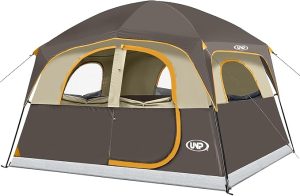
Designed for camping and hiking, this tent features a roomy interior measuring approximately 10 feet by 9 feet, with a stated center height of 78 inches. Its advertised six-person capacity makes it suitable for families and small groups, while the generous center height provides room for many adults to stand upright when changing clothes or organizing their belongings.
One of the most appealing aspects of the UNP tent is its ventilation system. It features a large mesh door, five mesh windows, and a mesh roof section designed to encourage airflow and provide views of the surrounding campsite. These features can be particularly useful during warm-weather camping, when several people sharing one shelter may generate considerable heat and moisture overnight.
The tent is also designed with convenience in mind. According to the supplied product information, two people can set it up in approximately five minutes, while one person may be able to complete the process in around ten minutes. Its carry bag measures approximately 24.6 × 8.26 × 8.26 inches, and the listed weight is around 18 pounds, making it a practical candidate for family car camping and established campsites.
For weather protection, the supplied details describe a polyurethane waterproof coating, steel leg poles, and a rainfly. However, the listing contains differing water-resistance figures: the specification table states 1,500 mm, while the product description mentions a 1,000 mm coating. These figures should be verified against the exact model before making a definitive comparison.
In this review, we will examine the UNP 6-Person Camping Tent’s specifications, sleeping capacity, interior height, setup process, ventilation, weather protection, portability, durability considerations, advantages, and potential drawbacks to help you determine whether it is a suitable choice for your next family camping trip.
Key Specifications of the UNP 6-Person Camping Tent
| Feature | Details |
|---|---|
| Brand | UNP |
| Product Name | UNP 6-Person Camping Tent |
| Recommended Uses | Camping and hiking |
| Occupancy | 6 people |
| Product Dimensions | 120″L × 108″W × 78″H, as supplied |
| Advertised Floor Dimensions | 10 feet × 9 feet |
| Floor Area | Approximately 90 square feet |
| Item Weight | 17.8 pounds in the specification table; approximately 18 pounds in the description |
| Packed Dimensions | 24.6 × 8.26 × 8.26 inches |
| Shape | Listed as square; the advertised floor plan is rectangular |
| Season Rating | Listed as 4-season; suitability should be verified with the manufacturer |
| Center Height | 78 inches |
| Setup Time | Approximately 5 minutes for two people; around 10 minutes for one person, according to the listing |
| Water Resistance Technology | Listed as 1,500 mm in the specification table |
| Alternative Waterproofing Figure | 1,000 mm polyurethane coating stated in the product description |
| Rainfly | Included |
| Frame | Four steel leg poles, according to the listing |
| Door | One large mesh door |
| Windows | Five mesh windows |
| Roof Design | Mesh roof section and rectangular roof structure, as described |
| Sleeping Arrangements | Advertised to accommodate two air mattresses or six sleeping bags |
| Warranty/Quality Assurance | Listed as one-year quality assurance |
| Intended Activities | Family camping, hiking, and fishing |
1. Six-Person Sleeping Capacity for Family Adventures
One of the main attractions of the UNP 6-Person Camping Tent is its advertised capacity for six people. This makes it a potential option for families who want to sleep together under one roof without investing in a much larger group tent.
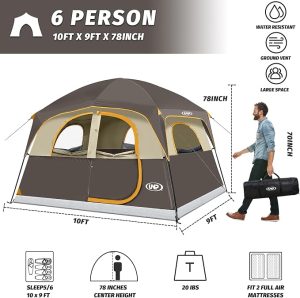
The tent’s stated floor dimensions of 10 feet by 9 feet provide approximately 90 square feet of floor area. This gives campers room to arrange sleeping bags, sleeping pads, or suitable air mattresses according to their needs.
According to the product description, the interior can accommodate two air mattresses or six sleeping bags. This flexibility is useful because families have different sleeping preferences. Some may prefer the simplicity of sleeping bags laid directly on the tent floor, while others may choose air mattresses for added cushioning.
For a family of four, the six-person rating may offer a helpful amount of extra room compared with a tent designed strictly for four occupants. The additional space can make it easier to arrange children’s sleeping areas and keep essential belongings close at hand.
However, advertised sleeping capacity should not be confused with generous living space. Six adults may fit closely together, but the available room for luggage, shoes, backpacks, and other equipment will be limited.
Families who want to store bulky items inside the tent may find it more comfortable to use the shelter with fewer occupants. It is also worth checking the actual dimensions of your sleeping pads or air mattresses before deciding how many will fit.
Overall, the UNP tent’s six-person capacity makes it worth considering for families seeking a shared sleeping shelter for weekend trips and recreational camping.
2. Spacious Interior with a 78-Inch Center Height
Interior height is an important factor when choosing a family camping tent, particularly for adults who do not want to remain bent over whenever they need to change clothes or organize their belongings.
The UNP 6-Person Camping Tent has a stated center height of 78 inches, equivalent to 6 feet 6 inches. This provides useful headroom for many adults and may allow them to stand upright near the center of the shelter.
For families, this added height can make everyday activities more convenient. Parents can help children change clothes, organize sleeping equipment, and prepare for bed without constantly crouching.
A taller interior can also create a more open feeling, particularly when compared with lower-profile tents designed primarily for sleeping.
However, the 78-inch figure represents the center height rather than the height available throughout the entire interior. The roof slopes and the shape of the walls will reduce standing room closer to the edges.
The supplied dimensions also contain a minor inconsistency: the product specification gives a length of 120 inches and a width of 108 inches, while the description advertises a 10-by-9-foot floor plan. These measurements are broadly consistent, but buyers should still confirm the manufacturer’s exact floor dimensions for the selected model.
For families who value headroom and a less confined interior, the tent’s stated center height is a useful feature.
3. Five-Minute Setup for Two People
After a long drive to a campsite, few families want to spend an excessive amount of time assembling their shelter. The UNP 6-Person Camping Tent is advertised as being relatively straightforward to pitch, with a setup time of approximately five minutes for two people.
The product description also states that one person may be able to assemble it in around ten minutes. Actual setup time will depend on familiarity with the tent, campsite conditions, and whether the process includes securing the rainfly, stakes, and guylines.
This emphasis on convenient assembly can be particularly helpful for beginners who are still learning how to pitch camping equipment.
A relatively simple setup process also allows families to settle into their campsite sooner, leaving more time for outdoor activities such as hiking, fishing, cooking, and exploring the surrounding area.
Nevertheless, campers should avoid rushing the assembly process simply to meet the advertised time. Correctly positioning the tent, securing its support structure, and anchoring it properly are important for safety and weather protection.
Practicing at home before departure can help you understand how the poles connect and how the tent folds away for storage. It also provides an opportunity to confirm that all components are present.
For families who value convenience without necessarily needing an instant pop-up design, the UNP tent’s advertised assembly time is an appealing feature.
4. Mesh Door, Five Windows, and Roof Ventilation
Ventilation is one of the most important features to consider when several people share a camping tent. Warm air and moisture can accumulate overnight, making an enclosed shelter feel stuffy and sometimes contributing to condensation.
The UNP 6-Person Camping Tent addresses this concern with a large mesh door, five mesh windows, and a mesh roof section.
These mesh panels are designed to support airflow while allowing campers to enjoy views of the surrounding campsite. When the weather is warm, opening suitable ventilation areas can help fresh air move through the tent and reduce the buildup of heat.
The large mesh door can also make entering and leaving the shelter more convenient, especially when family members are moving between the tent and the campsite throughout the day.
The five windows offer additional opportunities for ventilation, depending on their individual design and how they are configured. Their mesh construction can help keep some insects out while allowing air to circulate.
The mesh roof section may also help warm air escape from the upper portion of the tent. However, airflow will depend on wind conditions, outdoor humidity, and whether the rainfly covers the mesh area.
Families should remember that mesh panels alone do not provide protection against rain. The rainfly and any corresponding window coverings must be used according to the manufacturer’s instructions when wet weather is expected.
For warm-weather family camping, the combination of multiple mesh openings and a roof ventilation section is one of the UNP tent’s most attractive features.
5. Polyurethane Coating and Water-Resistance Considerations
Weather protection is essential when choosing a tent for family camping. Rain can arrive unexpectedly, and even a brief shower may become uncomfortable if water enters the sleeping area.
The UNP 6-Person Camping Tent is described as having a polyurethane waterproof coating. The supplied specification table lists a water-resistance figure of 1,500 mm, while the product description refers to a 1,000 mm polyurethane hydrostatic-rated coating.
These figures conflict, so the exact rating should be confirmed before treating either as the verified specification.
A hydrostatic-head rating measures the water pressure a fabric can withstand under a standardized test. A higher figure generally indicates greater resistance to water pressure, but it does not independently establish how well the entire tent will perform in heavy rain.
The complete shelter’s weather performance also depends on its rainfly coverage, seam construction, floor materials, zippers, ventilation openings, and correct assembly.
For ordinary family camping, a properly maintained tent with suitable weather protection may be adequate in mild conditions. However, campers expecting prolonged rainfall or challenging weather should examine the manufacturer’s detailed specifications before choosing this model.
It is also important to select a campsite with good drainage. Avoid pitching in depressions where rainwater may collect, and ensure the tent is secured according to the manufacturer’s instructions.
Because the supplied water-resistance figures differ, verifying the exact specification is particularly important if waterproof performance is a deciding factor in your purchase.
6. Included Rainfly for Additional Weather Protection
The UNP 6-Person Camping Tent includes a rainfly, which is an important component for protecting a tent from precipitation.
A rainfly is designed to shield the tent body from rain and can help reduce the amount of moisture reaching the main fabric, depending on its coverage and design.
For family campers, this feature is valuable because it provides an additional layer between the sleeping area and changing outdoor conditions.
The rainfly can also help protect parts of the tent from direct exposure to moisture. Its effectiveness depends on how it is attached, how well it covers the shelter, and whether the tent is pitched correctly.
However, the supplied product information does not provide enough detail to establish the rainfly’s precise coverage or whether every seam is factory-taped. Those details should be confirmed from the manufacturer’s documentation or the specific product listing.
When preparing for a camping trip, practice attaching the rainfly before departure and check that all required attachment points are present. Proper tension and positioning can help reduce water pooling and improve the shelter’s overall performance.
It is also wise to inspect the tent after use and allow it to dry fully before packing it away. Storing a damp tent for extended periods can encourage mildew and damage the fabric over time.
The inclusion of a rainfly is a useful advantage, although buyers should assess the complete weather-protection system rather than relying on the presence of a rainfly alone.
7. Steel Support Poles for Structural Support
The supplied product description identifies four steel leg poles as part of the tent’s construction. These components are intended to support the structure and help maintain its shape when the tent is assembled correctly.
A tent’s frame plays an important role in its stability, as it supports the fabric and helps the shelter retain its intended form.
For family camping, a stable structure is particularly important because the tent may be entered and exited frequently, and children may move around the interior.
Steel poles can provide structural support, although the overall durability of the tent depends on more than the frame material. Pole thickness, joint construction, fabric strength, anchoring points, and the tent’s geometry also affect performance.
The listing describes the tent as stable and suitable for outdoor activities, but this should not be interpreted as a guarantee that it will withstand every wind condition.
Campers should use the supplied stakes and any required guylines, select a suitable campsite, and follow the manufacturer’s weather guidance. Strong winds can place significant stress on a tent, particularly when it has a relatively tall profile.
The supplied information does not specify the steel grade, pole diameter, or exact frame layout. Buyers comparing several family tents may wish to check these details if long-term durability is a priority.
Overall, the listed steel support poles are a practical design feature, but actual stability depends on the complete construction and how the tent is pitched.
8. Packed Size and Portability for Family Car Camping
The UNP 6-Person Camping Tent is listed at approximately 17.8 pounds, while the product description rounds its weight to 18 pounds. The carry bag measures approximately 24.6 × 8.26 × 8.26 inches.
These specifications provide a useful indication of how the tent may fit into a family’s camping equipment.
For car camping, a tent weighing around 18 pounds is generally manageable to transport from home to the vehicle and then to an established campsite. Its packed dimensions can also help families estimate how much storage space it will occupy alongside sleeping bags, clothing, cooking supplies, and other gear.
The relatively compact carry bag may be convenient for families who want to keep their equipment organized between trips.
However, a tent suitable for car camping is not automatically the best choice for long-distance backpacking. Its packed bulk, weight distribution, and the space required for its poles may become more noticeable when carrying equipment over a long trail.
For hiking-related camping, consider how far you will need to transport the shelter and whether the rest of your equipment leaves enough room in your backpack.
The listed packed dimensions are particularly useful when comparing the UNP tent with larger cabin-style models that may occupy more space in a vehicle.
For families who primarily camp at established sites and travel by car, the combination of a moderate listed weight and dedicated carry bag makes this tent worth considering.
9. Four-Season Classification and Its Limitations
The supplied specification table lists the UNP 6-Person Camping Tent as a four-season tent. This designation deserves careful verification before it is used as a basis for purchasing decisions.
Four-season tents are generally designed to handle a broader range of conditions than typical recreational three-season shelters. Depending on their design, they may incorporate stronger pole structures, more weather-resistant fabrics, and features intended to manage cold temperatures, snow, or stronger winds.
However, the product description emphasizes mesh windows, a mesh door, a mesh roof section, and a lightweight family-camping design. These features can be useful in warm weather, but they do not by themselves establish that a tent is suitable for severe winter conditions.
The exact meaning of the four-season designation should therefore be confirmed with the manufacturer for the specific model.
Families should not assume that a four-season label automatically makes a tent suitable for snow loading, freezing temperatures, or extreme winds. Those capabilities depend on the complete construction and the manufacturer’s stated limits.
For most recreational family trips, the more important questions may be whether the tent offers adequate ventilation, appropriate rain protection, sufficient sleeping space, and a practical setup process for the conditions expected.
If you plan to camp in cold or snowy environments, look for specific evidence of winter suitability rather than relying on the season label alone.
This is an important consideration when comparing the UNP tent with other family camping options, particularly if your article intends to recommend tents for a wide variety of climates.
10. One-Year Quality Assurance and Customer Support
The supplied product description states that UNP offers one-year quality assurance for the camping tent and aims to provide a solution to customer questions within 12 hours.
For buyers, after-sales support can be a useful consideration when investing in camping equipment. A tent contains several components, including poles, fabric panels, zippers, stakes, and rainfly attachments, and problems with any of these parts can affect the camping experience.
A clearly stated support period may provide reassurance that assistance is available if a product-related issue arises.
However, the precise terms of the quality assurance should be checked before purchasing. The supplied wording does not establish whether the coverage includes all components, what exclusions apply, or whether repairs, replacement parts, or refunds are available in particular circumstances.
The advertised 12-hour response time should also be treated as a statement from the supplied product description rather than a guarantee of resolution within that period.
When purchasing through Amazon, buyers should check the specific seller, the applicable return policy, and the manufacturer’s current warranty or quality-assurance terms.
It can also be helpful to inspect the tent shortly after delivery and confirm that all components are present before planning a trip.
Although customer support is not a substitute for good product construction, accessible after-sales assistance can be a worthwhile factor when comparing camping tents.
Pros and Cons of the UNP 6-Person Camping Tent
Pros
-
Six-person capacity: Designed to accommodate families and small groups for recreational camping.
-
Useful floor space: The advertised 10-by-9-foot layout provides approximately 90 square feet of interior floor area.
-
Generous center height: The 78-inch height offers standing room for many adults near the center.
-
Convenient setup: The manufacturer advertises approximately five minutes for two people and around ten minutes for one person.
-
Multiple ventilation openings: A large mesh door, five mesh windows, and a mesh roof section support airflow.
-
Rainfly included: Provides an additional layer of weather protection when correctly installed.
-
Portable carry bag: The stated packed dimensions make storage and transport easier to assess.
-
Moderate listed weight: At approximately 18 pounds, the tent may be practical for vehicle-based camping.
-
Steel support poles: Provide structural support as part of the tent’s frame.
-
Listed quality assurance: The supplied description identifies a one-year quality-assurance period.
Cons
-
Conflicting water-resistance figures: The specification table lists 1,500 mm, while the description states 1,000 mm.
-
Four-season suitability needs verification: The listed season rating does not independently establish performance in severe winter weather.
Who Should Buy the UNP 6-Person Camping Tent?
The UNP 6-Person Camping Tent may appeal to several types of outdoor enthusiasts.
Families with children may appreciate the shared sleeping space and generous center height, especially when organizing weekend camping trips or short outdoor holidays.
Warm-weather campers may find the large mesh door, multiple windows, and mesh roof section useful for promoting airflow during mild or hot conditions.
Beginner campers may appreciate the advertised setup process, which is designed to make pitching the tent manageable without requiring extensive experience.
Car campers may find the listed weight and packed dimensions practical for transporting the tent to established campgrounds.
Fishing and outdoor recreation enthusiasts may also consider the shelter for suitable overnight trips, provided its weather protection and size meet their needs.
However, campers planning to sleep six people alongside bulky equipment should assess the available floor space carefully. Those planning winter trips or camping in severe weather should also confirm the model’s actual seasonal rating and performance limits with the manufacturer.
For families who value ventilation, moderate packed size, and a relatively straightforward assembly process, the UNP tent is a useful option to compare with other six-person family shelters.
Final Verdict: Is the UNP 6-Person Camping Tent Worth Considering?
The UNP 6-Person Camping Tent offers a practical combination of family sleeping capacity, generous center height, multiple ventilation openings, and a setup process designed to be straightforward.
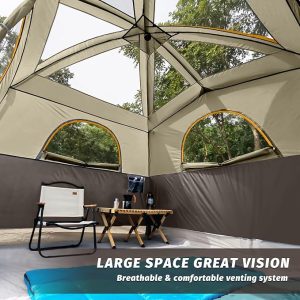
Its advertised 10-by-9-foot floor plan provides approximately 90 square feet of space, while the 78-inch center height gives many adults room to stand near the middle of the tent. The large mesh door, five mesh windows, and mesh roof section are particularly appealing for campers who prioritize airflow and visibility.
The listed weight of approximately 18 pounds and the dedicated carry bag also make it worth considering for family car camping and established campsites. The included rainfly and steel support poles provide additional practical features, while the stated one-year quality assurance may offer another point to investigate before buying.
There are, however, several details to confirm. The water-resistance specifications conflict, with the table listing 1,500 mm and the description mentioning 1,000 mm. The four-season designation should also be verified, as the supplied description does not establish suitability for severe winter weather. Finally, the six-person capacity should be considered in relation to the space needed for sleeping equipment and luggage.
Overall, the UNP 6-Person Camping Tent is worth considering for families who prioritize ventilation, standing height, and convenient setup for recreational outdoor adventures. It may be particularly suitable for car camping in appropriate weather conditions, provided the exact specifications match the intended use.
For your roundup of the ten best family camping tents, this model is a candidate for the best family tent for ventilation and everyday camping comfort. Before publishing, verify the water-resistance rating and season classification against the exact manufacturer’s listing so readers can compare it fairly with the other products in your guide.
4. CAMPROS CP 8-Person Camping Tent – Best Family Camping Tent for Two-Room Privacy, Spacious Comfort & Easy Setup
A family camping tent should do more than provide a place to sleep. It should create a comfortable outdoor retreat where parents can relax, children can settle in after a busy day of exploring, and everyone has enough room to enjoy the camping experience. When several people share one shelter, features such as interior height, room separation, ventilation, and straightforward assembly become especially important. The CAMPROS CP 8-Person Camping Tent is designed with these practical needs in mind, offering a spacious rectangular layout, a straight-wall structure, and a removable room divider that helps create separate living areas.
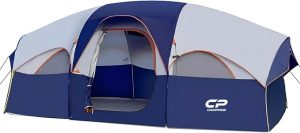
Manufactured under the CAMPROS CP brand, this tent is intended for camping and hiking adventures. Its advertised capacity of eight people makes it an option for larger families and groups who want to share a shelter during weekend getaways, campground holidays, and other outdoor trips. The supplied dimensions are 168 inches long, 108 inches wide, and 72 inches high, providing a floor area of approximately 126 square feet and a center height of six feet.
One of the tent’s most appealing features is its two-room configuration. A separating curtain can divide the interior into distinct sections, giving parents and children a greater sense of privacy or allowing campers to separate sleeping arrangements from other activities. The divider can also serve as a projector screen, adding a creative entertainment option for families who enjoy movie nights at the campsite.
The CAMPROS CP tent also emphasizes convenient setup. According to the supplied product information, its color-coded poles help simplify assembly, and two people can set it up in approximately five minutes. A mesh tent top and mesh doors promote airflow and provide views of the surrounding environment, while the polyester construction, sealed seams, and waterproof strip are intended to help protect the interior from wet weather.
Weighing approximately 8 kilograms, or 17.6 pounds, this tent offers a practical option for families who travel to established campsites by car. Its combination of interior space, privacy, ventilation, and straightforward assembly makes it worth considering for recreational camping.
In this review, we will examine the CAMPROS CP 8-Person Camping Tent’s key specifications, sleeping capacity, two-room layout, interior height, weather protection, ventilation, setup process, portability, advantages, and potential drawbacks to help you decide whether it is suitable for your family’s next outdoor adventure.
Key Specifications of the CAMPROS CP 8-Person Camping Tent
| Feature | Details |
|---|---|
| Brand | CAMPROS CP |
| Product Name | CAMPROS CP 8-Person Camping Tent |
| Material | Polyester |
| Product Dimensions | 168″L × 108″W × 72″H |
| Floor Length | 168 inches (14 feet) |
| Floor Width | 108 inches (9 feet) |
| Approximate Floor Area | 126 square feet |
| Item Weight | 8 kg (approximately 17.6 pounds) |
| Recommended Uses | Camping and hiking |
| Occupancy | Up to 8 people |
| Shape | Rectangular |
| Center Height | 72 inches (6 feet) |
| Season Rating | 3-season |
| Setup System | Color-coded poles |
| Advertised Setup Time | Approximately 5 minutes for two people |
| Room Configuration | Two rooms with a separating curtain |
| Material Construction | Polyester |
| Water Resistance | Described as waterproof, with sealed seams and a waterproof strip |
| Ventilation | Mesh tent top and mesh doors |
| Included Components | Carry bag, room divider, and stakes |
| Additional Feature | Room divider can serve as a projector screen |
| Intended Activities | Family camping, hiking, and recreational outdoor trips |
1. Eight-Person Capacity for Larger Family Adventures
One of the main attractions of the CAMPROS CP 8-Person Camping Tent is its advertised capacity for up to eight people. This makes it worth considering for larger families, groups of friends, or campers who prefer sharing a single shelter during outdoor adventures.
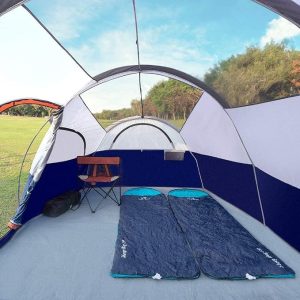
The tent’s stated floor dimensions of 14 feet by 9 feet provide approximately 126 square feet of interior floor area. This creates a substantial sleeping space for a recreational tent and offers flexibility when arranging sleeping bags, pads, and other camping essentials.
For families with several children, the larger capacity can make it easier to organize everyone in one location. It may also be useful when relatives or friends join the trip, reducing the need to carry multiple smaller tents.
However, the advertised capacity should be interpreted carefully. Eight people may fit inside when sleeping closely together, but the available room for luggage, shoes, backpacks, and other equipment will be limited.
Families who prioritize comfort may prefer to use the tent with fewer occupants, particularly if they bring large air mattresses or want to preserve some open floor space.
The two-room layout also introduces another consideration: the room divider provides separation, but the amount of space available in each section depends on where the curtain is positioned and how the sleeping equipment is arranged.
For families seeking a shared shelter with flexible sleeping arrangements, the CAMPROS CP tent’s eight-person capacity is an appealing starting point.
2. Straight-Wall Design for Improved Interior Space
The CAMPROS CP 8-Person Camping Tent features a straight-wall design intended to create a more spacious interior and make everyday activities more comfortable.
Traditional dome tents often have curved walls that slope inward toward the roof. While this design can be useful for portability and structural efficiency, it may reduce usable headroom near the edges.
A straight-wall layout aims to make better use of the interior by keeping more of the walls upright. This can help campers move around more comfortably and make it easier to position sleeping equipment along the sides.
For families, the practical benefits may include having more room to change clothes, organize personal belongings, and assist children with their bedtime routines.
The tent’s stated center height of 72 inches, or six feet, provides useful headroom for many adults. However, the center-height measurement does not mean the entire interior offers six feet of standing room.
The actual usable space depends on the roof structure, pole arrangement, and dimensions of the individual room sections.
Although the straight-wall design can improve the sense of space, the total floor area remains approximately 126 square feet. Families should therefore consider the number of occupants and the size of their sleeping equipment before deciding whether the tent will be comfortable for everyone.
Overall, the straight-wall structure is a useful feature for campers who prefer a more open interior than many traditional dome-style tents provide.
3. Two-Room Layout for Privacy and Better Organization
One of the most distinctive features of the CAMPROS CP 8-Person Camping Tent is its removable room divider. This curtain separates the interior into two sections, giving families greater flexibility when organizing their sleeping arrangements.
Sharing one tent can be convenient, but it does not always provide the privacy everyone wants. Parents may prefer a separate sleeping area, while children may enjoy having a section of the tent that feels like their own space.
The room divider helps address this need by creating a visual separation between the two sections. Depending on how the tent is arranged, one side can be used for adults and the other for children, or the interior can be organized around different sleeping groups.
The divided layout can also help campers maintain a more organized environment. For example, one section may be used primarily for sleeping, while the other accommodates selected bags and personal belongings, provided sufficient floor space remains.
It is important to note that the divider is a curtain rather than a solid wall. It can offer visual separation, but it does not provide complete sound insulation or the privacy of a fully enclosed cabin room.
The available space in each section also depends on the placement of the divider and the size of the sleeping equipment.
Nevertheless, the ability to create two distinct areas is a significant advantage for families who value a more organized and flexible camping arrangement.
4. Room Divider That Doubles as a Projector Screen
Beyond creating separate sleeping areas, the CAMPROS CP tent’s divider is described as being usable as a projector screen.
This feature introduces an entertaining possibility for families who enjoy spending time together at the campsite after sunset. With suitable equipment and appropriate conditions, campers could arrange a small movie night inside or near the tent.
Children may particularly enjoy watching a family-friendly film after a day spent hiking, exploring nature, or playing outdoor games.
The divider can also serve a practical purpose during the day by maintaining separation between the two interior sections. This means the feature has potential value beyond entertainment.
However, the product details do not specify the divider’s exact dimensions, material finish, or compatibility with particular projectors. Image quality will depend on the screen surface, projector brightness, available space, and ambient light.
Families should also consider ventilation, electrical safety, and the risk of condensation if using electronic equipment inside an enclosed tent. Avoid using unsuitable electrical equipment in wet conditions, and follow the equipment manufacturer’s safety instructions.
The projector-screen feature is best viewed as a bonus rather than an essential reason to purchase the tent. Its primary benefit remains the flexible two-room arrangement.
For families who appreciate creative ways to make camping more entertaining, this additional function adds a distinctive touch to the CAMPROS CP tent.
5. Six-Foot Center Height for Comfortable Movement
Interior height can make a meaningful difference when camping with several people. A tent that requires everyone to remain crouched can become inconvenient when changing clothes, arranging sleeping bags, or preparing for bed.
The CAMPROS CP 8-Person Camping Tent has a listed center height of 72 inches, equivalent to six feet.
This height provides useful headroom for many adults, although taller campers may need to bend slightly depending on their height and where they stand inside the shelter.
The extra headroom can help families manage daily activities more comfortably, particularly when children need assistance getting dressed or when personal belongings need to be organized.
Combined with the straight-wall design, the center height may also contribute to a more open interior compared with lower-profile tents.
However, the actual standing space will vary throughout the tent. Roof slopes and the position of supporting poles can reduce headroom toward the edges and near the room divider.
It is also important to distinguish between height and floor space. Although the tent offers a six-foot center height, the available room for eight sleeping occupants remains limited by the 14-by-9-foot footprint.
For families who want a tent that is reasonably comfortable to move around inside, the six-foot center height is a practical feature.
6. Polyester Construction for Recreational Camping
The CAMPROS CP 8-Person Camping Tent is made from polyester, a commonly used material in recreational camping shelters.
Polyester is valued in tent construction because it can provide a useful balance of weight, durability, and resistance to moisture-related stretching compared with some alternative fabrics.
For family campers, the material is part of the tent’s overall design for repeated outdoor use. It provides the fabric structure that forms the walls, roof, and other shelter panels.
However, the performance of a polyester tent depends on more than the material name alone. Fabric thickness, weave, coatings, seam construction, and manufacturing quality all influence durability and weather resistance.
The supplied product details do not specify the polyester’s denier rating or the precise composition of its waterproof coating, so these characteristics cannot be assessed fully from the information available.
To help preserve the tent, allow it to dry completely before storage, remove dirt after use, and avoid prolonged exposure to harsh conditions when it is not needed.
It is also sensible to store the tent in a cool, dry location and inspect the fabric, zippers, and pole connections before each trip.
Overall, polyester construction is a practical choice for a recreational family tent, although long-term durability will depend on the quality of the complete product and how it is maintained.
7. Waterproof Construction, Sealed Seams, and Weather Protection
Weather protection is an important consideration when selecting a family camping tent. Unexpected rain can make an outdoor trip uncomfortable if water enters the sleeping area or dampens essential belongings.
The supplied product description states that the CAMPROS CP tent uses a high-tech coating, sealed seams, and a waterproof strip to provide water resistance.
These features are intended to help prevent water from passing through the fabric and vulnerable connection points.
Sealed seams are particularly useful because stitching can create small openings in the fabric. Appropriate sealing helps reduce the likelihood of moisture entering through those areas.
A waterproof strip may provide additional protection along designated seams or joins, depending on the specific construction.
However, the listing does not provide a numerical hydrostatic-head rating, so it is not possible to compare its waterproof performance directly with tents that have a verified rating such as 1,200 mm or 3,000 mm.
The description’s use of the word “waterproof” should also not be interpreted as a guarantee of protection under all conditions. Performance depends on rain intensity, wind direction, the condition of the coating, correct pitching, and campsite drainage.
For family camping, it is important to inspect the tent before departure and follow the manufacturer’s instructions for assembly and weather protection.
Choose a campsite with good drainage, avoid low-lying areas where water can collect, and ensure that all required stakes and guylines are used correctly.
For trips involving prolonged heavy rain or challenging weather, verify the manufacturer’s specific weather-performance guidance before relying on the tent as your primary shelter.
8. Mesh Roof and Doors for Improved Ventilation
Ventilation is particularly important in a family tent because several occupants generate heat and moisture throughout the night.
The CAMPROS CP 8-Person Camping Tent features a mesh top and mesh doors designed to support airflow and provide views of the surrounding campsite.
Mesh panels allow air to circulate while helping keep some insects out when the openings are properly configured. This can make the tent more comfortable during warm-weather camping.
A mesh roof can also help warm air rise and escape, depending on how the roof and any rainfly are arranged.
For families camping during mild summer weather, this airflow can help reduce the stuffy feeling that sometimes develops when several people sleep in the same shelter.
The mesh doors can also provide convenient access and visibility, making it easier to see the surrounding environment while relaxing inside the tent.
However, mesh alone does not protect against rain or strong wind. The tent’s weather-protection components need to be installed and configured according to the manufacturer’s instructions when conditions change.
Ventilation performance will also depend on outdoor humidity, temperature, and wind conditions. Even a well-ventilated tent may develop condensation in cold or humid weather.
Overall, the mesh roof and doors are practical features for families who prioritize airflow, visibility, and comfort during recreational camping.
9. Color-Coded Poles for Easier Assembly
Setting up a large family tent can be challenging when the poles look similar and it is unclear which components belong in particular locations.
The CAMPROS CP 8-Person Camping Tent uses color-coded poles to help simplify the assembly process.
Color coding allows users to match pole sections with corresponding attachment points or sleeves, depending on the manufacturer’s design. This can reduce confusion and make the setup process more manageable for beginners.
According to the supplied product information, two people can set up the tent in approximately five minutes. Actual assembly time will vary depending on familiarity with the tent, the condition of the campsite, and whether the time includes attaching all accessories and securing the structure.
For families arriving late in the afternoon, a relatively straightforward setup process can help them settle in before darkness falls.
It can also make camping more enjoyable for people who are new to larger shelters and would prefer not to deal with an overly complicated assembly system.
However, the advertised five-minute setup should be treated as an approximate manufacturer claim rather than a guarantee. Properly securing the tent is more important than assembling it as quickly as possible.
Before leaving home, practice connecting the poles, positioning the tent, attaching any required components, and folding the structure away.
For families who want a spacious shelter without an unnecessarily difficult setup process, color-coded poles are a useful convenience feature.
10. Portability and Included Camping Accessories
The CAMPROS CP 8-Person Camping Tent has a listed weight of 8 kilograms, equivalent to approximately 17.6 pounds.
For a tent designed to accommodate up to eight people, this weight may be manageable for family car camping and established campsites where equipment does not need to be carried over long distances.
The supplied product information also confirms that the tent comes with a carry bag, room divider, and stakes.
The carry bag provides a convenient way to store and transport the tent between trips. Stakes are essential for securing the shelter to suitable ground, while the room divider supports the two-room layout.
These included components help provide a practical starting point for preparing the campsite, although the supplied details do not fully identify every accessory that may be included in the package.
Buyers should confirm whether the exact product version includes all required poles, guylines, and other assembly components.
The tent’s weight is worth considering if you plan to hike with it over long distances. While it may be manageable for short transfers from a vehicle to a campsite, the combined weight and packed bulk can become inconvenient during backpacking trips.
Families who mainly travel by car are likely to find the weight less restrictive.
Overall, the included carry bag, room divider, and stakes contribute to the tent’s practicality, especially for recreational camping where convenient transportation and straightforward organization are priorities.
Pros and Cons of the CAMPROS CP 8-Person Camping Tent
Pros
-
Eight-person capacity: Provides a shared shelter option for larger families and groups.
-
Spacious rectangular layout: The 14-by-9-foot floor plan offers approximately 126 square feet of floor space.
-
Two-room configuration: The removable divider helps create separate sleeping areas.
-
Projector-screen functionality: The divider can also serve as a screen for suitable family entertainment.
-
Straight-wall design: Intended to improve usable interior space and make movement more comfortable.
-
Six-foot center height: Offers useful headroom for many adults.
-
Convenient setup: Color-coded poles are designed to make assembly easier, with an advertised setup time of approximately five minutes for two people.
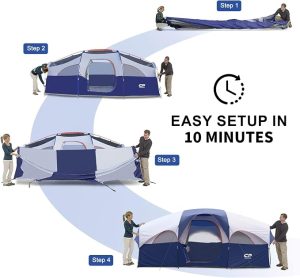
-
Ventilation features: Mesh doors and a mesh roof support airflow and visibility.
-
Polyester construction: A practical material for recreational camping shelters.
-
Weather-protection features: The supplied description identifies coated fabric, sealed seams, and a waterproof strip.
-
Useful accessories included: A carry bag, room divider, and stakes are listed in the package.
Cons
-
Limited privacy: The divider is a curtain rather than a solid wall, so it does not provide full sound insulation.
-
Eight-person capacity may feel crowded: The advertised occupancy leaves limited room for luggage and bulky sleeping equipment.
Who Should Buy the CAMPROS CP 8-Person Camping Tent?
The CAMPROS CP 8-Person Camping Tent may be a suitable option for several types of outdoor enthusiasts.
Larger families may appreciate its advertised capacity and flexible interior layout, especially when several people need to sleep in one shelter.
Parents camping with children may find the room divider useful for creating separate sleeping sections and helping organize personal space.
Families who enjoy camping entertainment may appreciate the divider’s additional projector-screen function, which offers another possible way to spend an evening at the campsite.
Beginner campers may benefit from the color-coded pole system, which is intended to make assembly easier and reduce confusion during setup.
Car campers may find the tent’s weight and included carry bag practical for transporting equipment to established campsites.
However, families seeking complete privacy between rooms may prefer a tent with fully enclosed sleeping compartments. Likewise, campers planning long-distance backpacking or trips in severe weather should carefully evaluate the tent’s weight and verified weather-performance specifications.
For families who want a roomy shelter with a flexible interior, ventilation, and relatively straightforward assembly, the CAMPROS CP is worth comparing with other eight-person camping tents.
Final Verdict: Is the CAMPROS CP 8-Person Camping Tent Worth Considering?
The CAMPROS CP 8-Person Camping Tent is a practical candidate for families who want a spacious recreational shelter with features designed to improve organization and convenience.
Its most distinctive advantage is the two-room configuration. The removable curtain provides a way to separate sleeping areas, giving parents and children more flexibility when arranging the interior. Its additional projector-screen function also offers an interesting option for family entertainment.
The tent’s 14-by-9-foot floor plan provides approximately 126 square feet of space, while its six-foot center height and straight-wall design aim to make the interior more comfortable to use. The mesh roof and doors support airflow, and the color-coded poles are intended to make setup more straightforward.
The listed weight of approximately 17.6 pounds makes it a reasonable option to consider for car camping, although backpackers should assess the packed size and carrying requirements carefully.
There are a few limitations to keep in mind. The eight-person rating does not guarantee generous room for everyone and their belongings, and the curtain divider provides visual separation rather than complete privacy. In addition, the product information does not provide a numerical waterproof rating, so its weather performance should be verified before purchasing for trips where rain protection is a major concern.
Overall, the CAMPROS CP 8-Person Camping Tent is worth considering for families who prioritize a flexible two-room layout, practical interior space, and easy setup. Its strongest use case is recreational family camping at established sites, where the room divider and ventilation features can make shared accommodation more convenient.
For your roundup, this model is a candidate for the best two-room family camping tent for privacy and organized sleeping arrangements. Before publishing, confirm the exact weather-protection specifications and included components against the manufacturer’s product listing so readers can compare it accurately with the other tents in your guide.
5. Coleman Instant Camping Tent – Best Instant Family Camping Tent for Fast Setup, Weather Protection & Everyday Comfort
When planning a family camping trip, the last thing anyone wants is to spend precious outdoor time struggling with tent poles, confusing instructions, and complicated assembly. After a long drive to the campsite, families want to unpack, settle in, and start enjoying the fresh air. The Coleman Instant Camping Tent is designed to make that process easier, offering a quick-pitch design that can be ready in as little as one minute under suitable conditions.
Coleman is a well-known name in recreational camping equipment, and this instant tent focuses on convenience without abandoning the practical features families need for outdoor adventures. Made from 100% polyester, it is designed for three-season use and incorporates Coleman’s WeatherTec system, which uses welded corners and inverted seams to help prevent water from entering the tent.
The tent’s stated floor dimensions are 10 by 9 feet, providing approximately 90 square feet of floor space. With an advertised capacity of six people, it may appeal to families with children, couples who prefer extra room, and campers who want a shelter that can be assembled quickly during weekend getaways.
Another useful feature is its integrated rainfly, which is designed to improve airflow. Good ventilation matters when several people share a tent because body heat and moisture can accumulate overnight. The rainfly works alongside the tent’s construction to support comfort while helping protect the interior from changing weather conditions.
Coleman also uses double-thick Polyguard 2X fabric, which is intended to provide durability through repeated camping trips and exposure to ordinary outdoor conditions. Combined with the instant setup system, these features make the tent an appealing option for campers who prioritize convenience and straightforward use.
However, quick setup is only one part of choosing a family tent. Interior space, packed weight, weather protection, and sleeping arrangements all influence how comfortable a shelter will be in practice. In this review, we will examine the Coleman Instant Camping Tent’s specifications, setup system, materials, ventilation, weather-protection features, advantages, limitations, and suitability for different types of campers.
Key Specifications of the Coleman Instant Camping Tent
| Feature | Details |
|---|---|
| Brand | Coleman |
| Product Name | Coleman Instant Camping Tent |
| Material | 100% polyester |
| Product Dimensions (as supplied) | 8.66″L × 8.66″W × 47.24″H |
| Advertised Floor Dimensions | 10 × 9 feet |
| Approximate Floor Area | 90 square feet |
| Item Weight | 24.6 pounds |
| Floor Width | 9 feet |
| Recommended Uses | Camping and hiking |
| Occupancy | Up to 6 people |
| Shape | Listed as round |
| Season Rating | 3-season |
| Included Components | Rainfly |
| Water-Protection System | Coleman WeatherTec system |
| Seam Construction | Welded corners and inverted seams |
| Tent Fabric | Double-thick Polyguard 2X polyester |
| Setup System | Instant setup design |
| Advertised Setup Time | As fast as 1 minute |
| Ventilation Feature | Integrated rainfly designed to improve airflow |
Specification note: The supplied overall dimensions of 8.66 × 8.66 × 47.24 inches appear inconsistent with the advertised 10 × 9-foot floor dimensions and may refer to packed dimensions or contain a listing error. The tent’s shape is also listed as round, although its stated floor dimensions describe a rectangular footprint. Confirm these details against the exact product model before purchasing.
1. Instant Setup in as Little as One Minute
The most distinctive feature of the Coleman Instant Camping Tent is its quick-assembly design. According to the supplied product information, the tent can be set up in as little as one minute.
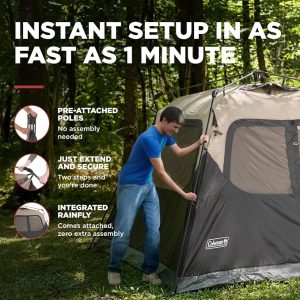
For families, this can be a considerable convenience. Arriving at a campsite with tired children, bags of supplies, and limited daylight can make complicated tent assembly particularly frustrating. A tent designed to simplify pitching helps campers spend less time preparing their shelter and more time enjoying their surroundings.
The instant setup system is intended to reduce the number of separate assembly steps compared with many conventional pole-and-sleeve tents. Depending on the model, the poles and tent structure may be integrated so that the shelter can be extended and secured more quickly.
This feature may be particularly attractive to beginners who have little experience with camping equipment. It can also benefit frequent weekend campers who want to make short outdoor trips less demanding.
Nevertheless, the one-minute figure should be treated as an advertised best-case setup time rather than a guarantee. Actual setup may take longer when campers are unfamiliar with the mechanism, working on uneven ground, or attaching and securing additional components.
Properly staking the tent and checking that its structure is secure remain essential, even when the initial setup is fast.
Overall, the instant setup design is a major reason to consider this Coleman model if convenience is one of your family’s highest priorities.
2. Six-Person Capacity for Family Camping
The Coleman Instant Camping Tent is advertised to accommodate up to six people, making it a potential option for families who prefer to sleep together under one shelter.
Its stated floor dimensions of 10 feet by 9 feet provide approximately 90 square feet of floor area. This can accommodate several sleeping bags or a combination of sleeping pads, depending on their dimensions and the way occupants arrange themselves.
For families with young children, sharing one tent can make nighttime routines simpler and provide a convenient place to keep everyone together. The tent may also work well for smaller groups of friends who want a shared shelter for short outdoor trips.
However, advertised capacity does not necessarily equal spacious comfort. Six people may fit more comfortably when using compact sleeping bags than when using bulky air mattresses or bringing extensive camping luggage inside.
Space for backpacks, shoes, clothing, and other personal belongings can also become limited when the tent is occupied by its maximum number of sleepers.
Couples or families with fewer occupants may find that the available floor area provides a more comfortable balance between sleeping space and storage.
Before purchasing, consider the number of people who will regularly use the tent and the type of sleeping equipment you plan to bring.
The six-person capacity makes this model worth considering for family camping, but the best experience will depend on realistic expectations about the available interior space.
3. Coleman WeatherTec System for Water Protection
Weather protection is an important consideration when choosing a tent, particularly for families who may encounter unexpected rain during an outdoor trip.
The Coleman Instant Camping Tent incorporates the brand’s WeatherTec system. The supplied product information identifies welded corners and inverted seams as key components intended to help prevent water from entering the interior.
Welded corners are designed to reduce vulnerable openings at the lower corners of the tent, where water can sometimes collect or find its way through poorly protected seams.
Inverted seams are constructed to help reduce direct exposure of the stitching to rainwater. Together, these features are intended to improve the tent’s resistance to wet conditions.
For family campers, this can provide reassurance when the weather changes unexpectedly during a weekend at an established campground.
However, water protection depends on more than the presence of a named system. The condition of the fabric, correct setup, rainfly positioning, campsite drainage, and the severity of the weather all influence real-world performance.
The supplied details do not include a numerical hydrostatic-head rating or a specific rainfall threshold, so the tent’s water resistance cannot be compared precisely with models that provide those measurements.
For best results, pitch the tent on suitable ground, avoid depressions where rainwater may accumulate, and ensure that all required components are installed correctly.
The WeatherTec system is a useful feature, but it should not be interpreted as a guarantee against water intrusion in every weather condition.
4. Integrated Rainfly for Airflow and Weather Readiness
A rainfly is an important tent component because it can help shield the main fabric from rain while supporting the shelter’s overall weather protection.
The Coleman Instant Camping Tent features an integrated rainfly that, according to the supplied description, is designed to improve airflow.
Ventilation is particularly important when several people sleep inside one tent. Occupants release moisture as they breathe, and temperature differences between the interior and exterior can contribute to condensation.
A design that encourages airflow can help make the interior feel less stuffy and may help manage moisture under suitable conditions.
The integrated rainfly may also simplify the camping experience by reducing the need to handle a completely separate rainfly during setup, depending on the exact model configuration.
For families, this can support the tent’s broader focus on convenience and ease of use.
However, an integrated rainfly does not eliminate the need to follow the manufacturer’s setup instructions. Ventilation openings must remain configured as intended, and the tent should be pitched correctly to support both airflow and weather protection.
The effectiveness of ventilation will also depend on wind, humidity, temperature, and how many people occupy the shelter.
Overall, the rainfly is a useful part of the Coleman Instant Camping Tent’s design, combining a weather-protection role with an emphasis on airflow.
5. Double-Thick Polyguard 2X Fabric for Repeated Use
The Coleman Instant Camping Tent uses double-thick Polyguard 2X fabric, which is described as being designed to withstand the elements season after season.
Fabric quality matters because a tent must cope with repeated pitching, folding, transportation, and exposure to outdoor conditions. A shelter used regularly for family holidays may experience considerably more handling than one used only occasionally.
The Polyguard 2X construction is intended to provide a durable fabric solution for recreational camping. Its polyester material is commonly used in tents because it offers a practical balance of weight, flexibility, and resistance to moisture-related stretching.
For families, a tent that can withstand ordinary repeated use may represent better value over time than one that requires frequent replacement.
Nevertheless, the description does not provide a fabric denier rating or detailed laboratory durability measurements. It is therefore difficult to quantify the fabric’s strength relative to competing models based on the supplied information alone.
Long-term performance will also depend on how the tent is used and maintained. Abrasion from rough surfaces, prolonged exposure to strong sunlight, and storage while damp can contribute to premature wear.
To help preserve the fabric, clean off dirt after each trip, allow the tent to dry completely before packing it away, and store it in a cool, dry location.
The Polyguard 2X material is a promising feature for recreational family use, although proper care remains important for maintaining the tent over repeated camping seasons.
6. Ten-by-Nine-Foot Floor for Practical Sleeping Arrangements
The advertised floor dimensions of the Coleman Instant Camping Tent are 10 feet long by 9 feet wide, providing approximately 90 square feet of floor area.
This gives families a useful starting point when planning sleeping arrangements. The rectangular footprint can accommodate sleeping bags, pads, and selected personal belongings, depending on how the space is organized.
For parents camping with children, a shared sleeping arrangement can make it easier to keep everyone together overnight.
The floor area may also be suitable for couples who prefer additional room for their gear, or smaller families who do not need to fill the tent to its advertised capacity.
However, the usable space will depend on the actual interior layout, the placement of supporting poles, and the dimensions of the sleeping equipment.
Families should also remember that floor area is not the same as unobstructed living space. When six people and their belongings are inside, there may be little room left for changing clothes or moving around.
The supplied product listing’s overall dimensions also appear inconsistent with the advertised floor dimensions. Buyers should confirm the exact model’s measurements before relying on them to plan their sleeping arrangements.
For campers who want a quick-pitch tent with a clearly stated 10-by-9-foot floor, this Coleman model may be worth considering, especially for short family trips and established campsites.
7. Three-Season Design for Spring, Summer, and Fall Camping
The Coleman Instant Camping Tent is listed as a three-season shelter, making it a candidate for recreational trips during spring, summer, and fall.
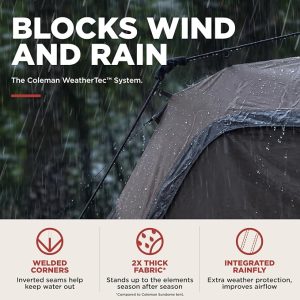
Three-season tents are generally intended for ordinary camping conditions, including mild temperatures and moderate weather, rather than extreme winter environments.
For families who enjoy weekend holidays, school-break trips, and warm-weather campground stays, this type of design can offer a useful balance of shelter and ventilation.
The integrated rainfly and WeatherTec features are intended to help the tent handle wet conditions, while the ventilation-focused design can support comfort during warmer weather.
However, a three-season rating does not guarantee that a tent will remain comfortable in every temperature or perform reliably in severe storms.
Cold conditions, strong winds, prolonged heavy rain, and sudden weather changes may create challenges that depend on the tent’s construction and the manufacturer’s stated limits.
Families planning trips in exposed locations or unpredictable climates should review the manufacturer’s guidance before relying on this shelter.
It is also important to use appropriate sleeping bags, insulated sleeping pads, and clothing for the expected conditions. The tent itself is only one part of a comfortable camping setup.
For recreational campers who usually choose established campsites and avoid severe weather, the three-season rating makes the Coleman Instant Camping Tent a reasonable option to evaluate.
8. Convenient Design for Beginners and Weekend Campers
A tent that is easy to assemble can make camping more approachable for people who are new to outdoor adventures.
The Coleman Instant Camping Tent’s quick setup system is particularly relevant for beginners who may be unfamiliar with traditional tent poles, sleeves, and complicated assembly instructions.
Instead of spending a large portion of the arrival period assembling a shelter, campers can focus on arranging sleeping equipment, preparing meals, and exploring the campsite.
This convenience can be especially useful for families taking short weekend trips, when maximizing time outdoors is often more important than carrying a specialized shelter with numerous technical features.
The tent may also appeal to experienced campers who simply prefer a straightforward setup process after a long journey.
Its advertised six-person capacity gives it potential flexibility for different group sizes, although comfort will depend on the number of occupants and their equipment.
Despite the simplified setup, first-time users should still practice assembling and packing the tent before their trip. Learning the mechanism at home can help prevent confusion when arriving at the campsite.
Campers should also verify that the tent is correctly secured before sleeping in it or leaving it unattended.
The combination of instant setup and familiar recreational features makes this Coleman model particularly appealing to people who value convenience over a more elaborate tent design.
9. Portability and Weight Considerations
The Coleman Instant Camping Tent has a listed weight of 24.6 pounds, making weight an important factor to consider before purchasing.
For families travelling by car, this may be manageable because the tent can be transported with the rest of the camping equipment and carried a relatively short distance to the campsite.
The quick setup design may also help make the tent convenient for regular weekend use, particularly when campers want to minimize the effort involved in setting up and packing away their shelter.
However, a weight of nearly 25 pounds is relatively substantial for anyone planning to carry a tent over long hiking distances.
The product is listed for camping and hiking, but that recommendation does not automatically mean it is ideal for backpacking. The packed size, weight distribution, and total load carried by each person should all be considered.
The supplied overall dimensions also need verification because they do not align clearly with the advertised floor dimensions. Confirming the packed dimensions will help buyers determine whether the tent fits comfortably in their vehicle or storage space.
For car campers, the weight may be a reasonable trade-off for the quick setup design and family-oriented capacity.
For backpackers, however, a lighter tent designed specifically for carrying on foot may be a more practical choice.
10. Practical Weather Protection with a Straightforward Package
The Coleman Instant Camping Tent combines several features intended to simplify family camping: a rapid setup system, an integrated rainfly, polyester fabric, and the WeatherTec water-protection design.
The supplied listing identifies the rainfly as an included component. This is useful when checking what comes with the product, although buyers should confirm the full contents of the package for the exact model being considered.
For families, a straightforward shelter can reduce the amount of preparation required before a trip. The quick assembly design may make arrival and departure more manageable, while the integrated rainfly and seam construction provide features intended to support weather readiness.
Its three-season rating makes it a potential fit for ordinary recreational camping rather than specialized winter expeditions.
Nevertheless, the tent’s advertised features should be evaluated in context. The WeatherTec system is intended to help prevent water intrusion, but the supplied details do not specify a numerical waterproof rating or guarantee protection during severe weather.
Likewise, the instant setup claim describes the potential speed of initial assembly rather than the time required to complete every step of pitching, staking, and organizing the campsite.
Before purchasing, confirm the model number, packed dimensions, included accessories, and manufacturer’s instructions.
Taken together, these features make the Coleman Instant Camping Tent an option for campers who want a convenient shelter with practical weather-protection elements and minimal assembly complexity.
Pros and Cons of the Coleman Instant Camping Tent
Pros
-
Very fast setup: Advertised to be ready in as little as one minute, making it attractive for quick weekend trips.
-
Family-friendly capacity: The six-person rating provides a shared shelter option for families and small groups.
-
Practical floor dimensions: The stated 10-by-9-foot footprint offers approximately 90 square feet of floor area.
-
WeatherTec system: Welded corners and inverted seams are designed to help reduce water intrusion.
-
Integrated rainfly: Intended to improve airflow while contributing to weather protection.
-
Double-thick Polyguard 2X fabric: Designed for repeated recreational use.
-
Three-season design: Suitable to consider for ordinary spring, summer, and fall camping.
-
Beginner-friendly concept: The instant setup system can reduce the complexity of pitching a conventional tent.
-
Suitable for car camping: The weight may be manageable when the tent is transported by vehicle.
-
Established camping brand: Coleman offers a familiar name for shoppers comparing recreational camping equipment.
Cons
-
Relatively heavy: At 24.6 pounds, it may be inconvenient for long-distance hiking and backpacking.
-
Six-person capacity may feel cramped: Sleeping six people with their luggage can leave limited room to move.
Who Should Buy the Coleman Instant Camping Tent?
The Coleman Instant Camping Tent may suit several types of campers, depending on their priorities.
Families who value convenience may appreciate the instant setup design, particularly when travelling with children or arriving at the campsite late in the day.
Beginner campers may find a quick-pitch system less intimidating than a conventional tent that requires multiple separate assembly steps.
Weekend campers who frequently visit established campgrounds may benefit from a shelter designed to reduce setup time and simplify trip preparation.
Small families and couples may find the advertised 10-by-9-foot floor more comfortable when there are fewer occupants than the stated six-person maximum.
Car campers may be comfortable with the tent’s 24.6-pound weight because the shelter does not need to be carried over long distances.
On the other hand, backpackers seeking lightweight equipment may prefer a smaller, lighter tent. Families who need generous storage space or fully separate sleeping areas should also compare the interior dimensions and layouts of alternative models.
If rain protection is a major priority, check the exact product model’s detailed weather specifications rather than relying solely on the WeatherTec name.
Final Verdict: Is the Coleman Instant Camping Tent Worth Considering?
The Coleman Instant Camping Tent stands out for its emphasis on quick assembly and convenient recreational camping. Its advertised setup time of as little as one minute is particularly attractive to families who want to spend more time enjoying the outdoors and less time preparing their shelter.
The stated 10-by-9-foot floor offers approximately 90 square feet of space, while the six-person capacity makes the tent a potential choice for families and small groups. Its WeatherTec system, welded corners, inverted seams, integrated rainfly, and double-thick Polyguard 2X fabric provide useful design features intended to support weather protection and repeated use.
However, buyers should consider its 24.6-pound weight, the limitations of the advertised sleeping capacity, and the need to verify the supplied overall dimensions. The available information also does not provide a numerical waterproof rating, so campers planning trips in persistently wet conditions should investigate the manufacturer’s detailed specifications.
Overall, the Coleman Instant Camping Tent is worth considering for families and weekend campers who prioritize fast setup, practical weather-protection features, and straightforward outdoor accommodation. It is especially appealing for established campsites and car-camping trips where convenience matters more than minimizing carried weight.
For your roundup, this model is a candidate for the best instant family camping tent for quick and convenient setup. Before publishing, confirm the precise model dimensions and waterproof specifications so readers can compare it fairly with the other family tents in your list.
6. Coleman Sundome Camping Tent – Best Compact Family Camping Tent for Easy Setup, Ventilation & Weekend Adventures
Not every camping adventure requires a massive tent with multiple rooms and enough space for a large group. Sometimes, the best outdoor shelter is one that is simple to pitch, comfortable to sleep in, and easy to manage when the weekend calls for a spontaneous escape into nature. The Coleman Sundome Camping Tent is designed around this practical approach, offering a familiar dome-style structure for campers who value straightforward setup, dependable everyday functionality, and a compact shelter for outdoor adventures.
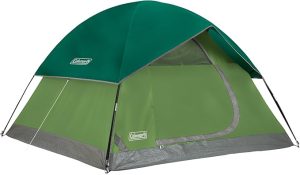
Coleman is a recognized name in recreational camping equipment, and the Sundome range is popular among campers looking for a straightforward tent for short trips, campground stays, and casual outdoor activities. The model described here is listed with a three-person capacity, making it an option for a small family, a couple who wants extra room, or a group of friends who prefer a shared sleeping space.
Its dome-shaped design provides a simple, rounded structure that can be practical for recreational camping. Compared with some larger cabin-style tents, a compact dome tent can be easier to handle and may suit campsites where space is limited. The listed blue color also gives the shelter a classic outdoor appearance.
Two notable features in the supplied specifications are the ground vent and rainfly. Ventilation matters because moisture from breathing and temperature differences can lead to condensation inside a tent. A ground vent can help encourage airflow, while the rainfly is intended to provide an additional layer of protection against weather, depending on the specific model and how it is pitched.
The Coleman Sundome is listed for three-season camping and hiking, suggesting that it is intended for ordinary recreational conditions rather than severe winter environments. Its stated water-resistance classification is “Standard Water Resistance,” although the supplied details do not include a numerical waterproof rating.
One important point for shoppers: the specifications provided do not identify the tent’s exact dimensions or weight. Since the Sundome range includes different sizes and model variations, those details should be checked against the precise product listing before making a purchase.
In this review, we will explore the tent’s design, three-person capacity, ventilation, rainfly, seasonal suitability, portability considerations, advantages, and limitations to help you decide whether it belongs on your family camping shortlist.
Key Specifications of the Coleman Sundome Camping Tent
| Feature | Details |
|---|---|
| Brand | Coleman |
| Product Name | Coleman Sundome Camping Tent |
| Design | Camping tent |
| Shape | Dome |
| Color | Blue |
| Occupancy | Up to 3 people |
| Recommended Uses | Camping and hiking |
| Season Rating | 3-season |
| Included Components | Ground vent and rainfly |
| Water Resistance | Standard water resistance, as listed |
| Tent Structure | Dome-style design |
| Ventilation Feature | Ground vent |
| Weather-Protection Feature | Rainfly |
| Exact Dimensions | Not provided in the supplied specifications |
| Item Weight | Not provided in the supplied specifications |
Specification note: The exact dimensions, weight, fabric details, and numerical waterproof rating were not included in the supplied information. Coleman Sundome tents are available in different capacities and configurations, so confirm the exact model before relying on specifications from another version.
1. Three-Person Capacity for Small Families and Couples
The Coleman Sundome Camping Tent is listed as accommodating up to three people, making it a practical option to consider for smaller camping groups.
For a couple who enjoys weekend trips, the extra sleeping capacity may provide room for personal belongings alongside sleeping bags or pads. It may also suit a parent camping with one or two children, provided everyone is comfortable sharing a compact sleeping area.
A three-person tent can be particularly useful for campers who do not need the floor space or carrying requirements associated with larger family shelters. It offers a simpler alternative for short trips, occasional campground stays, and outdoor getaways where a large living area is unnecessary.
However, the advertised capacity should be considered a maximum sleeping estimate rather than a promise of spacious accommodation. Three adults may need to sleep closely together, especially when using wider sleeping pads or bringing backpacks inside.
Families who need space for bulky luggage, a portable crib, or additional equipment should assess the exact floor dimensions before buying. In some cases, choosing a tent with a higher occupancy rating may provide a more comfortable experience.
The Sundome’s three-person rating is therefore most appealing to smaller groups who want a shared shelter without the extra bulk of a large family tent.
2. Dome Design for a Practical Outdoor Shelter
The Coleman Sundome uses a dome-style structure, a common design in recreational camping tents.
Dome tents generally use intersecting or curved poles to create a rounded shelter. This structure can offer a useful balance between interior space, manageable assembly, and portability, although the performance of any specific tent depends on its pole configuration and construction.
For casual campers, the dome design provides a familiar layout that can be easier to understand than more elaborate cabin-style shelters with multiple rooms and more complicated support structures.
Its rounded profile may also help the tent shed some wind around its surface when it is correctly pitched and oriented. However, no dome tent should be assumed stormproof, and performance in strong winds depends on its construction, staking, guyline use, and campsite conditions.
The dome shape can be especially practical for couples, small families, and beginner campers who want a straightforward shelter for overnight trips.
One trade-off is that curved walls often reduce usable headroom near the edges. This can make the interior feel more compact than a straight-wall cabin tent, even when the floor area is comparable.
Since the supplied specifications do not identify the exact dimensions of this Sundome model, buyers should review the floor plan and center height before deciding whether it will comfortably accommodate their sleeping arrangements.
3. Ground Vent for Improved Air Circulation
Ventilation plays an important role in maintaining comfort inside a tent. When people sleep in an enclosed shelter, moisture from breathing and differences between indoor and outdoor temperatures can contribute to condensation.
The Coleman Sundome specification list identifies a ground vent as one of the included components.
A ground-level vent can help support air circulation through the lower portion of the tent. Depending on the complete ventilation design, airflow through lower vents can work alongside other openings to help reduce stuffiness.
This can be beneficial during mild-weather camping, particularly when the tent is occupied by several people or when humidity levels are relatively high.
Better airflow may help make the sleeping environment feel more comfortable, although ventilation cannot eliminate condensation under every condition.
The performance of the vent will depend on its placement, the tent’s other openings, outdoor wind, temperature, and humidity. Campers should follow the manufacturer’s instructions for using the ventilation features and rainfly together.
It is also important to remember that a ground vent is not necessarily a substitute for roof vents or mesh panels. The supplied specifications do not identify every ventilation feature on the exact model being considered.
For campers who value airflow in a compact shelter, the listed ground vent is a useful feature to investigate further.
4. Rainfly for Additional Weather Protection
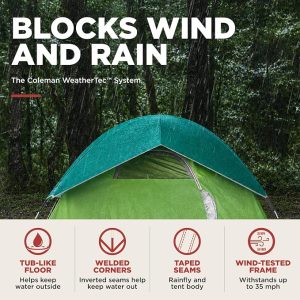
A rainfly is an important component of many camping tents because it provides an additional layer between the sleeping area and the elements.
The Coleman Sundome specifications list a rainfly among the included components. When fitted correctly, a rainfly can help protect the tent’s main fabric from rain and direct exposure to moisture.
For families and casual campers, this feature can be reassuring when weather changes during a weekend trip. It may also help protect the main tent body when the shelter is used in suitable conditions.
However, the effectiveness of a rainfly depends on its design, coverage, attachment points, and correct installation. The tent must also be pitched on suitable ground and secured properly.
The supplied information does not specify the rainfly’s coverage, fabric rating, or the precise water-resistance performance of the complete tent. It is therefore not possible to assign a numerical waterproof rating to this model from the details provided.
Campers should check the exact product instructions to understand how the rainfly should be positioned and whether any additional weather-protection components are required.
A rainfly is a useful feature for ordinary camping, but it should not be interpreted as a guarantee against water intrusion during prolonged heavy rain or severe weather.
5. Three-Season Suitability for Recreational Camping
The Coleman Sundome Camping Tent is listed as a three-season tent, making it a candidate for recreational trips during spring, summer, and fall.
Three-season tents are generally intended for ordinary camping conditions rather than extreme winter use. They are commonly selected by people who want a shelter for weekend holidays, established campgrounds, and casual outdoor adventures.
For small families and couples, this seasonal classification can offer a practical starting point when choosing a tent for typical fair-weather camping.
The ground vent and rainfly may contribute to comfort and weather readiness, depending on the specific model’s complete construction.
However, a three-season label does not mean the tent will be suitable for every weather condition encountered during those seasons. Heavy rain, strong winds, cold temperatures, and sudden changes in the weather can still create challenges.
Campers should consult the manufacturer’s instructions and weather guidance before using the tent in exposed locations or conditions beyond ordinary recreational camping.
For cooler trips, suitable sleeping bags, insulated sleeping pads, and appropriate clothing remain essential. A tent provides shelter, but it does not replace proper preparation for the expected temperature.
The three-season rating makes the Sundome worth considering for campers who generally choose established sites and plan trips around manageable outdoor conditions.
6. Blue Color for a Classic Camping Look
The supplied specifications list the Coleman Sundome Camping Tent in blue.
Although color does not determine a tent’s capacity or weather resistance, it can be a consideration for shoppers who prefer a particular outdoor aesthetic.
The blue finish gives the tent a familiar recreational camping appearance that can suit family holidays, campground weekends, and casual trips to the outdoors.
A clearly visible tent can also be easier to identify among similar shelters at a busy campsite, although visibility will depend on the surrounding environment and lighting.
Color preference is ultimately subjective, so buyers may wish to compare available versions of the Sundome range if appearance is important to them.
It is worth remembering that color alone does not indicate whether one version is more durable or weather-resistant than another. Those qualities depend on the fabric, construction, seams, coatings, and other design features.
For shoppers who like the listed blue finish, it is a straightforward aesthetic advantage rather than a major performance feature.
7. A Potentially Practical Option for Beginner Campers
For people new to camping, a tent does not need to have a complicated layout or numerous specialized features to be useful.
The Coleman Sundome’s dome design and three-person capacity make it a potential option for campers who want a relatively straightforward shelter for their first outdoor trips.
A smaller tent can be easier to manage than a large family shelter, particularly when learning how to choose a campsite, arrange sleeping equipment, secure tent stakes, and pack everything away afterward.
For couples or parents camping with one or two children, a compact shelter can also help keep equipment requirements manageable.
However, the supplied information does not explicitly state the setup time or identify the exact pole system used by this model. Buyers should therefore avoid assuming that every Sundome version has the same assembly process.
First-time campers should practise pitching their tent at home before their trip. This makes it easier to identify missing components and understand the instructions without the pressure of arriving at a campsite after dark.
They should also learn how to secure the tent properly and how to pack it away when it is dry.
For beginners seeking a small recreational shelter, the Sundome is worth considering, provided the exact model’s dimensions and assembly requirements meet their needs.
8. Camping and Hiking Versatility
The Coleman Sundome is listed for camping and hiking, suggesting that it is intended for recreational outdoor activities rather than a single specialized use.
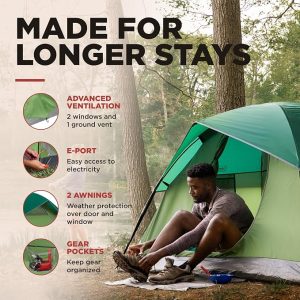
Its three-person capacity may suit overnight campground stays, casual weekend adventures, and trips where a small group needs a shared sleeping shelter.
A dome-style design can be useful for campers who prefer a more compact structure than a large cabin tent. Depending on the exact model’s packed size and weight, it may also be easier to transport and store than larger family shelters.
However, the fact that a tent is recommended for hiking does not automatically mean it is ideal for long-distance backpacking.
The supplied specifications do not include the tent’s weight, packed dimensions, or detailed material construction. These details are important when deciding whether it is suitable to carry on foot for extended distances.
For car camping, weight and packed size may be less restrictive because equipment can be transported by vehicle. For backpacking, every item carried matters, so a dedicated lightweight shelter may be preferable.
The Sundome’s listed uses make it a potential option for casual outdoor enthusiasts, but buyers should verify its exact weight and packed dimensions before planning a hiking trip that involves carrying the tent.
9. Standard Water Resistance for Everyday Camping
The Coleman Sundome specifications identify the water-resistance technology as “Standard Water Resistance.”
This description suggests a basic water-resistance classification in the supplied listing, but it does not provide enough information to quantify the tent’s protection against rain.
Water resistance depends on several factors, including the fabric coating, seam construction, rainfly coverage, and how the tent is pitched and maintained.
The listed rainfly may provide additional protection when installed correctly, while the tent’s overall design will influence how moisture is managed during use.
However, without a numerical hydrostatic-head rating or more detailed manufacturer specifications, it would be misleading to claim that this particular model offers a specific level of waterproof performance.
Campers should review the exact product listing to determine whether additional seam sealing or other preparation is recommended.
Good campsite selection is also important. Avoid pitching in depressions where rainwater can collect, and use the tent according to the manufacturer’s instructions.
For ordinary recreational camping, the listed water-resistance feature is worth considering, but anyone expecting prolonged heavy rain should verify the tent’s weather-performance details before relying on it as their primary shelter.
10. Compact Shelter Considerations and Value for Smaller Groups
The Coleman Sundome’s three-person capacity, dome design, ground vent, and rainfly make it a potential option for campers who want a simple shelter without the extra space requirements of a large family tent.
For a couple or a small family, a tent of this type may provide a practical balance between sleeping accommodation and ease of handling.
Its straightforward design can also be appealing to occasional campers who do not need multiple rooms, a large standing area, or elaborate interior organization features.
However, evaluating its overall value requires more information than the supplied specifications currently provide.
The exact dimensions, item weight, fabric details, and price are not included, making it difficult to compare this version directly with other tents in your roundup.
Those details matter because a three-person tent with a compact packed size may be more convenient for transport, while a larger or heavier version may offer additional space at the expense of portability.
Buyers should also check the included accessories and the manufacturer’s setup instructions to ensure they understand what is supplied with the exact model.
For campers who prioritize a practical dome design and basic recreational functionality, the Sundome is worth considering once its exact measurements and specifications have been confirmed.
Pros and Cons of the Coleman Sundome Camping Tent
Pros
-
Three-person capacity: Suitable to consider for couples, small families, and small camping groups.
-
Dome-style structure: Offers a familiar design for recreational camping.
-
Ground vent included: Provides a designated feature for supporting airflow.
-
Rainfly included: Adds a layer intended to help protect against rain.
-
Three-season classification: Intended for ordinary recreational camping rather than extreme winter use.
-
Versatile intended use: Listed for camping and hiking.
-
Blue color option: Provides a classic outdoor appearance.
-
Potentially practical for beginners: Its basic design may suit campers seeking a straightforward shelter.
-
Suitable for smaller groups: May be easier to manage than a large family tent when extensive interior space is unnecessary.
Cons
-
Limited capacity: Three people may have little extra room for luggage or bulky sleeping equipment.
-
Dimensions not provided: The exact floor area and center height cannot be evaluated from the supplied details.
Who Should Buy the Coleman Sundome Camping Tent?
The Coleman Sundome Camping Tent may be worth considering for several types of campers.
Couples who enjoy weekend camping may appreciate a smaller shelter that provides a shared sleeping space without requiring a large family tent.
Parents camping with one or two children may find the three-person capacity suitable for short trips, provided the available floor area accommodates their sleeping equipment.
Beginner campers may prefer a straightforward dome-style tent while learning the basics of campsite selection, pitching, and packing.
Casual outdoor enthusiasts who visit established campgrounds may appreciate the combination of a ground vent, rainfly, and three-season classification.
Campers who prioritize simple shelter design may prefer a compact tent over larger models with multiple rooms and additional accessories.
However, families who regularly camp with several children, carry bulky equipment, or need room to stand and move around may be better served by a larger tent.
Backpackers should also confirm the tent’s exact weight and packed dimensions before choosing it for trips that involve long walks with all their equipment.
Final Verdict: Is the Coleman Sundome Camping Tent Worth Considering?
The Coleman Sundome Camping Tent is a potential option for smaller camping groups who want a straightforward recreational shelter. Its dome design, three-person capacity, ground vent, and included rainfly provide a practical combination of features for ordinary outdoor trips.
Its three-season classification makes it worth considering for spring, summer, and fall camping in suitable conditions. The ground vent is a useful feature to investigate for airflow, while the rainfly is intended to provide an additional layer of weather protection.
Nevertheless, the specifications supplied for this particular model are incomplete. Without exact dimensions, weight, setup details, and a numerical waterproof rating, it is difficult to determine how it compares with other tents in terms of interior comfort, portability, and rain performance.
Overall, the Coleman Sundome Camping Tent is worth considering for couples, small families, and beginner campers who need a simple dome-style shelter for recreational camping. Its suitability will depend on whether the exact model offers enough floor space and the appropriate level of weather protection for your planned trips.
For your roundup, this model is best positioned as a compact camping tent for small families and weekend adventures. Before publishing, confirm the precise Sundome model and its dimensions, weight, and water-resistance specifications so readers can make an informed comparison with the larger family tents in your list.
7. CORE 10-Person Straight Wall Cabin Tent – Best Large Family Camping Tent for Spacious Comfort, Standing Room & Group Adventures
Imagine arriving at a peaceful campsite with your family, surrounded by towering trees, fresh air, and the promise of a weekend away from everyday distractions. The children are eager to explore, the adults want somewhere comfortable to relax, and everyone needs a place to sleep without feeling cramped. When a camping trip involves a large family or a group of friends, a spacious tent can make the difference between simply having shelter and enjoying a comfortable outdoor retreat. The CORE 10-Person Straight Wall Cabin Tent is designed around this need for space, offering a rectangular layout and a nearly straight-wall structure intended to make the interior feel more open and accessible.
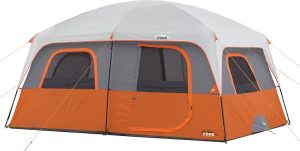
CORE is a camping equipment brand known for recreational shelters designed with family and group camping in mind. This tent is listed with an advertised capacity of ten people, making it an option for larger groups who want to share one shelter rather than carry several smaller tents. Its rectangular shape also provides a practical foundation for arranging sleeping bags, air mattresses, and personal equipment.
One of the most appealing features described for this model is its nearly straight-wall design. Traditional dome tents often slope inward toward the roof, reducing usable headroom around the edges. A cabin-style structure aims to provide more vertical wall space, making it easier to move around, change clothes, and organize camping gear. For families with children, this extra sense of openness can make daily routines more convenient.
The tent is listed in grey, a neutral color that suits a range of outdoor settings. It is also described as freestanding, meaning its structure is designed to stand without relying entirely on ground stakes to maintain its basic shape. Stakes and guylines may still be essential for securing the shelter against wind and other outdoor conditions.
However, there is an important detail to clarify before purchasing. The supplied product description includes references to a camp table, a magnetic-seal cooler, a loveseat, and a weighted blanket. These appear to describe separate products rather than features of the CORE tent. They should not be treated as included tent accessories unless the exact product listing confirms otherwise. The supplied information also lists a four-season rating and fiberglass poles, specifications that should be verified against the precise model before purchase.
In this detailed review, we will examine the tent’s advertised capacity, straight-wall design, rectangular floor plan, freestanding construction, pole material, weather-resistance considerations, seasonal suitability, practical advantages, and limitations. The goal is to help you assess whether the CORE 10-Person Straight Wall Cabin Tent deserves a place among the best family camping tents for spacious group accommodation.
Key Specifications of the CORE 10-Person Straight Wall Cabin Tent
| Feature | Details |
|---|---|
| Brand | CORE |
| Product Name | CORE 10-Person Straight Wall Cabin Tent |
| Design | Camping tent |
| Shape | Rectangular |
| Advertised Occupancy | Up to 10 people |
| Season Rating | Listed as 4-season; requires verification |
| Color | Grey |
| Installation Type | Freestanding |
| Pole Material | Fiberglass, as supplied |
| Interior Design | Nearly straight-wall construction |
| Interior Space | Described as spacious, with improved standing room and movement |
| Water Resistance | Described as a weather-resistant design |
| Ventilation | Advanced ventilation system, according to the supplied specifications |
| Exact Floor Dimensions | Not provided |
| Center Height | Not provided |
| Item Weight | Not provided |
| Included Components | Not confirmed in the supplied information |
| Intended Use | Family camping and group outdoor recreation |
Important specification note: The supplied information does not include the tent’s exact dimensions, center height, packed weight, waterproof rating, or full package contents. In addition, several of the supplied “About this item” features refer to unrelated products, including a camp table, cooler, loveseat, and weighted blanket. Those features are excluded from the tent review because they cannot be verified as part of this model.
1. Ten-Person Capacity for Large Families and Group Camping
The CORE 10-Person Straight Wall Cabin Tent is advertised to accommodate up to ten people, making it a potential choice for large families, groups of friends, or campers who prefer to share a single shelter.
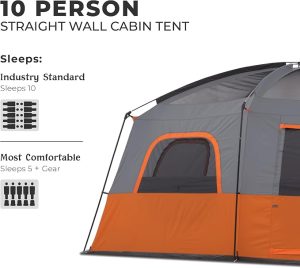
When several people travel together, a large tent can simplify campsite organization. Rather than carrying multiple small shelters, a group may be able to arrange its sleeping equipment within one shared space. This can make it easier to coordinate bedtime routines, keep track of personal belongings, and maintain a central place for everyone to gather.
For larger families, the shared arrangement can be particularly appealing. Parents can keep children nearby at night, while older children may have enough room to organize their own sleeping bags and personal items, depending on the tent’s actual floor plan.
The advertised ten-person capacity should nevertheless be interpreted carefully. Tent occupancy ratings generally describe how many people can fit inside using relatively compact sleeping arrangements. They do not necessarily indicate how many people can sleep comfortably alongside large air mattresses, luggage, shoes, and other camping equipment.
For example, ten people using sleeping bags may require a different layout from a group bringing several queen-size air mattresses. Storage requirements can also reduce the amount of floor space available for sleeping.
Because the supplied specifications do not include the tent’s exact floor dimensions, it is not possible to calculate the usable area or confirm the best sleeping arrangement for ten occupants.
Before purchasing, consider the number of people who will regularly use the shelter and the equipment they intend to bring. A large family may find that the advertised capacity is useful, while a smaller group may enjoy significantly more comfort and storage space.
Overall, the ten-person rating makes this CORE model worth considering for group camping, provided its verified dimensions match your family’s needs.
2. Nearly Straight Walls for a More Open Interior
One of the key design features described for the CORE 10-Person Straight Wall Cabin Tent is its nearly straight-wall construction.
This design aims to create a more usable interior by reducing the inward slope commonly associated with traditional dome tents. When the walls remain more upright, campers may have additional room near the edges of the shelter for sitting, organizing belongings, and moving around.
For families, this can make everyday camping activities easier. Changing clothes, helping children prepare for bed, or reaching for a bag may be less awkward when the interior feels open rather than sharply curved.
The design may also provide more flexibility when arranging sleeping equipment. Sleeping bags, pads, and other items can potentially be positioned along the walls while leaving a central walkway, depending on the tent’s dimensions and support structure.
Another advantage of a more open layout is that it can make the shelter feel less confined when several people occupy it at the same time.
However, a nearly straight-wall design does not mean every part of the tent offers full standing height. The roof can still slope, and the actual amount of headroom depends on the tent’s center height and structural design.
Since the supplied specifications do not provide a verified center-height measurement, buyers should confirm this detail if standing room is a priority.
Even with that limitation, the nearly straight-wall concept is a meaningful advantage for campers who want a cabin-style interior that prioritizes usable space and comfortable movement.
3. Rectangular Floor Plan for Flexible Sleeping Arrangements
The tent is listed with a rectangular shape, a practical layout for organizing a large group within one shelter.
Rectangular tents can make it easier to divide the floor into sections for sleeping equipment and personal belongings. For example, parents could position their sleeping bags at one end, children could sleep together along another side, and a small passage could be left through the middle if the dimensions allow.
This type of arrangement can help reduce clutter and make it easier for campers to move around without stepping over everyone else’s belongings.
A rectangular footprint may also make it easier to plan the tent’s position at the campsite, particularly when the available ground is relatively level and has a clearly defined area for pitching.
For families who use air mattresses, the floor plan is especially important. Mattress dimensions can influence how many sleeping spaces fit inside and whether room remains for bags or other equipment.
However, the supplied specifications do not identify the floor length, width, or total floor area of this exact tent. Its rectangular shape alone is not enough to determine how many mattresses will fit comfortably.
Before buying, check the manufacturer’s floor plan and compare the internal measurements with the dimensions of your intended sleeping equipment.
A rectangular layout offers useful organizational possibilities, but the comfort of the final arrangement depends on the actual usable floor area and the number of occupants.
4. Freestanding Construction for Flexible Campsite Placement
The CORE tent is listed as freestanding, a feature that can be helpful when positioning a shelter at the campsite.
A freestanding tent is designed to maintain its basic shape through its pole structure rather than depending entirely on stakes to hold the tent body upright. This can make initial positioning and adjustment more convenient on suitable ground.
For family campers, flexibility during setup can be valuable. If the first position turns out to be too close to a tree, too exposed to the wind, or poorly aligned with the available space, a freestanding structure may be easier to reposition before it is fully secured.
This can also be helpful when choosing the orientation of the entrance relative to the campsite’s main activity area.
However, freestanding does not mean that the tent can safely be left unsecured. Stakes and guylines are often important for maintaining stability, especially when wind conditions change.
The exact anchoring requirements depend on the tent’s construction and the manufacturer’s instructions. Campers should use the specified attachment points and appropriate stakes for the ground conditions.
It is also important to choose a suitable site. Avoid low areas where water can collect, uneven surfaces that may damage the floor, and exposed locations where strong winds could place additional stress on the structure.
The freestanding classification provides useful flexibility during setup, but correct anchoring and careful campsite selection remain essential parts of safe tent use.
5. Fiberglass Poles and Structural Considerations
The supplied specifications identify fiberglass as the pole material for the CORE 10-Person Straight Wall Cabin Tent.
Fiberglass poles are used in a range of recreational tents because they can provide a relatively affordable and lightweight structural option. They are commonly assembled from sections that connect to form the framework supporting the tent fabric.
For family campers, the pole system is important because it influences setup, stability, and the overall handling of the shelter.
However, fiberglass poles have limitations. Their performance depends on their diameter, construction, connectors, and the loads placed on them. They can crack or splinter if bent beyond their intended limits, mishandled, or subjected to excessive force.
This consideration is particularly relevant to a large tent. A shelter with a high advertised occupancy may have a substantial frame, and buyers should understand how its pole system is designed to support the structure.
The supplied details do not identify the number of poles, their dimensions, or the precise frame configuration. It is therefore not possible to make a definitive judgment about the strength or stability of this particular tent based on pole material alone.
Campers should follow the assembly instructions carefully and avoid forcing pole sections into position. Inspect the poles and connectors before each trip, and replace damaged components rather than continuing to use them.
Because the tent is described as a straight-wall cabin design, it is especially important to verify that the supplied pole specifications match the exact model. Large cabin tents can differ considerably in their frame arrangements.
Fiberglass poles may be perfectly adequate for the intended use, but the complete frame design and manufacturer’s weather guidance are more informative than the material name alone.
6. Weather-Resistant Design for Outdoor Protection
Weather protection is one of the most important considerations when choosing a large family tent. A shelter must help protect its occupants from ordinary outdoor conditions while maintaining a comfortable environment inside.
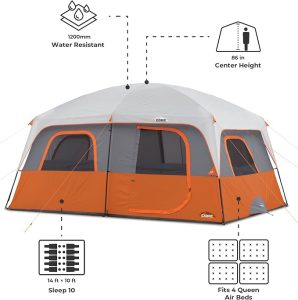
The supplied specifications describe the CORE tent as having a weather-resistant design. This suggests that weather protection is a design consideration, but it does not establish a specific waterproof performance level.
A tent’s ability to resist rain depends on several factors, including the fabric coating, seam construction, roof design, rainfly coverage, floor material, and quality of the assembly.
Seams and attachment points can be particularly important because they may provide potential entry points for moisture. The design of the roof and rainfly, where applicable, also influences how water is directed away from the sleeping area.
However, the supplied product details do not identify a numerical hydrostatic-head rating, specific seam-sealing technology, or a verified waterproof performance standard for this exact model.
It would therefore be misleading to describe the tent as suitable for prolonged heavy rain without further evidence.
For family camping, take practical precautions regardless of the tent’s advertised weather resistance. Select a site with good drainage, avoid pitching where runoff collects, secure the tent correctly, and follow the manufacturer’s instructions for all weather-protection components.
It is also wise to practise setup before travelling so that the shelter can be pitched properly when conditions are less than ideal.
The weather-resistant description is a useful starting point, but buyers should confirm the detailed specifications before relying on the tent in wet or exposed environments.
7. Advanced Ventilation for a More Comfortable Camping Experience
Ventilation can have a significant effect on comfort inside a family tent, particularly when several people sleep in the same shelter.
Occupants release moisture through breathing, while differences between the temperature inside and outside the tent can contribute to condensation. Without sufficient airflow, the interior may become stuffy or damp.
The supplied specifications describe an advanced ventilation system for this CORE model. This indicates that airflow is intended to be part of the tent’s design, although the exact ventilation features are not identified in the provided details.
Depending on the model, ventilation may involve mesh panels, roof openings, adjustable vents, or other features designed to encourage air movement. However, these specific components should not be assumed without confirmation from the official product listing.
For families, effective ventilation can help improve comfort during warm nights and may reduce the buildup of moisture under suitable conditions.
It can also be useful when several people share the tent, because body heat and humidity can accumulate more quickly in a crowded interior.
Ventilation cannot eliminate condensation in every environment. High outdoor humidity, cold temperatures, limited wind, and the number of occupants all affect how moisture behaves inside a tent.
Campers should use the ventilation features according to the manufacturer’s instructions and avoid blocking openings with luggage or bedding.
Before purchasing, verify exactly which vents and mesh panels this model includes. A clearly documented ventilation layout is particularly valuable when selecting a large tent for regular family use.
8. Four-Season Rating: What Buyers Should Verify
The supplied specifications list the CORE 10-Person Straight Wall Cabin Tent as a four-season tent. This classification requires careful verification before purchase.
In general, a four-season rating suggests that a tent is intended to handle a broader range of environmental conditions than a typical three-season shelter. However, the label alone does not establish that a tent is suitable for every winter environment or extreme weather event.
A shelter’s real-world performance depends on its frame, fabric, anchoring system, ventilation, roof design, and ability to handle wind or snow loads.
Large cabin-style tents also have different design priorities from compact mountaineering tents. Their generous interior space and more upright walls can be useful for group camping, but these characteristics alone do not demonstrate suitability for heavy snow or severe mountain conditions.
The supplied details do not include a verified snow-load rating, wind rating, or detailed explanation of the four-season classification. They also identify fiberglass poles, but the pole material alone is not enough to determine whether the complete structure is suitable for demanding winter use.
For these reasons, buyers should confirm that the four-season designation applies to the exact model and review the manufacturer’s stated weather limits.
If you plan to camp in snow, freezing temperatures, or exposed locations, choose equipment specifically rated for those conditions and follow the manufacturer’s safety guidance.
For ordinary family campground trips, the tent may still be worth considering, but the four-season label should not be treated as proof of severe-weather capability without supporting specifications.
9. Grey Color and Practical Group-Camping Appeal
The CORE 10-Person Straight Wall Cabin Tent is listed in grey, a neutral color that can fit naturally into many outdoor settings.
Color is largely a matter of personal preference, but it can influence how a tent looks within a campsite. Grey offers a relatively understated appearance that may appeal to families who prefer a simple, neutral design.
For group camping, the overall layout and visibility of the shelter matter more than its color. Nevertheless, some campers appreciate equipment that looks coordinated with their other outdoor gear.
A large tent can become a central point of activity at the campsite, serving as the main sleeping shelter for a family or group of friends.
Its rectangular design and nearly straight walls are intended to make the interior feel more usable, although the actual comfort level depends on the verified dimensions and number of occupants.
Because the supplied specifications do not include detailed measurements or a confirmed list of accessories, buyers should focus on those practical factors before making a decision based on appearance.
The grey finish is a straightforward aesthetic feature, while the tent’s actual value will depend more heavily on interior space, construction, ventilation, and weather performance.
10. Practical Considerations for Setup, Storage, and Long-Term Use
A large family tent requires more planning than a compact shelter. Before buying the CORE 10-Person Straight Wall Cabin Tent, it is important to consider not only the sleeping capacity but also the setup process, transportation requirements, and storage space.
The freestanding design may provide flexibility when positioning the shelter, while the nearly straight walls aim to improve the interior experience. However, the supplied information does not specify the exact setup time, packed dimensions, total weight, or complete list of included accessories.
These details matter when determining whether the tent is suitable for your family. A large shelter may be manageable for car camping but inconvenient if it must be carried a long distance from a parking area.
Storage is another consideration. A tent designed for ten people may require more room in a vehicle or at home than a smaller two- or four-person shelter.
For families who camp frequently, learning the assembly process before the first trip can make setup more efficient. It also provides an opportunity to check the poles, connectors, fabric, and any required anchoring components.
After each trip, allow the tent to dry fully before storing it. Remove dirt and debris, inspect the fabric and pole sections, and keep the packed shelter in a cool, dry place.
These simple maintenance steps can help protect camping equipment from avoidable wear.
Ultimately, the CORE tent’s suitability will depend on whether its verified dimensions, weight, assembly requirements, and weather specifications align with your family’s needs.
Pros and Cons of the CORE 10-Person Straight Wall Cabin Tent
Pros
-
Large advertised capacity: Designed to accommodate up to ten people, making it worth considering for large families and groups.
-
Nearly straight-wall design: Intended to provide more usable interior space and improve movement around the shelter.
-
Rectangular shape: Offers a practical starting point for organizing sleeping bags and other camping equipment.
-
Freestanding construction: Can provide flexibility when positioning the tent before it is fully secured.
-
Grey color: Offers a neutral appearance that suits a range of campsite settings.
-
Ventilation-focused design: The supplied description identifies an advanced ventilation system intended to support airflow.
-
Weather-resistant design: Weather protection is identified as a design consideration, although the exact performance rating needs verification.
-
Potential for group accommodation: One large shelter can help keep a family or camping group together.
-
Cabin-style interior concept: May be attractive to campers who prefer a more open layout than many traditional dome tents provide.
Cons
-
Exact dimensions are missing: The floor area and center height cannot be assessed accurately from the supplied information.
-
Weight and packed size are not provided: Transportation and storage requirements remain uncertain.
Who Should Buy the CORE 10-Person Straight Wall Cabin Tent?
The CORE 10-Person Straight Wall Cabin Tent may be worth considering for several types of campers, provided the exact model specifications meet their requirements.
Large families may appreciate the advertised ten-person capacity, particularly when everyone wants to sleep in a shared shelter.
Groups of friends may find a large rectangular tent convenient for campground weekends and recreational trips where sharing accommodation helps simplify campsite organization.
Campers who value interior space may be attracted to the nearly straight-wall design, which is intended to improve movement and usable headroom compared with more sharply sloped layouts.
Car campers may find a large shelter practical when transportation and packed weight are less restrictive than they would be during backpacking.
Campers who prefer a freestanding design may appreciate the flexibility of positioning the shelter before securing it fully to the ground.
However, this tent may not be the right choice for everyone. Backpackers should verify the weight and packed size before considering it for trips involving long walks. Families seeking a verified winter shelter should also confirm the four-season designation and obtain detailed weather-performance information.
Likewise, anyone planning to accommodate ten people regularly should check the floor dimensions and test the intended sleeping arrangement against the size of their mattresses and luggage.
Final Verdict: Is the CORE 10-Person Straight Wall Cabin Tent Worth Considering?
The CORE 10-Person Straight Wall Cabin Tent is a promising option to investigate for families and groups who prioritize spacious accommodation and a more open cabin-style interior.
Its advertised ten-person capacity makes it relevant to larger camping groups, while its rectangular shape and nearly straight walls are intended to improve interior organization and movement. The freestanding classification may also provide flexibility during initial setup, and the supplied specifications identify ventilation and weather resistance as design considerations.
However, several important details remain unconfirmed. The supplied information does not identify the tent’s exact dimensions, center height, weight, packed size, numerical waterproof rating, or complete package contents. The four-season classification should also be verified against the manufacturer’s documentation, particularly for buyers who intend to camp in cold, snowy, or exposed conditions.
Additionally, the camp table, magnetic cooler, loveseat, and weighted blanket mentioned in the supplied product description appear to be features of separate products, not confirmed components of the tent. They should not be included in the article as tent benefits unless the exact listing establishes otherwise.
Overall, the CORE 10-Person Straight Wall Cabin Tent is worth considering as a potential large-group camping shelter for families who value an open interior and shared sleeping space. Its final suitability depends on confirming the exact model, dimensions, frame design, ventilation features, and weather-performance specifications.
For your roundup, it is a candidate for the best large family camping tent for spacious group accommodation. Before publishing, verify the product listing and correct the unrelated product-description details so readers receive an accurate, trustworthy review.
8. Coleman Montana Camping Tent – Best Family Camping Tent for Weather Protection, Easy Access & Spacious Outdoor Adventures
Imagine arriving at a beautiful campsite with your family, surrounded by towering trees, fresh air, and the calming sounds of nature. The sun is beginning to set, the children are excited to explore, and everyone is looking forward to a relaxing evening outdoors. The only thing standing between you and that perfect camping experience is setting up a comfortable, dependable shelter. This is where the Coleman Montana Camping Tent comes into consideration, offering a family-oriented design with weather-protection features, convenient access, and practical storage for outdoor adventures.
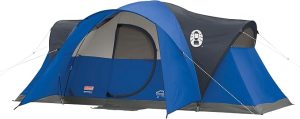
Designed for camping and hiking, this Coleman tent combines durable polyester construction with features intended to make campsite living more comfortable. Its welded corners and inverted seams help prevent water from entering through vulnerable areas, while the included rainfly provides an additional layer of protection against changing weather. For families who want to enjoy the outdoors without worrying about every passing shower, these features can make a meaningful difference when conditions are suitable for recreational camping.
One of the tent’s most distinctive features is its hinged door with an extended awning. Unlike a conventional tent entrance that relies entirely on a flexible fabric flap, a hinged door is designed to make coming and going more convenient. The extended awning also offers a little additional coverage near the entrance, which can be useful when storing footwear or preparing to step inside during light rain. Inside, storage pockets help keep smaller essentials organized, while double-thick fabric is intended to withstand repeated use across camping seasons.
The supplied product details list a seven-person occupancy, a weight of 22.3 pounds, and a conventional pitching time of approximately 15 minutes. These specifications suggest a tent aimed at families and groups who value a balance between sleeping capacity, practical features, and manageable setup. However, one important detail deserves attention: the listing identifies the tent as a seven-person model in its specifications but mentions an eight-person tent under included components. Its listed packed dimensions also differ from what would normally be expected of the assembled tent, so buyers should verify the exact Montana model before purchasing.
In this review, we will explore the Coleman Montana’s key specifications, weather-protection features, setup process, interior organization, strengths, and limitations to help you determine whether it deserves a place on your family’s camping checklist.
Key Specifications of the Coleman Montana Camping Tent
The following table summarizes the specifications provided in the product listing. Where details are unclear or inconsistent, the uncertainty is identified rather than treated as a confirmed feature.
| Specification | Details |
|---|---|
| Brand | Coleman |
| Product Name | Coleman Montana Camping Tent |
| Material | 100% polyester |
| Product Dimensions (as listed) | 27″L × 8.5″W × 8.5″H |
| Item Weight | 22.3 pounds |
| Floor Width | 7 feet |
| Recommended Uses | Camping and hiking |
| Shape | Dome (as listed) |
| Advertised Occupancy | 7 people |
| Included Components | Listed as an 8-person tent; verify exact model |
| Season Rating | 3-season |
| Water Resistance Technology | 1500 mm (as listed) |
| Weather-Protection Features | Welded corners, inverted seams, included rainfly |
| Door Design | Hinged door with extended awning |
| Interior Organization | Storage pockets |
| Fabric Construction | Double-thick fabric, according to the listing |
| Setup Type | Conventional pitch |
| Advertised Setup Time | Approximately 15 minutes |
| Manufacturer | Coleman |
Important specification note: The dimensions of 27 × 8.5 × 8.5 inches appear more consistent with a packed or carried product than an assembled family tent, but the listing does not explicitly confirm this. The stated seven-person capacity also conflicts with the eight-person description. Confirm the precise model number, assembled floor dimensions, peak height, and capacity before relying on these figures.
10 Key Features of the Coleman Montana Camping Tent
1. Family-Oriented Sleeping Capacity for Group Camping
When planning a family camping trip, sleeping capacity is one of the first specifications worth examining. The Coleman Montana listing advertises room for seven people, positioning it as an option for families, group outings, or campers who want to share a shelter rather than carry several smaller tents.
A larger-capacity tent can make family logistics easier. Instead of dividing everyone among separate shelters, a shared tent gives parents and children one central place to sleep, organize their belongings, and settle down at the end of an outdoor adventure.
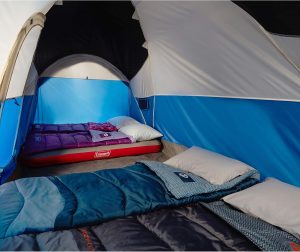
However, the advertised capacity should be viewed as a maximum sleeping estimate rather than a guarantee of spacious comfort. Tent capacity ratings often assume tightly arranged sleeping positions and leave limited room for luggage, shoes, or other equipment. Families bringing air mattresses, bulky sleeping bags, or substantial camping gear may find that the usable space feels smaller than expected.
The listing’s conflicting seven-person and eight-person descriptions make it especially important to confirm the exact version. Before purchasing, check the assembled floor area and consider how many people will sleep inside alongside their belongings.
Best for: Families and groups who need shared sleeping accommodation and are comfortable planning their interior layout carefully.
2. Weather Protection with Welded Corners and Inverted Seams
A comfortable camping trip depends partly on how well your shelter handles changing weather. Coleman highlights welded corners and inverted seams as features designed to help keep water from entering through vulnerable parts of the tent.
Corners and seams can be potential entry points for moisture, especially when rain runs down the tent fabric or collects around the lower edges. Welded corners help address vulnerable construction points, while inverted seams are intended to reduce water intrusion through stitched areas.
These features can provide useful protection during ordinary recreational camping, particularly when the tent is pitched correctly and its rainfly is installed as intended. They may help families feel more prepared when a light shower arrives unexpectedly.
Nevertheless, no tent should be considered completely waterproof under every condition based on these features alone. Groundwater, wind-driven rain, poor pitching, worn fabric, and prolonged exposure can all affect performance.
The listed 1500 mm water-resistance figure should also be verified against the precise model’s documentation. A hydrostatic-head rating is a measure of fabric resistance to water pressure, not a guarantee that the complete tent will remain dry in all conditions.
Best for: Campers who want practical rain-protection features for ordinary three-season trips, provided they pitch the tent carefully and check the weather forecast.
3. Included Rainfly for an Additional Layer of Protection
The rainfly is another important feature highlighted in the Coleman Montana listing. A rainfly provides an additional layer over the tent body, helping shield the shelter from precipitation and, depending on its design, reducing direct exposure to moisture.
For families, this extra layer can help make a campsite more comfortable when weather conditions change. Rather than relying solely on the tent’s main fabric, the rainfly adds another barrier between the sleeping area and the elements.
A properly fitted rainfly can also help direct water away from entrances and other vulnerable areas. Its effectiveness, however, depends on correct installation, adequate coverage, and sufficient separation from the tent body where the design requires it.
Before heading out, check that the rainfly is included in the package, fits the exact model, and can be attached securely. It is also wise to practice setting it up at home rather than trying to understand the attachment points during an approaching rainstorm.
Keep in mind that the product listing does not provide a wind-speed rating or evidence that this tent is intended for severe storms. It should be treated as recreational camping shelter, not a substitute for specialized expedition equipment.
Best for: Families who want an extra weather-protection layer for weekend camping and other suitable outdoor trips.
4. Hinged Door for Convenient Entry and Exit
One of the more distinctive features in the listing is the hinged door. A tent entrance can become a busy area when several people are sharing a shelter, especially when children repeatedly move in and out during the day.
A hinged door is designed to open and close more conveniently than a standard loose fabric flap. This can make it easier to manage entry and exit while carrying small items, helping children through the doorway, or returning to the tent after an evening around the campsite.
The door’s design may also help maintain a more orderly entrance, depending on how the particular model is constructed and secured. This is a practical advantage for families who value simple, accessible campsite routines.
That said, a hinged entrance does not eliminate the need to handle the door carefully. Campers should avoid forcing it, keep the entrance area clear, and follow the manufacturer’s instructions for opening, closing, and securing it.
Because tent designs can vary by model year, confirm that the exact Coleman Montana version you are buying includes the advertised hinged door.
Best for: Families who prioritize convenient access, especially when children and several campers share the same shelter.
5. Extended Awning for More Practical Entrance Coverage
The extended awning works alongside the hinged door to make the entrance area more useful. Although it should not be confused with a full porch or enclosed vestibule, an awning can offer some coverage immediately outside the doorway.
This small covered area can be useful during everyday camping activities. For example, campers may have a little more shelter while opening the door, removing muddy shoes, or preparing to step outside during light rain.
An awning can also make the entrance feel more welcoming by creating a transition between the outdoors and the sleeping area. Families with children may appreciate having a designated spot to pause before bringing wet footwear or damp clothing inside.
However, the amount of protection depends on the awning’s actual size and construction, neither of which is specified in the supplied details. It should not be assumed to provide enough room for chairs, cooking equipment, or substantial storage.
Avoid using stoves or open flames beneath the awning or close to the tent fabric. Maintain safe distances from all heat sources and follow camping fire-safety guidance.
Best for: Campers who appreciate a more sheltered entrance and a little extra convenience during ordinary campsite routines.
6. Double-Thick Fabric for Repeated Camping Use
Camping tents are exposed to more than rain. Repeated packing, transportation, pitching, sunlight, and contact with the ground can all contribute to wear over time.
According to the supplied listing, the Coleman Montana uses double-thick fabric intended to withstand the elements season after season. This suggests that the construction is designed with repeated recreational use in mind rather than occasional use alone.
For families who camp several times a year, durability can be an important consideration. A tent that is handled carefully, dried completely after wet trips, and stored properly has a better chance of remaining useful over multiple outings.
Still, the phrase “double-thick fabric” does not provide a complete measure of durability. The supplied details do not specify the fabric denier, reinforcement locations, UV-resistance rating, or abrasion-test results. It would therefore be unwise to assume that the fabric is indestructible or suitable for extreme weather.
To extend the tent’s lifespan, pitch it on a clear site, avoid dragging it across rough ground, use appropriate ground protection when recommended, and allow it to dry before long-term storage.
Best for: Families seeking a tent for recurring weekend trips and seasonal camping, with sensible care and maintenance.
7. Polyester Construction for Outdoor Practicality
The product listing identifies the tent’s material as 100% polyester. Polyester is widely used in recreational tents because it can offer a useful combination of relatively low weight, practical handling, and resistance to moisture absorption compared with some other common textile options.
For a family tent, these characteristics can make everyday use more manageable. The fabric can be packed away when dry, transported to the campsite, and pitched for a weekend in the outdoors without requiring the specialized handling associated with some heavier shelter materials.
However, the material name alone does not establish the tent’s complete weather performance. Coatings, seams, construction quality, ventilation, and the fit of the rainfly also play important roles in keeping the interior comfortable.
The supplied listing does not specify whether every component—including the floor, rainfly, and main tent body—uses identical fabric construction. Buyers should check the detailed manufacturer documentation if material specifications are important to their decision.
Best for: Recreational campers looking for a conventional synthetic-fabric tent that can be transported and used for regular outdoor trips.
8. Storage Pockets for Better Interior Organization
A family campsite can quickly become cluttered with small essentials. Flashlights, phones, headlamps, charging accessories, maps, and personal items all need somewhere convenient to go.
The Coleman Montana includes storage pockets intended to keep smaller gear organized and off the floor. While this might sound like a minor feature, it can make a noticeable difference when several people share a tent.
Instead of leaving small belongings scattered across sleeping bags, campers can use the available pockets to establish a simple organization system. Parents might keep a flashlight in a consistent place, while other family members can store lightweight personal items within easy reach.
Keeping the floor clearer also helps reduce the chance of accidentally stepping on small objects when entering or leaving the tent at night. Good organization is particularly useful in low-light conditions when everyone is tired after a day of outdoor activities.
The listing does not specify the number, dimensions, or placement of the pockets, so the available storage may be more limited than some buyers expect. These pockets should be treated as a solution for small essentials rather than a replacement for a separate gear bag.
Best for: Families who appreciate small organizational features that make shared sleeping spaces easier to manage.
9. Conventional Pitching with an Advertised 15-Minute Setup
The Coleman Montana uses a conventional pitching process, with the supplied listing advertising a setup time of approximately 15 minutes. For families who prefer a straightforward camping routine, a conventional tent can be a practical choice once they become familiar with its poles, fabric, and attachment points.
Learning the setup process before leaving home can make the experience considerably smoother. A practice run allows campers to identify each component, understand how the structure fits together, and confirm that nothing is missing.
It is important, however, to treat the 15-minute figure as an advertised estimate rather than a guaranteed setup time. Actual pitching time depends on the number of people helping, experience, ground conditions, wind, and the complexity of the particular model.
For a first-time user, allowing additional time is sensible. Setting up the tent in daylight and on relatively level ground is generally easier than trying to pitch it after dark or in poor weather.
The supplied details do not establish whether the 15-minute estimate includes attaching the rainfly, staking every point, and adjusting the guy lines. A fully secured shelter may take longer than simply getting the main structure standing.
Best for: Families who want a conventional tent setup and are happy to spend a little time learning the process before their trip.
10. Three-Season Design for Spring, Summer, and Autumn Adventures
The listing identifies the Coleman Montana as a three-season tent, making it a potential option for many ordinary recreational camping trips during milder weather.
Three-season tents are generally designed for conditions such as spring showers, summer outings, and autumn camping when temperatures and weather remain within the shelter’s intended operating range. For families planning park visits, weekend getaways, or campsite holidays, this type of tent can be a versatile choice.
Ventilation and rain protection remain important during these trips. Campers should use the tent’s ventilation features as intended, pitch the rainfly correctly, and choose a campsite with suitable drainage.
However, a three-season classification does not mean that a tent is suitable for every weather condition throughout those seasons. It does not automatically make the shelter safe for severe thunderstorms, strong winds, heavy snow, or freezing temperatures.
The supplied details also do not specify the Montana’s peak interior height or complete assembled dimensions. These measurements matter when assessing comfort, especially for taller adults or families who want enough room to sit up and change clothes.
Best for: Families planning recreational trips in generally mild conditions who want a practical shelter rather than specialized extreme-weather equipment.
Pros and Cons of the Coleman Montana Camping Tent
Pros
-
Family-oriented capacity: The listing advertises room for seven people, potentially making it suitable for shared family camping.
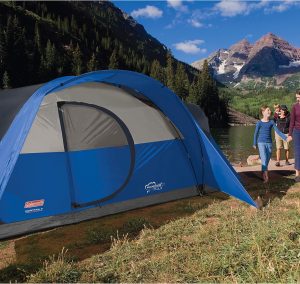
-
Rain-protection features: Welded corners, inverted seams, and an included rainfly are designed to help reduce water intrusion.
-
Convenient hinged door: The advertised entrance design can make coming and going easier.
-
Extended awning: Provides some additional coverage around the doorway, depending on the exact model.
-
Double-thick fabric: Intended to support repeated use over multiple camping seasons.
-
Practical storage pockets: Help keep small essentials organized and off the floor.
-
Polyester construction: Offers a familiar, practical material choice for recreational camping.
-
Manageable advertised setup time: The listing suggests approximately 15 minutes for conventional pitching, although actual times will vary.
-
Useful three-season positioning: Potentially suitable for a range of spring, summer, and autumn trips in appropriate conditions.
-
Recognizable outdoor brand: Coleman offers a broad range of recreational camping equipment, making model documentation and accessory compatibility worth checking before purchase.
Cons
-
Conflicting occupancy information: The specifications say seven people, while the included-components field refers to an eight-person tent.
-
Unclear dimensions: The listed 27 × 8.5 × 8.5 inches do not clearly establish the assembled tent’s size.
-
Limited confirmed floor measurements: The stated seven-foot floor width is insufficient to determine the full sleeping area.
-
Unverified water-resistance rating: The 1500 mm figure should be checked against the precise model’s documentation.
-
Conventional setup: It is not advertised as an instant tent, so pitching requires more assembly than a pre-attached-pole design.
-
No confirmed interior height: The supplied information does not establish how comfortably taller campers can sit or move inside.
-
Awning size is unspecified: The extent of the extra entrance coverage cannot be determined from the listing.
-
No severe-weather guarantee: The listed features do not establish suitability for extreme winds, heavy snow, or prolonged severe storms.
-
Real-world comfort depends on layout: A maximum occupancy figure does not guarantee generous room for people, mattresses, and luggage.
Who Should Buy the Coleman Montana Camping Tent?
The Coleman Montana may be worth considering for several types of campers, provided the exact model and its measurements match their needs.
1. Families planning weekend camping tripsFamilies who enjoy occasional outdoor getaways may appreciate the combination of a shared sleeping shelter, storage pockets, and a convenient entrance. Before buying, they should confirm that the actual floor dimensions accommodate everyone comfortably.
2. Campers who value a practical entrance
The hinged door and extended awning are potentially useful for people who frequently enter and exit the tent or want a little coverage near the doorway. These features may be particularly appealing to families with children.
3. Recreational campers who want basic rain protection
Welded corners, inverted seams, and a rainfly offer a practical set of weather-oriented features. Campers should still verify the water-resistance specifications and choose suitable conditions for their trip.
4. Families who camp several times each year
The advertised double-thick fabric may appeal to buyers seeking a shelter for repeated recreational use. Proper pitching, cleaning, drying, and storage remain essential to extending its useful life.
5. Campers who prefer conventional tent assembly
Those comfortable with traditional pitching may find the setup process manageable, particularly after practicing at home. Campers who strongly prioritize the fastest possible setup might prefer an instant-pitch alternative instead.
Who might want to consider another tent?
This model may not be the best choice for buyers who need a verified eight-person interior, substantial standing room, extensive gear storage, or a shelter rated for severe weather. It may also be less appealing to people who want a guaranteed rapid setup with pre-attached poles.
Most importantly, anyone purchasing on the basis of exact dimensions or occupancy should resolve the inconsistencies in the listing before making a decision.
Final Verdict: Is the Coleman Montana Camping Tent Worth Considering?
The Coleman Montana Camping Tent presents several appealing features for recreational family camping, including an advertised seven-person capacity, polyester construction, a rainfly, welded corners, inverted seams, storage pockets, and a distinctive hinged door with an extended awning. Its conventional pitching process is advertised to take approximately 15 minutes, making it a potential option for campers who prefer a traditional setup rather than an instant-pitch design.
Its strongest selling points are the combination of practical entrance features and basic weather-protection measures. The storage pockets can help maintain a tidier sleeping area, while the rainfly and seam construction are intended to improve protection during suitable camping conditions. These are useful considerations for families who want their tent to serve as a comfortable base for outdoor adventures.
However, there is one important reason to verify this product carefully before buying: the listing contains conflicting occupancy information, and its stated dimensions do not clearly identify the assembled tent’s size. The supplied seven-foot floor width alone is not enough to determine whether the tent can comfortably accommodate a family of the intended size. The 1500 mm water-resistance figure should also be confirmed for the exact model.
Overall, the Coleman Montana is a potential candidate for families seeking a conventional recreational camping tent with convenient access and basic weather-protection features. Its suitability ultimately depends on verifying the model, actual sleeping area, interior height, and water-resistance specifications.
For this roundup of the 10 Best Family Camping Tents – Top Picks for Spacious Comfort, Easy Setup & Outdoor Adventures, it can be considered a practical option for buyers who prioritize entrance convenience and everyday camping functionality. Just make sure the model’s confirmed dimensions and capacity align with your family’s needs before adding it to your outdoor gear collection.
9. UNP 10-Person Camping Tent – Best Large Family Camping Tent for Spacious Comfort, Two-Room Privacy & Outdoor Adventures
Imagine arriving at a scenic campsite with your entire family, ready for a weekend filled with campfire stories, stargazing, outdoor games, and peaceful nights surrounded by nature. With a large group, however, finding a shelter that accommodates everyone without making the experience feel cramped can be challenging. The UNP 10-Person Camping Tent is designed to address that challenge with a generous rectangular layout, a tall interior, multiple mesh openings, and a privacy divider that transforms the shared sleeping area into two separate spaces.
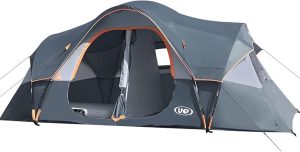
Measuring a listed 18 feet long by 9 feet wide and standing 78 inches tall, this UNP tent offers a substantial footprint for families who want to sleep together under one roof. The manufacturer describes it as spacious enough for up to 10 sleeping bags or three queen-size air mattresses, making it an appealing option for larger families, group camping trips, and outdoor gatherings where having a shared shelter matters.
Space is only part of the experience, though. The tent’s large mesh roof offers an opportunity to watch the night sky when weather conditions allow, while its mesh windows and door panels are designed to encourage airflow. During warm-weather camping, these ventilation features can help the interior feel more connected to the outdoors. The tent also includes a privacy divider curtain that separates the interior into two rooms, giving parents, children, or different members of a group a little more personal space.
Practicality is another part of the design. According to the supplied listing, two people can set up the tent in approximately 10 minutes, and its larger carry bag is intended to make repacking easier. The rainfly features vestibular and extended awning sections designed to help keep rain from falling directly into the entrance areas. Together, these features make the tent worth considering for families seeking a spacious base for recreational camping.
There are, however, a few details worth examining carefully. The supplied specifications identify the tent as a four-season model, yet the large mesh roof and numerous mesh panels suggest that ventilation and warmer-weather comfort are important priorities. Its listed 1000 mm water-resistance rating also does not, by itself, establish suitability for prolonged heavy rain or severe weather. We will explore these considerations alongside the tent’s most useful features to help you decide whether it suits your family’s camping plans.
Key Specifications of the UNP 10-Person Camping Tent
| Specification | Details |
|---|---|
| Brand | UNP |
| Product Name | UNP 10-Person Camping Tent |
| Material | Polyester; mesh panels |
| Product Dimensions | 216″L × 108″W × 78″H |
| Item Weight | 21 pounds |
| Floor Width | Listed as 18 feet; likely refers to length rather than width |
| Recommended Uses | Camping and hiking |
| Shape | Rectangular |
| Advertised Occupancy | 10 people |
| Seasons | Listed as four-season; verify with the manufacturer |
| Included Components | Stakes listed; confirm whether poles, rainfly, and divider are included in the package |
| Water Resistance Technology | 1000 mm |
| Fabric Specification | 185T polyester with PU1000 mm coating, according to the listing |
| Approximate Floor Area | 162 square feet (18 ft × 9 ft) |
| Interior Height | 78 inches |
| Setup Time | Approximately 10 minutes for two people, according to the listing |
| Packed Dimensions | 25.6″ × 10.2″ × 10.2″ |
| Ventilation | Large mesh roof, mesh windows, and mesh door panels |
| Room Configuration | One hanging privacy divider creates two interior sections |
| Rain Protection | Rainfly with vestibular and extended awning design |
Specification clarification: The dimensions of 216 × 108 inches equal 18 × 9 feet, so the listed 18-foot floor width appears to describe the tent’s length. The resulting footprint is approximately 162 square feet. Also, the supplied listing mentions a four-season classification, but the mesh-heavy design makes it important to verify the intended weather conditions with the manufacturer before relying on it for cold-weather or severe-weather camping.
10 Key Features of the UNP 10-Person Camping Tent
1. Spacious 18 × 9-Foot Layout for Large Families
One of the most compelling features of the UNP tent is its advertised 18 × 9-foot footprint. With approximately 162 square feet of floor space, it offers a substantial shared area for family members who prefer to sleep together rather than distribute everyone among several smaller tents.
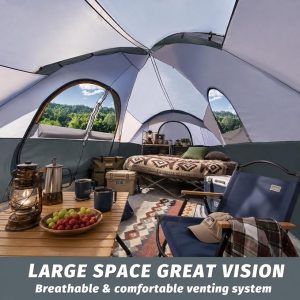
A large interior can simplify family camping in several ways. Parents can keep children close at night, friends can share one shelter during group trips, and campers can organize their sleeping arrangements around the available space. Instead of coordinating several separate tent entrances, the group has a central place to gather, sleep, and prepare for the following day’s activities.
According to the supplied product description, the tent can accommodate up to 10 sleeping bags or three queen-size air mattresses. This gives prospective buyers a useful starting point when considering sleeping arrangements, although the actual fit depends on mattress dimensions, layout, and the room left for personal belongings.
Maximum occupancy should not be confused with generous personal space. Ten adults with large mattresses and luggage may find the interior more crowded than a family using compact sleeping bags. A group should also consider how the privacy divider affects the usable area in each section.
For families seeking a shared shelter for vacations, weekend campsites, or group outdoor adventures, the generous footprint is one of this model’s main attractions.
Best for: Large families and groups who need a substantial shared sleeping area and are willing to plan their interior layout carefully.
2. Tall 78-Inch Interior for Improved Everyday Comfort
The listed 78-inch interior height is another useful feature for a family-oriented tent. A relatively tall center height can make it easier for many adults to sit upright, change clothes, organize belongings, and move around without feeling as restricted as they might in a low-profile backpacking shelter.
This extra vertical space can be especially valuable during trips that last several days. A tent is not simply somewhere to sleep; it can also become a temporary changing area, a place to organize equipment, or a sheltered retreat when the weather interrupts outdoor activities.
For parents camping with children, a taller interior can make everyday routines more manageable. Getting dressed in the morning, helping younger campers prepare for bed, or sorting sleeping bags can feel less awkward when there is enough headroom to sit up comfortably.
However, the listed 78 inches represents the tent’s stated height, not a guarantee of that much clearance throughout the entire interior. Tent walls typically slope or curve toward the edges, so standing room may be concentrated near the center.
Buyers should also confirm whether the stated height is the peak height and check the manufacturer’s assembled dimensions for the exact model.
Best for: Families who appreciate extra headroom for changing clothes, organizing gear, and managing everyday campsite routines.
3. Large Mesh Roof for Ventilation and Stargazing
The large mesh roof is one of the tent’s most distinctive features. It serves a practical purpose by allowing air to circulate through the upper portion of the shelter, while also offering an enjoyable way to observe the sky when the weather is clear and the rainfly is configured to permit the view.
Imagine settling into your sleeping bag after a day of hiking, with the night sky visible above the campsite. For children and adults alike, watching stars from inside a tent can turn an ordinary camping evening into a memorable experience.
Beyond the visual appeal, overhead mesh can help warm air escape as it rises inside the shelter. Combined with appropriately positioned windows and doors, this can support airflow and reduce the feeling of stuffiness that sometimes develops when several people sleep in one enclosed space.
There is an important trade-off, however. Mesh provides less insulation and weather protection than a solid fabric panel. If the rainfly covers the mesh roof, the view of the stars may be reduced or blocked, depending on the design and how the fly is installed. Wind, cold temperatures, insects, and rain also affect how much of the roof can comfortably remain exposed.
The supplied listing does not confirm whether the rainfly can be configured to preserve an unobstructed view while maintaining adequate weather protection.
Best for: Families who enjoy stargazing and prioritize airflow during suitable camping conditions.
4. Mesh Windows and Doors for Better Airflow
Ventilation becomes increasingly important when several people share one shelter. Body heat, moisture from breathing, damp clothing, and warm outdoor conditions can all contribute to an uncomfortable interior if air circulation is limited.
The UNP tent is described as having large mesh windows on three sides, along with additional mesh panels on its doors. These openings are intended to encourage air movement and help the interior feel more open during camping trips.
For families camping in warm or humid weather, multiple ventilation points can be especially useful. Opening the appropriate panels can help hot air escape and allow fresh air to circulate, while the mesh helps provide a barrier against many flying insects when the panels are intact and properly closed.
The windows can also make the shelter feel less enclosed during daylight hours. Campers may enjoy views of the surrounding trees, campsite, or landscape without needing to leave the tent.
Still, mesh ventilation is not a substitute for insulation or weather protection. During cold or windy conditions, exposed mesh can allow considerable air movement, and condensation may still develop when temperature differences and humidity are high.
To get the most from the design, campers should use the available openings according to the weather and install the rainfly when necessary.
Best for: Warm-weather campers who value airflow, outdoor views, and a less enclosed sleeping environment.
5. Two-Room Layout with a Hanging Privacy Divider
Sharing one tent can be convenient, but large groups do not always want to share a completely open sleeping area. Parents may want a separate section for children, two families may want their own sleeping zones, or friends may prefer some visual separation at night.
The UNP tent addresses this with a hanging privacy divider that can be suspended from the ceiling to create two interior sections. This offers greater flexibility than a completely open floor plan, allowing campers to organize the interior according to the needs of their group.
For example, one section could be used as a parents’ sleeping area while the other accommodates children. Alternatively, a group of friends could divide sleeping arrangements between the two sections while keeping shared belongings organized in designated areas.
The divider can also make a large tent feel more structured. Rather than having sleeping bags scattered throughout one open space, campers can establish separate zones for different members of the group.
It is important to understand that a fabric divider provides visual privacy, not soundproofing or a fully separate enclosed room. It may also reduce flexibility when placing large mattresses, so it is worth planning the layout before departure.
Best for: Families and groups who want flexible sleeping arrangements and a greater sense of privacy inside a shared tent.
6. Divider Screen That Can Double as an Outdoor Movie Surface
An especially interesting detail in the supplied listing is the suggestion that the privacy divider can also serve as a projection screen. With a compatible projector and suitable lighting conditions, the divider could provide a simple surface for an outdoor movie night.
This creates an additional recreational possibility for family camping. After a day of hiking, swimming, or exploring, everyone could gather at the campsite for a film, a children’s show, or a favorite family video.
Using the divider as a screen may be particularly convenient because it can make use of a feature already intended to separate the tent’s interior. It offers a creative way to bring entertainment into a trip without necessarily carrying a separate screen.
There are a few practical considerations. The supplied product details do not establish that a projector is included, so it should be treated as a separate accessory unless the seller confirms otherwise. Image quality will depend on the projector, ambient light, divider fabric, and the available setup space.
For safety, keep electrical equipment protected from moisture and do not run generators or fuel-burning equipment inside the tent or close to its openings.
Best for: Families who enjoy campsite entertainment and want to make their shared shelter more versatile.
7. Polyester Fabric with a Listed 1000 mm PU Coating
The supplied listing identifies the tent fabric as 185T polyester with a PU1000 mm waterproof coating. Polyester is a common material in recreational camping tents because it offers practical handling and can be combined with coatings designed to improve resistance to water.
The polyurethane, or PU, coating is intended to help the fabric resist moisture. The listed 1000 mm figure refers to a water-pressure test commonly used to describe fabric hydrostatic head. It should not be interpreted as a guarantee that the entire tent will remain dry under every type of rainfall or camping condition.
This distinction matters for families planning multi-day trips. Overall water protection also depends on seam construction, the condition and fit of the rainfly, the floor material, how the tent is pitched, and whether water can collect beneath the shelter.
The listing does not provide a separate waterproof rating for every tent component or detailed performance data for prolonged heavy rain. As a result, it is sensible to regard the supplied rating as one piece of information rather than a complete measure of weather resistance.
Before purchasing, confirm the rating and intended conditions with the manufacturer, particularly if you expect to camp in areas with frequent heavy rainfall.
Best for: Recreational campers looking for a coated polyester tent for suitable outdoor conditions, provided they understand its weather limitations.
8. Rainfly with Vestibular and Extended Awning Design
The rainfly is designed to provide an additional layer of weather protection, while the supplied description highlights vestibular and extended awning features intended to reduce rain entering through the entrance areas.
This is a practical consideration for family camping. Tent entrances can become vulnerable when rain falls directly onto an open doorway, particularly when campers are entering and exiting frequently. An awning can provide some coverage and help make the transition between the outdoors and the sleeping area more comfortable.
A vestibule-style section, where present in the exact model, may also offer a useful covered area near the entrance. Depending on its size and design, this could help keep footwear or small items under cover instead of bringing everything into the sleeping area.
However, the listing does not specify the awning’s dimensions or clearly establish how much protected storage space is available. It should not be assumed to be a large enclosed vestibule or a substitute for a separate canopy.
Correct installation is essential. The rainfly should be attached as directed, and the campsite should be selected to avoid low spots where water may collect. Even well-designed rain protection can be undermined by poor pitching or water flowing underneath the tent.
Best for: Families who want additional entrance coverage and a more practical arrangement for everyday campsite use.
9. Advertised 10-Minute Setup for Two People
A large tent can be intimidating to assemble, particularly for campers who are new to outdoor equipment. The UNP listing describes its design as easy to pitch, with two people reportedly able to set it up in approximately 10 minutes.
A straightforward setup process can make a meaningful difference on family trips. Parents often have several tasks to manage upon arrival, from organizing food and sleeping equipment to keeping children occupied. A tent that is familiar and manageable to pitch can help reduce the initial workload.
The supplied product information also lists a carry bag measuring 25.6 × 10.2 × 10.2 inches. This is intended to provide room for repacking the tent, potentially making it less frustrating to return the fabric and components to the bag after a trip.
Nevertheless, the 10-minute figure should be treated as an advertised estimate rather than a guaranteed result. Actual setup time depends on experience, ground conditions, wind, and whether all components are organized and ready to use.
For a first outing, allow extra time and practice at home. Also, check that the package includes all required components. The specifications list stakes, but the supplied details do not fully confirm the contents of the complete package.
Best for: Families who want a manageable pitching process and are willing to familiarize themselves with the tent before travelling.
10. Large Carry Bag and Practical Packing for Group Trips
A spacious family tent is useful at the campsite, but transportation and storage are also important. Large shelters can become awkward to pack, especially when several people are tired and ready to leave after a weekend outdoors.
The UNP listing provides carry-bag dimensions of 25.6 × 10.2 × 10.2 inches and describes the bag as larger to make repacking easier. A little extra room in a carry bag can help reduce the struggle of fitting fabric back inside, particularly if the tent is folded differently from its original factory-packed arrangement.
At a listed weight of 21 pounds, the tent is not a particularly lightweight shelter for carrying long distances on foot. However, that weight may be manageable for car camping, established campsites, and trips where the tent is transported from a vehicle to a nearby pitching area.
Families should also consider the space required to transport the tent alongside sleeping bags, mattresses, cooking equipment, clothing, and other camping essentials.
After use, ensure the tent is completely dry before storing it for an extended period. Moisture left inside the packed fabric can encourage mildew and unpleasant odors, potentially shortening the shelter’s useful life.
Best for: Car campers and families who want a large shared shelter and can accommodate its packed size and weight.
Pros and Cons of the UNP 10-Person Camping Tent
Pros
-
Large advertised floor area: The listed 18 × 9-foot footprint provides approximately 162 square feet of floor space.
-
High interior profile: The stated 78-inch height may improve comfort for sitting up and changing clothes.
-
Designed for group sleeping: The listing describes space for up to 10 sleeping bags or three queen-size air mattresses.
-
Two-room configuration: The hanging divider provides flexible sleeping arrangements and visual separation.
-
Large mesh roof: Offers ventilation and the possibility of stargazing when weather and rainfly configuration permit.
-
Multiple mesh windows and door panels: Designed to support airflow and provide views of the surroundings.
-
Potential movie-night versatility: The divider can reportedly serve as a projector screen, although the projector is not confirmed as included.
-
Rainfly with extended awning features: Intended to help protect entrance areas from falling rain.
-
Conventional polyester construction: A familiar material choice for recreational camping.
-
Advertised two-person setup: The manufacturer states that two people can set up the tent in about 10 minutes.
-
Carry bag included in the product description: The listed dimensions may make packing more manageable.
Cons
-
Four-season classification needs verification: The extensive mesh design may be better suited to milder conditions than severe cold or snow.
-
Limited confirmed weather-performance information: A listed 1000 mm fabric rating does not establish the performance of the entire tent in prolonged heavy rain.
Who Should Buy the UNP 10-Person Camping Tent?
The UNP 10-Person Camping Tent may appeal to several types of campers, particularly those who value interior space and flexible sleeping arrangements.
1. Large families
Families who need to accommodate several children and adults in one shelter may appreciate the advertised 18 × 9-foot footprint. Before buying, measure your intended mattresses and consider how much space will remain for luggage and movement.
2. Groups of friends who camp together
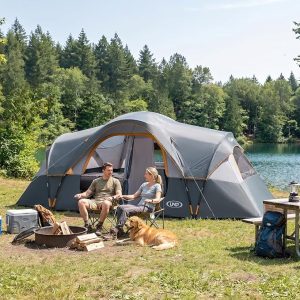
A shared tent can simplify campsite organization by keeping the group in one place. The divider offers a way to separate sleeping areas without requiring a second tent.
3. Families who enjoy warm-weather campingThe mesh roof and multiple mesh panels are appealing features for campers who prioritize airflow and views of the surrounding environment. They may be especially enjoyable on mild evenings when stargazing is possible.
4. Campers who appreciate extra interior organization
The two-room layout can help establish distinct sleeping zones, while the large footprint offers more flexibility for arranging bedding and personal items.
5. Families who enjoy campsite entertainment
The suggested projector-screen use of the divider adds a recreational possibility for groups who enjoy movie nights. Remember that the projector is not confirmed as part of the package.
6. Car campers and established-campsite visitors
The listed 21-pound weight and substantial footprint make the tent more appropriate for trips where equipment can be transported by vehicle or carried a short distance.
Who should consider another tent?
This model may be less suitable for backpackers seeking minimal weight, campers who regularly face severe winter conditions, or buyers who require independently verified heavy-rain performance. Anyone needing generous space for 10 adults and their luggage should also examine the actual floor layout carefully rather than relying on the advertised capacity alone.
Final Verdict: Is the UNP 10-Person Camping Tent Worth Considering?
The UNP 10-Person Camping Tent offers an appealing combination of space, ventilation, and layout flexibility for families and groups who enjoy sharing a shelter. Its listed 18 × 9-foot footprint, 78-inch height, mesh roof, multiple mesh openings, and hanging privacy divider give it several features worth considering for recreational camping.
Its biggest advantage is the way the interior can be organized. Rather than offering one large, completely open sleeping area, the tent allows campers to create two sections for greater visual privacy. The large mesh roof and windows also make ventilation and outdoor views central parts of the design, while the rainfly’s extended awning features are intended to provide additional coverage near the entrances.
There are important qualifications, however. The stated 10-person capacity does not guarantee comfortable accommodation for 10 adults with mattresses and luggage. The 1000 mm water-resistance rating should not be treated as proof of reliable performance in prolonged heavy rain, and the four-season classification deserves confirmation given the extensive mesh construction. The exact package contents should also be checked before purchase.
Overall, this UNP model is worth considering for large families and groups who prioritize spacious sleeping arrangements, ventilation, and flexible interior organization for suitable camping conditions. It may be particularly appealing for car camping, family holidays, and group weekends where a large shared shelter is more useful than a compact, lightweight tent.
For the roundup 10 Best Family Camping Tents – Top Picks for Spacious Comfort, Easy Setup & Outdoor Adventures, the UNP 10-Person Camping Tent is a potential choice for the best large family tent with a two-room layout and stargazing-friendly mesh roof. Before making a final decision, verify the precise model, four-season rating, rain protection, and included components so that the tent’s actual capabilities match your family’s outdoor plans.
10. Portal 8-Person Tunnel Camping Tent – Best Family Camping Tent with a Screen Room, Spacious Interior & Outdoor Relaxation Space
Imagine spending a weekend in the great outdoors with your family, waking up to birdsong, enjoying breakfast surrounded by trees, and spending the afternoon relaxing together without constantly worrying about insects. When camping with a large group, finding a tent that offers both a comfortable sleeping area and somewhere to relax during the day can make all the difference. The Portal 8-Person Tunnel Camping Tent is designed to provide that combination, bringing together a spacious interior, an attached screen room, weather-protection features, and generous ventilation for family adventures.
With listed dimensions of 20 feet long, 8 feet wide, and 76 inches high, this Portal tent offers a substantial footprint for families and groups who want room to sleep, organize their equipment, and enjoy time together. Its tunnel-style construction creates an elongated layout, while the additional screen room provides a separate space for relaxing, keeping outdoor gear organized, or spending time with pets away from many flying insects.
One of the tent’s most appealing features is its screen room, which adds versatility beyond a conventional sleeping shelter. Rather than having everyone remain inside the sleeping area whenever they want to sit down or take a break, campers can use this screened section as a casual gathering spot. Whether you’re enjoying a quiet morning with a cup of coffee, letting the dogs settle nearby, or relaxing after a long hike, the additional space can make campsite life feel more comfortable.
The Portal tent also emphasizes ventilation and outdoor views. Its mesh ceiling, windows, doors, and screen room are designed to encourage airflow, while the full mesh ceiling can offer an open view of the sky when the weather and rainfly configuration allow it. A removable rainfly and water-resistant fabric coating provide additional weather protection, and color-coded poles are intended to simplify setup.
With an advertised eight-person capacity, a listed weight of 25.8 pounds, and an estimated two-person setup time of 15 minutes, this tent may appeal to families who prefer a spacious camping base over a compact, lightweight shelter. Nevertheless, buyers should consider how the sleeping area is divided from the screen room, how much space remains for luggage, and how well the tent’s weather protection matches their planned camping conditions.
In this review, we’ll examine the Portal 8-Person Tunnel Camping Tent’s specifications, practical features, advantages, limitations, and suitability for different kinds of family camping trips.
Key Specifications of the Portal 8-Person Tunnel Camping Tent
| Specification | Details |
|---|---|
| Brand | Portal |
| Product Name | Portal 8-Person Tunnel Camping Tent |
| Material | 100% polyester, according to the listing |
| Product Dimensions | 240″L × 96″W × 76″H |
| Item Weight | 25.8 pounds |
| Floor Width | 96 inches (8 feet) |
| Recommended Uses | Camping and hiking |
| Shape | Tunnel |
| Advertised Occupancy | 8 people |
| Seasons | Three-season: spring, summer, and fall |
| Included Components | Door mud footprint, fiberglass roof poles, iron leg poles, rainfly, and stakes |
| Water Resistance | Water-resistant coating and removable rainfly |
| Fabric Specification | 66D fabric, according to the listing |
| Overall Layout | Approximately 20 × 8 feet, including a 14-foot main section and 6-foot screen room |
| Interior Height | 76 inches at the center |
| Screen Room | Attached screened relaxation area |
| Pole Construction | Fiberglass roof poles and iron leg poles |
| Setup Time | Approximately 15 minutes for two people, according to the listing |
| Setup Features | Color-coded poles and instructions |
| Ventilation | Mesh ceiling, windows, doors, and screen room |
| Additional Features | One electrical access port (E-port) and multiple wall storage pockets |
Specification note: The listing describes the overall tent as approximately 20 × 8 feet, divided into a 14-foot main section and a 6-foot screen room. This means the entire footprint should not be interpreted as 20 feet of enclosed sleeping space. The exact sleeping capacity will depend on the main compartment’s dimensions, mattress sizes, and how much room is needed for personal belongings.
10 Key Features of the Portal 8-Person Tunnel Camping Tent
1. Spacious Tunnel Design for Family Camping
The Portal tent’s tunnel-shaped construction gives it an elongated layout that can be particularly useful for family camping. Rather than concentrating all the available floor area in one compact space, the design extends along its length, creating separate areas for sleeping and relaxation.
According to the supplied product details, the tent measures approximately 20 feet by 8 feet overall, with a 14-foot main section and a 6-foot screen room. This arrangement gives families more flexibility when deciding where to sleep, store equipment, and spend time during the day.
The extended layout can also help create a more organized campsite. Sleeping bags and airbeds can remain in the main compartment, while the screen room provides an additional place to sit, relax, or keep selected items close at hand.
However, the advertised eight-person capacity needs to be interpreted carefully. The screen room is not necessarily equivalent to an enclosed sleeping compartment, and its available floor space should not automatically be counted as eight-person sleeping accommodation. The product listing mentions that the tent fits two full-size airbeds and other camping gear, which is useful context when assessing the actual sleeping arrangement.
Families should measure their intended mattresses and consider whether everyone will have enough space to sleep comfortably without blocking the entrances.
Best for: Families who value an elongated layout with separate areas for sleeping and daytime activities.
2. Attached Screen Room for Relaxation and Outdoor Living
The attached screen room is arguably the Portal tent’s strongest selling point. Many conventional family tents provide a place to sleep but offer limited space for sitting, socializing, or keeping outdoor equipment separate from bedding.
The Portal’s additional screened section is intended to create a more flexible relaxation area. Campers can use it as a place to sit during the day, organize selected equipment, or take a break from the sun while remaining connected to the campsite.
For families with children, this additional space can be useful for quiet activities, board games, or simply gathering together between outdoor adventures. It can also be a practical spot for dogs to relax when the family is spending time at the campsite, provided the animals are supervised and the space is suitable for them.
The screen helps provide a barrier against many flying insects, but it should not be assumed to make the room completely insect-proof. Small insects may still enter through open doors or damaged mesh.
The screen room is also not described as a fully enclosed, weatherproof living room. Its protection from wind and rain depends on the design, door arrangement, and rainfly coverage. Before buying, check whether the supplied footprint and rainfly protect the areas you intend to use most frequently.
Best for: Families who want a sheltered-feeling outdoor relaxation area alongside their sleeping compartment.
3. Separate Sleeping and Relaxation Zones
A major benefit of a tent with a screen room is the opportunity to organize campsite activities without crowding the sleeping area. When several people share one shelter, the interior can quickly become cluttered with shoes, bags, jackets, and equipment.
The Portal’s main section and screen room create two distinct zones that can help reduce this problem. The main compartment can be reserved primarily for sleeping, changing clothes, and storing essential personal items, while the screened area can serve as a daytime gathering spot.
This arrangement can be particularly useful for families who have different routines. Children might be relaxing in the screen room while adults organize sleeping bags, or the family might use the screened section to sit together after returning from a walk.
It can also help establish a simple organization system. Keeping muddy footwear and selected outdoor equipment away from sleeping bags can make the interior easier to maintain throughout the trip.
There are limitations, however. The screen room should not automatically be treated as a secure storage area for valuables, and the listing does not establish that it provides the same weather protection as the main compartment. Families should also avoid blocking entrances or placing heavy equipment where it could damage the mesh.
Best for: Campers who want more organized shared space and a clearer distinction between sleeping and daytime activities.
4. Water-Resistant 66D Fabric and a Removable Rainfly
Weather protection is an important consideration when choosing a tent for family camping. The Portal listing identifies the fabric as 66D material with a water-resistant coating and includes a removable rainfly designed to provide additional protection.
The fabric coating is intended to help water resist penetration through the material, while the rainfly adds a further layer above the main tent structure. When installed correctly, the fly can help shield the tent body from rainfall and reduce direct exposure to wet conditions.
The removable design also offers some flexibility. During suitable dry weather, the rainfly may be removed to make greater use of the mesh ceiling and outdoor views, provided the manufacturer’s instructions and the conditions allow it. When rain is expected, reinstalling the fly is an important part of preparing the shelter.
Still, the product details do not provide a numerical hydrostatic-head rating or a complete waterproof specification. Water-resistant fabric should not automatically be interpreted as fully waterproof under prolonged heavy rain.
The exact level of protection also depends on seam construction, rainfly coverage, ground conditions, and the quality of the setup. For better results, choose a campsite with suitable drainage and avoid pitching the tent in a low area where water may collect.
Best for: Recreational campers who want a coated-fabric shelter with an additional rainfly for ordinary three-season trips.
5. Fiberglass Roof Poles and Iron Leg Poles
The Portal tent uses a combination of fiberglass roof poles and iron leg poles, according to the supplied specifications. These components form part of the structure that supports the tent’s shape and helps maintain its overall layout.
The listing describes the fiberglass poles as upgraded, with improved resistance to pressure and better bending performance. Fiberglass poles are commonly used in recreational tents because they can flex to a degree during assembly and help support a lightweight structure.
The iron leg poles provide a different structural component, helping support the relevant sections of the tent. Combining different pole materials allows the manufacturer to assign specific structural roles to different parts of the design.
For family campers, the most important practical consideration is proper assembly and care. Poles should be connected and positioned according to the instructions, and campers should avoid forcing sections into place or using a damaged pole.
No pole material makes a tent immune to strong winds or severe weather. The supplied details do not provide a wind rating, so it would be inappropriate to assume that the structure is suitable for storms or exposed locations.
After each trip, inspect the poles and connectors for damage, clean off dirt, and store the components in the supplied bag.
Best for: Families who want a structured recreational tent and are prepared to assemble, inspect, and maintain its pole system carefully.
6. Mesh Ceiling for Airflow and Open Sky Views
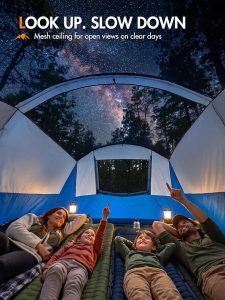
The Portal tent’s full mesh ceiling is designed to support ventilation while offering an open view of the outdoors. This feature can make the tent feel less enclosed, particularly during warm evenings when campers want to enjoy the atmosphere of the campsite.
For families, the view through the mesh can be a pleasant part of the experience. On a clear night, campers may be able to observe the stars from inside the tent when the rainfly is removed or configured to leave the ceiling visible.
The mesh also provides a route for warm air to escape, helping support airflow through the shelter. Combined with the mesh windows, doors, and screen room, it contributes to the tent’s emphasis on ventilation.
However, the view and airflow depend on the weather and the rainfly arrangement. If the fly covers the ceiling, it may obscure the sky, while removing it exposes the mesh roof to direct rainfall.
The mesh ceiling also offers less insulation than a solid fabric panel. During cold nights, windy conditions, or sudden weather changes, campers should use the rainfly and other protection features as directed.
Best for: Families who enjoy outdoor views and ventilation during mild-weather camping trips.
7. Mesh Windows and Doors for Improved Ventilation
When several people sleep inside one tent, air circulation can have a noticeable effect on comfort. Heat and moisture can accumulate as occupants breathe, sleep, and move around, especially in warm or humid environments.
The Portal tent features mesh windows and doors alongside its mesh ceiling and screen room. Together, these elements are intended to encourage air movement and help the interior feel more open.
For summer camping, the ability to open suitable panels can make the shelter more comfortable. Mesh also helps keep many insects outside when the openings are properly closed and the mesh is undamaged.
Multiple openings may give campers some flexibility when arranging ventilation, depending on wind direction and weather conditions. This is particularly useful for a family tent with a substantial footprint and several occupants.
Nevertheless, ventilation features do not guarantee that condensation will never occur. Moisture can still build up when humid air meets cooler tent surfaces, and airflow will vary depending on the environment and how the tent is pitched.
To maintain comfort, avoid storing wet clothing inside the sleeping compartment when possible, use the available ventilation as intended, and make sure the rainfly is fitted correctly whenever weather protection is needed.
Best for: Warm-weather campers who prioritize airflow, visibility, and a less enclosed tent interior.
8. 76-Inch Center Height for Everyday Comfort
The Portal tent has a listed center height of 76 inches, which can provide useful headroom for many adults. In a large family shelter, additional vertical space can make everyday activities more comfortable than they would be in a low-profile tent.
A taller center can make it easier to sit upright, change clothes, organize sleeping equipment, and help children get ready for bed. It can also reduce the feeling of confinement during longer stays when the tent serves as a temporary base throughout the day.
However, the stated 76 inches represents the center height rather than guaranteed standing room across the entire floor. Tunnel tents have curved or sloping sides, so headroom usually decreases toward the edges.
Families should also remember that the screen room and main compartment may have different usable clearances, depending on the structure. The listed overall height does not establish that every section provides the same amount of headroom.
If taller adults will be using the tent frequently, checking the manufacturer’s assembled diagrams and any available interior-height measurements can help set realistic expectations.
Best for: Families who want useful headroom for changing clothes, organizing gear, and moving around the central part of the shelter.
9. Color-Coded Poles and an Advertised 15-Minute Setup
Setting up a large family tent can be one of the more challenging parts of arriving at a campsite. The Portal listing addresses this with color-coded poles and clear instructions, which are intended to make assembly more straightforward.
Color coding can help campers identify which pole belongs in which position, reducing the need to guess during setup. This is particularly helpful for people who have not used the tent before or who are trying to assemble it while managing other campsite tasks.
The manufacturer states that two people can set up the tent in approximately 15 minutes. For a shelter with a separate screen room and multiple pole components, this is a useful advertised target, though it should not be treated as a guaranteed time.
First-time users may need longer to identify each component, fit the rainfly, stake the structure, and adjust the tent securely. Windy weather, uneven ground, and missing or disorganized parts can also increase setup time.
A practice run at home is one of the easiest ways to make the first camping trip smoother. It allows you to learn the pole arrangement and verify that the included components are present before travelling.
Best for: Families who want a conventional tent with setup aids that can make assembly easier after some preparation.
10. Practical Storage Features and an Electrical Access Port
The Portal tent includes multiple wall storage pockets and one electrical access port, or E-port. Although these features may not be as immediately noticeable as the screen room, they can make day-to-day camping more organized.
Wall pockets provide designated places for small essentials such as headlamps, phones, maps, and other lightweight items. Keeping frequently used belongings off the floor can help reduce clutter and make it easier to locate them at night.
The E-port is intended to provide a designated access point for a compatible electrical cable, allowing campers to route a power connection into the tent without leaving a door or window partly open. This may be useful at campsites that provide suitable electrical hookups.
The presence of an E-port does not mean that a power supply or electrical accessories are included. Campers should verify what is permitted at their campsite and use suitable, outdoor-rated equipment according to the manufacturer’s instructions.
Electrical safety is especially important around tents. Keep connections dry, avoid overloaded outlets, and never use fuel-burning generators, stoves, or heaters inside the tent or near its openings.
Together, the storage pockets and E-port add practical touches that may help the tent feel more convenient for family trips.
Best for: Campers who appreciate built-in organization and may use a compatible campsite power connection.
Pros and Cons of the Portal 8-Person Tunnel Camping Tent
Pros
-
Spacious overall layout: The listed 20 × 8-foot footprint offers a substantial area for sleeping and relaxing.
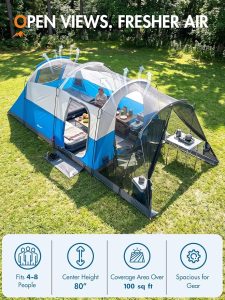
-
Separate screen room: Creates an additional area for daytime activities, relaxation, and selected gear.
-
Useful sleeping and living zones: The 14-foot main section and 6-foot screen room help separate sleeping from other campsite activities.
-
Tall center height: The listed 76-inch height can improve comfort when sitting up and changing clothes.
-
Mesh ceiling and multiple openings: Designed to support airflow and offer views of the outdoors.
-
Stargazing potential: The mesh ceiling can provide an open sky view when conditions and rainfly configuration allow.
-
Rainfly included: Provides an additional layer of protection when installed correctly.
-
Combination pole structure: Fiberglass roof poles and iron leg poles support the tent’s design.
-
Color-coded setup system: Intended to make assembly easier to understand.
-
Advertised two-person setup: The listing suggests approximately 15 minutes, although actual setup time may vary.
-
Wall storage pockets: Help keep smaller belongings organized.
-
Electrical access port: Provides a designated route for a compatible power cable where campsite facilities permit.
Cons
-
Eight-person capacity requires careful planning: The screen room should not automatically be counted as enclosed sleeping space.
-
Large footprint: The tent needs a sufficiently large campsite with suitable ground conditions.
Who Should Buy the Portal 8-Person Tunnel Camping Tent?
The Portal 8-Person Tunnel Camping Tent may be a strong candidate for campers who want more than a conventional sleeping shelter. Its combination of a main compartment and screen room gives it a distinct advantage for groups who spend a lot of time relaxing at the campsite.
1. Large families who want a shared camping base
Families looking for a single shelter for sleeping and relaxing may appreciate the extended layout. Before buying, confirm the main compartment’s sleeping capacity and make sure the planned mattresses fit without obstructing entrances.
2. Campers who value a screened relaxation area
The screen room is especially appealing to people who want a separate place to sit, unwind, or spend time with supervised pets. It offers more versatility than a tent that provides only a sleeping compartment.
3. Families planning spring, summer, and autumn trips
The listing identifies the tent as a three-season model. Its mesh panels and removable rainfly can be useful across many ordinary recreational trips, provided the weather remains within the shelter’s intended conditions.
4. Campers who enjoy ventilation and outdoor views
The mesh ceiling, windows, and doors make the tent worth considering for people who enjoy airflow and an open connection to their surroundings. Stargazing may be possible when the rainfly arrangement and weather allow it.
5. Campers who appreciate organized interiors
Built-in wall pockets and a separate screened area can help keep small items and selected equipment from cluttering the sleeping space. The E-port may also be convenient at campsites with compatible electrical facilities.
6. Car campers and established-campsite visitors
The tent’s 25.8-pound weight and large footprint make it better suited to trips where it can be transported by vehicle or carried a short distance to the campsite.
Who might prefer another tent?
This model may not be ideal for backpackers who prioritize low weight and compact packing, families who require a fully enclosed living area during heavy rain, or campers who need a shelter for severe winter weather. It may also be less suitable for groups expecting eight people to sleep comfortably alongside bulky mattresses and extensive luggage.
Final Verdict: Is the Portal 8-Person Tunnel Camping Tent Worth Considering?
The Portal 8-Person Tunnel Camping Tent offers an appealing combination of spacious design, a separate screen room, ventilation, and practical storage features. Its defining advantage is that it aims to provide both a sleeping shelter and an additional place for family members to relax, rather than requiring everyone to spend all their time in the main sleeping compartment.
The screen room is particularly useful for families who enjoy slow mornings, casual conversations, or relaxing after a day of outdoor activities. Meanwhile, the mesh ceiling and windows are designed to encourage airflow and offer views of the surroundings. The removable rainfly, water-resistant fabric coating, color-coded poles, wall pockets, and electrical access port add further practical touches for recreational camping.
There are important considerations before purchasing. The advertised eight-person capacity should be assessed against the actual sleeping area, because the six-foot screen room is not necessarily equivalent to enclosed sleeping space. The product listing also does not provide a numerical waterproof rating, so buyers should avoid assuming that the tent will withstand prolonged heavy rain or severe weather.
Overall, this Portal model is worth considering for families and groups who prioritize a spacious camping layout with a dedicated screened relaxation area. It is particularly suited to car camping and established campsites where the larger footprint is manageable and the additional living space can be put to good use.
For the roundup 10 Best Family Camping Tents – Top Picks for Spacious Comfort, Easy Setup & Outdoor Adventures, the Portal 8-Person Tunnel Camping Tent is a potential choice for the best family camping tent with a screen room for outdoor relaxation. Before making a final decision, verify the exact assembled dimensions, sleeping capacity, rainfly coverage, and included components to ensure that the tent matches your family’s needs and planned camping conditions.
Also read : 9 Best Tents for Camping – Top Picks for Comfort, Weather Protection & Outdoor Adventures
Frequently Asked Questions About the 10 Best Family Camping Tents
Choosing the right family camping tent can make a significant difference in how comfortable, organized, and enjoyable your outdoor adventures become. From compact weekend shelters to spacious cabin tents and models with separate screen rooms, the best choice depends on your family size, camping style, weather conditions, and preferred setup process. Here are answers to common questions to help you choose confidently.
1. What is the best family camping tent for most families?
The best family camping tent depends on your needs and the number of people sharing it. The Coleman Skydome 6-Person Camping Tent is worth considering for families seeking a conventional recreational tent, while the CORE 9-Person Instant Cabin Tent may appeal to those who prioritize quick setup and a roomy cabin-style interior. Larger families may prefer options such as the UNP 10-Person Camping Tent, which offers a substantial footprint and a two-room layout.
Before choosing, compare the actual sleeping area, interior height, weather protection, ventilation, and packed weight rather than relying on occupancy ratings alone.
2. How many people should a family camping tent accommodate?
Choose a tent based on the number of people who will actually sleep inside, along with the space needed for mattresses, sleeping bags, and personal belongings. A tent advertised for six people may fit six sleeping bags closely but offer limited room for luggage or airbeds.
As a general guideline, consider a tent rated for one or two more people than the number in your family if you want additional space. For example, a family of four might find a six-person tent more comfortable than a four-person model. Families with bulky mattresses or substantial gear may need even more room.
3. Which family camping tent is easiest to set up?
The CORE 9-Person Instant Cabin Tent is a strong candidate for campers who prioritize convenience because its supplied specifications describe pre-attached poles and an advertised setup time of two minutes or less. The Coleman Instant Camping Tent is another option, with the listing advertising setup in as little as one minute.
These times are manufacturer claims rather than guaranteed results. Actual setup time depends on experience, weather, campsite conditions, and whether the rainfly and stakes must also be installed.
4. Are family camping tents waterproof?
Not every family camping tent is fully waterproof under all conditions. Some use water-resistant coatings, taped or inverted seams, welded corners, and rainflies to help limit water intrusion.
For example, the reviewed CORE 9-Person Instant Cabin Tent lists a 1200 mm water-resistance specification, while the UNP 10-Person Camping Tent lists a 1000 mm PU coating. These figures should be checked against the exact models’ documentation and do not independently guarantee that the entire tent will remain dry in prolonged heavy rain.
For better protection, pitch the tent correctly, install the rainfly as directed, use suitable ground protection when recommended, and avoid low areas where water can collect.
5. What is the difference between a cabin tent and a dome tent?
A cabin tent generally has more upright walls and a relatively box-shaped interior, which can provide more usable headroom near the sides. This style is appealing to families who want room to sit, change clothes, and organize their belongings.
A dome tent typically uses curved poles to create a rounded structure. Dome tents can offer a practical balance of space and structural simplicity, although usable headroom often decreases toward the edges.
The CORE instant cabin models in this roundup are worth considering for families who value interior room, while dome-style options such as the Coleman Skydome may suit campers who prefer a more conventional tent layout.
6. Are four-season family tents better than three-season tents?
Not necessarily. A three-season tent is generally designed for spring, summer, and autumn camping in suitable conditions. It often emphasizes ventilation, manageable weight, and protection from ordinary rain.
A four-season tent is intended for a broader range of conditions, potentially including snow and stronger winds, depending on its design. However, the four-season label alone does not guarantee suitability for every extreme-weather situation.
In this roundup, the UNP 10-Person Camping Tent is listed as a four-season model, but its extensive mesh roof and windows make it especially important to verify the manufacturer’s intended conditions. Families camping in severe winter weather should choose a tent with independently confirmed specifications appropriate to that environment.
7. Which tent is best for a large family or group?
For families who need substantial floor space, the UNP 10-Person Camping Tent and CORE 10-Person Straight Wall Cabin Tent are worth investigating. The UNP listing specifies an approximately 18 × 9-foot footprint, while the CORE model is described as having a spacious, straight-wall design.
The Portal 8-Person Tunnel Camping Tent is another interesting option because it combines a main sleeping compartment with a separate screen room.
Remember that a maximum occupancy rating does not guarantee comfortable sleeping space for every person and all their gear. Confirm the assembled dimensions and work out how your mattresses will fit before buying.
8. What are the benefits of a tent with a room divider or screen room?
A room divider helps create separate sleeping zones within a shared tent. It can provide visual privacy for parents and children or help different members of a group organize their belongings.
A screen room, such as the one described for the Portal 8-Person Tunnel Camping Tent, offers a separate area for relaxing, socializing, or keeping selected equipment outside the main sleeping compartment. Mesh can help keep many flying insects out when the panels are closed and intact.
However, a divider does not provide soundproofing, and a screen room should not automatically be treated as a fully enclosed or waterproof living area.
9. What features should I look for in a family camping tent?
Focus on the features that will make your specific trips comfortable and manageable:
-
Sleeping capacity: Enough room for everyone, with space for bedding and personal belongings.
-
Interior height: Useful headroom for sitting up and changing clothes.
-
Weather protection: A suitable rainfly, reliable seams, and a clearly documented water-resistance specification.
-
Ventilation: Mesh windows, doors, and roof panels to support airflow.
-
Setup process: Clear instructions, manageable pole systems, or instant-pitch features.
-
Storage: Interior pockets, vestibules, or a separate screen room.
-
Weight and packed size: Important when transporting the tent to the campsite.
-
Durability: Appropriate fabric and poles for the conditions in which you plan to camp.
The right combination matters more than having the largest number of features.
10. How can I make my family camping tent last longer?
Proper care can extend a tent’s useful life and help preserve its weather protection. Always follow the manufacturer’s care instructions, and consider these habits:
-
Pitch the tent on suitable ground, clearing away sharp objects first.
-
Secure the tent with the recommended stakes and guylines.
-
Avoid forcing poles or pulling the fabric excessively during assembly.
-
Clean away dirt and debris after each trip.
-
Allow the tent to dry completely before storing it for an extended period.
-
Keep the tent in a cool, dry place away from prolonged direct sunlight.
-
Inspect the fabric, seams, poles, zippers, and rainfly before your next trip.
-
Repair small areas of damage promptly using compatible repair materials.
Practicing setup at home before a trip is also useful. It helps you identify missing components and become familiar with the tent before arriving at the campsite.
Conclusion: Choosing the Best Family Camping Tent for Your Next Adventure
Finding the right family camping tent is about more than choosing the model with the highest capacity or the longest list of features. The best tent should offer a comfortable sleeping arrangement, dependable protection for its intended conditions, sufficient ventilation, and a setup process that works for your family. When these elements come together, camping becomes easier to organize and more enjoyable for everyone.
Throughout this roundup of the 10 Best Family Camping Tents – Top Picks for Spacious Comfort, Easy Setup & Outdoor Adventures, we explored options designed for different camping priorities. The Coleman Skydome 6-Person Camping Tent offers a conventional option for smaller families, while the CORE 9-Person Instant Cabin Tent and Coleman Instant Camping Tent appeal to campers who value quick setup. The CAMPROS CP 8-Person Camping Tent provides a room-divider arrangement, and the UNP 10-Person Camping Tent offers a large interior with a flexible two-room layout.
For families seeking additional living space, the Portal 8-Person Tunnel Camping Tent stands out for its attached screen room, which creates a separate area for relaxing alongside the main sleeping compartment. Meanwhile, larger cabin-style models may be attractive to groups who want a roomy shared shelter.
Before making your final choice, pay close attention to the details that affect everyday comfort. Check the actual sleeping area, interior height, packed weight, weather-protection specifications, ventilation, and included components. Maximum occupancy figures can be optimistic when everyone brings an air mattress and personal gear, so consider your family’s real sleeping arrangement rather than relying on the advertised number alone.
It is equally important to verify conflicting or incomplete specifications in product listings. A stated water-resistance rating does not guarantee protection in every storm, and a four-season label should not replace checking whether the tent is designed for your expected weather conditions. Always follow the manufacturer’s setup and care instructions.
Ultimately, the best family camping tent is the one that suits your group, your budget, and the adventures you want to enjoy. Whether you’re planning a quiet weekend beside a lake, a family road trip with several campsite stops, or a longer outdoor holiday, choosing a shelter that balances space, convenience, and appropriate weather protection will help you spend less time worrying about camp setup and more time making wonderful memories together.
Our final advice: Choose based on your family’s real needs rather than capacity alone, practice pitching the tent before your trip, and prepare for the weather you are likely to encounter. With the right shelter and a little planning, your next family camping adventure can be more comfortable, organized, and rewarding.