
Introduction
Imagine standing outdoors as daylight slowly fades, the temperature drops, and the familiar landscape transforms into a world of shadows. Details that once seemed obvious become difficult to distinguish, distant objects blend into the darkness, and ordinary optics begin to reveal their limitations. In such conditions, thermal imaging technology offers a different perspective, detecting differences in heat rather than relying solely on visible light. For outdoor enthusiasts exploring the world of thermal optics, this technology opens the door to a fascinating combination of innovation, visibility, and convenience.
However, getting access to thermal imaging does not necessarily mean spending a fortune. While premium thermal rifle scopes can command impressive prices, budget-friendly alternatives have made this technology more accessible to buyers who want useful features without stretching their finances. Whether you are comparing entry-level models, exploring thermal optics for lawful hunting where permitted, or simply researching the technology behind modern optical equipment, finding the right balance between affordability and performance is essential.
The challenge is knowing which features deserve your attention. Image resolution, thermal sensitivity, detection range, refresh rate, battery life, durability, and ease of use can all influence the experience you get from a thermal scope. Some affordable models prioritize straightforward operation and portability, while others offer additional features such as digital zoom, multiple color palettes, onboard recording, and rechargeable batteries. Understanding these differences can help you avoid paying for features you may never use while ensuring that important performance considerations are not overlooked.
That is precisely what this guide aims to accomplish. In our roundup of the 8 Best Budget Thermal Rifle Scopes – Top Affordable Picks for Clear Imaging, Reliable Performance & Value, we explore options worth considering for buyers seeking an economical entry into thermal imaging. We will examine the features that distinguish each model, discuss their potential advantages and limitations, and highlight the factors that matter most when comparing price against capability.
Most importantly, affordability should not be confused with compromising on every important feature. A well-chosen budget thermal scope may offer a practical combination of image clarity, dependable construction, convenient controls, and useful functionality at a more manageable price. Nevertheless, specifications and real-world performance can vary considerably, so it is worth looking beyond marketing claims and considering independent testing, warranty coverage, and compatibility with your intended equipment.
By the end of this guide, you will have a clearer understanding of what to look for when shopping for an affordable thermal rifle scope, which specifications deserve priority, and how to evaluate the trade-offs between cost and performance. The goal is simple: help you make a more informed purchasing decision and find a thermal optic that offers meaningful value for your budget.
8 Best Budget Thermal Rifle Scopes – Top Affordable Picks for Clear Imaging, Reliable Performance & Value
| No. | Product name | Thermal sensor | Magnification / zoom | Key features | Price |
|---|---|---|---|---|---|
| 1 | AGM Global Vision Rattler V2 19-256 | 256 × 192 | 2.5× base; digital zoom | Compact design, multiple color palettes, shot-activated recording | Check Amazon |
| 2 | AGM Global Vision Rattler V2 25-256 | 256 × 192 | 3.5× base; digital zoom | 25 mm lens, video recording, weather-resistant construction | Check Amazon |
| 3 | ATN Thor 6 Mini 2-16x 256 | 256 × 192 | 2–16× | Lightweight design, thermal imaging, digital zoom | Check Amazon |
| 4 | PARD Pantera 256 | 256 × 192 | Model-dependent | Thermal display, compact construction, multiple imaging settings | Check Amazon |
| 5 | Sightmark Shade 3.5-28×30 | Verify listing | 3.5–28× (listed model) | Digital magnification and thermal viewing | Check Amazon |
| 6 | AGM Global Vision Rattler V2 25-320 | 320 × 256 | 3.5× base; digital zoom | Higher-resolution sensor than entry-level 256 models | Check Amazon |
| 7 | RIX Storm S1 | 256 × 192 | Model-dependent | Thermal image enhancement, compact build, adjustable display | Check Amazon |
| 8 | Nocpix Bolt P25R | 256 × 192 | Model-dependent | Integrated rangefinder and ballistic calculation features | Check Amazon |
1. AGM Global Vision Rattler V2 19-256 Thermal Imaging Device
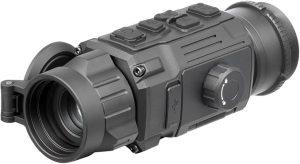
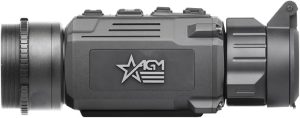
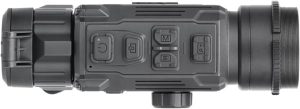
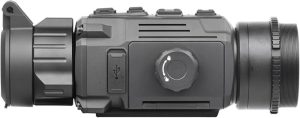
The AGM Global Vision Rattler V2 19-256 is a compact thermal imaging device designed for users seeking an accessible entry point into thermal optics without immediately investing in higher-priced, high-resolution equipment. Featuring a 256 × 192 thermal sensor, a 19mm Germanium lens, and a high-resolution OLED display, this model combines essential thermal imaging technology with convenient digital features in a portable black housing.
One of its most notable characteristics is its 12μm VOx thermal detector with 20mK thermal sensitivity. These specifications are designed to help the device distinguish subtle temperature differences and display heat signatures against their surroundings. Combined with a 50Hz refresh rate, the system aims to provide smooth thermal imagery, making it useful for observing changing outdoor environments in low-visibility conditions.
The Rattler V2 19-256 also stands out for its recording and connectivity capabilities. Users can capture photographs and videos directly to internal memory, while built-in Wi-Fi supports live streaming, file transfers, and remote operation through compatible mobile devices. Its 19mm lens offers a compact optical configuration intended for short- and medium-range observation.
Importantly, the supplied specifications describe this particular model as a quick-conversion thermal clip-on device for compatible daytime optics. That distinction matters when comparing it with dedicated thermal rifle scopes: buyers should verify the exact configuration, mounting compatibility, and intended use before purchasing. For anyone exploring affordable thermal imaging, the Rattler V2 19-256 offers an interesting combination of a compact sensor, an OLED display, and practical digital features.
Key Specifications
-
Brand: AGM Global Vision
-
Model / Style: Rattler V2 19-256
-
Color: Black
-
Sport: Hunting
-
Thermal Sensor Resolution: 256 × 192 pixels
-
Thermal Detector: 12μm VOx
-
Thermal Sensitivity: 20mK
-
Objective Lens Diameter: 19mm Germanium lens
-
Refresh Rate: 50Hz
-
Display: High-resolution OLED
-
Item Weight: 6.34 ounces
-
Material: Polycarbonate
-
Mounting Type: Cantilever mount, according to the supplied listing
-
Compatible Devices: Day optics with compatible mounting systems
-
Connectivity: Built-in Wi-Fi
-
Recording: Video recording and image capture
-
Storage: Built-in internal memory
Specification note: The supplied listing states a maximum magnification of 256×. Because 256 × 192 is also the stated thermal sensor resolution, verify the actual magnification specification with the seller before publication.
256 × 192 Thermal Sensor with 20mK Sensitivity
The AGM Global Vision Rattler V2 19-256 features a 256 × 192 thermal sensor designed to produce thermal images by detecting differences in infrared radiation. Rather than depending on visible light, the device displays heat patterns, allowing users to observe thermal contrasts in low-light environments.
Its 12μm VOx detector and stated 20mK thermal sensitivity are important components of its imaging system. Thermal sensitivity describes how well a sensor can distinguish small temperature differences between objects and their surroundings. This can influence how clearly subtle thermal details appear in the displayed image.
For buyers comparing entry-level thermal optics, these specifications provide a useful starting point for evaluating the device. Actual image quality will also depend on environmental conditions, the distance from the observed subject, and other optical and processing characteristics.
19mm Germanium Lens for Compact Thermal Imaging
The device uses a 19mm Germanium objective lens, a component specifically suited to thermal imaging applications.
Germanium is commonly used in thermal optics because it transmits infrared radiation effectively within relevant thermal imaging wavelengths. The 19mm lens provides a compact optical configuration intended for short- and medium-range observation.
A smaller objective lens can help keep an imaging device portable, which may appeal to users who prefer equipment that is easier to carry and integrate with compatible optical systems. However, the lens specification alone does not establish a precise detection distance; real-world performance depends on several factors, including sensor resolution, target size, and environmental conditions.
High-Resolution OLED Display
A further highlight is the high-resolution OLED display, which presents the thermal information captured by the sensor.
OLED technology can provide strong contrast between displayed thermal tones, helping users distinguish differences in the image. This is especially relevant when examining thermal scenes in which objects have similar visible appearances but different heat signatures.
The display works alongside the sensor and image-processing system to make thermal information easier to interpret. Although the supplied specifications do not provide the display’s exact resolution, the OLED panel is a notable feature for a compact thermal imaging device.
50Hz Refresh Rate for Smooth Viewing
The Rattler V2 19-256 features a 50Hz refresh rate, meaning the displayed thermal image can update up to 50 times per second under supported operating conditions.
A higher refresh rate can make changes in the scene appear smoother than they would on a slower display. This can be useful when observing moving objects or scanning an outdoor environment.
For users comparing thermal devices, refresh rate is worth considering alongside sensor resolution and thermal sensitivity. A 50Hz specification is useful information, although it does not independently guarantee superior image clarity or tracking performance.
Quick Clip-On Conversion for Compatible Day Optics
One of the model’s defining features is its quick clip-on conversion capability. According to the supplied product description, it can transform compatible daytime optics into a thermal imaging system without requiring the user to change their usual viewing setup entirely.
This approach may appeal to buyers who already own compatible optics and want to explore thermal imaging without purchasing a completely separate optical system.
However, compatibility is particularly important here. Not every daytime optic or mounting arrangement will work with every thermal attachment. Buyers should confirm the exact model configuration, mounting requirements, alignment considerations, and manufacturer-approved compatibility before purchasing.
The listing also mentions a cantilever mount, so it is worth checking whether the advertised package includes the mounting hardware required for the intended setup.
Video Recording and Image Capture
The built-in recording functionality adds convenience for users who want to preserve observations for later review.
The device supports:
-
Video recording directly to internal memory.
-
Image capture for saving individual thermal scenes.
-
Reviewing recorded material after an observation session.
These capabilities can make the device more versatile than a thermal viewer that only displays live imagery. Recorded material can be useful for documenting observations, reviewing image quality, or comparing how thermal scenes appear under different conditions.
The supplied details do not specify the maximum recording resolution, video format, or total internal storage capacity, so these details should be confirmed before purchase.
Built-In Wi-Fi Connectivity
The Rattler V2 19-256 also includes built-in Wi-Fi connectivity, providing additional flexibility for compatible mobile devices.
According to the supplied listing, Wi-Fi supports live video streaming, transferring recordings, and remote control through compatible devices.
These functions can simplify access to recorded content and provide an alternative way to view the thermal image. However, buyers should check mobile application compatibility, supported operating systems, and the available remote-control functions before relying on a particular workflow.
Compact Polycarbonate Construction
The supplied specifications identify polycarbonate as the device’s construction material, with a listed weight of just 6.34 ounces.
Its relatively lightweight design may appeal to outdoor users who want to avoid carrying unnecessarily heavy equipment. A compact body can also make storage and transport more convenient.
Nevertheless, the supplied information does not establish a specific waterproof rating, impact-resistance rating, or operating-temperature range. Buyers who expect to use the device in demanding weather should check the manufacturer’s official durability specifications rather than assume that its construction guarantees weatherproof performance.
Pros
-
256 × 192 thermal sensor provides a defined entry-level thermal imaging resolution.
-
12μm VOx detector supports thermal image capture.
-
20mK stated thermal sensitivity is a useful specification when comparing thermal sensors.
-
19mm Germanium lens provides a compact thermal optical configuration.
-
OLED display presents thermal images with contrast.
-
50Hz refresh rate supports smooth image updates.
-
Video recording and image capture allow observations to be saved.
-
Built-in Wi-Fi supports compatible mobile connectivity and remote functions.
-
Quick clip-on conversion may benefit users with compatible daytime optics.
-
6.34-ounce listed weight makes portability a notable consideration.
Cons
-
256 × 192 resolution is relatively modest compared with higher-resolution thermal imaging systems.
-
The 19mm lens is intended for a compact optical configuration and may not meet every user’s requirements for longer-range observation.
Who Is the AGM Global Vision Rattler V2 19-256 Best For?
The AGM Global Vision Rattler V2 19-256 may suit buyers looking for a compact thermal imaging device with recording and wireless connectivity.
It may be worth considering for:
-
Thermal optics newcomers comparing entry-level sensor specifications.
-
Outdoor enthusiasts interested in thermal imaging technology.
-
Existing compatible-optics owners considering a clip-on thermal imaging solution.
-
Users who value recording features for saving thermal observations.
-
Buyers who prioritize portability when comparing imaging equipment.
-
Technology-focused shoppers who want to compare sensor resolution, thermal sensitivity, refresh rate, and connectivity before committing to a purchase.
Before buying, check the exact product listing, intended configuration, compatibility requirements, warranty, and applicable local regulations.
The AGM Global Vision Rattler V2 19-256 is an interesting candidate for a budget-focused thermal imaging roundup because it combines a 256 × 192 thermal sensor, a 19mm Germanium lens, a 50Hz refresh rate, an OLED display, and built-in recording and Wi-Fi features.
Its strongest selling points are its compact specifications and digital functionality. The clip-on capability may also appeal to buyers who already own compatible daytime optics, although mounting compatibility should be confirmed carefully.
The main consideration is whether its sensor resolution and optical configuration meet the buyer’s expectations. Shoppers comparing affordable thermal devices should also verify the actual magnification, detection specifications, battery performance, and current price before making a decision.
Overall, the AGM Global Vision Rattler V2 19-256 is worth investigating for its combination of portability and thermal imaging features, provided the exact model configuration and compatibility are confirmed before purchase.
Also read: 7 Best Rifle Scopes Under $800 – Top Picks for Hunting, Accuracy & Long-Range Shooting
2. AGM Global Vision Rattler V2 19-256 Thermal Rifle Scope
The AGM Global Vision Rattler V2 19-256 Thermal Rifle Scope is designed for outdoor users looking for thermal imaging capabilities in a compact, feature-rich optical system. With a 256 × 192 thermal sensor, 19mm objective lens, and 2.5× base magnification, this model emphasizes a wide field of view and practical image viewing for close- to medium-range observation.
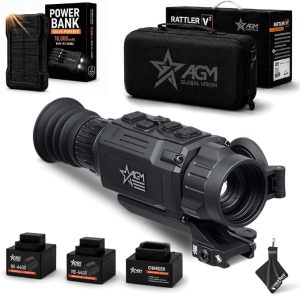
One of its most appealing features is its combination of thermal imaging and digital viewing options. The advertised 8× digital zoom, 10 reticle styles, and four color options give users several ways to configure the display to their preferences. It also includes a stadiametric rangefinder, which is designed to help estimate distance using the apparent size of an object.
Battery performance is another notable consideration. According to the supplied product description, the scope can operate for up to 11.5 hours on a single charge and comes with two rechargeable batteries. Actual operating time may vary depending on settings, temperature, and usage, but the additional battery can be useful during extended outdoor sessions.
The Rattler V2 19-256 also includes shot-activated recording with audio, allowing users to capture footage without manually starting a recording each time. Its advertised IP67 protection, recoil resistance, and broad operating-temperature range further emphasize its suitability for outdoor conditions. Before purchasing, however, it is important to confirm the exact model variant, mounting compatibility, and specifications listed by the seller.
Key Specifications
-
Brand: AGM Global Vision
-
Model / Style: Rattler V2 19-256
-
Color: Black
-
Sport: Hunting
-
Product Dimensions: 8.5 × 2.7 × 2.6 inches
-
Item Weight: 16 ounces
-
Material: Polycarbonate
-
Thermal Sensor Resolution: 256 × 192 pixels
-
Objective Lens Diameter: 19mm
-
Minimum Magnification: 2.5×
-
Maximum Magnification: 20×, as stated in the supplied specifications
-
Digital Zoom: 8×, as advertised
-
Battery Life: Up to 11.5 hours, according to the product description
-
Batteries: Two rechargeable batteries included, according to the listing
-
Reticle Options: 10 styles
-
Display Color Options: Four
-
Rangefinding: Stadiametric rangefinder
-
Recording: Shot-activated video recording with audio
-
Weather Protection: IP67, according to the supplied listing
-
Temperature Range: −22°F to 131°F
-
Recoil Resistance: Advertised; confirm the manufacturer’s exact rating
256 × 192 Thermal Sensor for Heat-Based Imaging
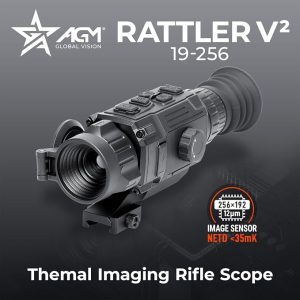
The Rattler V2 19-256 uses a 256 × 192 thermal sensor to detect infrared radiation and convert differences in heat into a visible image.
Unlike conventional optical equipment, which depends on reflected visible light, thermal imaging displays temperature contrasts. This allows the device to present thermal information in conditions where ordinary viewing may be limited by darkness.
The 256 × 192 resolution places the model in the entry-level category compared with thermal optics featuring higher-resolution sensors. For shoppers working within a budget, this specification provides a useful starting point for comparing image detail, cost, and overall capabilities.
Actual image quality also depends on thermal sensitivity, image processing, environmental conditions, and the distance at which an object is observed. Because the supplied details do not state the sensor’s thermal sensitivity, that specification should be confirmed before making direct performance comparisons with other models.
19mm Objective Lens and 2.5× Base Magnification
The device combines a 19mm objective lens with 2.5× base magnification, a configuration intended to provide a relatively wide viewing area for close- to medium-range observation.
A wider field of view can make it easier to scan a scene and maintain awareness of the surrounding area. This is particularly relevant when comparing compact thermal optics, since a highly magnified image may show more detail in a smaller portion of the scene.
The 19mm lens also contributes to the device’s compact optical design. Buyers should remember, however, that lens diameter and base magnification alone do not establish a precise detection range. Detection performance depends on several factors, including sensor resolution, target size, thermal contrast, and atmospheric conditions.
8× Digital Zoom and Flexible Magnification
The supplied product description advertises 8× digital zoom, allowing the displayed thermal image to be enlarged electronically.
Digital zoom can make particular portions of an image appear larger, which may help when examining details on the display. However, digital magnification does not add new information to the original sensor image. As zoom increases, the image may become less detailed or more pixelated.
The listing also specifies a maximum magnification of 20×. Because the relationship between that figure, the 2.5× base magnification, and the advertised 8× digital zoom is not fully explained in the supplied details, buyers should verify the exact magnification specifications for this model variant.
Up to 11.5 Hours of Battery Life
Extended battery performance can be important for portable electronic optics, particularly when access to charging facilities is limited.
According to the listing, the Rattler V2 19-256 provides up to 11.5 hours of operation on a single charge and includes two rechargeable batteries. Having a spare battery can offer additional flexibility when a charging point is unavailable.
Actual battery life may vary depending on operating temperature, display settings, wireless connectivity, and recording activity. Buyers should also confirm whether the advertised runtime applies to a particular power-saving mode or a standard operating configuration.
10 Reticle Styles and Four Color Options
The scope advertises 10 reticle styles and four color options, providing flexibility in how information is displayed.
Reticle choices allow users to select from different visual patterns, while color options change the appearance of the thermal image. Depending on the available modes, different palettes can help make temperature contrasts easier to distinguish under varying environmental conditions.
These settings are useful comparison points when shopping for thermal optics. However, the supplied product details do not identify all 10 reticle styles or the names of the four color palettes, so those details should be checked against the manufacturer’s documentation.
Stadiametric Rangefinder
The built-in stadiametric rangefinder is designed to estimate distance using the apparent dimensions of an object of known or assumed size.
This differs from an electronic laser rangefinder, which measures distance using emitted laser light and its return. A stadiametric rangefinder’s accuracy depends on how accurately the object’s dimensions can be estimated and how clearly its outline can be identified.
The supplied listing does not describe the rangefinder’s calibration requirements or expected accuracy. Buyers should therefore treat it as an estimation feature rather than assume it provides the same measurements as a dedicated electronic rangefinder.
Shot-Activated Recording with Audio
The Rattler V2 19-256 includes shot-activated recording with onboard audio, according to the product description.
This feature is designed to capture footage automatically when the device detects the relevant event, reducing the need to start recording manually. Audio recording can also preserve sound alongside the thermal footage.
For users who want to review recorded observations later, automatic recording may be more convenient than relying exclusively on manual controls.
Before purchasing, it is worth checking the recording resolution, storage capacity, supported file formats, and whether the shot-activation function requires specific settings or additional configuration.
IP67 Protection and Outdoor Durability
The supplied listing advertises IP67 protection, recoil resistance, and an operating-temperature range of −22°F to 131°F.
An IP67 rating generally indicates protection against dust ingress and temporary immersion in water under specified laboratory test conditions. It should not be interpreted as unlimited waterproofing under every possible condition.
The stated operating-temperature range is equivalent to approximately −30°C to 55°C. This broad range may be relevant to buyers who expect to use their equipment in changing outdoor environments, although operating and storage limits can differ.
The manufacturer’s documentation should be consulted for the exact recoil rating, mounting requirements, and maintenance recommendations.
Compact Design and Polycarbonate Construction
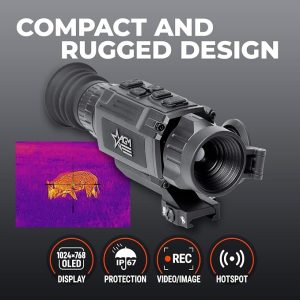
With listed dimensions of 8.5 × 2.7 × 2.6 inches and a weight of 16 ounces, the Rattler V2 19-256 is presented as a compact thermal optic.
The listed polycarbonate construction contributes to its overall material specification. Its dimensions and weight are useful when assessing how much space the device may occupy in an equipment bag or when comparing it with other models.
Buyers should verify whether the dimensions and weight include mounting hardware, batteries, or other accessories, since package contents can affect the final carrying weight.
Pros
-
256 × 192 thermal sensor for heat-based imaging.
-
19mm objective lens and 2.5× base magnification.
-
Advertised 8× digital zoom.
-
Up to 11.5 hours of stated battery life.
-
Two rechargeable batteries included, according to the listing.
-
10 reticle styles and four color options.
-
Built-in stadiametric rangefinder.
-
Shot-activated video recording with audio.
-
Advertised IP67 dust and water protection.
-
Broad stated operating-temperature range.
-
Compact dimensions and a listed weight of 16 ounces.
Cons
-
The 256 × 192 sensor offers less native image detail than higher-resolution thermal sensors.
-
Digital zoom enlarges the image without increasing the sensor’s underlying resolution.
Who Is the AGM Global Vision Rattler V2 19-256 Best For?
This model may interest buyers comparing compact thermal optics who value a combination of imaging, recording, and convenience features.
It may be worth considering for:
-
Thermal optics beginners comparing entry-level sensor resolutions.
-
Outdoor enthusiasts researching thermal imaging technology.
-
Buyers who value battery flexibility and the convenience of a spare rechargeable battery.
-
Users interested in recording features for reviewing saved thermal footage.
-
Shoppers comparing display customization through reticle and color options.
-
Buyers who prioritize portability when evaluating optical equipment.
Before choosing this model, confirm the precise model number and whether its features meet your needs. Also check the seller’s warranty, current price, included accessories, and applicable local regulations.The AGM Global Vision Rattler V2 19-256 Thermal Rifle Scope presents an appealing collection of advertised features for buyers comparing entry-level thermal optics. Its 256 × 192 sensor, 19mm lens, 2.5× base magnification, digital zoom, recording functions, and rechargeable battery system provide several useful comparison points.
Its standout practical features are the advertised dual-battery package, shot-activated recording with audio, and IP67 protection. At the same time, buyers should consider the limitations of a 256 × 192 sensor and remember that digital zoom does not increase native image resolution.
Overall, the Rattler V2 19-256 is worth investigating as a budget-oriented option, provided the exact model configuration and technical specifications are verified. Comparing its current price with competing models will help determine whether its combination of features represents good value for money.
3. ATN ThOR 6 Mini Compact Thermal Riflescope, 2–16x, 256×192 Sensor, + Power Bundle
The ATN ThOR 6 Mini Compact Thermal Riflescope is a compact thermal imaging optic designed for hunters who want thermal visibility, convenient recording capabilities, and a lightweight setup. This particular package includes the 256×192 thermal sensor model, a Signature Series cloth, and a Signature Series Power Bundle, making it an option worth considering for buyers who want additional accessories alongside the riflescope.
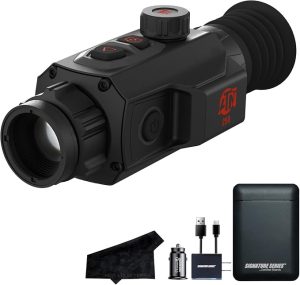
Powered by ATN’s 6th Generation Thermal Engine, the ThOR 6 Mini is designed to produce thermal images by detecting differences in heat rather than relying on visible light. Its 12μm pixel pitch and advertised thermal sensitivity of ≤20mK help it distinguish subtle temperature differences, while its variable 2–16x magnification provides flexibility for different viewing situations.
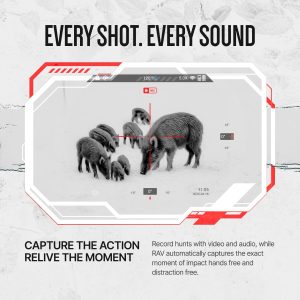
Beyond its thermal imaging capabilities, the ThOR 6 Mini offers built-in video and audio recording, 64GB of internal storage, and automatic shot-activated recording. Its magnesium alloy construction is intended to provide a balance of durability and portability, while a rechargeable battery offers up to eight hours of operation on the 256×192 model. For hunters comparing compact thermal optics, this bundle combines imaging technology, recording features, and additional power-related accessories in one package.
Key Specifications
-
Brand: Certified Brands (as listed)
-
Product: ATN ThOR 6 Mini Compact Thermal Riflescope
-
Color: Black
-
Style: + Power Bundle
-
Sport: Hunting
-
Item weight: 500 g
-
Material: Magnesium alloy
-
Minimum magnification: 2x
-
Maximum magnification: 16x
-
Compatible device: Rifle
-
Thermal sensor resolution: 256×192
-
Pixel pitch: 12μm
-
Thermal sensitivity: ≤20mK NETD
-
Thermal processing: ATN 6th Generation Thermal Engine
-
Internal storage: 64GB
-
Recording: Video and audio recording
-
Recording feature: Automatic recording before and after each shot
-
Weapon profiles: Up to five
-
Power source: Single high-capacity rechargeable battery
-
Advertised battery life: Up to eight hours for the 256×192 model
-
Included items: ATN ThOR 6 Mini riflescope, Signature Series cloth, and Signature Series Power Bundle
Thermal Imaging Performance and Image Clarity
One of the main selling points of the ATN ThOR 6 Mini is its thermal imaging system. According to the supplied product description, the riflescope uses ATN’s sixth-generation thermal engine, paired with a 256×192 thermal sensor and a 12μm pixel pitch. These components are intended to help the device detect heat signatures and display differences in temperature as a thermal image.
The sensor’s advertised thermal sensitivity of ≤20mK NETD is another important specification. NETD, or noise-equivalent temperature difference, indicates how well a thermal sensor can distinguish small temperature differences. A lower NETD figure generally indicates greater thermal sensitivity, although real-world image quality also depends on environmental conditions, processing, optics, and the quality of the display.
The supplied description also mentions 384×288 and 640×512 sensor variants with sensitivity ratings of ≤18mK NETD. However, the bundle being reviewed here is specifically identified as the 256×192 model with ≤20mK NETD. Buyers should confirm the selected variant before purchasing, since the higher-resolution models are not the same configuration.
For a budget-conscious shopper, this thermal system provides a useful starting point for comparing sensor specifications, but the listing does not provide enough information to establish its practical detection or identification distances.
Variable 2–16x Magnification
The ThOR 6 Mini offers a stated magnification range of 2x to 16x. This variable range provides flexibility between a lower magnification setting and a more enlarged view.
At 2x magnification, the scope may be more suitable for viewing a broader scene than at its highest magnification setting. Higher magnification can help make objects appear larger, but it does not create additional thermal detail beyond what the sensor and optical system can resolve. Digital magnification, if used, can also make image softness or pixelation more noticeable.
The product information does not specify whether the advertised magnification range is entirely optical or includes digital magnification. Buyers should verify this distinction and check the field of view at different settings before deciding whether the scope suits their intended use.
Recording, Audio, and 64GB Internal Storage
A notable feature of the ATN ThOR 6 Mini is its built-in video and audio recording system. The product description states that footage is saved directly to 64GB of internal memory, so the listed configuration does not require a separate memory card for the advertised recording function.
The inclusion of audio recording provides additional context alongside the video, while the automatic recording feature is designed to capture footage before and after a shot. This can help preserve a continuous record of an event without requiring the user to manually start recording at precisely the right moment.
For users who value reviewing recorded footage, the internal storage and automatic recording features may be more appealing than a basic thermal optic without recording capabilities.
However, the listing does not specify video resolution, frame rate, recording duration per file, or the exact length of the pre-shot and post-shot recording windows. Those details would be worth checking before purchase, particularly for buyers who expect to record frequently.
Multiple Weapon Profiles and Convenient Controls
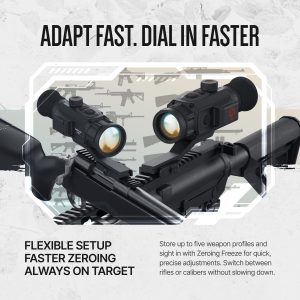
The ThOR 6 Mini supports up to five weapon profiles, according to the supplied description. This feature is intended for users who need to save different configurations for separate rifles, calibers, or setups.
Keeping several profiles can make it more convenient to switch between configurations without having to recreate every setting each time. The listing also states that the scope can pause the displayed image to help users make reticle adjustments while sighting in.
The advertised controls are described as simple and intuitive, with adjustments intended to be accessible while using the device. Nevertheless, the source information does not explain exactly which settings each weapon profile stores or whether every change in rifle configuration can be handled without additional verification.
A stored profile should not be treated as a guarantee of zero retention across different rifles or mounting setups. Buyers should follow the manufacturer’s instructions and confirm the optic’s settings and zero whenever changing configurations.
Lightweight Magnesium Alloy Construction
The riflescope is described as being constructed from magnesium alloy, a material commonly valued for combining strength with relatively low weight.
The listing gives the item weight as 500 g and also describes the device as weighing under 500 grams. These statements are slightly inconsistent, so the exact weight of the supplied configuration should be verified. The included bundle may also have a different total shipping weight from the riflescope itself.
For a compact thermal optic, weight can affect overall equipment balance and carrying comfort during longer outings. A lighter scope may be easier to handle than a heavier alternative, although the final balance will also depend on the rifle, mounting hardware, and any additional accessories.
The supplied details describe the construction as rugged but do not provide an IP water-resistance rating, a formal shock-resistance specification, or a stated operating-temperature range. Those durability details should not be assumed from the material alone.
Rechargeable Battery and Advertised Eight-Hour Runtime
The 256×192 version of the ThOR 6 Mini is described as using a single high-capacity rechargeable battery, with an advertised runtime of up to eight hours.
That stated runtime may be useful to buyers comparing compact thermal scopes for extended outings. Actual operating time can vary with factors such as display brightness, recording activity, wireless functions, ambient temperature, and battery condition.
The title and supplied details also identify this product as a + Power Bundle. The package is said to include a Signature Series Power Bundle, but the exact contents of that accessory bundle are not itemized in the information provided. It would therefore be unwise to assume that it includes a particular number of spare batteries, a specific charger, or a defined additional runtime without checking the seller’s package details.
Before buying, confirm exactly what power accessories are included and whether they are compatible with the selected ThOR 6 Mini variant.
What Is Included in the Power Bundle?
According to the supplied product description, the package contains:
-
One ATN ThOR 6 Mini Compact Thermal Riflescope, 2–16x, with a 256×192 sensor and ≤20mK NETD.
-
One Signature Series cloth.
-
One Signature Series Power Bundle.
The additional accessories may provide extra value compared with purchasing the optic alone, particularly for buyers who want a bundled package. However, the description does not itemize the contents of the Signature Series Power Bundle, so its precise value cannot be assessed from the supplied details alone.
Buyers should check the Amazon listing’s package contents, selected variation, and seller information to ensure that the accessories shown or described are included in the exact option they order.
Pros
-
Compact thermal configuration: The 256×192 sensor and 12μm pixel pitch provide clearly stated specifications for comparison with other thermal optics.
-
Advertised thermal sensitivity: The ≤20mK NETD rating indicates the sensor’s stated sensitivity to small temperature differences.
-
Variable magnification: The listed 2–16x range offers multiple viewing settings.
-
Built-in recording: Video and audio recording are included in the advertised feature set.
-
64GB internal memory: Provides onboard storage for recorded footage.
-
Automatic recording: The pre-shot and post-shot recording feature is designed to capture events without requiring manual activation at the exact moment.
-
Multiple weapon profiles: Supports up to five stored profiles.
-
Magnesium alloy construction: Designed to balance durability and manageable weight.
-
Rechargeable battery: The 256×192 model is advertised to run for up to eight hours.
-
Additional accessories: The listed package includes a cloth and Signature Series Power Bundle.
Cons
-
The sensor resolution is relatively modest compared with the listed higher-resolution variants: The 256×192 version should not be assumed to deliver the same level of image detail as the 384×288 or 640×512 models.
-
The 500 g weight is not stated consistently: The listing says both 500 g and under 500 g.
Who Is the ATN ThOR 6 Mini Compact Thermal Riflescope Best For?
The ATN ThOR 6 Mini may appeal to buyers who want a compact thermal optic with recording features and bundled accessories rather than a device focused solely on basic thermal viewing.
It may be worth considering for:
-
Buyers comparing compact thermal optics: The magnesium alloy construction and listed 500 g weight offer useful starting points for comparing portability.
-
Users who value onboard recording: Built-in audio and video recording, 64GB of storage, and automatic recording are prominent features of this model.
-
Buyers who want configurable settings: The five-profile capacity may be useful when managing multiple saved configurations.
-
Shoppers interested in a bundled package: The Signature Series Power Bundle and cloth may offer added value, provided the package contents are confirmed.
-
Customers comparing thermal sensor specifications: The 256×192 resolution, 12μm pixel pitch, and ≤20mK NETD rating provide concrete specifications for evaluating this particular variant.
It may be less suitable for buyers who prioritize high-resolution thermal imaging above all else, need a verified long detection range, or require documented waterproofing and shock-resistance ratings before purchasing.
The ATN ThOR 6 Mini Compact Thermal Riflescope, 2–16x, 256×192 Sensor, + Power Bundle offers a combination of compact construction, variable magnification, onboard recording, internal storage, multiple weapon profiles, and rechargeable power. Its advertised ≤20mK NETD sensitivity and sixth-generation thermal processing are useful specifications for shoppers comparing thermal imaging equipment.
Its strongest advertised features are the 64GB internal storage, automatic video and audio recording, five weapon profiles, and inclusion of additional bundle accessories. These features give the product a broader feature set than a thermal optic that provides imaging alone.
However, its value as a budget option ultimately depends on the current Amazon price and the precise contents of the Power Bundle. The unclear accessory list, inconsistent weight description, and missing real-world performance and durability details make it important to verify the exact configuration before buying.
Overall, the ATN ThOR 6 Mini is worth comparing if you want a compact thermal riflescope with built-in recording and bundled accessories. Before making a final decision, confirm the sensor variant, magnification method, package contents, warranty, and current price so you can judge whether this configuration offers the right value for your needs.
Also read: 7 Best Rifle Scopes Under $800 – Top Picks for Hunting, Accuracy & Long-Range Shooting
4. PARD Pantera 256 Thermal Riflescope
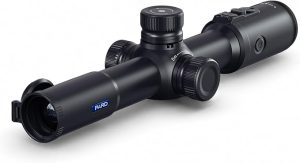
The PARD Pantera 256 Thermal Riflescope is a thermal imaging optic designed for hunters and shooting enthusiasts who want a combination of image clarity, adjustable magnification, and practical field features. With a 256×192 thermal sensor, a 25mm objective lens, and PARD’s IREA image engine, this riflescope is designed to help users detect heat signatures and distinguish temperature differences in environments where conventional optical viewing may be limited.
One of its most notable specifications is its advertised thermal sensitivity of ≤15mK NETD. Combined with a 12μm VOx sensor, a 50Hz refresh rate, and Super-resolution image processing, the Pantera 256 aims to improve the visibility and smoothness of thermal imagery. Its stated detection range reaches up to 1,312 yards, although actual detection and identification performance will depend on the target, weather, terrain, and viewing conditions.
Beyond thermal imaging, the Pantera 256 includes a built-in ballistic calculator, multiple saved ballistic profiles, picture-in-picture viewing, and recoil-activated recording. Its aluminum-alloy housing, IP67 protection rating, and stated 6,000J recoil resistance also make it a model worth considering for shoppers looking for a rugged thermal riflescope. With a 1920×1080 OLED display and a range of reticle and image settings, it offers several adjustment options for users who value customization.
Key Specifications
-
Brand: PARD
-
Product: Pantera 256 Thermal Riflescope
-
Color: Black
-
Style: Riflescope
-
Dimensions: 14.17 × 5.31 × 4.72 inches
-
Item weight: 1.1 pounds
-
Material: Aluminum
-
Minimum magnification: 3.6x
-
Maximum magnification: 28.8x
-
Objective lens diameter: 25mm
-
Thermal sensor resolution: 256×192
-
Sensor type: 12μm VOx
-
Thermal sensitivity: ≤15mK NETD
-
Image processing: PARD IREA image engine with Super-resolution
-
Refresh rate: 50Hz
-
Field of view: 7.0° × 5.3°
-
Advertised thermal detection range: Up to 1,312 yards (1,200 meters)
-
Side-focus range: 16.4 feet (5 meters) to infinity
-
Display: 1920×1080 OLED
-
Reticle options: 6 styles and 4 colors
-
Image modes: 5
-
Scene modes: 3
-
Ballistic calculator: Manual range input
-
Saved ballistic profiles: Up to 10
-
Additional features: Picture-in-picture (PIP), Hot Track, recoil-activated recording, Wi-Fi, PardVision2 compatibility
-
Protection rating: IP67
-
Stated recoil resistance: 6,000J
-
Warranty: 3 years, according to the supplied listing
-
Support: US after-sales support and 24-hour online customer support, as advertised
Thermal Imaging Performance and Image Clarity
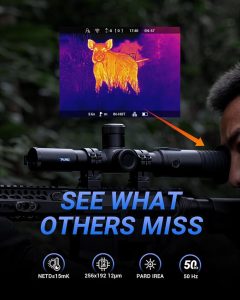
The PARD Pantera 256 is built around a 256×192 thermal sensor using 12μm VOx technology. Rather than relying on visible light, thermal imaging detects differences in infrared energy emitted by objects. This allows a thermal optic to display heat signatures in conditions where ordinary optical viewing may be less effective.
The advertised thermal sensitivity of ≤15mK NETD is one of the product’s notable specifications. NETD measures a sensor’s ability to distinguish small temperature differences; a lower figure generally indicates better thermal sensitivity under comparable test conditions. The Pantera’s stated sensitivity may therefore appeal to buyers comparing entry-level and mid-range thermal imaging devices.
The scope also uses PARD’s IREA image engine, which the manufacturer describes as enhancing thermal image clarity and detail. This is complemented by Super-resolution processing, which is said to improve the displayed image through noise reduction, contrast enhancement, and image correction.
These processing features are intended to make thermal imagery easier to interpret, but they do not change the underlying physical resolution of the 256×192 sensor. The amount of useful detail visible will still depend on the sensor, lens, environmental conditions, and processing.
50Hz Refresh Rate for Smooth Thermal Viewing
The Pantera 256 features a stated 50Hz refresh rate, meaning the displayed thermal image updates 50 times per second. A higher refresh rate can help make movement appear smoother when viewing moving heat signatures or scanning a changing scene.
This can be a useful feature for buyers who want a responsive viewing experience rather than a display that appears noticeably choppy during movement. The refresh rate works alongside the thermal sensor and image-processing system to determine the overall viewing experience.
However, a 50Hz refresh rate alone does not guarantee superior image quality. Sensor resolution, thermal sensitivity, display performance, and processing all contribute to how clearly the image appears.
25mm Objective Lens and 3.6–28.8x Magnification
The Pantera 256 has a 25mm objective lens and a listed magnification range of 3.6x to 28.8x. Its 3.6x base magnification provides a more enlarged starting view than some thermal optics with lower base magnification.
According to the supplied product description, the scope has a 7.0° × 5.3° field of view. This specification helps describe how much of the surrounding scene can be seen at the stated viewing configuration. A wider field of view can make it easier to observe a broader area, while a narrower field of view shows a smaller portion of the scene.
The higher magnification settings offer a tighter view, but magnification does not create additional detail beyond what the sensor and optical system can resolve. At high digital magnification, the image may appear more pixelated or less detailed.
The listing does not explicitly distinguish optical magnification from digital magnification. Buyers should confirm how the 3.6–28.8x range is achieved before comparing it directly with the magnification figures of other thermal scopes.
Thermal Detection Range of Up to 1,312 Yards
PARD advertises a thermal detection range of up to 1,312 yards (1,200 meters) for the Pantera 256. This figure may attract buyers who are comparing the reach of different thermal imaging systems.
It is important, however, to understand what a detection-range claim means. Detecting that a heat-emitting object is present is different from recognizing what the object is or identifying fine details. Detection performance can also vary according to the object’s size, temperature contrast, atmospheric conditions, background temperature, and visibility.
The listing describes the scope as built for hunting within 200 yards while also advertising a much longer thermal detection range. These figures are not necessarily contradictory: the stated 200-yard use case may reflect the intended closer-range application, while the detection figure refers to the ability to register a heat signature at a greater distance.
Buyers should not interpret the maximum detection figure as a guaranteed identification distance. The supplied information does not provide independently verified detection, recognition, or identification testing results.
Manual-Range Ballistic Calculator and Saved Profiles
One of the Pantera 256’s more specialized features is its built-in ballistic calculator. The supplied description specifies that the calculator uses manual range input, meaning users must already know or obtain the distance separately rather than relying on a range measurement generated by the calculator itself.
The system supports up to 10 saved ballistic profiles. The listed profile parameters include:
-
Velocity
-
Bullet weight
-
Ballistic coefficient
-
Temperature
-
Altitude
-
Scope height
-
Zero range
Having multiple saved profiles can make it easier to organize different configurations within the device. This may be useful to users who want to maintain separate sets of ballistic data rather than entering the same information repeatedly.
The key limitation is that the listing describes manual distance entry, not a laser rangefinder. Buyers should not assume the scope measures distance automatically unless the exact product variant explicitly lists that capability. The calculator’s usefulness also depends on accurate input data and the manufacturer’s instructions.
1920×1080 OLED Display and Customization Options
The Pantera 256 includes a 1920×1080 OLED display, according to the supplied specifications. The display presents the processed thermal image alongside reticles and device menus.
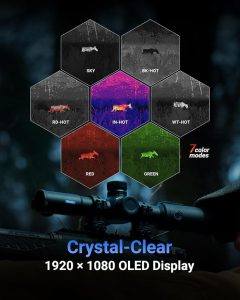
OLED technology is commonly used in electronic optics because it can provide high contrast. In a thermal riflescope, display quality contributes to how comfortably users can view the image and interpret the available settings.
The product description lists six reticle styles and four reticle colors, giving users several display configurations to choose from. It also offers five image modes and three scene modes, which are intended to let users adjust the presentation for different viewing conditions.
These options can make the device more adaptable to individual preferences. However, the listing does not identify every mode by name or explain the exact differences between them, so the full range of settings should be confirmed in the manufacturer’s documentation.
Convenient Controls, Picture-in-Picture, and Hot Track
The Pantera 256 uses a riflescope-style design with side focus, a multifunction control turret, and dedicated shortcut buttons. The stated goal is to make common adjustments accessible without requiring users to navigate complicated menus for every function.
The product description says that rotating the control turret adjusts magnification and that a double press activates picture-in-picture (PIP). PIP displays an enlarged section of the image within a smaller view of the wider scene, helping users examine detail while retaining some surrounding visual context.
The scope also includes a feature called Hot Track. Based on the product listing, it is intended as an additional thermal-viewing aid, although the supplied description does not explain its precise tracking behavior or limitations.
These features expand the scope’s functionality beyond basic thermal viewing. Still, ease of use will depend on the user’s familiarity with the controls, and buyers may want to review the manual before purchasing if a straightforward interface is a major priority.
Photo, Video, Recoil-Activated Recording, and Wi-Fi
The Pantera 256 supports photos, video, and Wi-Fi connectivity, according to the supplied description. It also includes recoil-activated recording, which is designed to trigger recording in response to recoil rather than relying entirely on manual operation.
This feature can help preserve footage of an event without requiring the user to start recording at exactly the right moment. Wi-Fi connectivity and compatibility with the PardVision2 application provide additional options for connecting with supported devices and managing compatible functions.
The listing does not specify the recording resolution, frame rate, internal storage capacity, supported file formats, or the precise app features available for this model. Buyers who expect to record frequently should confirm those details and check whether a compatible phone and application version are required.
Aluminum-Alloy Construction, IP67 Protection, and Recoil Resistance
The Pantera 256 features an aluminum-alloy housing and a stated recoil resistance of 6,000J. Aluminum alloy is commonly used in equipment housings where a balance of strength and weight is desirable.
Its advertised IP67 rating is another important specification. Under standard ingress-protection definitions, IP67 indicates that a properly rated device is dust-tight and can withstand temporary immersion in water under specified test conditions. This should not be interpreted as a guarantee of performance in every wet environment or after damage, wear, or improper installation.
The listing also mentions a multi-coated glass lens, which is intended to support optical performance. The supplied information does not specify the coating design or provide independent test results.
At 1.1 pounds, the listed weight may appeal to shoppers who want to keep their equipment relatively manageable. The dimensions, however, are given as 14.17 × 5.31 × 4.72 inches; buyers should confirm that these measurements correspond to the scope itself rather than its packaging.
Three-Year Warranty and Customer Support
The supplied listing advertises a three-year warranty, US after-sales support, and 24-hour online customer support. These may be valuable considerations for buyers comparing thermal optics, particularly because electronic imaging devices can be more complex than conventional optical scopes.
A longer stated warranty may provide reassurance, but the exact coverage matters. Buyers should check which parts are covered, whether accidental damage or battery-related issues are excluded, how warranty claims are handled internationally, and whether the US after-sales service applies to purchases made through their particular seller.
For international customers, the location of service centers and the cost of shipping a device for repair may also affect the overall ownership experience. The supplied details do not establish whether the advertised support arrangements apply worldwide.
Pros
-
High stated thermal sensitivity: The ≤15mK NETD specification is a notable feature for a 256×192 thermal sensor.
-
IREA image processing: The image engine and Super-resolution processing are designed to enhance contrast, reduce noise, and improve displayed detail.
-
50Hz refresh rate: Supports smooth presentation of moving thermal imagery.
-
Variable magnification: The listed 3.6–28.8x range provides multiple viewing settings.
-
Advertised long detection range: The manufacturer lists thermal detection up to 1,312 yards, though actual results will vary.
-
High-resolution OLED display: The 1920×1080 display presents thermal images, menus, and reticles.
-
Manual-range ballistic calculator: Supports saved ballistic data and up to 10 profiles.
-
Multiple customization options: Six reticle styles, four reticle colors, five image modes, and three scene modes are listed.
-
Recording and connectivity: Includes photo and video functions, recoil-activated recording, Wi-Fi, and PardVision2 compatibility.
-
Picture-in-picture and Hot Track: Additional tools beyond basic thermal imaging.
-
Ruggedness features: Aluminum-alloy housing, IP67 protection, and stated 6,000J recoil resistance.
-
Advertised three-year warranty: May offer additional reassurance, subject to the actual warranty terms.
Cons
-
256×192 sensor resolution: Buyers prioritizing greater native thermal detail may prefer to compare higher-resolution alternatives.
-
High magnification needs clarification: The listing does not specify how much of the 3.6–28.8x range is optical versus digital.
Who Is the PARD Pantera 256 Thermal Riflescope Best For?
The PARD Pantera 256 may be worth comparing for shoppers who want a feature-rich thermal riflescope with image-processing options, a customizable display, recording capabilities, and a rugged housing.
It may appeal particularly to:
-
Thermal optics buyers comparing image sensitivity: The ≤15mK NETD rating and IREA image engine are useful specifications to consider.
-
Users who value adjustable viewing: The listed 3.6–28.8x magnification range offers flexibility, although the optical and digital components should be verified.
-
Buyers who want built-in configuration tools: The manual-range ballistic calculator and capacity for 10 profiles provide additional settings beyond basic thermal imaging.
-
Users interested in recording features: Photo and video support, recoil-activated recording, and Wi-Fi may be useful additions.
-
Shoppers who prioritize weather protection: The advertised IP67 rating and aluminum-alloy housing are worth considering, provided the rating and warranty are confirmed for the exact model.
-
Buyers who want display customization: Multiple reticle, image, and scene settings allow the viewing experience to be adjusted.
It may be less suitable for buyers whose main priority is the highest possible native sensor resolution, a verified laser rangefinder, or a confirmed long battery runtime. Those requirements should be checked against the exact specifications of competing models.
The PARD Pantera 256 Thermal Riflescope combines a 256×192 thermal sensor, ≤15mK NETD sensitivity, IREA image processing, a 50Hz refresh rate, and a 1920×1080 OLED display. Its additional features—including a manual-range ballistic calculator, saved profiles, picture-in-picture, Hot Track, recoil-activated recording, and Wi-Fi—give it a broad feature set for buyers comparing thermal optics.
Its strongest selling points on paper are the stated thermal sensitivity, display and image-processing features, and advertised IP67 protection. The three-year warranty may also be attractive, depending on its terms and whether the support arrangements apply to the buyer’s location.
There are still important details to verify, particularly the optical versus digital magnification, battery life, recording specifications, and the conditions attached to the warranty. The advertised 1,312-yard detection range should also be treated as a detection claim rather than a promise of clear identification at that distance.
Overall, the PARD Pantera 256 is a feature-rich option to compare when looking for a thermal riflescope with a range of image and recording tools. Whether it belongs among the best budget choices will ultimately depend on its current selling price, the exact model configuration, and how its real-world performance compares with other scopes in the same price range.
5. Sightmark Shade 3.5–28×30 Thermal Riflescope
The Sightmark Shade 3.5–28×30 Thermal Riflescope is a compact thermal imaging optic designed for hunters who want heat detection capabilities, adjustable magnification, and recording features in a lightweight aluminum housing. With a 256×192 thermal sensor and a stated thermal sensitivity of less than 50mK NETD, the Shade is designed to detect heat signatures and display thermal contrast in environments where conventional optical viewing may be limited.
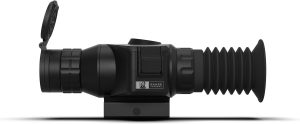
One of its key features is its combination of 3.5x optical magnification and 1–8x digital zoom. This arrangement allows users to view the scene at the base magnification and enlarge the displayed image when they need a closer look. The riflescope also includes a 1280×720 FLCOS display, which presents the processed thermal image, while its integrated video recorder supports storage of up to 256GB.
The Sightmark Shade also emphasizes portability and practical power options. Weighing approximately 1.4 pounds, it features an aluminum construction, a Picatinny mount, and an advertised runtime of up to 4.4 hours using two CR123A batteries. USB external power is another useful addition for users who want to extend operating time. For buyers comparing budget thermal optics, the Shade offers a combination of essential imaging features and convenient recording capabilities, although its price and real-world performance should be evaluated before deciding whether it represents good value.
Key Specifications
-
Brand: Sightmark
-
Product: Shade Thermal Riflescope
-
Listed color/model designation: 3.5–28×30
-
Style: Hunting, compact
-
Dimensions: 5.55 × 3 × 2.9 inches
-
Item weight: 1.4 pounds
-
Material: Aluminum
-
Minimum magnification: 3.5x
-
Maximum magnification: 28x
-
Compatible device: Firearm
-
Thermal sensor resolution: 256×192
-
Thermal sensitivity: Less than 50mK NETD
-
Optical magnification: 3.5x
-
Digital zoom: 1–8x
-
Display: 1280×720 FLCOS
-
Recording: Integrated video recorder
-
Supported storage capacity: Up to 256GB
-
Mounting system: Picatinny mount
-
Power source: Two CR123A batteries
-
Advertised battery life: Up to 4.4 hours
-
External power: USB power options
Thermal Detection and Image Contrast
The Sightmark Shade uses a 256×192 thermal sensor to detect differences in infrared energy and present them as a thermal image. Unlike conventional optical scopes, which depend on reflected visible light, thermal imaging can reveal heat signatures in conditions where ordinary viewing may be difficult.
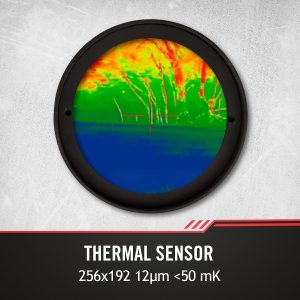
The supplied product description lists a thermal sensitivity of less than 50mK NETD. NETD, or noise-equivalent temperature difference, describes a thermal sensor’s ability to distinguish small temperature differences. Generally, a lower NETD figure indicates greater thermal sensitivity when comparing devices tested under equivalent conditions.
The Shade’s stated sensitivity is an important specification for shoppers comparing entry-level thermal scopes. However, NETD should not be used as the only measure of performance. Sensor resolution, lens quality, image processing, atmospheric conditions, and the temperature contrast between an object and its surroundings also affect the image a user sees.
The listing promotes the Shade for use in dense brush, challenging terrain, and changing nighttime weather. These are the manufacturer’s stated use cases rather than independently verified performance results. Buyers should avoid assuming that the scope will maintain the same image clarity in every environment.
Optical Magnification and Digital Zoom
One of the Shade’s central features is its combination of 3.5x optical magnification and 1–8x digital zoom. Optical magnification provides the scope’s base view, while digital zoom enlarges the displayed image electronically.
This distinction matters when comparing thermal riflescopes. Digital zoom can make a heat signature appear larger on the display, but it does not add new information to the original sensor image. As digital magnification increases, the image may look softer or more pixelated.
The supplied product details list a maximum magnification of 28x and a digital zoom range of 1–8x. These figures may refer to the base optical magnification combined with the available digital zoom settings, but the listing does not fully explain the calculation or exact magnification steps.
For that reason, buyers should confirm how the manufacturer defines the maximum 28x magnification before comparing it with another scope’s optical magnification. This is especially important when image detail at higher magnification is a priority.
1280×720 FLCOS Display
The Sightmark Shade features a 1280×720 FLCOS display for presenting thermal images and the device’s viewing interface. The display is an important part of the user experience because it determines how the processed image appears through the scope.
The supplied description characterizes the display as sharp and detailed, intended to support viewing in low-light and nighttime environments. Its resolution provides a defined display specification for shoppers to compare when evaluating thermal optics.
However, display resolution and thermal sensor resolution are different measurements. The Shade’s 1280×720 display does not mean its thermal sensor captures images at that resolution; the listed sensor resolution remains 256×192. Image-processing and display technology can affect how the image is presented, but they cannot independently replace detail that the sensor has not captured.
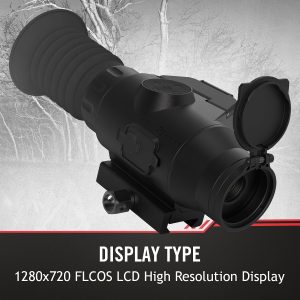
The product information does not specify the display’s refresh rate, brightness settings, or available thermal color palettes. Buyers who care about these features should verify them in the complete product manual or listing.
Integrated Video Recording and Storage Support
The Shade includes an integrated video recorder, allowing users to capture footage while using the thermal scope. According to the supplied description, the device supports storage of up to 256GB, which may provide substantial capacity for saving recordings, depending on the selected storage medium and recording settings.
Recording can be useful for reviewing footage later or keeping a record of what the thermal device displayed. Having this function built into the scope also means buyers do not necessarily need a separate recording device for the advertised video-capture feature.
However, the listing does not specify whether the 256GB capacity refers to a memory card, another supported storage medium, or a particular included accessory. It also does not state the video resolution, frame rate, file format, or recording time available at different quality settings.
Before purchasing, confirm whether a storage card is included or must be purchased separately. It is also worth checking the manufacturer’s recommended storage specifications to ensure compatibility.
Compact Aluminum Construction and Picatinny Mount
The Sightmark Shade is described as having an aluminum housing and a compact design. Its listed dimensions are 5.55 × 3 × 2.9 inches, and its weight is approximately 1.4 pounds.
Aluminum is commonly used in equipment housings because it can provide a useful balance of structural strength and manageable weight. The Shade’s compact dimensions may appeal to buyers who want a thermal optic that does not take up excessive space in their equipment setup.
The supplied description also identifies a Picatinny mount. This gives buyers a specific mounting-system detail to check against their existing equipment. Compatibility should still be confirmed for the exact firearm and mounting configuration rather than assumed from the mount type alone.
The listing does not provide a specific waterproof rating, dust-protection rating, or recoil-resistance figure. Although the product is described as rugged, those performance ratings should not be inferred from its aluminum construction alone.
Battery Life and USB External Power
The Shade operates using two CR123A batteries, with an advertised runtime of up to 4.4 hours. Battery life is an important consideration for any electronic optic, especially for users who expect to spend extended periods outdoors.
The stated runtime provides a baseline for comparison, but actual operating time may vary depending on temperature, display settings, recording activity, and the condition and quality of the batteries.
The product description also mentions USB external power options. This can be useful when a compatible external power source is available, potentially allowing the scope to operate for longer than the internal batteries alone would permit.
The supplied information does not identify the exact USB power requirements, supported power-bank specifications, or whether a suitable cable is included. Buyers should confirm those details before relying on external power for extended use.
It is also worth checking the manufacturer’s battery recommendations and handling instructions before purchasing replacement batteries or accessories.
Ease of Use and Practical Features
The Shade’s combination of variable magnification, an integrated video recorder, and external power support is intended to provide a straightforward feature set for thermal viewing.
The digital zoom lets users enlarge the displayed image when desired, while the integrated recorder provides a way to save footage without relying on a separate recording device. The Picatinny mount also provides a clearly stated mounting interface to check for compatibility.
Nevertheless, the supplied product details do not describe the complete menu layout, control arrangement, startup time, image modes, or reticle options. It is therefore difficult to assess the scope’s full ease of use based on the available information alone.
Buyers who prioritize a simple interface may wish to review the user manual or product demonstrations before making a purchase.
Pros
-
256×192 thermal sensor: Provides a clearly specified sensor resolution for comparison with other budget thermal optics.
-
Stated thermal sensitivity below 50mK NETD: Offers a useful specification for evaluating the sensor’s ability to distinguish temperature differences.
-
Optical and digital magnification: Combines 3.5x base optical magnification with 1–8x digital zoom.
-
1280×720 FLCOS display: Provides a defined display resolution for viewing processed thermal images.
-
Integrated video recording: Allows footage to be captured directly through the device.
-
Storage support up to 256GB: Offers the potential for substantial recording capacity, subject to compatible storage requirements.
-
Compact dimensions: The listed size may appeal to buyers looking for a relatively compact thermal optic.
-
Aluminum construction: Provides a durable housing material commonly used in equipment.
-
Picatinny mount: Specifies the mounting system for compatibility checks.
-
USB external power options: May help extend operating time when a compatible power source is available.
-
Widely available battery format: Uses two CR123A batteries, though buyers should confirm the manufacturer’s recommended type.
Cons
-
256×192 sensor resolution: Buyers seeking greater native thermal detail may prefer to compare higher-resolution models.
-
Digital zoom has limitations: Enlarging the image does not create additional thermal detail and may make pixelation more apparent.
Who Is the Sightmark Shade 3.5–28×30 Best For?
The Sightmark Shade may be worth considering for shoppers who want a compact thermal riflescope with an integrated recorder and more than one way to power the device.
It may be particularly relevant to:
-
Buyers comparing entry-level thermal sensors: The 256×192 resolution and less-than-50mK NETD specification provide a starting point for comparing image performance.
-
Users who want adjustable magnification: The listed optical magnification and digital zoom provide flexibility in how the displayed image is viewed.
-
Buyers interested in recording footage: The integrated recorder and stated support for storage up to 256GB may be useful for saving thermal video.
-
Shoppers who value a compact design: The stated dimensions and 1.4-pound weight provide useful measurements for evaluating size and portability.
-
Users who want external power options: USB external power may be beneficial when a compatible source is available.
-
Buyers checking Picatinny compatibility: The listed mount specification helps narrow down whether the product suits their equipment.
It may be less suitable for buyers who prioritize high native thermal resolution, long battery life without external power, or documented waterproofing and recoil ratings. Those requirements should be compared against the full specifications of competing models.
The Sightmark Shade 3.5–28×30 Thermal Riflescope offers a combination of a 256×192 thermal sensor, less-than-50mK NETD sensitivity, 3.5x optical magnification, digital zoom, and a 1280×720 FLCOS display. Its integrated video recorder, storage support, aluminum housing, Picatinny mount, and USB external power options add practical features to its core thermal imaging function.
Its main appeal is the combination of compact dimensions and built-in recording. The option to use external power may also help users who need more operating time than the advertised 4.4-hour battery runtime provides.
There are some important limitations to weigh before purchasing. The native sensor resolution is relatively modest, the magnification figures need clarification, and the supplied listing does not specify recording quality or formal weather-resistance and recoil ratings. The value of the device will also depend on whether the required storage accessories are included and how its current price compares with similar models.
Overall, the Sightmark Shade is worth comparing if you want a compact thermal riflescope with recording and flexible power options. Before choosing it as one of the best budget thermal scopes, verify the exact magnification specifications, storage compatibility, durability ratings, and current Amazon price.
6. AGM Global Vision RattlerV2 19-256 Thermal Imaging Scope – Dual-Battery Bundle
The AGM Global Vision RattlerV2 19-256 Thermal Imaging Scope is a compact thermal optic designed for hunters who want a wide field of view, convenient target observation, and dependable battery performance during extended outdoor trips. This particular bundle includes the RattlerV2 19-256 thermal scope, five AGM thermal targets for zeroing, and a microfiber optics cleaning cloth from Field Boys. These additional items may offer practical value to buyers who want accessories alongside their thermal imaging device.
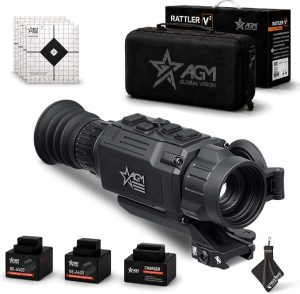
The RattlerV2 19-256 features a 19mm objective lens and 2.5x base magnification, a combination intended to support close- to mid-range scanning and observation of moving heat signatures. Its digital zoom, multiple reticle styles, and stadiametric rangefinder add flexibility, while shot-activated recording with onboard audio allows users to capture footage without manually starting a recording at the moment of an event.
Battery performance is another major selling point. According to the supplied product description, the scope can operate for up to 11.5 hours on a single charge and comes with two rechargeable batteries. Its IP67 protection rating, recoil resistance, and stated operating-temperature range also make it worth considering for buyers who need an optic designed for outdoor conditions. With a limited five-year manufacturer warranty advertised, the RattlerV2 19-256 offers a combination of thermal imaging, recording, and practical accessories for shoppers comparing compact thermal scopes.
Key Specifications
-
Brand: AGM Global Vision
-
Product: RattlerV2 19-256 Thermal Imaging Scope
-
Color: Black
-
Style/model: 19-256
-
Dimensions: 2.6 × 8.5 × 2.7 inches, as listed
-
Item weight: 16 ounces (1 pound)
-
Material: Polycarbonate
-
Objective lens diameter: 19mm
-
Minimum magnification: 2.5x
-
Compatible devices: Rifle, shotgun, and handgun, as listed
-
Thermal sensor resolution: Not specified in the supplied details for this particular listing
-
Digital zoom: 8x
-
Reticle styles: 10
-
Reticle colors: 4
-
Rangefinding feature: Stadiametric rangefinder
-
Recording: Shot-activated video recording with onboard audio
-
Advertised battery life: Up to 11.5 hours on a single charge
-
Batteries included: Two rechargeable batteries
-
Waterproof and dust protection: IP67
-
Recoil resistance: Advertised; specific resistance figure not supplied
-
Operating temperature: -22°F to 131°F (approximately -30°C to 55°C)
-
Warranty: Limited five-year manufacturer warranty, according to the supplied listing
-
Included accessories: Five AGM thermal targets and one Field Boys microfiber optics cleaning cloth
Wide Field of View and 2.5x Base Magnification
One of the main features highlighted in the RattlerV2 19-256 description is its 2.5x base magnification. Compared with a thermal optic that begins at a higher magnification, a lower base setting can provide a broader view of the surrounding scene, depending on the lens and sensor configuration.
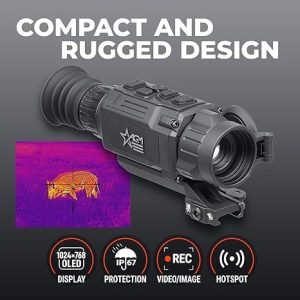
A wider field of view can be useful when scanning an area or following movement without repeatedly adjusting magnification. This is particularly relevant when observing heat signatures that may move across the viewing area.
The product description positions the RattlerV2 19-256 as suitable for close- to mid-range scanning and fast-moving targets. Its 19mm objective lens is part of the optical system that determines the view presented to the thermal sensor.
However, the supplied details do not give a numerical field-of-view measurement or a confirmed detection distance for this particular bundle. Buyers should consult the manufacturer’s specifications for those figures rather than assume that the performance matches another RattlerV2 model.
8x Digital Zoom and Reticle Customization
The RattlerV2 19-256 includes 8x digital zoom, allowing users to enlarge the displayed thermal image. Digital magnification can help make an object appear larger on the screen, but it does not add new detail to the original sensor image. At higher zoom settings, the image may appear less sharp or more pixelated.
The scope also offers 10 reticle styles and four reticle color options. These settings provide a degree of customization, allowing users to select a display arrangement that suits their preferences and viewing conditions.
The availability of multiple reticle options is useful for buyers who want more than one fixed display style. However, the listing does not identify all 10 reticle designs or explain whether every reticle style supports all four color choices.
For shoppers comparing thermal scopes, it is worth checking the exact menu options and digital-zoom behavior in the manufacturer’s manual before purchasing.
Stadiametric Rangefinder for Distance Estimation
Another advertised feature is the built-in stadiametric rangefinder. This type of rangefinder estimates distance using the apparent size of an object and a known or assumed reference dimension.
The feature can provide a distance estimate without necessarily requiring a separate electronic rangefinder. However, the result depends on having a suitable reference size and correctly interpreting the displayed information.
Importantly, a stadiametric rangefinder is not the same as a laser rangefinder. The supplied product description does not indicate that this model includes a laser distance-measuring system.
Buyers should therefore verify how the rangefinder works and what information it requires. Its estimates should not be treated as exact measurements, particularly when the target’s actual dimensions are uncertain.
Dual Rechargeable Batteries and Up to 11.5 Hours of Operation
Battery life is one of the strongest advertised advantages of the RattlerV2 19-256. The supplied listing states that the scope can operate for up to 11.5 hours on a single charge and includes two rechargeable batteries.
Having a second battery can be convenient for longer outings because it provides an alternative power source when the first battery needs recharging. The stated runtime also gives buyers a useful comparison point when evaluating the operating endurance of different thermal devices.
Nevertheless, the phrase “up to 11.5 hours” describes an advertised maximum rather than a guaranteed runtime in every situation. Actual performance may vary with temperature, display brightness, recording activity, and battery condition.
The supplied details do not specify battery capacity, charging time, or the exact conditions used to determine the advertised runtime. Buyers should check those details and confirm which charging accessories are included in the selected package.
Shot-Activated Recording with Onboard Audio
The RattlerV2 19-256 features shot-activated recording and onboard audio. According to the product description, this allows the scope to record footage automatically rather than requiring the user to press a recording button at the moment an event occurs.
This feature may be useful for preserving footage for later review. Audio recording can also add context to the video, depending on the device’s recording implementation and the surrounding environment.
Automatic recording is a practical convenience for buyers who want recording built into their thermal optic instead of carrying a separate recording device.
However, the supplied information does not specify the video resolution, frame rate, internal storage capacity, supported memory-card type, or the exact duration of footage captured before and after activation. Those details should be verified if recording quality and storage capacity are important purchasing considerations.
IP67 Protection and Outdoor Durability
The RattlerV2 19-256 is advertised with IP67 protection, recoil resistance, and an operating-temperature range of -22°F to 131°F.
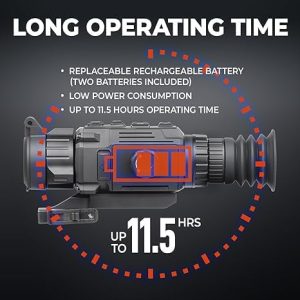
Under standard ingress-protection definitions, IP67 means that a properly rated device is dust-tight and can withstand temporary immersion in water under specified test conditions. This can provide useful reassurance for equipment intended for outdoor use, although it does not mean the device is immune to all water exposure or damage.
The stated temperature range is approximately -30°C to 55°C. This indicates the operating conditions claimed by the listing, but the supplied details do not specify whether battery performance, display behavior, and recording functions remain identical throughout that entire range.
The scope’s polycarbonate construction is another stated characteristic. Polycarbonate is commonly used in equipment housings where low weight and impact resistance are desirable, although the actual durability of the complete device depends on its design and construction.
The listing mentions recoil resistance but does not provide a specific recoil-energy rating for this particular package. Buyers should consult the manufacturer’s compatibility guidance before assuming that the scope is appropriate for every firearm listed by the seller.
Included AGM Thermal Targets and Cleaning Cloth
This package includes three types of items:
-
One AGM RattlerV2 19-256 Thermal Imaging Scope
-
Five AGM thermal targets intended to make zeroing easier
-
One Field Boys microfiber optics cleaning cloth
The five thermal targets are a useful addition because the seller specifically identifies them as accessories for zeroing the scope. Their inclusion may reduce the need to purchase compatible targets separately, depending on the user’s existing equipment.
The microfiber cleaning cloth is intended for cleaning optical surfaces. Using an appropriate, clean microfiber cloth can help remove dust and smudges, although buyers should follow the manufacturer’s cleaning instructions to avoid damaging the lens or its coatings.
The additional accessories may improve the package’s overall value, but their value depends on the current bundle price and whether the buyer would otherwise purchase them separately.
Warranty and Long-Term Support
The supplied product description advertises a limited five-year manufacturer warranty. A warranty can be an important consideration when buying an electronic thermal optic, since the device combines sensors, a display, battery components, and recording functions.
The stated five-year period may be attractive to buyers who want longer-term coverage. However, the word “limited” matters: the warranty may cover only specified defects or components and may exclude accidental damage, misuse, or normal wear.
Before purchasing, confirm the warranty terms for the exact model and seller, including whether registration is required, which components are covered, and how repairs are handled. Buyers outside the manufacturer’s main service region should also check whether the warranty applies internationally and whether shipping or service fees may arise.
Pros
-
2.5x base magnification: Designed to provide a broader view for close- to mid-range scanning.
-
19mm objective lens: A clearly stated optical specification for comparing similar thermal devices.
-
8x digital zoom: Offers additional image enlargement when needed.
-
Reticle customization: Provides 10 reticle styles and four color options.
-
Stadiametric rangefinder: Offers distance estimation based on reference dimensions.
-
Two rechargeable batteries: Provides a spare power source for extended outings.
-
Advertised runtime of up to 11.5 hours: A useful comparison point for battery endurance.
-
Shot-activated recording: Allows footage to be captured automatically.
-
Onboard audio: Adds an audio component to recorded footage.
-
IP67 protection: Advertised dust-tight construction and resistance to temporary immersion under specified test conditions.
-
Wide operating-temperature range: Listed from -22°F to 131°F.
-
Useful bundled accessories: Includes five AGM thermal targets and a microfiber optics cleaning cloth.
-
Limited five-year warranty: May offer additional peace of mind, subject to the warranty terms.
Cons
-
Sensor resolution is not specified in the supplied details: Buyers should verify the exact sensor resolution for this particular listing before comparing it with other models.
-
Digital zoom has limitations: Enlarging the image does not create additional native thermal detail.
Who Is the AGM Global Vision RattlerV2 19-256 Best For?
The AGM Global Vision RattlerV2 19-256 bundle may appeal to shoppers who want a thermal imaging device with a relatively low base magnification, rechargeable batteries, recording features, and useful accessories.
It may be worth considering for:
-
Buyers who value a wider viewing area: The 2.5x base magnification is intended to support scanning rather than starting with a highly magnified view.
-
Users who want flexible display settings: The 10 reticle styles and four colors offer customization options.
-
Shoppers who prioritize battery endurance: The advertised 11.5-hour runtime and two rechargeable batteries are notable features.
-
Buyers who want automatic recording: Shot-activated video and onboard audio are included in the advertised feature set.
-
Users who appreciate bundled accessories: The five thermal targets and cleaning cloth may provide added convenience.
-
Buyers looking for outdoor protection: The stated IP67 rating and operating-temperature range are useful specifications to verify against their needs.
It may be less suitable for buyers who require a confirmed high-resolution thermal sensor, detailed independent performance measurements, or a laser rangefinder. Those requirements should be checked before deciding whether this model is the best fit.
The AGM Global Vision RattlerV2 19-256 Thermal Imaging Scope bundle combines 2.5x base magnification, 8x digital zoom, customizable reticles, a stadiametric rangefinder, and shot-activated recording with onboard audio. Its advertised 11.5-hour battery life, two rechargeable batteries, IP67 protection, and limited five-year warranty add to its appeal for shoppers comparing thermal imaging equipment.
The included five AGM thermal targets and Field Boys microfiber cleaning cloth are useful extras that distinguish this package from a listing containing only the scope. However, the exact sensor resolution, field-of-view measurement, recording specifications, and recoil-resistance rating are not provided in the supplied details, so those points should be verified before purchase.
Overall, the RattlerV2 19-256 bundle is worth comparing if you value battery endurance, automatic recording, and included accessories. To determine whether it is genuinely one of the best budget thermal scopes, compare its current Amazon price with competing models and confirm the exact hardware specifications and warranty coverage for this particular package.
7. RIX Storm S1 Thermal Riflescope – Compact 256×192 Thermal Imaging with RET Technology
The RIX Storm S1 Thermal Riflescope is a compact thermal imaging device designed for hunters who want a lightweight, easy-to-operate scope with long-range observation capabilities. Featuring a 256×192 thermal sensor, a 19mm objective lens, and a 50Hz refresh rate, this model combines essential thermal imaging features with a compact aluminum-alloy body. Its lightweight construction makes it an option for users who prefer equipment that is easier to carry during extended outdoor activities.
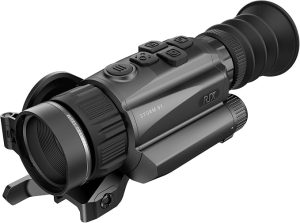
One of the Storm S1’s key selling points is RIX’s RET image-enhancement technology, which uses image-processing algorithms to improve the appearance and clarity of images captured by its thermal sensor. This can help users get more detail from the available thermal image, although the technology does not change the sensor’s native 256×192 resolution into a true 384-resolution sensor.
The scope also features a simplified operating menu and controls designed for use in low-light conditions, including when wearing gloves. With a stated base magnification of 3.0× and a compact design measuring approximately 5.3 × 2.5 × 2.2 inches, the RIX Storm S1 aims to balance portability, ease of use, and thermal observation performance.
Key Specifications
-
Brand: RIX
-
Model: Storm S1
-
Color: Black
-
Thermal sensor resolution: 256×192 pixels
-
Objective lens diameter: 19mm
-
Base magnification: 3.0×
-
Magnification range: The supplied description mentions up to 7.0×, while the specification table lists a maximum of 3.5×. Confirm the exact magnification range for the specific model before purchasing.
-
Refresh rate: 50Hz
-
Image enhancement: RIX RET technology
-
Material: Aluminum alloy
-
Dimensions: Approximately 5.3 × 2.5 × 2.2 inches
-
Weight: 14.4 ounces, according to the specification table
-
Primary use: Hunting and thermal observation
-
Controls: Simplified menu and buttons designed for operation in darkness and with gloves
Detailed Review of the RIX Storm S1 Thermal Riflescope
1. 256×192 Thermal Sensor for Thermal Observation
The RIX Storm S1 uses a 256×192 thermal sensor to capture temperature-based images, allowing users to observe differences in heat rather than relying solely on visible light. This can be useful in low-light environments and other situations where conventional optics may struggle to reveal a warm object against its surroundings.
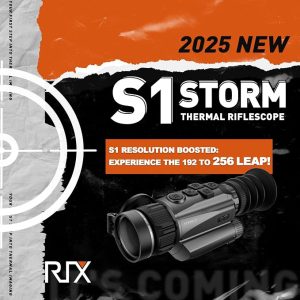
Its 19mm objective lens provides the foundation for the device’s thermal imaging capabilities. The listing states that the scope can observe targets at distances of up to 1,094 yards, making long-distance observation a central part of its advertised appeal.
However, it is important to distinguish thermal detection from positive identification. Detecting a heat signature at a particular distance does not necessarily mean that the user can clearly identify the object at that same distance. Actual performance depends on the target’s size, temperature contrast, weather, background conditions, and image quality.
The supplied listing does not provide a thermal sensitivity rating, such as NETD, or a detailed field-of-view measurement. Those figures would help buyers compare the Storm S1 more accurately with other thermal scopes in this price category.
2. RET Image-Enhancement Technology
One of the most notable features of the RIX Storm S1 is its RET image-enhancement technology. According to the product description, this technology uses algorithms to improve the appearance of images produced by the 256×192 thermal detector, potentially making them look closer to images from a higher-resolution 384-class detector.
This is appealing to budget-conscious buyers because image processing can improve perceived sharpness and make thermal scenes easier to interpret. Better contrast and image presentation may help distinguish a heat signature from its background.
Nevertheless, software enhancement has limitations. RET does not add the same amount of underlying scene information that a higher-resolution thermal sensor captures natively. Buyers should therefore evaluate the Storm S1 based on its actual 256×192 sensor rather than assuming that it performs identically to a native 384×288 model.
3. 3.0× Base Magnification and Advertised Long-Range Performance
The product description identifies 3.0× as the Storm S1’s basic magnification. This provides a magnified starting view for observing distant objects, while the listing advertises observation distances of up to 1,094 yards.
However, the supplied information contains a specification discrepancy: the technical table lists a maximum magnification of 3.5×, whereas the description advertises a range from 3.0× to 7.0×. These figures should be verified against the exact Storm S1 version being sold.
Magnification alone does not determine how much detail a thermal scope can resolve. Sensor resolution, lens performance, thermal sensitivity, image processing, and viewing conditions all influence the usable image at distance.
For buyers comparing several budget thermal scopes, it is worth checking the manufacturer’s specifications for the precise model and confirming whether the advertised upper magnification is optical, digital, or a combination of both.
4. Compact Aluminum-Alloy Construction
The Storm S1 is designed with portability in mind. Its aluminum-alloy housing offers a metal construction in a compact form, and the listing gives dimensions of approximately 5.3 inches long, 2.5 inches wide, and 2.2 inches high.
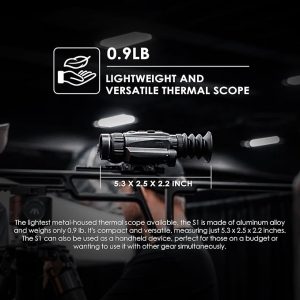
The specification table lists the weight as 14.4 ounces, while the product description says the scope weighs less than one pound. These statements are consistent, although the exact weight of the complete package may differ depending on the included accessories.
A compact design can be attractive to hunters who want to minimize the amount of equipment they carry. It may also make the device easier to handle and store than a larger thermal optic.
The listing does not specify an ingress-protection rating, recoil-resistance rating, or operating-temperature range. Buyers who expect to use the scope in heavy rain, demanding weather, or on a particular firearm should verify those details with the manufacturer before relying on it in those conditions.
5. Simplified Menu and Intuitive Controls
RIX emphasizes ease of operation as another important Storm S1 feature. The scope’s menu is described as straightforward, with controls intended to reduce the time required to learn the device.
This is useful for buyers who prefer practical operation over a complicated interface. A clear menu can make it easier to access basic settings without repeatedly consulting a manual.
The product description also highlights a button layout and bin-cover design intended to support operation in darkness and while wearing gloves. This could be helpful during outdoor use, when lighting and fine motor control may be limited.
However, the supplied listing does not detail the complete menu system, available image palettes, reticle options, recording functions, or wireless connectivity. Buyers who want these features should confirm their availability on the specific Storm S1 model rather than assume they are included.
6. 50Hz Refresh Rate for Smooth Thermal Viewing
The RIX Storm S1 has an advertised 50Hz refresh rate, meaning the thermal image can refresh up to 50 times per second under the stated specification.
A higher refresh rate can make changes in the scene appear smoother as the user moves the device or observes moving objects. This can contribute to a more comfortable viewing experience than a lower-refresh-rate display, particularly during movement.
However, refresh rate is only one part of the viewing experience. The sensor’s resolution, image-processing performance, display characteristics, and environmental conditions also affect how clear and useful the image appears.
The listing does not provide enough information to assess the Storm S1’s full display specifications or compare its overall image quality directly with competing models.
Pros
-
Compact and lightweight: The listed 14.4-ounce weight and small body make the scope portable.
-
256×192 thermal imaging: Provides thermal observation capability in low-light conditions.
-
RET image enhancement: Uses processing algorithms to improve the appearance of thermal images.
-
50Hz refresh rate: Supports smooth image updates during observation.
-
19mm objective lens: Provides a compact lens configuration for the device.
-
Advertised long-range observation: The listing states a maximum observation distance of 1,094 yards, although practical identification range may be shorter.
-
Aluminum-alloy housing: Offers a metal-bodied alternative to some polymer-bodied optics.
-
Glove-friendly controls: The design is advertised as easier to operate in darkness and while wearing gloves.
-
Straightforward menu: May appeal to users who prefer a less complicated interface.
Cons
-
Magnification specifications conflict: The technical table lists a maximum of 3.5×, while the description advertises magnification up to 7.0×.
-
No supplied NETD rating: Thermal sensitivity cannot be assessed from the provided details.
Who Is the RIX Storm S1 Best For?
The RIX Storm S1 may suit several types of buyers:
-
Budget-conscious hunters: Those looking for a compact thermal optic with a 256×192 sensor and image enhancement.
-
Portability-focused users: Those who prefer a lightweight aluminum-alloy body instead of a larger, heavier device.
-
Users who value simple controls: Those who want a relatively straightforward menu and controls designed for low-light operation.
-
Buyers comparing entry-level thermal scopes: Those interested in a 50Hz refresh rate and RET image processing without immediately moving to a higher-resolution sensor category.
It may be less suitable for buyers who require verified waterproofing, documented recoil resistance, extensive recording features, or the strongest possible native thermal resolution. Such buyers should compare the full specifications of competing models before deciding.
The RIX Storm S1 Thermal Riflescope presents an appealing combination of compact construction, a 256×192 thermal sensor, 50Hz refresh rate, and RET image-enhancement technology. Its lightweight aluminum-alloy body and simplified controls may make it an attractive option for users who prioritize portability and ease of operation.
Its advertised 1,094-yard observation distance is worth examining carefully, since the ability to detect a heat signature at long range does not guarantee that the object will be identifiable at that distance. The unclear magnification specifications also need verification before purchase.
Overall, the RIX Storm S1 is worth considering as a compact thermal imaging option, provided its actual magnification range, durability ratings, and price are confirmed. Comparing those details with other models in this roundup will help determine whether it offers the right balance of performance and value.
8. DNT Optics ThermNight TNC225R Multispectral Thermal and Night Vision Riflescope
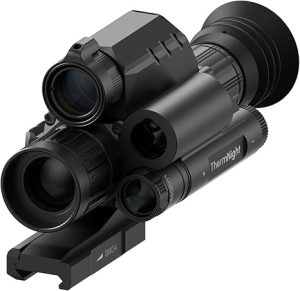
The DNT Optics ThermNight TNC225R Multispectral Riflescope is designed for users who want to combine thermal imaging and digital night vision in a single optic. Rather than relying exclusively on thermal imaging, this model combines a 256×196 thermal detector with a Sony STARVIS 2 low-light sensor, giving users multiple viewing modes for different lighting conditions. This combination makes it an interesting option for buyers looking for more versatility than a conventional thermal-only scope can provide.
One of the TNC225R’s standout features is its multispectral display system, which allows users to switch between thermal imaging, day/night vision, and a hybrid Picture-in-Picture (PIP) view. Its thermal detector has a stated NETD below 25 mK, while the digital night vision channel is designed to deliver improved image clarity in low-light environments. Together, these features aim to support thermal detection and provide additional visual context when observing a scene.
The scope also includes built-in 32GB storage, a detachable infrared illuminator, an inclination-measuring digital gyroscope, and a stated battery life of up to five hours. With an IP67 waterproof rating and advertised recoil resistance up to .50 BMG, the TNC225R combines several practical features in a compact housing. However, buyers should verify the exact product variant and specifications because the supplied listing contains inconsistencies between its title-style designation and some of its measurements.
Key Specifications
-
Brand: DNT Optics
-
Product model identified in description: ThermNight TNC225R
-
Style listed: 256-25 Laser Rangefinder
-
Color: Black
-
Thermal sensor resolution: 256×196 pixels, as stated in the description
-
Thermal pixel pitch: 12 μm
-
Thermal sensitivity: NETD below 25 mK
-
Night vision sensor: Sony STARVIS 2
-
Viewing modes: Day/night vision, thermal imaging, and hybrid multispectral Picture-in-Picture
-
Dimensions: Approximately 6.7 × 3 × 3.1 inches in the specification table; description states approximately 7 inches long
-
Weight: 1.4 pounds in the specification table; the description separately states 22 ounces
-
Material: Aluminum, according to the specification table
-
Mounting type: Short Picatinny mount, listed as PMS 0 MOA
-
Storage: Built-in 32GB
-
Infrared illuminator: Detachable; 850nm option mentioned, with 940nm illuminator available separately
-
Battery life: Up to five hours
-
Waterproof rating: IP67
-
Advertised recoil resistance: Up to .50 BMG
-
Additional features: One-shot zeroing across thermal and day/night channels, digital zoom wheel, digital gyroscope, detachable eyecup with metal threads
1. Multispectral Thermal Imaging and Digital Night Vision
The defining feature of the DNT Optics ThermNight TNC225R is its combination of thermal imaging and digital night vision. These two technologies capture different kinds of information, so having them available in one device can provide greater viewing flexibility than relying on only one imaging method.
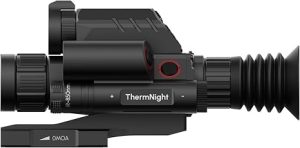
The thermal channel uses a 256×196 detector with a 12μm pixel pitch and a stated NETD below 25 mK. Thermal imaging detects differences in infrared radiation, helping reveal warm objects even when visible-light conditions are poor.
The digital night vision channel uses a Sony STARVIS 2 sensor, which is designed to provide sensitivity in low-light environments. Unlike thermal imaging, digital night vision depends on available light and may also use infrared illumination when the environment is sufficiently dark.
The combination is useful because thermal and digital night vision have different strengths. Thermal imaging can help reveal a heat signature, while digital night vision can provide additional visual details about the surrounding scene. Actual clarity depends on environmental conditions and the performance of each sensor.
2. 256×196 Thermal Sensor with NETD Below 25 mK
The TNC225R’s thermal detector has a stated resolution of 256×196 pixels and a pixel pitch of 12μm. Its advertised NETD of less than 25 mK describes the sensor’s ability to distinguish small temperature differences under specified test conditions.
A lower NETD generally indicates greater thermal sensitivity, which can help make subtle temperature variations more visible. This can be useful when a warm object has relatively little temperature contrast with its surroundings.
However, thermal sensitivity alone does not determine overall image quality. Sensor resolution, lens specifications, image processing, weather, and the distance to the observed object all influence the level of detail available to the user.
The supplied product information does not specify the objective lens diameter, optical magnification, or a verified detection range for the TNC225R. Those details would be valuable when comparing it with other budget thermal scopes in this roundup.
3. Sony STARVIS 2 Sensor for Low-Light Viewing
Another important feature is the Sony STARVIS 2 sensor used for digital night vision. This sensor technology is designed to improve light sensitivity and image quality in low-light conditions.
The benefit of combining this sensor with thermal imaging is the ability to change viewing modes according to the scene. Thermal imaging can help reveal heat signatures, while the digital channel can show more conventional visual information when there is sufficient ambient light or appropriate infrared illumination.
The listing does not provide the digital sensor’s resolution or a quantified low-light performance rating. Therefore, the extent of its advantage over competing night vision systems cannot be determined from the supplied specifications alone.
For shoppers interested in multispectral imaging, the key consideration is whether having both channels in one scope justifies the price compared with a dedicated thermal optic.
4. Multispectral Display with Picture-in-Picture
The ThermNight TNC225R offers three advertised viewing approaches: day/night vision, thermal imaging, and a hybrid display using Picture-in-Picture (PIP).
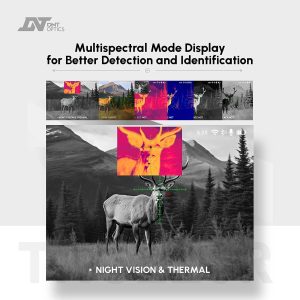
This flexibility allows the user to switch between imaging modes rather than being restricted to a single sensor. The hybrid display can present information from both channels, helping provide thermal contrast alongside conventional visual detail.
For a buyer evaluating a multispectral scope, this is a meaningful advantage because thermal and digital images serve different purposes. The ability to view both types of information through one device may be more convenient than carrying separate optics.
However, the listing does not specify display resolution, refresh rate, PIP window size, or the degree of control users have over the hybrid display. Buyers who prioritize these features should consult the full manufacturer specifications before purchasing.
5. One-Shot Zeroing Across Both Imaging Channels
The TNC225R’s advertised one-shot zeroing feature is intended to simplify the process of aligning its thermal and digital day/night vision channels to the same point of impact.
According to the supplied description, the user can zero the day/night vision channel and then adjust the thermal reticle to match it. This is designed to reduce the need to repeat the full alignment process independently for each viewing mode.
The main appeal is convenience: users can switch between imaging channels without having to treat them as entirely separate aiming systems.
The listing does not explain every calibration condition or provide detailed information about reticle options. Buyers should consult the manufacturer’s instructions to understand the exact process and limitations of this feature.
6. Detachable Infrared Illuminator
The ThermNight TNC225R includes a detachable infrared illuminator. The listing mentions an 850nm infrared illuminator and states that a 940nm version can be purchased separately.
An infrared illuminator supplies light outside the range normally visible to the human eye, helping a compatible digital night vision sensor produce an image in very dark conditions.
The availability of different wavelengths offers a choice for users with different illumination requirements. However, the product description does not provide comparative illumination distances, beam patterns, or detailed performance measurements for the two options.
It is also important to distinguish infrared illumination from thermal imaging: the illuminator supports the digital night vision channel, while the thermal sensor detects infrared radiation emitted by objects themselves.
7. Compact Design and Aluminum Construction
The supplied specifications describe the scope as approximately 6.7 inches long, 3 inches wide, and 3.1 inches high, with a listed weight of 1.4 pounds.
The product description gives a slightly different weight of 22 ounces and describes the scope as approximately 7 inches long. The length figures are broadly consistent, but the weight figures are not: 1.4 pounds equals 22.4 ounces, so the difference is small and may reflect rounding or listing variation.
Its aluminum construction is intended to provide a durable housing while keeping the unit relatively compact. The listed short Picatinny mount also identifies the mounting interface buyers should check for compatibility with their equipment.
Although the compact size may appeal to users who want multiple imaging technologies in one device, the scope is heavier than some of the lightest thermal-only options. Its actual suitability depends on the mounting setup and the user’s priorities.
8. IP67 Waterproofing and Advertised Recoil Resistance
The TNC225R is listed with an IP67 waterproof rating, which indicates dust-tight construction and protection against temporary immersion under specified test conditions.
The product description also advertises recoil resistance up to .50 BMG. This is a manufacturer-listed durability claim rather than an independently verified performance result in the supplied information.
These specifications may be attractive to buyers who need an optic designed for demanding outdoor environments. Nevertheless, the scope should be used within the manufacturer’s stated limits, and buyers should confirm warranty coverage and compatibility with their intended firearm.
The listing does not provide a full operating-temperature range or details of the tests used to establish the recoil rating.
9. Built-In Storage, Digital Zoom, and Digital Gyroscope
The TNC225R includes 32GB of built-in storage, providing space for saving recordings or images if supported by the device’s recording system. The listing also mentions a digital zoom wheel, which is intended to make magnification adjustments more convenient.
A digital gyroscope measures orientation and movement. In this model, the description identifies it as a feature for measuring inclination and cant angle, which can provide additional positional information.
The listing does not specify video resolution, supported recording formats, available frame rates, or whether the storage can be expanded. It also does not provide the digital zoom range.
These are important details for buyers who plan to use the scope’s recording functions regularly or who want to compare its digital features with those of competing models.
10. Battery Life of Up to Five Hours
The manufacturer-provided description states that the TNC225R offers up to five hours of battery life. This gives buyers a useful starting point when estimating how long the scope may operate between charges.
Actual runtime can vary according to the selected imaging mode, display brightness, use of the infrared illuminator, recording activity, and environmental conditions. Using both imaging channels or additional features may affect how long the device remains powered.
The supplied listing does not identify the battery type, charging method, or whether spare batteries are included. Buyers planning extended outdoor use should confirm these details before purchasing.
Pros
-
Multispectral imaging: Combines thermal imaging and digital night vision in one device.
-
256×196 thermal detector: Provides a dedicated thermal imaging channel with a 12μm pixel pitch.
-
NETD below 25 mK: Advertises thermal sensitivity for distinguishing small temperature differences.
-
Sony STARVIS 2 sensor: Supports the digital night vision channel in low-light environments.
-
Multiple display modes: Includes thermal, day/night vision, and hybrid Picture-in-Picture viewing.
-
One-shot zeroing feature: Designed to simplify alignment between the two imaging channels.
-
Detachable infrared illuminator: Provides infrared illumination for digital night vision.
-
Built-in 32GB storage: Offers onboard storage for supported recordings and images.
-
IP67 rating: Advertises dust-tight construction and protection against temporary immersion under specified conditions.
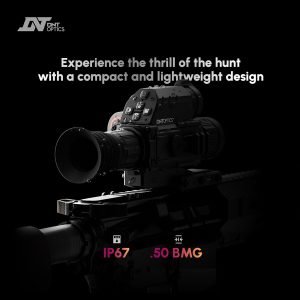
-
Compact housing: Combines two imaging technologies in a single optic.
-
Digital gyroscope: Provides inclination and cant-angle information according to the listing.
Cons
-
Product designation needs verification: The specification table lists “256-25 Laser Rangefinder,” while the description identifies the product as the ThermNight TNC225R. Confirm that the listing corresponds to the intended model.
-
Weight figures vary slightly: The table states 1.4 pounds, while the description states 22 ounces
Who Is the DNT Optics ThermNight TNC225R Best For?
The DNT Optics ThermNight TNC225R may appeal to:
-
Buyers who want multispectral imaging: Those interested in combining thermal and digital night vision in one optic.
-
Users who value viewing flexibility: Those who want thermal, day/night vision, and hybrid display modes.
-
Low-light observation enthusiasts: Those interested in a Sony STARVIS 2 sensor and a detachable infrared illuminator.
-
Buyers who value onboard recording: Those who want built-in storage for supported photos or video.
-
Users seeking a compact combination optic: Those who prefer one device with multiple imaging technologies rather than separate thermal and digital night vision equipment.
It may be less suitable for buyers who need a clearly documented laser rangefinder, a verified long-distance detection specification, or detailed information about optical magnification before making a purchase.
The DNT Optics ThermNight TNC225R stands out for its combination of thermal imaging, digital night vision, and hybrid multispectral viewing. Its 256×196 thermal detector, stated NETD below 25 mK, Sony STARVIS 2 sensor, built-in 32GB storage, and IP67 rating make it a feature-rich option on paper.
Its strongest selling point is versatility: instead of relying on a thermal sensor alone, it offers additional digital night vision capabilities and multiple display modes. However, the supplied listing leaves several important questions unanswered, particularly regarding optical magnification, detection range, battery details, and the claimed laser rangefinder designation.
My recommendation: Consider the TNC225R if multispectral imaging is a priority, but verify the exact model, included accessories, magnification, and whether a laser rangefinder is actually built in before buying. Those checks will help you determine whether it offers good value compared with the other thermal scopes in this roundup.
Also read: 7 Best Rifle Scopes Under $800 – Top Picks for Hunting, Accuracy & Long-Range Shooting
Frequently Asked Questions About Budget Thermal Rifle Scopes
1. What is a budget thermal rifle scope?
A budget thermal rifle scope is an optic designed to detect infrared radiation and display temperature differences as a thermal image, typically at a lower price than premium models. Depending on the model, it may include features such as digital zoom, image enhancement, video recording, Wi-Fi, or multiple display modes. Affordable options can offer useful thermal imaging capabilities, but their resolution, sensitivity, durability, and detection performance vary.
2. Are budget thermal rifle scopes worth buying?
Yes, a budget thermal scope may be worth considering if its specifications match your needs and you understand its limitations. Models in this roundup offer different combinations of sensor resolution, lens size, image processing, battery life, and construction. Before purchasing, compare the actual specifications and warranty rather than choosing solely by price or advertised magnification.
3. What thermal sensor resolution should I look for?
Sensor resolution affects how much detail the thermal image can represent. Several models discussed in this article use sensors around the 256-pixel class, while some listings may offer higher-resolution alternatives.
A higher native resolution can help reveal more detail, but it is not the only factor that determines image quality. Lens performance, thermal sensitivity, image processing, and environmental conditions also matter. Image enhancement can improve how an image appears, but it does not provide the same underlying information as a higher-resolution sensor.
4. What does NETD mean in a thermal scope?
NETD stands for Noise Equivalent Temperature Difference. It describes how sensitively a thermal sensor can distinguish small temperature differences under specified test conditions. It is usually expressed in millikelvin (mK).
Generally, a lower NETD indicates greater thermal sensitivity. For example, the PARD Pantera 256 listing specifies a NETD of 15 mK or less, while the DNT Optics ThermNight TNC225R listing specifies less than 25 mK. These figures are useful for comparison, but they should not be used alone to predict overall image quality.
5. How far can a budget thermal scope detect a target?
Detection range varies with sensor resolution, objective lens size, thermal sensitivity, target size, temperature contrast, and weather conditions. Some product listings advertise long detection distances, but these figures do not necessarily indicate the distance at which a person or object can be positively identified.
When comparing scopes, distinguish between detection range, recognition range, and identification range. If a manufacturer does not clearly explain the conditions behind its advertised distance, treat the figure as a specification to verify rather than a guarantee of real-world performance.
6. What is the difference between optical magnification and digital zoom?
Optical magnification is produced by the optic’s lens system. Digital zoom enlarges the image electronically, which can make an object appear larger but may also make image details less clear.
A scope advertised with a high maximum magnification does not automatically provide better thermal detail at long distances. Check the base optical magnification, the digital zoom range, and whether the manufacturer clearly distinguishes between the two.
7. Are thermal scopes waterproof and resistant to recoil?
Some models have documented environmental protection and recoil-resistance ratings, but these features are not universal. For example, the supplied listings for the AGM Rattler V2 and PARD Pantera 256 specify IP67 protection, while the DNT Optics ThermNight TNC225R listing also advertises IP67 and recoil resistance up to .50 BMG.
An IP67 rating indicates dust-tight construction and protection against temporary immersion under specified test conditions. Recoil compatibility should be verified for the exact model and intended firearm. Always check the manufacturer’s instructions, warranty conditions, and mounting requirements before use.
8. How important is battery life when choosing a thermal scope?
Battery life is an important consideration, especially for extended outdoor use. The AGM Rattler V2 listing advertises up to 11.5 hours under its stated conditions, while the DNT Optics ThermNight TNC225R listing specifies up to five hours.
Actual runtime may vary depending on display brightness, recording, wireless connectivity, image settings, and the use of accessories such as an infrared illuminator. Check whether spare batteries are included, how the unit is charged, and whether external power is supported.
9. What is the difference between a thermal scope and a thermal clip-on device?
A dedicated thermal scope is designed to function as a standalone optic. A thermal clip-on device is designed to attach to a compatible existing optical setup, allowing thermal imaging to be added without necessarily replacing the original optic.
These devices have different compatibility requirements and intended uses. For example, the AGM Global Vision Rattler V2 clip-on-style listing discussed earlier should not automatically be treated as interchangeable with a dedicated thermal riflescope. Verify the exact model, mounting arrangement, and compatibility requirements before buying.
10. What should I check before buying a budget thermal scope?
Before making your final decision, review the following:
-
Native thermal sensor resolution and stated NETD.
-
Objective lens diameter and field of view.
-
Optical magnification and digital zoom specifications.
-
Detection-range claims and whether identification performance is documented.
-
Battery life, charging method, and spare-battery availability.
-
Water-resistance and recoil-resistance ratings.
-
Recording, storage, and connectivity features, if required.
-
Mount compatibility and the device’s weight.
-
Warranty coverage, return policy, and availability of customer support.
-
The exact model number and product variant, particularly when a listing contains conflicting specifications.
These checks can help you avoid paying for features you do not need or relying on specifications that are unclear or inconsistent.
Conclusion
Choosing the right budget thermal rifle scope means finding the best balance between image clarity, practical features, durability, and price. The eight products discussed in this guide offer different approaches to thermal imaging, from compact devices with straightforward controls to advanced options featuring image enhancement, video recording, extended battery life, and multispectral viewing.
The AGM Global Vision Rattler V2 stands out in this roundup for its advertised long battery life and practical recording features. The ATN ThOR 6 Mini offers a compact design with onboard recording, while the PARD Pantera 256 combines a 256×192 thermal sensor with image-enhancement features and a rugged aluminum-alloy housing. The Sightmark Shade is another option to examine if you prefer a compact scope with digital zoom and onboard recording. Meanwhile, the RIX Storm S1 emphasizes portability and image processing, and the DNT Optics ThermNight TNC225R offers the added versatility of thermal and digital night vision in one device.
For buyers comparing these models, remember that the most expensive option is not necessarily the best fit. Consider how you intend to use the scope, how much detail its sensor can provide, whether its battery life meets your needs, and whether its mounting and durability specifications suit your equipment. Also, verify model numbers and magnification specifications carefully, as some of the supplied product listings contain conflicting or incomplete details.
Most importantly, do not judge a thermal scope by its advertised detection distance alone. Detecting a heat signature is different from recognizing or positively identifying an object, and practical performance depends on several factors, including sensor resolution, lens characteristics, temperature contrast, and environmental conditions.
Ultimately, the best budget thermal rifle scope is the one that delivers the features you genuinely need, offers dependable performance for its intended purpose, and fits your budget without compromising on essential specifications. Compare the available options carefully, verify the manufacturer’s claims, and check local laws governing thermal optics and their intended use before making your final purchase.